
When organizing your climbing harness or backpack for a mountain ascent, securing your gear is just as critical as securing yourself. The best keychain hook for attaching gear during mountain climbing depends entirely on whether the hook will support human weight or simply hold lightweight accessories. For securing non-safety-critical items like keys, chalk bags, or water bottles, a lightweight accessory carabiner, snap hook, or lobster claw hook is highly effective. However, if there is any chance the attachment point will experience dynamic forces, heavy static loads, or become part of a safety system, you must exclusively use a certified, climbing-rated locking carabiner.
Standard keychain hooks, such as brass snap hooks or zinc-alloy lobster claws, are strictly designed for lightweight accessory retention. They lack the structural integrity, material testing, and load ratings required to support a climber. Misusing an unrated accessory hook in a load-bearing scenario can lead to catastrophic gear failure or severe accidents. To ensure safety on the mountain, you must match each piece of gear to the appropriate hook style based on the manufacturer’s stated limits and the specific demands of your climbing environment.
Comparing Hook Styles: Carabiner vs. Snap Hook vs. Lobster Claw
Understanding the mechanical differences, operation, and ideal use cases for each hook style allows you to organize your gear efficiently while maintaining safety on the route.
Products mentioned in this guide
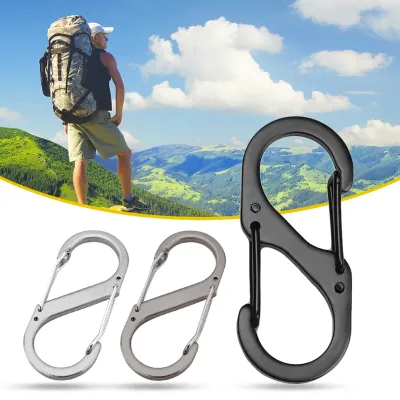
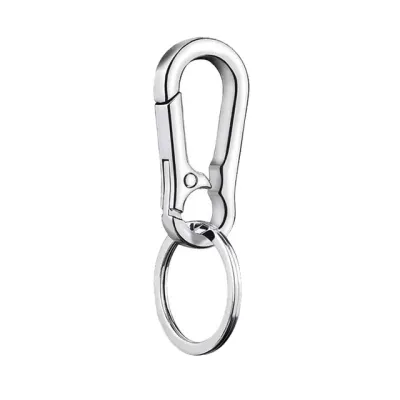
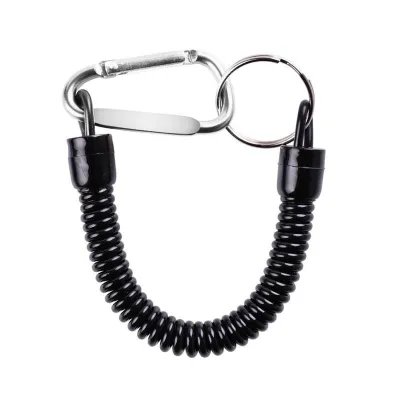
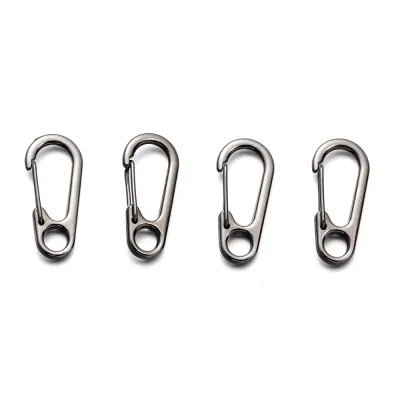
Prices are valid at publication and may change. Please refer to the product page for the latest price.
Carabiners (Locking and Non-Locking) Carabiners are the most recognizable and versatile connectors in mountain climbing. They typically feature an oval, D-shape, or pear-shape design that distributes loads along the spine, which is the strongest part of the hook. Gate mechanisms vary widely, ranging from simple non-locking wire gates and solid straight gates to complex locking systems like screw-gates, twist-locks, and magnetic locks. Non-locking accessory carabiners offer rapid, one-handed operation, making them excellent for clipping lightweight items to your pack. However, for any application where safety or heavy loads are involved, a climbing-rated carabiner stamped with a kilonewton (kN) rating is mandatory. These rated carabiners undergo rigorous manufacturing standards to ensure they can withstand the extreme forces encountered during a fall or haul.
Snap Hooks (Trigger Snaps) Snap hooks, often referred to as trigger snaps, utilize a spring-loaded gate mechanism operated by a small thumb trigger. When you pull down on the trigger, the gate slides open, allowing you to quickly clip or unclip the hook from a gear loop. This design offers a highly secure closure because the gate naturally snaps back into a closed position when the trigger is released. Climbers frequently use snap hooks to attach chalk bags, water bottles, or route guides to their harnesses or backpacks. The primary drawback of snap hooks in mountain environments is their susceptibility to dirt, sand, and ice. If grit or moisture enters the internal spring chamber, the trigger mechanism can jam, leaving the gate stuck in an open or partially closed position.
Lobster Claw Hooks Lobster claw hooks feature a dual-spring gate design that resembles a claw, opening inward when pressure is applied to the lever. This mechanism provides an exceptionally high level of security against accidental opening, as the gate requires deliberate pressure to release. Because of this secure closure, lobster claw hooks are ideal for securing valuable or easily dropped items to harness gear loops where snagging against rock faces is a concern. However, the dual-spring mechanism makes lobster claw hooks bulkier and heavier than standard accessory carabiners. They can also be difficult to operate with cold hands or thick climbing gloves, which is a significant consideration for high-altitude or cold-weather climbs.
Critical Safety Boundaries: Load Ratings and Misuse Risks
In mountain climbing, confusing an accessory hook with a load-bearing connector can have fatal consequences. Equipment cannot replace proper training, experience, and sound judgment, and understanding the physical limitations of your gear is a fundamental part of climbing safety.

To prevent dangerous misuse, you must inspect the body of every hook you plan to bring onto the mountain. Climbing-rated carabiners are stamped with their minimum breaking strength in kilonewtons (kN) along three axes: major axis, minor axis, and gate-open. A rating of 20 kN, for example, indicates the carabiner can withstand approximately 2,000 kilograms of force under ideal conditions. Conversely, standard keychain hooks, snap hooks, and decorative carabiners are typically stamped with warnings such as “Not for Climbing” or “Not for Load Bearing.” If a hook lacks a clear, stamped kN rating from a reputable climbing manufacturer, it must be treated strictly as a low-load accessory clip.
Using unrated hooks or non-locking carabiners in high-stress situations introduces severe risks, such as cross-loading and gate-open loading. Cross-loading occurs when a hook rotates, forcing the load onto the weaker minor axis or directly against the gate. While a rated locking carabiner is designed to handle minor cross-loading forces, an unrated snap hook or lobster claw will easily deform or snap under minimal tension. Similarly, if a non-locking gate is pushed open by a rope, rock edge, or adjacent gear, the strength of the connector drops dramatically. Gear retention hooks must never be used to anchor a person, support body weight, or attach critical safety equipment like belay devices, runners, or protection.
Decision Framework: Matching the Hook to Your Specific Gear
Selecting the right hook style requires analyzing the weight, value, and accessibility of the gear you need to secure. Use this framework to match your equipment to the safest and most efficient connector.
Choose a Snap Hook if: You need to attach frequently accessed, medium-weight items where quick, one-handed release is essential. Snap hooks are highly practical for securing chalk bags, lightweight water bottles, or route maps to your harness or the exterior of your backpack. The thumb trigger allows you to detach the item instantly without looking, which is highly beneficial when you are established on a stance and need to access your gear quickly. Ensure the snap hook is made of a corrosion-resistant material like stainless steel or anodized aluminum to withstand outdoor exposure.
Choose a Lobster Claw if: You are securing valuable, fragile, or easily dropped items to your harness gear loops, and you want to minimize the risk of accidental detachment. Items such as headlamps, multi-tools, compact cameras, or GPS units are difficult to replace mid-climb and can pose a hazard to climbers below if dropped. The secure, dual-spring gate of a lobster claw hook prevents the connector from accidentally clipping onto or off of rock features, ropes, or other gear loops during tight chimney squeezes or active movement.
Choose an Accessory Carabiner if: You need to group multiple lightweight items together or require a low-profile, lightweight clip that adds minimal bulk to your kit. Accessory carabiners are excellent for organizing keys, small repair kits, pocket knives, or energy gel packets inside your backpack lid. Because they lack complex trigger mechanisms, they are highly reliable, lightweight, and easy to clip onto daisy chains or internal gear loops.
Choose a Rated Locking Carabiner if: The attachment point will experience dynamic forces, heavy static loads, or is integrated into any part of a safety system. This includes hauling heavy gear bags, securing yourself to an anchor, or clipping into a high-tension line. Before using any carabiner for these tasks, verify the manufacturer’s specifications and ensure the locking sleeve is fully engaged. In high-risk environments, a locking carabiner is the only connector that provides the structural integrity and gate security required to protect your life and your gear.
Inspection and Maintenance for Harsh Mountain Environments
Mountain environments expose your gear to harsh elements, including abrasive granite dust, fine sand, moisture, and freezing temperatures. Over time, these factors can degrade the performance of your keychain hooks, compromising their security and ease of use. In humid tropical environments like the Philippines, persistent moisture and salt air can accelerate corrosion on low-grade metal hooks, making material selection and regular maintenance even more critical.
To maintain your gear, you must perform a thorough visual and functional check before every climb. Start by testing the gate snap-back mechanism: open the gate fully and release it; it should snap shut instantly and completely without hesitation. Inspect the hook body for sharp burrs, deep scratches, or hairline cracks, which can weaken the metal or damage your ropes and harness loops. Pay close attention to the hinge pin and spring chamber, looking for signs of corrosion, rust, or accumulated dirt that could impede movement.
If you encounter harsh conditions on the mountain, you must know when to retire a hook to prevent gear loss or safety hazards. Establish clear stop conditions for your equipment. You must immediately stop using a hook and consult the manufacturer or replace the item if:
- The gate fails to close automatically or align correctly with the nose.
- The locking mechanism on a carabiner jams or slips.
- You observe visible deformation, bending, or deep grooving on the hook body.
- Severe corrosion or pitting is present, particularly around the hinge or spring.
- The hook has been subjected to a severe drop onto a hard surface, which can cause internal, invisible micro-fractures.
Frequently Asked Questions (FAQ)
Can I use a standard hardware store snap hook for climbing gear?
No, you should never use a standard hardware store snap hook for critical climbing gear or safety systems. Hardware store hooks are designed for general utility, such as hanging tools or securing pet leashes, and they lack the rigorous quality control, material testing, and certified load ratings required for outdoor climbing. These hooks are often made of brittle zinc alloys or low-grade steel that can fail suddenly under moderate loads or in cold mountain temperatures. For your safety, use only outdoor-rated accessory clips or certified climbing carabiners purchased from reputable outdoor manufacturers.
How do I prevent my hook gate from freezing or jamming?
To prevent hook gates from freezing or jamming in cold, dusty, or wet environments, keep the moving parts clean and dry. If the manufacturer’s instructions permit, you can apply a small amount of dry, wax-based lubricant to the gate hinge and spring mechanism. Avoid using heavy, oil-based lubricants, as they attract dirt, sand, and grit, which will eventually grind down the mechanism and cause it to jam. After climbing in wet or freezing conditions, thoroughly dry your hooks at room temperature before storing them in a well-ventilated area away from direct moisture.

Community discussion
Share your experience or ask a question. Comments are reviewed before publication.