
Selecting the right bouncing ball for exercise depends on matching your height to the ball’s fully inflated diameter and aligning the material thickness with your specific fitness activities. A proper fit ensures your hips and knees rest at a safe, stable angle, while the correct material prevents sudden deflation during high-intensity movements.
Quick Reference: Baseline Size and Material by Goal
To quickly find your starting point, compare your height to standard ball diameters. Most adults under 5 feet 2 inches align with a 55 cm ball, while those up to 5 feet 11 inches typically require a 65 cm ball. Taller individuals generally need a 75 cm or 85 cm option.
For active sitting or gentle stretching, a standard matte-finish ball offers sufficient comfort. If your routine includes weight training or dynamic bouncing, prioritize heavy-duty, anti-burst materials with textured surfaces. Use these baselines as a starting point, then verify the physical fit using your actual body posture.
Products mentioned in this guide
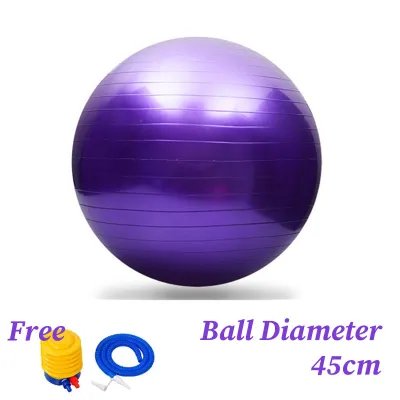
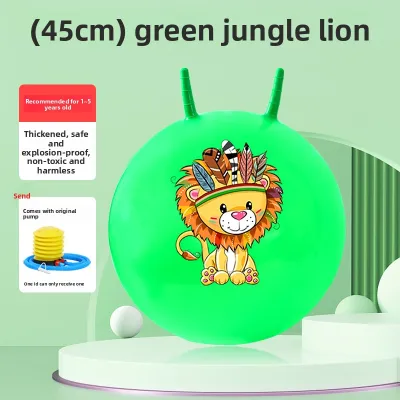
Prices are valid at publication and may change. Please refer to the product page for the latest price.
Decoding Size Specs: Matching Diameter to Your Height
Choosing the correct diameter is essential for maintaining proper biomechanics during exercise. Manufacturers categorize these fitness tools by their maximum inflated diameter.

Standard ranges include 55 cm for individuals between 4 feet 8 inches and 5 feet 2 inches, 65 cm for heights from 5 feet 3 inches to 5 feet 11 inches, and 75 cm or 85 cm for taller users.
To physically verify the fit, sit upright on the fully inflated ball with your feet flat on the floor. Your thighs should rest parallel to the ground, forming a clean 90-degree angle at your knees. If your knees point upward, the ball is too small; if your heels lift to keep your balance, the ball is too large.
Keep in mind that ambient temperature and humidity affect the material’s elasticity. In warm, tropical climates, the PVC material naturally expands more easily. Always measure the physical diameter with a tape measure during inflation rather than relying solely on visual estimation or firmness.
Safety Specs: Understanding Anti-Burst and Weight Limits
Safety should be your primary concern when selecting a bouncing ball for exercise, especially when performing dynamic movements or lifting weights. Standard exercise balls and specialized anti-burst models differ significantly in how they handle punctures.
Standard PVC balls can pop instantly when punctured, potentially leading to falls. In contrast, anti-burst models feature thicker, denser walls designed to release air slowly if punctured, giving you enough time to safely step off.
When evaluating weight capacity, look for two distinct ratings on the packaging. The static weight limit indicates the maximum weight the ball can support while stationary, such as when used as an office chair. The dynamic weight limit measures the maximum weight the ball can withstand during active movement, bouncing, or weightlifting.
Always calculate your total load by adding your body weight to the weight of any dumbbells or resistance bands you plan to use. For dynamic exercises, choose a ball with a dynamic rating that far exceeds your combined weight to account for the extra force generated during bounces.
Additionally, inspect the surface texture. High-quality balls feature raised, concentric ridges or a slip-resistant matte finish. This texture prevents the ball from sliding out from under you on smooth tiled floors or glossy gym mats, which is particularly important in humid environments where sweat can compromise grip. Whether you choose a basic model or a premium option priced over ₱1,000, verifying these material specifications is essential.
Matching Material and Firmness to Your Workout Goals
Your specific fitness routine dictates the ideal material thickness and inflation level of your exercise ball. Matching these factors to your goals ensures both comfort and performance.
- Core Training and Weightlifting: If your goal is to build core stability or perform dumbbell presses, prioritize a heavy-duty, anti-burst ball. Inflate the ball to its maximum recommended diameter to ensure a firm, highly responsive surface. A firm ball forces your stabilizing muscles to work harder to maintain balance during lifts.
- Yoga, Pilates, and Stretching: For flexibility and low-impact routines, a slightly softer ball is often preferred. Under-inflating the ball by a very small margin—while staying within safe limits—provides a larger contact patch with the floor, offering more stability and a gentler surface for your spine. Look for materials with a soft, tactile grip that clings well to yoga mats.
- Active Sitting and Desk Use: Using a bouncing ball for exercise as an active chair helps engage your core throughout the workday. For this purpose, select a ball that keeps your hips slightly higher than your knees to encourage natural spinal alignment. Consider models with a weighted bottom or an anti-slip base ring to prevent the ball from rolling away when you stand up.
Setup and Inspection: Ensuring Safe Inflation and Use
Proper setup is critical to achieving the rated safety and performance of your exercise ball. When inflating a new ball, do not rush the process.
First, inflate the ball to approximately 80% of its target diameter and let it sit for 24 hours. This allows the PVC material to adjust to the room temperature and stretch evenly. After this resting period, finish inflating the ball to its full specified diameter, using a tape measure to verify the size. Avoid over-inflating, as overstretching weakens the seams and increases the risk of bursting.
Before every workout, perform a quick visual inspection. Check the surface for deep scratches, scuffs, or discoloration. Run your hands along the seams to feel for any separation, and ensure the inflation valve is pushed flush into the ball.
If you notice any slow leaks, bulging areas, or deep gouges, stop using the ball immediately. Do not attempt to patch a damaged exercise ball with tape or bicycle tire repair kits, as these fixes cannot withstand the high pressure of dynamic exercise.
Frequently Asked Questions (FAQ)
Can I use a larger ball and just under-inflate it to match my height?
No, under-inflating a larger ball to fit a shorter height is not recommended. When a ball is significantly under-inflated, the material loses its structural integrity and becomes highly unstable. This instability can cause your joints to align incorrectly during exercises, increasing the risk of strain. Additionally, an under-inflated ball creates uneven stress on the PVC, which can lead to premature wear and sudden material failure. Always purchase the correct manufactured size for your height.
How often should I replace my bouncing ball for exercise?
For regular home use, consider replacing your exercise ball every one to two years, or sooner if you observe signs of wear. Look for permanent stretching, localized bulging, or fine cracks in the material. In warm, humid climates, the plasticizers in PVC can degrade faster, leading to a sticky or brittle surface. If the ball struggles to hold air or shows any seam separation, replace it immediately to ensure your safety.

Community discussion
Share your experience or ask a question. Comments are reviewed before publication.