
Choosing between braided fishing line and monofilament for angling in the Philippines depends entirely on where you fish, what you are targeting, and how you present your bait or lure. While braided line offers unmatched sensitivity and casting distance, monofilament provides crucial shock absorption and abrasion resistance. Understanding how these materials behave in tropical environments is key to avoiding lost gear and missed strikes.
Core Differences: How Braid and Mono Perform in the Water
Braided fishing line is constructed by weaving multiple micro-strands of synthetic fibers, resulting in an incredibly thin diameter relative to its breaking strength. This ultra-thin profile allows the line to cut through water currents with minimal resistance, helping your lures sink faster and run truer without bowing. Monofilament, made from a single extruded strand of nylon, is significantly thicker at the same breaking strength, which increases water drag but offers a smoother, more rounded profile.
The mechanical stretch of these lines dictates how they transmit energy. Monofilament naturally stretches under load, often expanding by fifteen to twenty-five percent before reaching its breaking point. This elasticity acts as a valuable shock absorber, cushioning the violent head shakes of a fighting fish. Braided line has virtually zero stretch, providing extreme sensitivity that transmits every vibration, bottom contact, or subtle nibble directly to your rod tip, though it requires a carefully adjusted reel drag to prevent pulling hooks.
Products mentioned in this guide
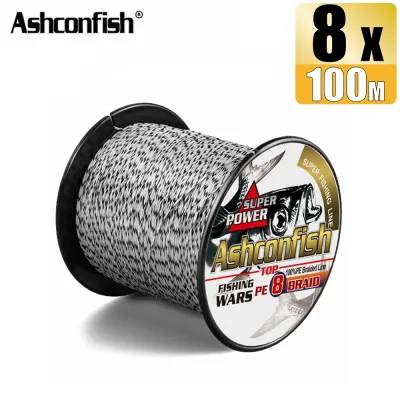
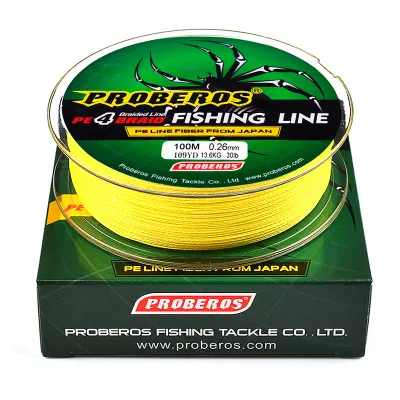
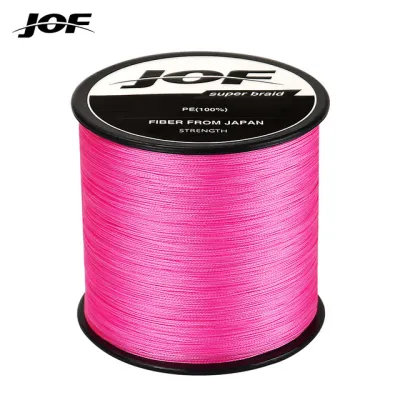
![[COD]100M 4 Strands Braided Fishing Line Super Strong PE Fishing Line Multifilament Braided Line](https://img.lazcdn.com/g/p/8dbdacca26bccd82e41c2f861d68deb8.jpg_400x400q80.jpg_.webp)
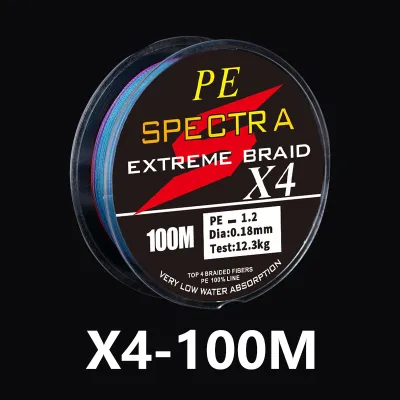
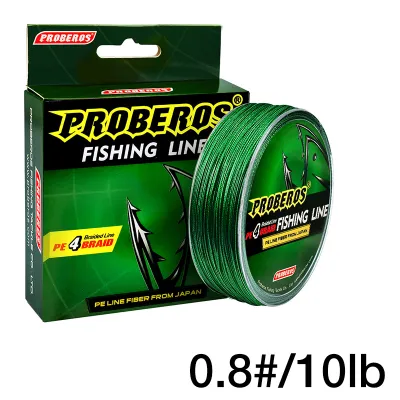
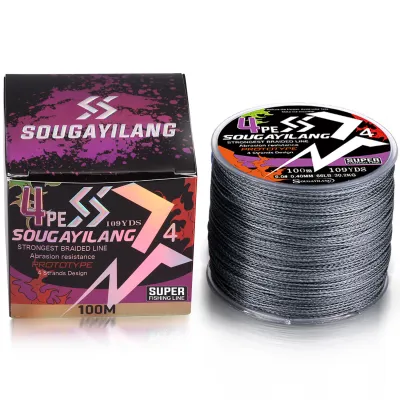
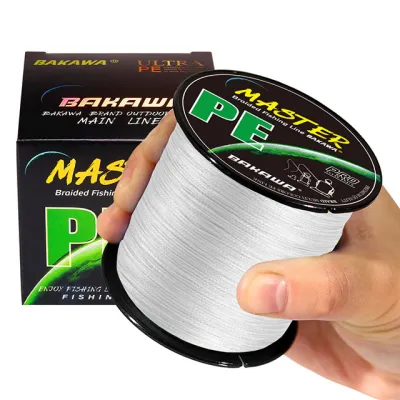
Prices are valid at publication and may change. Please refer to the product page for the latest price.
Visibility underwater is another critical performance factor. Monofilament is translucent and refracts light in a way that helps it blend into the water column, making it difficult for fish to detect. Braided line is opaque and highly visible, which can easily spook line-shy species in clear water. While colored braids help you track your line’s movement above water, they remain highly conspicuous below the surface.
When it comes to resisting physical damage, the two materials handle friction differently. Monofilament’s solid, uniform structure allows it to scrape against rough surfaces with only minor surface wear. Braided line consists of multiple woven strands; if even one or two of these micro-fibers are nicked by a sharp object, the structural integrity of the entire line is compromised, leading to sudden breakage under tension.
Saltwater vs. Freshwater: Matching Line to Philippine Environments
Fishing along coastal reefs, rocky drop-offs, and mangrove estuaries presents severe structural hazards. Sharp volcanic rocks, barnacle-encrusted pilings, and coral heads can slice through braided line instantly if it rubs against them under tension. However, the strong tidal currents common in deep saltwater channels require the thin diameter of braid to prevent the line from bowing. Anglers must balance these factors by matching their line to the specific structure they face.

In inland waters like Lake Taal, Caliraya, or marshy areas targeting haruan (mudfish) or dalag, the challenges shift. Submerged timber, thick water hyacinths, and heavy weeds are common. Braided line excels in heavy vegetation because its thin, strong profile acts like a saw, cutting through weed stems to pull fish out of dense cover. In clearer, open freshwater lakes, the high visibility of braid can be a disadvantage, making monofilament or a stealthy leader a better choice.
The intense tropical sun and high salinity of Philippine waters are highly destructive to fishing gear. Monofilament absorbs water and degrades rapidly when exposed to ultraviolet (UV) radiation, becoming brittle, weak, and prone to coiling over time. Braided line is highly resistant to UV rays and does not absorb water, allowing it to maintain its breaking strength much longer under the tropical sun.
To prevent losing a prized catch, establish a regular inspection routine. For monofilament, run your fingers along the last few meters of the line to feel for rough nicks, flat spots, or a dry, chalky texture. For braided line, look for fuzzy sections that indicate fraying, significant color fading, or soft spots where the weave has loosened. If any defects are found, cut back the damaged section immediately.
Target Species and Technique Considerations
Fast, hard-striking pelagic species like giant trevally (talakitok), barracuda, or Spanish mackerel (tanigue) have bony mouths that require a powerful, instant hookset. The zero-stretch nature of braided line ensures that the force of your rod sweep is transferred directly to the hook point. Conversely, soft-mouthed bottom feeders or species that make sudden, erratic runs close to the boat benefit from the stretch of monofilament, which prevents the hook from tearing out of the fish’s mouth.
Deep-water vertical jigging requires braided line to maintain direct contact with heavy jigs in deep currents. For surface trolling, monofilament is often preferred because its elasticity cushions the violent impact of a predatory fish striking a moving lure at high speed. Bottom bouncing over sandy or muddy flats allows the use of braid to feel the bottom composition, provided a leader is used to protect against occasional debris.
Monofilament slowly sinks, making it highly compatible with diving lures and mid-water presentations. Braided line tends to float or suspend on the surface due to its low density and water-repellent coatings. This buoyancy makes braid excellent for topwater frog fishing or popper casting, as it does not drag the nose of the lure downward, preserving its intended action.
To optimize your setup, you do not always have to choose one line over the other. Combining a braided main line with a monofilament or fluorocarbon leader offers the ultimate compromise. This hybrid configuration delivers the casting distance and sensitivity of braid, while the leader provides abrasion resistance near the hook and low visibility to keep from scaring the fish.
Handling, Knots, and Gear Compatibility
Spooling braided line requires high, consistent tension to ensure the wraps pack tightly onto the reel. If spooled loosely, the line can dig into itself under the pressure of a fighting fish, causing severe tangles or line breakage. Braid has virtually no memory, meaning it will not retain the shape of the spool. Monofilament is easier to spool but suffers from high memory, coiling tightly when cast if it has been sitting on the reel for a long time.
Because braided line is made of slick synthetic fibers, standard knots like the improved clinch knot will easily slip and untie under load. Anglers must learn specialized knots such as the Palomar knot for terminal tackle, or the FG knot and double Uni knot for joining braid to a leader. Monofilament is highly forgiving, holding basic knots securely due to the friction of the nylon material.
The abrasive texture of braided line, combined with the heat generated during long casts or fast runs, can damage low-quality rod guides. Ensure your fishing rod is equipped with ceramic, silicon carbide, or aluminum oxide guide inserts rated for braided line. Older or budget rods with simple metal guides can develop deep grooves over time, which will shred your line.
Watch for warning signs that your gear is not matched to your line. Frequent wind knots (loops of line catching on the guides during a cast) often indicate that a spinning reel is overfilled with braid or spooled too loosely. If you experience sudden line breakage near the rod tip, inspect the guides for microscopic cracks or grooves. Adjust your reel’s drag system to be lighter when using braid to compensate for the lack of line stretch.
Cost, Longevity, and Maintenance
Spooling a reel with high-quality braided line requires a higher initial investment in ₱ compared to monofilament. However, braid can easily last two to three years on a reel if properly maintained, and can even be “flipped” (spooling the worn outer line onto another reel so the unused inner line is now on top) to double its lifespan. Monofilament is highly affordable in ₱ per spool, but its susceptibility to environmental wear means it typically needs to be replaced every few months to ensure reliability.
Monofilament is highly vulnerable to chemical degradation from common outdoor products like sunscreens, insect repellents, and fuel oils, which can weaken the nylon structure. Braided line is chemically inert and highly resistant to these substances, making it far more durable in real-world fishing scenarios where hands are coated in sunblock or bait oils.
Inspect your line before every trip. Replace monofilament if it feels stiff, retains heavy coils, looks cloudy, or shows visible nicks. For braided line, look for a fuzzy texture along the working end, severe color loss, or a flat, limp feel. If the braid looks worn, you can often cut back the first ten to twenty meters to expose fresh, strong line underneath.
To maximize the lifespan of both line types, always rinse your reels thoroughly with gentle, fresh water after every saltwater outing to remove salt crystals. Store your gear in a cool, dry place away from direct sunlight, household chemicals, and electric motors (which produce ozone that degrades nylon).
Final Decision Framework: Which Line Should You Spool?
Choose braided fishing line if:
- You are fishing in deep water where current drag must be minimized.
- You require maximum casting distance and high sensitivity to feel subtle bites.
- You are fishing in heavy freshwater vegetation where you need to cut through weeds.
- You want a long-lasting line that resists tropical UV degradation.
Choose monofilament if:
- You are trolling or using techniques where line stretch prevents pulled hooks.
- You are fishing directly around sharp rocks, corals, or concrete structures without a leader.
- You are on a tight budget and want an affordable, easy-to-manage line.
- You are a beginner who wants to practice basic knot tying without slippage issues.
Verify first if:
- Check local tournament rules, as some competitions require specific line classes or prohibit braided lines.
- Verify with charter boat captains, as some deep-sea charters prefer all anglers to use monofilament to prevent tangled lines from cutting other gear.
- Check your rod and reel specifications to ensure they are rated for braided line use.
For the ultimate versatility on Philippine waters, consider rigging one rod with braided line (paired with a leader) for jigging and casting, and a second rod with monofilament for trolling or bait fishing.
Frequently Asked Questions (FAQ)
Does braided line scare fish in clear Philippine lakes?
Yes, braided line is opaque and highly visible in clear freshwater environments like Lake Caliraya or clear mountain streams. Fish can easily spot the dark thread in the water, which may cause them to refuse your bait or lure. To overcome this while still enjoying the casting benefits of braid, always tie a one-to-two-meter leader of clear monofilament or fluorocarbon to the end of your braided main line.
Should I always use a leader when fishing with braided line?
In almost all scenarios, using a leader with braided line is highly recommended. Braid lacks the abrasion resistance needed to survive contact with sharp rocks, corals, or fish teeth, and its zero-stretch property can cause hooks to pull out during sudden runs. A monofilament or fluorocarbon leader provides the necessary shock absorption, abrasion protection, and stealth, though you can tie braid directly when fishing in thick, soft freshwater weeds where visibility is low and cutting power is needed.

Community discussion
Share your experience or ask a question. Comments are reviewed before publication.