
The required waterproof rating for a diving flashlight depends entirely on your planned diving depth and specific underwater activity. While a basic IPX8 rating might suffice for shallow snorkeling, recreational scuba diving down to 30 or 40 meters requires a dedicated dive light with an explicit, manufacturer-certified depth rating. Understanding how these ratings translate from static laboratory tests to dynamic underwater environments is crucial to preventing equipment failure, housing implosion, and dangerous dark-out situations during a dive.
When exploring the vibrant marine life in tropical waters, having a reliable light source is essential for restoring the natural colors lost at depth. However, taking a standard flashlight underwater can lead to immediate flooding and permanent damage if the device cannot withstand the pressure. To choose the right flashlight for diving, you must match the manufacturer’s certified depth limit to your specific underwater activities, verify the integrity of the seals, and maintain the equipment properly against the corrosive effects of saltwater.
Decoding Waterproof Ratings: IPX8, ATM, and Meters
IPX8 is a common rating under the International Electrotechnical Commission (IEC) standard, indicating a device can withstand continuous submersion. However, IPX8 alone does not guarantee deep-dive safety. The rating simply means the device exceeded the IPX7 standard of submersion up to 1 meter for 30 minutes. To be useful for diving, the manufacturer must explicitly state the specific depth and time conditions, such as 100 meters for two hours.
Products mentioned in this guide
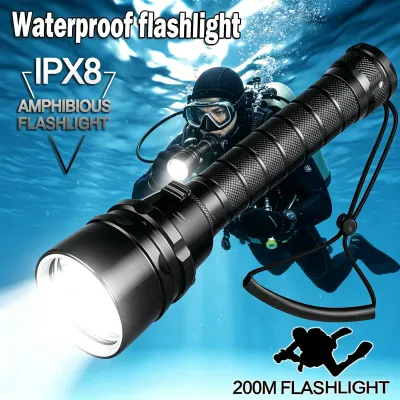
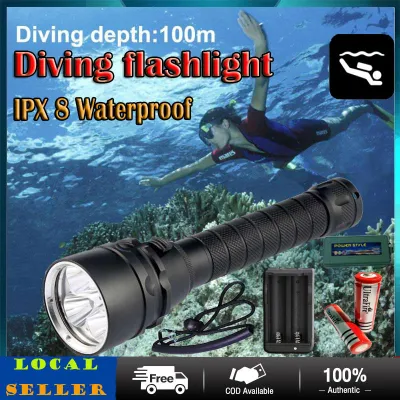
![[Buy 1 Take 1] LED Diving Flashlight IPX8 Waterproof 10000LM Long-distance Lighting USB Rechargeable Strong Light Flashlight Can Soak In Water For Daily Use Original Portable Flashlight](https://img.lazcdn.com/g/p/1757ac87fdbf0260660db90fbee0a847.jpg_400x400q80.jpg_.webp)
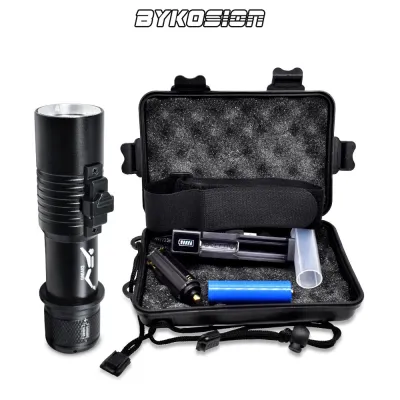
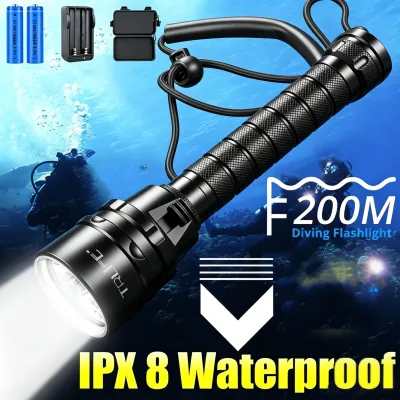
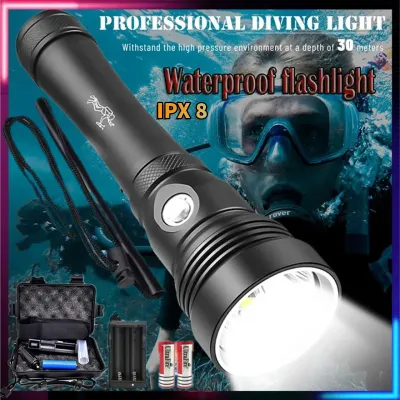
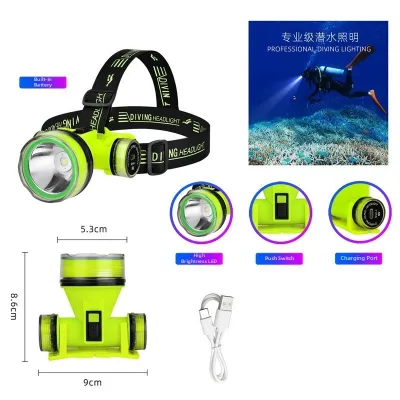
Prices are valid at publication and may change. Please refer to the product page for the latest price.
ATM, or atmospheres, measures pressure resistance relative to sea level. For every 10 meters of depth in water, the pressure increases by approximately one ATM. Therefore, a flashlight rated for 5 ATM is theoretically designed to withstand the static pressure at a depth of 50 meters.
However, these laboratory ratings are conducted under static conditions using fresh water. In real-world diving, dynamic pressure changes occur as you move the flashlight through the water or swim against currents. Saltwater is also denser than fresh water, slightly increasing the pressure exerted on the housing. Surface water resistance is fundamentally different from the structural pressure resistance required to prevent water from bypassing seals under deep submersion.
Matching Flashlight Specs to Your Diving Activity
For casual snorkeling and shallow freediving within the top 5 to 10 meters of water, a lightweight flashlight with a basic waterproof rating of 10 to 20 meters is generally sufficient. At these shallow depths, water pressure is relatively low, allowing standard double O-ring seals to prevent water ingress. You should still verify that the product is explicitly rated for submersion rather than just being splash-proof.

Recreational scuba diving typically reaches depths of up to 30 or 40 meters. For these activities, you must use a dedicated diving flashlight with a certified depth rating of at least 60 to 100 meters. This safety margin is necessary because dynamic movements, temperature fluctuations, and aging seals can reduce the effective pressure resistance. Dedicated dive lights feature thicker aluminum or polycarbonate bodies, heavy-duty tempered glass lenses, and robust rotary or magnetic switches.
Technical diving, wreck exploration, and deep cave diving require specialized equipment certified for depths exceeding 100 meters. At these extreme depths, equipment failure can be life-threatening. Technical divers rely on primary and backup lights with explicit deep-dive certifications, often featuring canister batteries and heavy-duty corded light heads. When selecting gear for these environments, consult the manufacturer directly to verify the testing protocols and ensure the housing can withstand extreme hydrostatic pressure.
Essential Pre-Dive and Underwater Safety Checks
Before every dive, inspect the flashlight’s sealing system. Unscrew the battery compartment and check the rubber O-rings for cracking, flattening, or dirt. Even a single strand of hair or a grain of sand can create a microscopic gap, allowing high-pressure water to flood the compartment during descent. Clean the O-rings and receiving grooves with a lint-free microfiber cloth.
Apply a thin layer of manufacturer-recommended silicone grease to the O-rings. This lubricant keeps the rubber supple, prevents friction tears when screwing the cap on, and helps the O-ring seat evenly. Avoid petroleum-based lubricants, which can degrade rubber or silicone seals. Ensure the battery compartment is locked securely without overtightening, which can deform the threads.
When underwater, avoid pressing physical push-buttons near the maximum rated depth, as pressure can compress the buttons and temporarily break the seal. Many diving lights use magnetic slide switches or rotary heads to eliminate this risk. If you notice internal fogging, moisture, or a sudden change in the beam pattern, water ingress has occurred. Immediately turn off the light if safe, switch to your backup, and begin a safe ascent.
Post-Dive Maintenance to Preserve Waterproofing
After completing your dive, rinse the flashlight thoroughly in clean, fresh water. Saltwater leaves behind tiny salt crystals that can scratch rubber O-rings and corrode metal threads. Submerge the light in a freshwater rinse tank for 10 to 15 minutes, operating the switches gently to flush out trapped salt or sand.
Dry the flashlight completely before opening the battery compartment. For long-term storage, remove the batteries to prevent damage from potential leaks. Slightly loosen the battery cap to relieve constant pressure on the rubber O-rings, helping them retain their elasticity.
Store the flashlight in a cool, dry place away from direct sunlight and extreme heat. High temperatures can rapidly degrade rubber O-rings and dry out silicone lubricants. Replacing the O-rings annually is a simple, cost-effective way to ensure long-term waterproofing.
Frequently Asked Questions (FAQ)
Can I use a standard IPX8 tactical flashlight for scuba diving?
No, you should not use a standard IPX8 tactical flashlight for scuba diving. While an IPX8 rating indicates that a flashlight can withstand continuous submersion, it is typically tested at shallow depths of only 1.5 to 2 meters for a limited duration. Tactical flashlights are designed to survive heavy rain, puddles, or brief drops into shallow water, but they lack the structural reinforcement, thick lenses, and specialized double or triple O-ring seals required to withstand the intense hydrostatic pressure of a scuba dive. Using a non-diving flashlight at depth will almost certainly result in immediate flooding, battery failure, or housing implosion.
Does saltwater degrade the waterproof rating over time?
Yes, saltwater can significantly degrade a flashlight’s waterproof capabilities if the device is not properly maintained. When saltwater dries, it forms hard salt crystals that can scratch the delicate rubber O-rings, corrode aluminum threads, and damage metal contacts. Over time, this corrosion and wear can compromise the integrity of the seals, leading to leaks even at shallow depths. To prevent this degradation, always rinse your diving flashlight thoroughly in fresh water after every ocean dive, dry it completely, and regularly inspect and lubricate the O-rings.

Community discussion
Share your experience or ask a question. Comments are reviewed before publication.