
Selecting the right portable camping shower tent in the Philippines requires balancing privacy, ventilation, and structural stability against unpredictable tropical weather. Whether you are pitching camp on a windy beach in Zambales, a humid forest in Laguna, or a cool ridge in Benguet, your outdoor enclosure must withstand sudden downpours and gusty winds while keeping you comfortable. The ideal utility tent serves as a private sanctuary for showering, changing, or housing a portable toilet, but its performance depends heavily on material specifications and structural design. By focusing on frame architecture, fabric coatings, ventilation layouts, and drainage systems, you can find a reliable shelter that matches your specific camping style.
Frame Stability and Anchoring for Varied Terrain
The structural integrity of a portable shower tent is its first line of defense against the elements. Unlike standard sleeping tents, shower tents have a tall, narrow profile with a high center of gravity, making them highly susceptible to catching the wind like a sail.
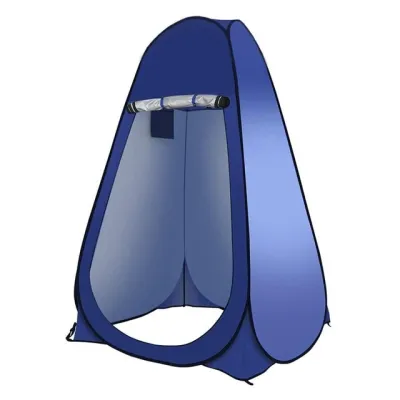
When evaluating frame designs, campers generally choose between instant pop-up fiberglass frames and manual aluminum pole assemblies. Pop-up frames utilize coiled steel or fiberglass bands integrated directly into the fabric, allowing the tent to spring into shape in seconds. While highly convenient, these flexible frames can buckle under strong coastal gusts or heavy rain accumulation, making them better suited for sheltered campsites or mild weather.
Products mentioned in this guide
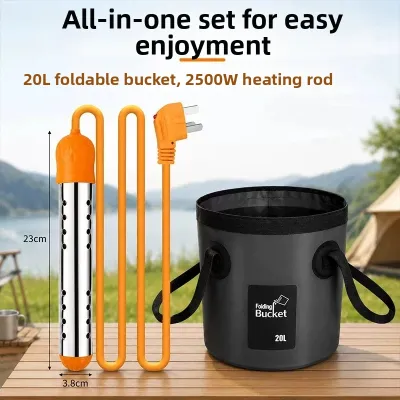
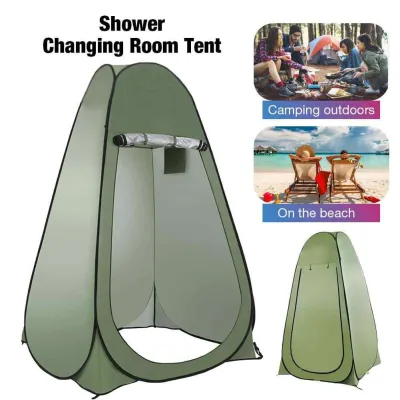
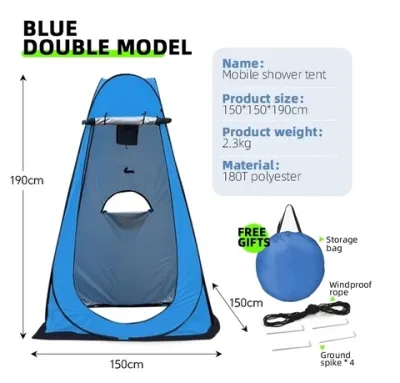
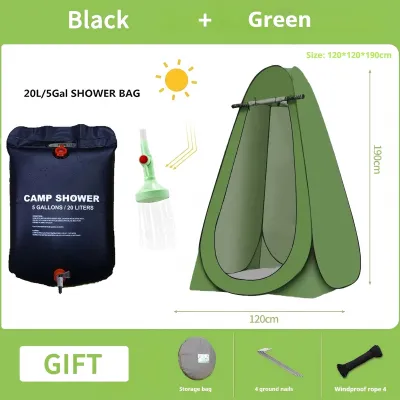
Prices are valid at publication and may change. Please refer to the product page for the latest price.
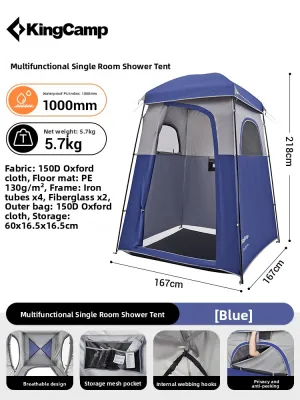
In contrast, manual assemblies using interlocking aluminum or heavy-duty fiberglass poles offer superior structural rigidity. These frames require manual threading through pole sleeves or attachment via plastic clips, which takes more time but creates a sturdy skeleton capable of resisting deformation. Aluminum poles are particularly valued for their high strength-to-weight ratio and resistance to rust, which is crucial when exposed to salty sea air and constant moisture.
Regardless of the frame type, robust anchoring points are non-negotiable for securing the tent on varied terrain. Look for models equipped with multiple guy-line attachment points positioned at the mid-section and upper corners of the tent body. These lines distribute wind forces evenly to the ground, preventing the tall structure from collapsing or shifting.
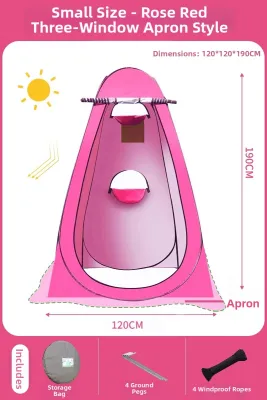
The base of the tent must feature heavy-duty stake loops made of reinforced webbing. Standard thin metal pegs often fail in soft coastal sand or loose volcanic soil; therefore, look for tents that accommodate wider, longer sand stakes or heavy-duty steel pegs for rocky ground.
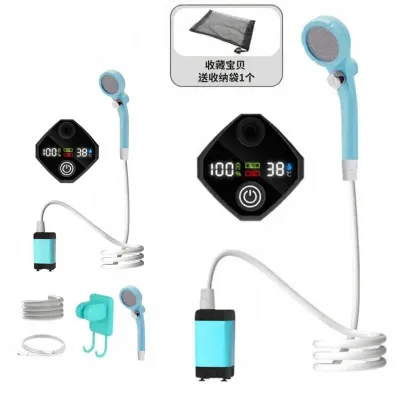
Furthermore, consider the base width and center-of-gravity design of the tent. A wider footprint naturally increases stability, but you must also evaluate how the frame handles internal loads. If you plan to hang a heavy solar shower bag—which can weigh 10 to 20 kilograms when full—the frame must be specifically rated to support suspended weight. Tents without dedicated, reinforced structural hooks for water bags will sag or tip over under the load. For models without this capacity, using an external tripod stand or placing the water source outside with a hose extension is a safer, more stable alternative.
Fabric Weather Resistance and Ventilation Balance
Tropical climates present a unique challenge: keeping heavy rain out while letting hot, humid air escape. When assessing the fabric of a portable shower tent, check the manufacturer’s specifications for the hydrostatic head rating, which is measured in millimeters (mm). A rating of 1,500mm to 3,000mm indicates that the fabric can withstand moderate to heavy tropical downpours without leaking. Ensure that the tent features fully taped seams, where a waterproof tape is heat-sealed over the stitching to prevent water droplets from seeping through the needle holes.

However, high waterproofing often comes at the cost of breathability. In the intense heat and humidity of the Philippines, a completely sealed polyester tent quickly turns into a stifling sauna. To prevent this, look for tents designed with strategic ventilation systems. Mesh roof panels are highly effective because they allow rising heat and steam to escape freely. These mesh panels should be protected by a removable rainfly that can be secured during sudden showers, allowing ventilation to continue even when it rains.
High-placed privacy windows or zippered mesh vents on the sides of the tent further encourage cross-ventilation. These openings should be positioned high enough to maintain visual privacy from the outside while still facilitating airflow.
Sun protection is another critical factor for daytime comfort. Look for fabrics treated with a Silver Coating or a verified Ultraviolet Protection Factor (UPF) rating of 50+. This reflective interior coating serves a dual purpose: it blocks harmful UV rays to keep the interior cooler during the day, and it prevents shadows from being projected onto the tent walls at night when a flashlight is used inside. Without a proper opaque or reflective coating, a backlit tent can inadvertently compromise your privacy by casting a clear silhouette to onlookers outside.
Interior Space, Privacy, and Convenience Features
A functional shower tent must provide enough physical space for comfortable movement. When reviewing dimensions, match the peak height of the tent to the tallest member of your camping group. A peak height of at least 190 to 200 centimeters allows most users to stand fully upright without bending, which is essential when washing hair or changing clothes. The floor footprint should also be spacious enough—ideally at least 120 by 120 centimeters—to allow you to bend over, reach for toiletries, and dress without constantly brushing against wet tent walls.
Privacy is paramount when using a utility tent in crowded public campsites or popular beach destinations. To guarantee true visual privacy, inspect the density of the fabric. Heavy-duty polyester (such as 190T or 210D oxford fabric) offers excellent opacity. You can verify this by holding the fabric up to a bright light source or checking product specifications for double-layer construction in critical areas. Zipper quality also plays a role in privacy; robust, dual-sided zippers allow you to lock the door securely from the inside and prevent accidental openings.
The interior layout should feature practical convenience elements that keep your gear dry and organized. Look for integrated towel racks or heavy-duty hooks positioned away from the direct spray of water. Mesh storage pockets are incredibly useful for keeping soap, shampoo, and personal items off the wet ground.
Additionally, look for tents with built-in straps or clips near the bottom edges. These straps can be used to secure a removable floor mat or to pin down the lower edges of the tent, preventing wind from lifting the fabric and exposing the interior.
Portability, Setup Speed, and Floor Drainage
How you transport and maintain your shower tent depends heavily on its packed size, weight, and drainage mechanism. For car camping trips where space is less of an issue, a slightly heavier, sturdier tent with a manual pole assembly is highly practical. However, if you are backpacking or have limited trunk space, look for lightweight models that pack down into a compact, circular carry bag (for pop-up designs) or a slim, rectangular duffel (for pole designs). Check the quality of the carry bag, ensuring it features durable zippers and reinforced handles to withstand frequent transport.
Setup speed is another trade-off to consider. Instant pop-up tents can be deployed in under a minute, making them excellent for quick stops or changing clothes on the go. However, if a steel band inside a pop-up tent snaps or warps, the entire unit often becomes unusable. Traditional manual pole setups take five to ten minutes to assemble but offer the advantage of easy repairability; if a fiberglass or aluminum pole cracks, it can often be taped, splinted, or replaced individually without discarding the tent body.
Managing wastewater is a critical operational detail. Floorless designs are highly popular because they allow water to drain directly into the ground, preventing pooling. However, this can lead to muddy conditions underfoot. To solve this, look for tents that feature a removable floor mat made of heavy-duty mesh or slatted plastic. This design allows water to drain freely through the gaps while keeping your feet clean and elevated above the mud. If you use a fully enclosed floor, ensure it has dedicated corner drain mesh panels to prevent water from pooling inside the tent.
Pre-Purchase Evaluation Checklist
Before finalizing your purchase on an online marketplace or at a local outdoor retailer, run through a structured evaluation to ensure the tent meets your specific needs. First, align the tent’s capacity and packed dimensions with your typical trip duration and transport method. A bulky pop-up tent might be difficult to pack if you travel by motorcycle or in a compact hatchback.
Second, cross-reference all waterproofing, UV protection, and frame material claims with the manufacturer’s official specification sheets. Avoid relying solely on vague marketing terms like “heavy-duty” or “fully waterproof.” Instead, look for concrete specifications such as “210D PU 2000mm” or “UPF 50+” to verify the material’s actual capabilities.
Finally, allocate your budget wisely. In the Philippines, high humidity and sudden weather shifts mean that durability and ventilation are worth prioritizing. It is wiser to invest your ₱1,500 to ₱4,000 budget in a tent with a sturdy frame, taped seams, and excellent ventilation rather than spending extra on aesthetic add-ons or complex multi-room designs that add weight and setup difficulty without improving basic functionality.
Frequently Asked Questions (FAQ)
Can a shower tent double as a portable toilet enclosure?
Yes, a portable camping shower tent can easily double as a toilet enclosure, provided you manage ventilation and hygiene carefully. When using the tent for a portable toilet, ensure all ventilation ports and windows are fully open to maintain continuous airflow and prevent odor buildup. It is highly recommended to use a separate, sealed waste management system, such as a dedicated chemical toilet or a dry bucket toilet with biodegradable bags and sawdust. If you plan to switch between showering and toilet functions during the same camping trip, always clean the interior thoroughly and use a separate, dedicated floor mat to maintain sanitary conditions.
How do I prevent mold and mildew after camping trips?
Preventing mold and mildew is essential for extending the lifespan of your tent, especially in the highly humid climate of the Philippines. After every camping trip, never store your tent while it is still damp or wet. Once you return home, pitch the tent in a shaded, well-ventilated outdoor area and allow it to air-dry completely before packing it back into its carry bag. If you notice dirt or mud on the fabric, clean it gently using a soft sponge, lukewarm water, and a mild, non-detergent soap. Avoid harsh chemical cleaners or scrubbing brushes, as these can strip away the waterproof polyurethane and UV-resistant coatings. Store the dry tent in a cool, dry place away from direct sunlight.

Community discussion
Share your experience or ask a question. Comments are reviewed before publication.