
Practicing basketball drills indoors in the Philippines presents a unique set of challenges, especially when trying to maintain a consistent training routine without disturbing others. The sharp, repetitive thud of a standard leather or rubber basketball bouncing on tiled, concrete, or wooden floors can easily echo through a home or travel through the walls of a close-quarters condominium or apartment. This acoustic disruption often forces players to limit their practice to outdoor courts, which may not always be accessible due to unpredictable tropical weather, heavy rains, or extreme afternoon heat.
To address this issue, silent basketballs have emerged as a popular alternative for indoor ball-handling and dribbling practice. These specialized training balls are designed to significantly reduce the impact noise of each bounce, allowing players to work on their skills at any hour of the day. However, it is important to understand that “silent” is a relative term; these balls are engineered for low-noise or noise-dampening performance rather than absolute silence. Selecting the right ball requires a clear understanding of material technologies, indoor acoustics, and how different options affect your training mechanics.
Understanding Silent Basketball Technology
To appreciate how a silent basketball functions, it helps to compare it to a standard regulation basketball. A traditional basketball relies on a pressurized rubber bladder wrapped in nylon threads and covered with a leather or synthetic composite skin. When you dribble a standard ball, the compressed air inside acts like a highly efficient spring, storing and releasing kinetic energy. This rapid compression and expansion of air, combined with the hard outer shell hitting the floor, creates a loud acoustic shockwave. This sound is divided into two types: airborne noise, which is the high-pitched “slap” of your hand hitting the ball and the ball hitting the floor, and structure-borne noise, which is the low-frequency vibration that travels through the floorboards and walls of a building.
Products mentioned in this guide
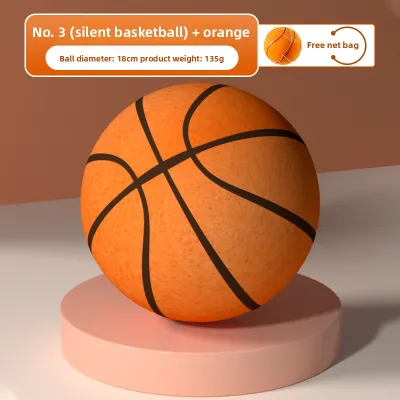
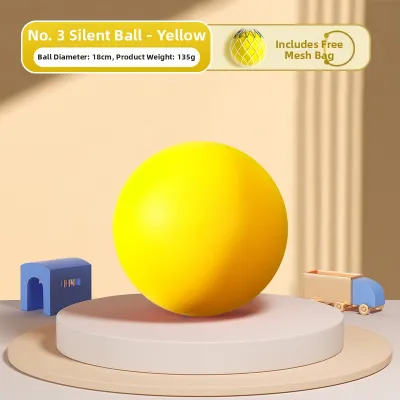
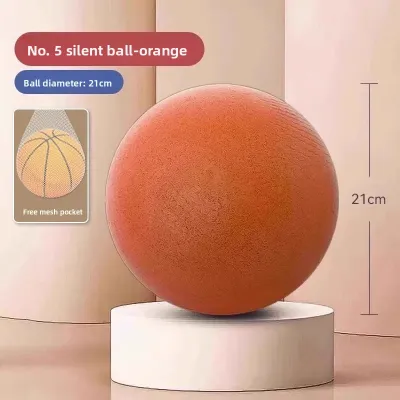

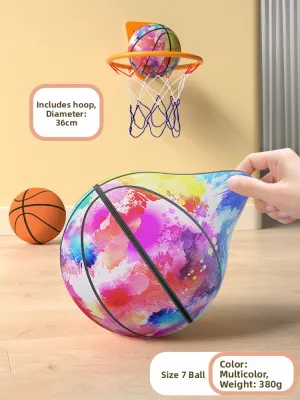
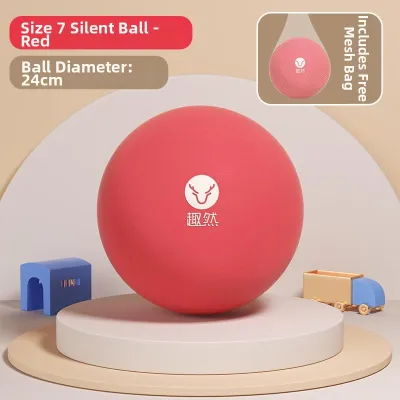
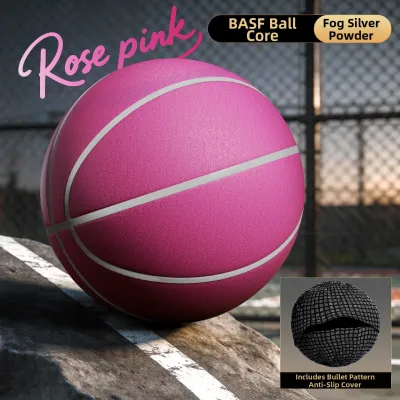
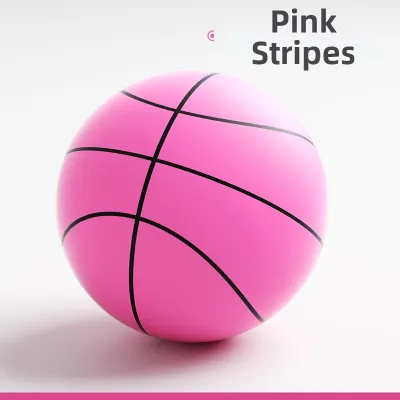
Prices are valid at publication and may change. Please refer to the product page for the latest price.
Silent basketballs eliminate the pressurized air bladder entirely. Instead, they utilize advanced material science to absorb and dissipate the kinetic energy of each bounce before it can convert into loud sound waves. The most common design relies on a highly porous, high-density foam structure, often made from specialized polyurethane. This foam contains millions of microscopic air pockets or cells. When the ball impacts the floor, these tiny cells compress individually, trapping the air and slowing down the rate of impact. This process dampens the sharp acoustic pop, converting the energy into minimal, low-frequency sound that does not carry as far.
Other designs use micro-cellular rubber or specialized composite materials that feature a semi-hollow or structured core. These balls maintain a more traditional outer skin while using internal geometric patterns or air channels to absorb sound. While these composite options offer a more realistic feel, they do not absorb as much sound as pure foam models.
This technological difference introduces an inherent trade-off between noise reduction and authentic performance. Because silent basketballs absorb energy to reduce sound, they naturally have less rebound elasticity than a pressurized ball. This means you must adjust your dribbling force, and the ball will not feel identical to a regulation leather basketball. Understanding this compromise is essential for setting realistic expectations for your indoor training sessions.
Key Selection Criteria for Indoor Use
When searching for a silent basketball suitable for Philippine homes, several critical factors must be evaluated to ensure the ball meets your training needs without causing structural damage or household frustration.

First, consider the noise dampening level in relation to your specific flooring. Many homes in the Philippines feature ceramic tile, polished concrete, or terrazzo floors. These hard, dense surfaces are highly reflective acoustically, meaning they amplify high-pitched sounds and do not absorb any impact energy. If you are practicing on tiles, you will need a ball with maximum sound absorption, such as a high-density polyurethane foam model. If your home has wooden parquet, laminate, or vinyl flooring, these surfaces have slightly more give but can act like a drum membrane, transmitting low-frequency vibrations to the rooms below. In multi-story homes or apartments, mitigating these low-frequency thuds is often more important than reducing the high-pitched slap of the ball.
Second, evaluate the rebound and grip characteristics of the ball. A silent basketball must bounce consistently to be useful for ball-handling drills. If the ball flatlines or bounces at unpredictable angles, it can ruin your dribbling mechanics and lead to poor habits. Grip is equally important, especially in the tropical climate of the Philippines, where high humidity and hand sweat can quickly make smooth surfaces slippery. Look for balls that feature molded pebbles or textured surfaces that mimic the grain of a standard basketball, as this helps maintain control even when your hands are damp.
Third, pay close attention to the weight and size specifications. To preserve your muscle memory, the training ball should closely match the dimensions of the ball you use in actual games. Standard basketball sizes include Size 7 (standard for men’s high school, collegiate, and professional play, measuring approximately 29.5 inches in circumference) and Size 6 (standard for women’s play and youth divisions, measuring approximately 28.5 inches). Many cheap foam balls are significantly lighter than the standard 600 to 650 grams of a regulation Size 7 ball. Dribbling an underweight ball can alter your hand speed and timing, so verify the weight specifications before purchasing.
Finally, assess the durability of the material. Indoor floors are generally smooth, but they can still accumulate dust, pet hair, and fine grit. Soft, low-density foam can act like a sponge, trapping dirt and gradually wearing down or tearing along the seams. A durable silent basketball should have a resilient outer skin or a high-density composition that resists abrasion and does not shed foam particles over time.
Comparing Common Silent Basketball Materials
To make an informed decision, it is helpful to compare the primary material compositions used in the manufacturing of silent basketballs. Each material offers a distinct balance of quietness, bounce realism, and longevity.
High-density polyurethane (PU) foam is the most common material for maximum noise reduction. These balls are manufactured using an injection-molding process that creates a solid structure filled with microscopic air cells. The primary advantage of high-density foam is its exceptional sound-dampening capability; it is by far the quietest option available, making it ideal for late-night practice or small apartment living. However, the trade-off is a less realistic bounce. The ball can feel somewhat spongy, and it lacks the crisp, responsive rebound of a pressurized leather ball. Additionally, in highly humid environments, open-cell polyurethane foam can absorb moisture from the air or sweat from your hands, which can temporarily increase its weight and reduce its bounce height.
Micro-cellular rubber and specialized composites represent the mid-range of the market. These balls are constructed with a denser, closed-cell rubber matrix or a synthetic composite cover over a structured core. The closed-cell structure prevents moisture absorption, making them highly durable and easy to clean in tropical climates. They offer a much more realistic bounce and weight, allowing for faster, more intense dribbling drills that closely mimic real game conditions. The downside is that they are noticeably louder than pure foam balls. The impact on hard floors produces a distinct, low-frequency thud that can easily travel through concrete walls and floors.
Hollow-core structured balls are a newer innovation that attempts to bridge the gap between foam and rubber. These balls feature a hollow center surrounded by a thick, flexible lattice or a series of internal air chambers. When the ball is dribbled, the air inside shifts through designed vents, absorbing the sound of the impact while allowing the outer shell to deform and snap back quickly. This structure provides a highly consistent bounce and a realistic grip, but the complex design can make them more expensive and potentially less durable if subjected to heavy compression, such as being stepped on or crushed under heavy objects.
| Material Type | Noise Reduction Level | Bounce Realism | Best Use Case | Durability |
|---|---|---|---|---|
| High-Density Polyurethane Foam | High (Very Quiet) | Low to Moderate | Small apartments, late-night practice, young children | Moderate (Prone to tearing on rough surfaces) |
| Micro-Cellular Rubber | Moderate | High | Serious ball-handling drills, spacious indoor areas | High (Resists wear and moisture) |
| Specialized Composite | Moderate to High | Moderate to High | Multi-purpose indoor training, intermediate players | High (Good balance of grip and structure) |
Practical Limitations and Indoor Environment Checks
Before you begin practicing with a silent basketball, it is crucial to conduct a thorough assessment of your indoor environment to ensure safety and prevent damage to your home or relationships with neighbors.
Start by checking your floor type compatibility. While silent basketballs are designed to be gentle on surfaces, some materials can still leave scuff marks on polished hardwood, laminate, or light-colored vinyl floors. Always test the ball in an inconspicuous corner of the room first. If you are practicing on ceramic tiles, be aware that while the ball itself is quiet, the impact can still cause loose tiles to crack over time if they were not installed with proper adhesive coverage.
Next, evaluate your physical space constraints. Typical Philippine homes, particularly in urban areas, may have compact living rooms or bedrooms with lower ceilings. Ensure you have a clear practice area free of breakable items such as glass cabinets, picture frames, televisions, or standing electric fans. Be especially mindful of ceiling fans, which are common in tropical households; practicing high dribbles or toss drills near an active ceiling fan poses a significant safety risk to both you and the appliance.
Neighbor and household considerations are equally important. If you live in a multi-story townhouse or a condominium, the low-frequency vibrations from dribbling can travel downward through the concrete slab, sounding like a heavy hammer to the neighbors living below you. To mitigate this, consider practicing on a ground floor, or place a high-density foam exercise mat or interlocking gym tiles over your practice area. This adds an extra layer of vibration isolation, keeping your training sessions respectful of those around you.
Finally, know when to stop. If your building administration has strict quiet hours, or if family members are sleeping, working, or studying nearby, even the quietest foam ball can still be a distraction. Equipment cannot replace common sense and mutual respect; if the vibration is still noticeable through walls, it is best to pause your practice or move to an outdoor space when conditions permit.
Building Your Shortlist: What to Look For When Shopping
When you are ready to purchase a silent basketball from an online marketplace or a specialized sports store, you should use a structured framework to filter your options rather than relying on unverified brand claims.
If your primary goal is absolute noise reduction because you live in a small apartment with thin walls, you should prioritize high-density polyurethane foam balls. Look for product descriptions that specify “micro-pore technology” or “solid foam construction.” These balls are lightweight and absorb the maximum amount of impact energy, making them the safest choice for minimizing household disturbance.
If you are a serious player looking to maintain your dribbling speed, crossover mechanics, and hand strength, you should prioritize micro-cellular rubber or specialized composite balls. Look for options that explicitly state they match standard Size 7 dimensions and weight distributions. These balls will provide the responsive bounce necessary for advanced drills, though you may need to pair them with a dampening mat to control the low-frequency vibrations on hard floors.
Use this verification checklist when browsing online listings:
- Read customer reviews specifically filtering for terms like "bounce height," "noise level," and "floor type." Pay attention to feedback from buyers who mention using the ball on tiles or wooden floors.
- Check the seller's return policy. Because bounce feel is highly subjective, having the option to return or exchange the ball if it does not meet your training expectations is highly valuable.
- Verify the official status of the seller or brand store to ensure you are receiving a genuine product made from non-toxic, high-density materials rather than a cheap, low-quality imitation that may emit strong chemical odors or degrade rapidly.
In terms of price-to-value expectations, budget-friendly silent basketballs typically range from ₱300 to ₱800. These are usually basic, solid foam balls that offer excellent noise reduction but limited bounce realism. Mid-range to premium options, ranging from ₱1,200 to ₱2,500 or more, often feature advanced composite covers, textured grips, and engineered hollow cores that provide a much closer approximation of a regulation basketball’s performance. Investing in a higher-quality ball is generally justified if you plan to use it daily for intensive skill development.
Frequently Asked Questions (FAQ)
Can I use a silent basketball outdoors?
No, silent basketballs are designed strictly for indoor use. The soft, porous materials that make these balls quiet—such as polyurethane foam or micro-cellular rubber—are highly susceptible to damage from rough outdoor surfaces like concrete, asphalt, or dirt. Dribbling a silent ball outdoors will quickly abrade the surface, tear the foam, and clog the microscopic pores with dirt, which permanently ruins both the grip and the bounce. Additionally, exposure to outdoor moisture and rough debris can cause rapid material degradation, and using the ball outdoors will typically void any manufacturer warranties.
Do silent basketballs require special maintenance or cleaning?
Yes, because of their porous nature, silent basketballs easily attract dust, pet hair, and sweat from your hands. To maintain the grip and structural integrity of the ball, wipe it down after each practice session with a damp, lint-free microfiber cloth. Avoid using harsh chemical cleaners, bleach, or alcohol-based sanitizers, as these substances can break down the polymer chains in the foam or rubber, causing the ball to become brittle, sticky, or misshapen. Never submerge a foam ball in water, as it can absorb moisture like a sponge, leading to internal mold growth and a permanently ruined bounce. Store the ball in a cool, dry place away from direct sunlight to protect it from the high heat and humidity of the tropical climate.
Will a silent basketball help me improve my shooting form?
While a silent basketball is an excellent tool for developing hand-eye coordination, finger strength, and dribbling rhythm, it is not recommended for shooting practice. The weight distribution, surface friction, and aerodynamic properties of a silent ball differ significantly from a regulation leather basketball. Practicing shots with a silent ball can negatively affect your shooting muscle memory, as the ball will not roll off your fingers or interact with the rim and backboard in a realistic manner. For the best results, use your silent basketball exclusively for ball-handling, crossovers, and stationary dribbling drills, and save your shooting practice for a standard ball on an outdoor or indoor court.

Community discussion
Share your experience or ask a question. Comments are reviewed before publication.