
Selecting the right tactical carry hydration vest for trail running in the Philippines requires balancing rugged durability with extreme breathability. Unlike standard road running singlets, trail running in tropical environments demands gear that can withstand abrasive vegetation, carry essential safety equipment, and manage high-volume hydration without bouncing. A tactical carry hydration vest offers modular storage and heavy-duty materials, but choosing the wrong model can lead to severe chafing, heat exhaustion, or premature gear failure.
To make an informed decision, you must evaluate how a vest performs under intense humidity, how it distributes weight on steep mountain ascents, and whether its tactical features serve a practical purpose on the trail. This guide provides a comprehensive framework to help you assess your environmental needs, analyze key design features, and select a vest profile tailored to your specific running style.
Assessing Trail and Climate Demands in the Philippines
Trail running in the Philippines presents a unique set of environmental challenges that directly impact your gear requirements. The combination of high relative humidity, steep elevation profiles, and unpredictable weather means your hydration vest must perform multiple roles simultaneously. It must act as a cooling layer, a stable load carrier, and a protective shield for your gear.
Products mentioned in this guide
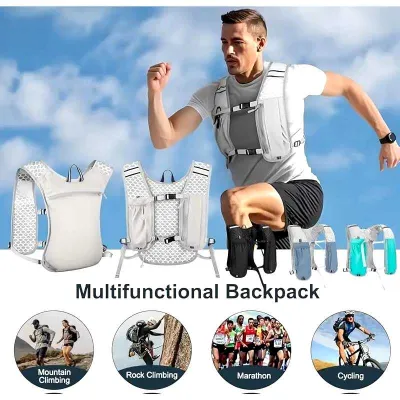
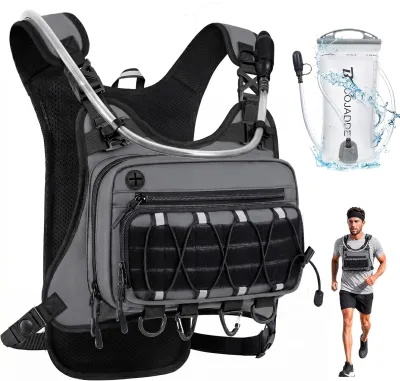
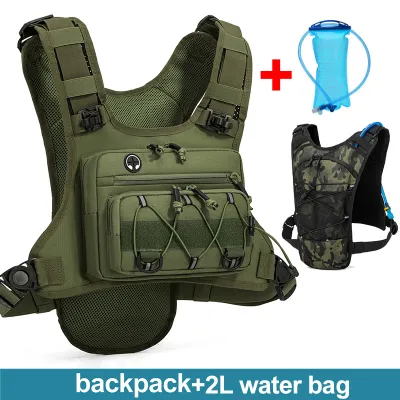
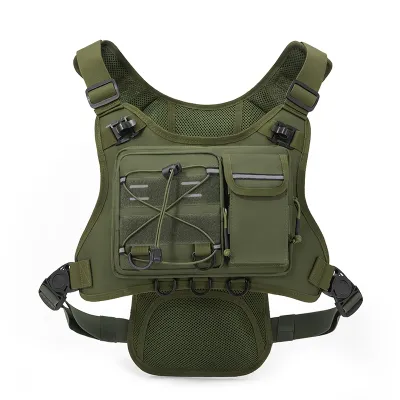
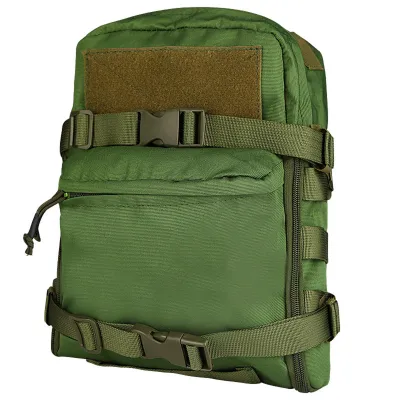
Prices are valid at publication and may change. Please refer to the product page for the latest price.
The diverse terrain of local trails—ranging from the clay-heavy mud of Mt. Makiling to the sharp, abrasive limestone of Mt. Pamitinan and the volcanic scree of Mt. Mariveles—demands highly durable fabrics. Standard lightweight running vests often snag and tear when brushing against thorny rattan, wild bamboo, or sharp rock faces. A tactical carry vest utilizing ripstop nylon or high-denier polyester provides the necessary abrasion resistance to survive these rugged environments. However, this durability must not come at the cost of weight; a heavy vest will absorb water and sweat, significantly increasing your energy expenditure on steep climbs.
Weather patterns in the Philippines are notoriously volatile. A clear, sunny morning can quickly transition into a torrential downpour, especially during the monsoon season or when tropical depressions approach. Your vest must be capable of carrying wet-weather gear, such as a lightweight waterproof jacket, while keeping your electronics and dry layers protected. Furthermore, the intense tropical heat accelerates fluid loss, making efficient hydration storage a critical safety factor.
When planning your hydration and nutrition capacity, consider the distance of your runs and the spacing of local aid stations. In many Philippine trail races or self-supported weekend runs, aid stations can be spaced 10 to 15 kilometers apart, often requiring hours of technical climbing to reach. For these conditions, a vest must accommodate at least 1.5 to 2 liters of fluid—either through dual front soft flasks, a rear hydration bladder, or a combination of both—alongside high-calorie trail snacks, salt tablets, and emergency first-aid supplies.
It is vital to remember that even the most advanced tactical hydration vest cannot replace proper training, heat acclimatization, and sound trail judgment. Before embarking on remote trails, ensure you have trained to handle the elevation and have planned your route thoroughly. If you experience early signs of heat exhaustion—such as dizziness, nausea, or a cessation of sweating—you must stop running immediately, seek shade, sip water, and utilize your emergency gear. Equipment is merely a tool to support your physical preparation and decision-making.
Evaluating Tactical Features and Storage Capacity
Tactical hydration vests are distinguished by their modularity and rugged construction, but not all tactical features are beneficial for high-intensity trail running. The key is to identify features that enhance your self-sufficiency without adding unnecessary bulk or creating friction points against your body.

Modular Lightweight Load-carrying Equipment (MOLLE) or PALS webbing is a hallmark of tactical gear. On a running vest, lightweight laser-cut MOLLE webbing allows you to attach external pouches, knife sheaths, or emergency beacons. However, you must use these attachments selectively. Heavy pouches attached to the exterior of a vest can create a pendulum effect, causing the vest to bounce and chafe during fast descents. Limit external attachments to lightweight, essential items, and ensure they are mounted tightly against the vest’s main body to minimize movement.
Storage configuration is another critical factor. A well-designed tactical running vest balances front and rear storage to distribute weight evenly across your torso. Front pockets should provide quick, bounce-free access to soft flasks, energy gels, salt capsules, and navigation tools like a smartphone or GPS unit. Rear storage should be reserved for heavier, less frequently accessed items, such as a hydration bladder, a spare headlamp, a lightweight windbreaker, and a basic survival kit.
Effective compartmentalization is essential for protecting your gear from both external rain and internal sweat. Look for vests that feature dedicated water-resistant compartments or internal dry sleeves. In the tropical heat, your body will produce significant amounts of sweat, which can easily saturate the back panel of your vest and damage unprotected electronics. Separating your wet gear, such as a damp rain jacket, from your dry layers and electronics is crucial for maintaining comfort and safety throughout your run.
Prioritizing Fit, Comfort, and Heat Management
No matter how durable or feature-rich a tactical vest is, it will quickly become a liability if it does not fit correctly or fails to manage heat effectively. In high-humidity environments, minor fit issues can escalate into painful chafing within a few kilometers.
The harness and strap system of the vest must distribute weight evenly across your shoulders, chest, and upper back. Look for wide, ergonomic shoulder straps that prevent the load from digging into your collarbones during steep ascents. Adjustable sternum straps—ideally dual elastic cords with quick-release buckles—allow you to customize the tension across your chest. This flexibility is vital, as your chest expands and contracts as you breathe heavily on steep climbs; a rigid strap system can restrict your breathing and accelerate fatigue.
Heat management is perhaps the most critical comfort factor in the Philippines. Traditional tactical vests made of solid, heavy fabrics will trap body heat, rapidly increasing your core temperature and risk of heat exhaustion. To prevent this, prioritize vests that utilize open-mesh back panels and highly breathable, moisture-wicking fabrics on all contact points. These materials facilitate airflow and encourage sweat evaporation, helping to regulate your body temperature even when running in 90% humidity.
Before purchasing a vest, establish a precise sizing protocol. Measure your chest circumference at the widest part of your lungs while wearing the typical apparel you plan to run in. When trying on a vest, load it with full water flasks and gear to simulate actual trail conditions. Check for any restricted range of motion in your arms and shoulders, and inspect the underarm areas for potential friction points. The vest should fit snugly like a second skin, moving with your body rather than shifting independently.
Building a Conditional Shortlist by Running Profile
Because trail runners have diverse goals and preferences, no single tactical hydration vest is universally perfect. To help you narrow down your options on sporting goods platforms or online marketplaces, match your running style to one of the following three functional profiles.
- Profile A: The Fast-and-Light Runner. If your primary focus is short to medium-distance trail runs (under 21 kilometers) or fast-packing on well-marked trails, prioritize a minimalist vest. This profile emphasizes front-only hydration storage (dual 500ml soft flasks), highly breathable mesh construction, and a streamlined silhouette. It should feature just enough rear storage for a lightweight windbreaker and basic emergency items, keeping overall weight to an absolute minimum.
- Profile B: The Ultra-Distance Explorer. For runners tackling ultra-marathons (50 kilometers to 100 kilometers or more) or multi-day self-supported adventures, maximum storage and modularity are essential. This profile requires a vest with a large rear compartment compatible with a 2-liter hydration bladder, multiple front pockets for nutrition, and external laser-cut MOLLE webbing for attaching modular gear or trekking poles. Durability and load distribution are paramount for this profile to prevent shoulder fatigue over long hours on the trail.
- Profile C: The Technical Scrambler. If you enjoy navigating highly technical terrain, off-trail ridges, and steep, rocky descents, your primary need is absolute stability and high abrasion resistance. This profile demands a vest constructed from heavy-duty ripstop fabrics with a secure, multi-point adjustment system that completely eliminates bounce. The storage should be highly compressed and sit high on the back to keep your center of gravity stable during dynamic movements.
Use the following checklist to evaluate and filter candidate vests based on your selected profile:
- [ ] Does the fabric offer a suitable balance of abrasion resistance and breathability for your profile?
- [ ] Are the front pockets deep enough to secure your preferred style of soft flasks?
- [ ] Does the vest feature adjustable sternum straps that accommodate deep breathing?
- [ ] Is there a dedicated, sweat-resistant compartment for protecting your phone and car keys?
- [ ] Can the rear compartment accommodate the specific size of your hydration bladder?
Pre-Purchase Verification and Post-Run Care
Once you have identified a potential tactical hydration vest, performing a thorough pre-purchase verification and establishing a strict post-run maintenance routine will ensure your gear performs reliably and lasts for years.
Before finalizing your purchase, verify the manufacturer’s specifications regarding hydration compatibility. Not all vests support every brand of hydration bladder or soft flask. Check the dimensions of the rear bladder compartment and confirm the routing options for the hydration hose—some runners prefer over-the-shoulder routing, while others prefer under-the-arm routing. Additionally, inspect the front pocket dimensions to ensure they can accommodate your existing soft flasks without requiring excessive force to insert or remove.
Upon receiving your vest, conduct a meticulous physical inspection. Examine the stitching quality along high-stress areas, such as the shoulder strap connections and pocket seams. Ensure that all zippers operate smoothly without catching on the surrounding fabric, and verify that the plastic buckles and adjustment hardware feel robust and secure. Any loose threads or flimsy hardware can quickly fail under the strain of trail running.
In the hot, humid climate of the Philippines, proper post-run care is essential to prevent the growth of mold, mildew, and unpleasant odors. After every run, empty all pockets and rinse the vest thoroughly in cool, clean water to remove accumulated salt from your sweat. Hand wash the vest using a mild, non-detergent soap, paying close attention to the contact panels and straps. Avoid using fabric softeners or bleach, as these can degrade the technical fibers and elastic components. Hang the vest to dry in a well-ventilated indoor space or a shaded outdoor area; avoid exposing it to direct, intense tropical sunlight, which can weaken the synthetic materials and cause elastic straps to lose their tension over time.
Frequently Asked Questions (FAQ)
Can I use a standard military tactical vest for trail running?
While standard military tactical vests offer excellent durability and modularity, they are generally unsuitable for trail running. Military vests are constructed from heavy, thick materials designed to carry heavy loads or body armor plates, which severely restricts breathability and traps body heat. This lack of ventilation can quickly lead to overheating in tropical climates. Furthermore, military vests lack the ergonomic, body-hugging fit of running-specific gear, resulting in excessive bouncing, friction, and painful chafing over long distances.
How do I prevent soft flasks from bouncing in tactical pouches?
To minimize soft flask bounce, ensure that you expel all excess air from the flasks after filling them; as you drink, continue to squeeze out any air pockets to keep the fluid compressed. Utilize the vest’s integrated bungee cord locks or elastic loops to secure the necks of the flasks tightly against the front harness. Additionally, adjust the vest’s sternum straps to ensure the front panels sit snugly against your chest, preventing the flasks from moving independently as you run.

Community discussion
Share your experience or ask a question. Comments are reviewed before publication.