
Choosing the right swim goggles is one of the most personal decisions a swimmer can make. Because every face features a unique combination of bone structure, eye depth, and nose width, a pair of goggles that fits one person comfortably might leak constantly on another. When selecting Mad Wave swim goggles, finding the ideal match requires looking closely at how the frame interacts with your facial anatomy and how the lens features align with your swimming environment. Whether you are training in a highly humid indoor pool or swimming under the intense tropical sun of the Philippines, understanding these variables ensures a comfortable, leak-free experience.
Understanding Mad Wave Goggle Fits and Face Shapes
To achieve a reliable, watertight seal, the goggle gasket must align precisely with your orbital bone structure. The orbital bone is the bony socket surrounding your eye. If a goggle frame is too wide or too narrow for your face, the silicone gasket will rest on areas where it cannot form a continuous seal, leading to persistent leaks. Swimmers with wider facial structures generally require frames with a broader profile and wider lens spacing, whereas those with narrower faces need more compact frames to prevent the outer edges of the gaskets from lifting near the temples.
Eye cup design plays a major role in how the goggles sit against your face. Low-profile racing cups are engineered to sit deep within the eye socket. This design minimizes water resistance, making it a favorite for competitive swimmers, but it requires a highly precise anatomical match. If your eye sockets are shallow, low-profile cups may press uncomfortably against your eyelashes or eyelids. Conversely, standard-volume or oversized recreational cups sit on the outer edge of the orbital bone. These models distribute pressure over a larger surface area, making them highly accommodating for various eye socket depths and offering a more forgiving fit for extended swimming sessions.
Products mentioned in this guide
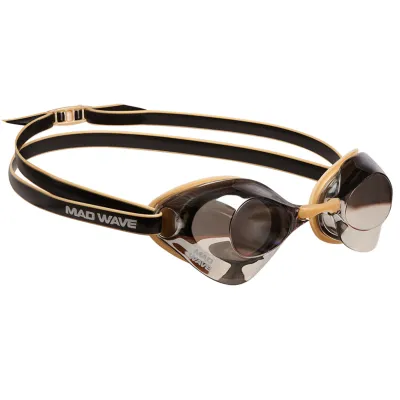
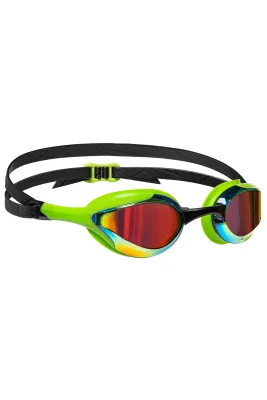
Prices are valid at publication and may change. Please refer to the product page for the latest price.
The nose bridge is the central anchor of any swim goggle, and its adjustability can make or break the fit. Mad Wave offers models with two primary nose bridge configurations: interchangeable nose bridges and flexible fixed frames. Interchangeable systems typically include several plastic bridges of varying lengths. If you have a wide nose bridge or close-set eyes, swapping the default bridge for a larger or smaller size allows you to position the eye cups comfortably over your orbital bones. Flexible fixed frames, often made of soft liquid silicone or thermoplastic rubber, stretch and contour naturally to the shape of your nose. While highly comfortable, they offer less customization for extreme facial dimensions.
Before making a decision, it is highly beneficial to consult the manufacturer’s sizing classifications. Most swim goggles are categorized into adult, junior, or specialized fits. Junior models are not just for children; they are often the ideal choice for adults with exceptionally narrow faces or petite bone structures. Specialized fits, such as those designed specifically for women or high-performance athletes, feature tailored frame geometries to match common facial profiles. Checking these classifications helps narrow down your options before you begin testing individual models.
Matching Goggle Features to Your Swimming Style
Your swimming style and environment dictate the specific features you should look for in a pair of goggles. Competitive racing demands maximum hydrodynamics. Racing goggles feature ultra-low profiles and rigid frame constructions that minimize drag as you glide through the water. These designs are optimized for high-speed starts and flip turns, ensuring the goggles remain securely in place under intense water pressure. However, this streamlined design often sacrifices some long-wear comfort, making them less ideal for casual fitness swimmers who plan to wear their goggles for hours at a time.

For recreational swimming or long lap-training sessions, comfort and peripheral vision are the top priorities. Wider-vision models feature larger lenses that expand your field of view, allowing you to keep track of other swimmers in the lane or navigate open-water environments more easily. The gaskets on these models are typically thicker and softer, utilizing high-grade silicone to cushion the face and reduce the appearance of temporary red rings left around the eye sockets after a long swim.
Lens tinting is another critical factor, especially when swimming in different lighting conditions. In the Philippines, outdoor pools and open-water swimming are common, exposing swimmers to intense sunlight and harsh water glare. Mirrored lenses are highly effective in these environments, as they reflect bright light away from your eyes, reducing squinting and eye strain. Smoke or dark-tinted lenses also work well for bright outdoor conditions by lowering overall light transmission. If you primarily swim in indoor pools, during early morning hours, or under overcast skies, clear or light-colored lenses (such as blue or yellow) are preferable because they maximize visibility in low-light settings.
The strap configuration of your goggles affects both security and ease of adjustment. High-intensity swimming requires a secure strap system that will not slip. Split silicone straps, which divide into two bands across the back of your head, offer excellent stability by distributing tension evenly. This setup is highly recommended for competitive starts and vigorous training. For casual lap swimming, a single strap with a quick-adjust buckle system provides sufficient security while allowing you to loosen or tighten the goggles with minimal effort, even while in the water.
Verifying Fit, Seal, and Purchase Conditions
Once you have identified the right style and frame type, verifying the physical fit is the final step to ensuring a successful purchase. The most reliable way to test a pair of goggles is by performing the “suction test.” To do this, gently press the goggle cups against your eyes without putting the strap over your head. Apply light pressure to expel the air inside the cups. If the goggles stick to your face and maintain suction for a few seconds before falling off, it indicates that the gasket shape matches your facial anatomy and will provide a watertight seal. If they fall off immediately, air is leaking in, and water will likely do the same.
Next, inspect the quality of the silicone gaskets. High-quality gaskets should feel soft, flexible, and uniform in thickness. Run your finger along the edge of the silicone to check for any stiff spots, uneven molding, or rough seams that could cause discomfort or pressure points during use. The gasket should compress evenly when pressed against your face, contouring smoothly to the curves of your cheekbones and brow.
When purchasing Mad Wave goggles in the Philippines, it is important to verify the return and exchange policies of authorized online retailers or local sporting goods stores. Because swim goggles are personal hygiene items, many retailers have strict return conditions. Ensure that the seller allows exchanges for fit issues, provided the product is unused and the original packaging remains undamaged. This protection is especially valuable when buying online, where you cannot perform the physical suction test before purchasing. When budgeting for your gear, check the local retail prices in ₱ across authorized distributors to ensure you are getting an authentic product with a valid return window.
Finally, check the product packaging or official specifications to see what accessories are included with your selected model. Many high-quality goggles come packaged with extra nose bridges of different sizes, which are essential for customizing the fit. Some models also include a protective pouch or hard storage case. Using a dedicated case protects the delicate lenses from scratches and prevents the silicone straps and gaskets from getting damaged or deformed inside your swim bag.
Frequently Asked Questions (FAQ)
How do I prevent Mad Wave goggles from fogging during a swim?
To keep your goggles from fogging, rinse them with cool pool water before your swim to balance the temperature of the lenses with the water. Avoid touching or rubbing the inside of the lenses, as this can easily scratch or rub off the factory-applied anti-fog coating. After your swim, rinse the goggles in clean, fresh water to remove chlorine or salt residue, and let them air dry completely in a shaded area. Never expose your goggles to extreme heat or direct sunlight when storing them, as high temperatures can degrade both the anti-fog treatment and the silicone gaskets.
Can I replace the nose bridge on my Mad Wave goggles if they feel too tight?
Whether you can replace the nose bridge depends entirely on the specific model of your Mad Wave goggles. Models designed with interchangeable nose bridge systems allow you to easily swap out the bridge for a wider or narrower size included in the packaging. If your goggles feature a fixed, flexible frame, the nose bridge cannot be replaced, and attempting to force an adjustment may damage the silicone or plastic. Always consult the product manual or official specifications to verify the adjustability of your model, and stop using the goggles immediately if you notice any signs of cracking or stress on the frame.

Community discussion
Share your experience or ask a question. Comments are reviewed before publication.