
Selecting a high-intensity illumination tool for underwater exploration requires a clear understanding of how light behaves under hydrostatic pressure and within aquatic environments. In the Philippines, where dive sites range from the shallow, macro-rich coral gardens of Anilao to the deep, current-swept shipwrecks of Coron, a light rated at 6000 lumens offers immense power. However, raw brightness is only one part of the equation. To find a tool that truly supports your underwater activities, you must evaluate how that light is distributed, how long it can be sustained, and how well the physical hardware withstands tropical marine conditions.
Making an informed choice involves looking past maximum performance claims on packaging and focusing on real-world usability. Different diving disciplines—whether recreational night diving, technical penetration, or underwater videography—demand vastly different beam shapes, color rendering capabilities, and mounting configurations. By analyzing these technical specifications and knowing what to verify in local dive shops, you can select a reliable light that enhances your safety and enjoyment on every dive.
Understanding 6000lm Output and Beam Angles
A rating of 6000 lumens represents a massive amount of light, but divers must distinguish between peak theoretical output and sustained operational brightness. Many manufacturers advertise the maximum lumen rating of the LED emitter under ideal laboratory conditions. In practice, high-power LEDs generate significant heat, and as the internal temperature rises, the light’s driver circuit will automatically reduce power to prevent damage. This thermal management means a light advertised at 6000 lumens may step down to a lower, stable output after a few minutes of continuous use, especially in the warm tropical waters of the Philippines where ambient water temperatures often range from 27°C to 30°C.
Products mentioned in this guide
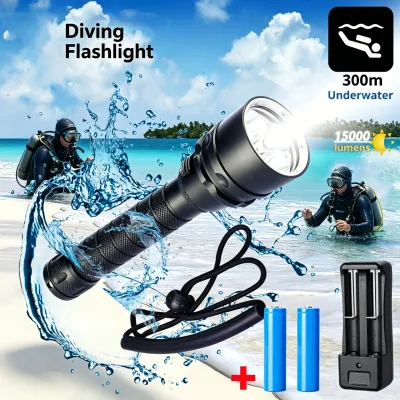
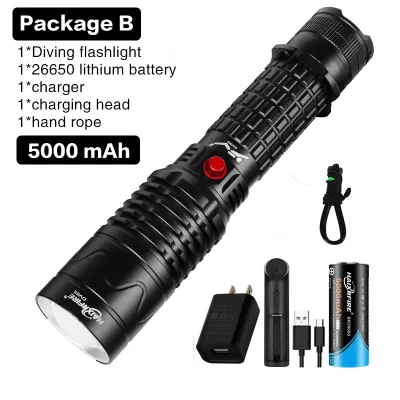
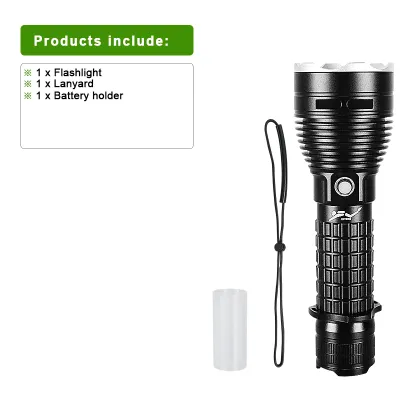
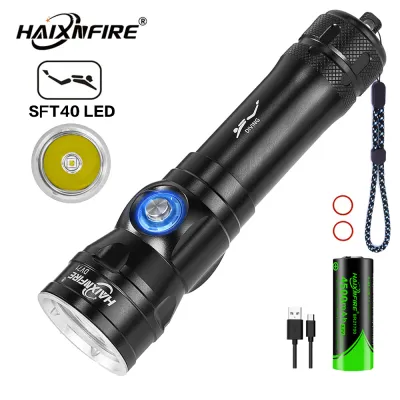
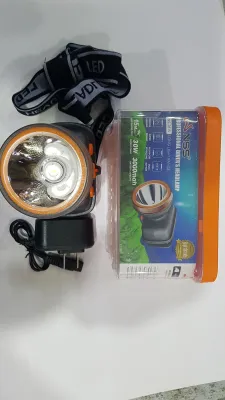
Prices are valid at publication and may change. Please refer to the product page for the latest price.
The shape of the light beam determines how effectively those lumens illuminate your surroundings. Beam angle is generally classified into spot beams (typically 5 to 15 degrees) and flood beams (typically 60 to 120 degrees). In waters with high concentrations of suspended organic matter, plankton, or silt, a wide flood beam can cause severe backscatter. This optical phenomenon occurs when light reflects off particles directly back toward your eyes or camera lens, creating a blinding glare that reduces overall visibility. Conversely, a tight spot beam concentrates the light into a piercing column that cuts through particulate-heavy water, illuminating distant objects without lighting up the surrounding debris.
Color temperature, measured in Kelvin (K), also plays a critical role in visual clarity and color preservation underwater. Water acts as a natural filter, absorbing longer wavelengths of light like red and orange within the first few meters of depth. A light with a cool color temperature of 6500K or higher can make the underwater landscape appear unnaturally blue or washed out. Selecting a light with a warmer color temperature, around 5000K to 5500K, helps restore natural tones and provides better contrast, making it easier to identify marine life and navigate complex reef structures.
Matching Light Features to Your Dive Style
No single dive light is perfectly suited for every underwater scenario, as different activities prioritize different performance characteristics. A light designed for wide-angle videography will perform poorly as a signaling tool for technical diving, while a tightly focused technical light will create harsh, overexposed hot spots in a photograph. Understanding these distinctions allows you to prioritize the features that align with your primary diving style.

Balancing these features requires managing trade-offs between battery capacity, physical size, and thermal efficiency. High-output lights require larger, heavier battery packs to maintain reasonable burn times, which can affect your buoyancy and trim. For divers who travel frequently between different islands in the Philippines, the physical weight of the gear and airline restrictions on large lithium-ion batteries are critical factors that must be weighed against the desire for maximum brightness.
Recreational Night Diving
For general night diving, the primary goal is to illuminate a broad area of the reef to observe nocturnal marine life and maintain situational awareness. A light with a medium-to-wide beam angle, typically between 40 and 60 degrees, is highly suitable for this purpose. This spread provides a generous field of view, allowing you to spot hunting moray eels, sleeping parrotfish, and active invertebrates without needing to constantly sweep the light back and forth.
Ergonomics and ease of use are paramount when diving in the dark. The light should feature an intuitive, reliable switch mechanism that can be operated effortlessly with one hand, leaving your other hand free to adjust your buoyancy compensator, hold a pressure gauge, or signal your buddy. A comfortable hand strap or a secure lanyard is essential to prevent the light from slipping from your grip and sinking into the depths.
Safety protocols dictate that you must never rely on a single light source during a night dive. Even the most reliable 6000lm light can experience a sudden battery depletion or electronic failure. Recreational divers should always carry a compact, independent backup light clipped to a BCD D-ring or tucked into a pocket, ensuring they can safely navigate and read their instruments if the primary light fails.
Technical and Cave Diving
Technical diving, including deep wreck exploration and cave penetration, demands uncompromising reliability and specific beam characteristics. In these overhead environments, a highly focused spot beam of 8 degrees or less is mandatory. This tight beam serves two critical functions: it cuts through silt and disturbed sediment to maintain visibility, and it acts as a primary communication tool, allowing divers to make clear, visible light signals to team members across distances.
Burn time and battery reliability are non-negotiable in technical diving. The light must be capable of delivering a consistent, un-stepped output for the entire planned duration of the dive, plus a substantial safety margin. Technical lights often utilize a canister design, where the heavy battery pack is mounted on the diver’s harness and connected via a durable cable to a lightweight light head, minimizing hand fatigue over long exposures.
Mounting versatility is another key requirement for technical operations. Most divers prefer a Goodman handle, which secures the light head to the back of the hand. This configuration keeps the fingers free to manipulate reels, run guide lines, operate valves, or perform gas switches without losing the direction of the light beam. The housing must be constructed from rugged, marine-grade anodized aluminum to withstand accidental impacts against rock or metal.
Underwater Photography and Videography
For underwater image makers, raw brightness is secondary to the quality and distribution of the light. Photographers and videographers require a high Color Rendering Index (CRI), which is a quantitative measure of a light source’s ability to reveal the colors of various objects faithfully in comparison with a natural light source. A CRI rating of 90 or higher is ideal for bringing out the brilliant reds of soft corals and the intricate patterns of macro subjects at depth.
To avoid harsh shadows and uneven exposure, imaging lights must produce an exceptionally wide, perfectly even flood beam, often between 100 and 120 degrees, with no hot spots or distinct edges. This smooth distribution of light ensures that the entire frame of a wide-angle lens is illuminated consistently. Adjustable power levels are also essential, allowing the shooter to reduce intensity when shooting close-up macro subjects to prevent overexposure and preserve fine details.
Integration with camera support systems is a critical consideration. The light housing should feature standard mounting options, such as a ball mount or a YS adapter, allowing it to attach securely to adjustable arms on a camera tray. Additionally, compatibility with optical cables or strobe triggers can allow the light to function as a focus light that automatically shuts off momentarily when a high-power strobe fires, preventing the continuous light from interfering with the final exposure.
Key Specifications to Verify Before Buying
Before purchasing a 6000lm diving light, you must carefully verify several technical specifications on the product packaging, user manual, or manufacturer datasheet. Do not rely solely on marketing headlines; instead, look for concrete engineering details that indicate build quality and safety.
- Depth Rating and Sealing: Ensure the light has a certified depth rating that exceeds your planned diving limits. A rating of 100 meters is standard for high-quality recreational and technical lights. Inspect the sealing mechanism; look for double O-ring seals at all opening joints, as this redundancy significantly reduces the risk of water ingress under high hydrostatic pressure.
- Battery Chemistry and Capacity: High-output lights require substantial power, typically provided by rechargeable lithium-ion (Li-ion) batteries. Verify the battery configuration and capacity, often measured in milliampere-hours (mAh) or watt-hours (Wh). Check whether the light uses standard, easily replaceable cells (such as 18650 or 21700 sizes) or a proprietary battery pack, as standard cells are much easier to replace when they eventually degrade.
- Switch Design: The switch is a common failure point on dive lights. Magnetic switches (either rotary collars or push buttons) are highly reliable because they do not require a physical shaft to penetrate the light casing, eliminating a potential leak path. Ensure the switch has a physical lock or a multi-step activation sequence to prevent the light from turning on accidentally inside your gear bag, which can generate extreme heat and pose a fire hazard.
- Thermal Protection: A true 6000lm light generates intense heat when operated in air. Verify that the light features an active thermal protection circuit that automatically monitors internal temperature and reduces power output if the light is turned on out of the water. This safeguard prevents damage to the LED emitter, driver board, and battery cells.
Building Your Shortlist: What to Look for in Local Stores
While online research is valuable, visiting a physical dive shop in the Philippines allows you to evaluate the build quality and ergonomics of a light firsthand. Handling the device in person is the best way to ensure it meets your expectations and fits comfortably into your gear configuration.
When examining a light in a local store, pay close attention to the machining of the aluminum body. The anodizing should be thick, uniform, and free of sharp edges or blemishes. Unscrew the battery compartment to inspect the threads; they should be clean, smooth, and square-cut rather than shallow or triangular, which can strip easily over time. Check the accessibility of the O-rings and ensure they are seated firmly in their grooves without twisting.
Inquire about the warranty terms and the availability of local service centers. Because dive lights operate in a harsh saltwater environment, the ability to obtain replacement parts, spare O-rings, or professional repairs locally in the Philippines is incredibly valuable. A slightly cheaper light purchased online without local support can quickly become useless if a single proprietary component fails or if you cannot source the correct replacement O-rings.
Compare the retail price in Philippine Pesos (₱) against the complete package contents. A higher-priced option may actually represent better value if it includes high-capacity batteries, a certified multi-bay charger, a durable carrying case, mounting hardware, and a comprehensive spare parts kit. Be cautious of extremely low-priced options that claim 6000 lumens but lack safety certifications, as these often utilize low-grade batteries that pose safety risks during charging and operation.
Maintenance and Battery Safety for Dive Lights
Proper post-dive maintenance is essential to ensure the longevity and reliability of your high-output dive light. Saltwater is highly corrosive, and even minor neglect can lead to seized threads, degraded seals, and eventual flooding of the electronics.
Immediately after every dive, soak the complete light assembly in clean, fresh water for at least 15 to 30 minutes. While the light is submerged, operate the switch mechanism several times to flush out any trapped salt crystals, sand, or silt. This step is particularly important in areas with fine volcanic sand, which can easily jam magnetic sliders or push buttons. After soaking, dry the exterior of the light thoroughly with a clean towel before opening the battery compartment to prevent water droplets from falling onto the internal contacts.
Lithium-ion batteries require careful handling to maintain their capacity and ensure safety, especially in hot, humid tropical climates. Store your batteries in a cool, dry place out of direct sunlight. If you plan to store the light unused for several weeks or months, discharge or charge the batteries to approximately 50% to 60% of their capacity; storing them completely empty or fully charged for long periods accelerates capacity loss. Regularly inspect the battery wraps for any tears or exposed metal, and replace any damaged cells immediately.
O-ring maintenance should be performed systematically. Periodically remove the O-rings using a blunt plastic tool—never a sharp metal object that could scratch the sealing groove. Inspect the O-rings for flat spots, cracks, or embedded dirt. Clean the groove with a lint-free cloth, apply a very thin film of high-quality silicone grease to the O-ring to keep it supple, and reinstall it carefully. Remember that grease is meant to lubricate the rubber, not create the seal; applying too much grease will actually attract sand and hair, increasing the risk of a leak.
Frequently Asked Questions (FAQ)
Can I use a 6000lm diving light as my only light source?
No, you should never rely on a single light source as your sole illumination during any dive where ambient light is insufficient, such as night dives, wreck penetrations, or cave dives. Even a highly reliable 6000lm light can experience sudden battery depletion, electronic driver failure, or physical damage from an impact. Standard safety protocols require carrying at least one compact, independent backup light. This backup ensures you can safely read your pressure gauge, signal your dive buddy, and navigate back to your exit point or perform a controlled ascent in the event of a primary light failure.
How long will a 6000lm light last on a single charge?
The burn time of a 6000lm light depends heavily on the battery capacity and the power setting used. At the maximum output of 6000 lumens, most high-quality lights will run for approximately 45 to 90 minutes on a fully charged battery. However, because high-power lights generate significant heat, many models will automatically step down their brightness to a lower level after a few minutes of continuous operation, which extends the overall burn time. To maximize battery life during a dive, it is best practice to use lower power settings (such as 1500 or 3000 lumens) for general navigation and reserve the maximum 6000lm output for situations that specifically require intense illumination.

Community discussion
Share your experience or ask a question. Comments are reviewed before publication.