
Selecting the ideal boxing pads for a home gym requires balancing your specific striking goals with the physical realities of your available space. Whether you are focusing on technical boxing, comprehensive Muay Thai striking, or solo conditioning, the right equipment must align with your room’s clearance, storage capacity, and structural limits. By evaluating your training environment first, you can avoid common pitfalls like purchasing oversized gear that restricts movement or choosing wall-mounted targets that your home’s structure cannot safely support.
Assessing Your Home Training Space and Setup
Before purchasing any training gear, you must evaluate the physical dimensions and structural limits of your designated home area. A common mistake is underestimating the amount of space required for dynamic movement. While you might fit comfortably in a corner while standing still, throwing a full-extension punch or a sweeping kick requires a much larger operational envelope.
To establish a safe training zone, measure the clearance needed for your longest strikes. For hand strikes, you need at least your full arm span plus an extra step in every direction to allow for footwork. If you plan to incorporate kicks, you must add a buffer that accounts for the leg’s full reach and the rotation of your hips. This dynamic buffer prevents you or your training partner from colliding with furniture, television screens, or low-hanging light fixtures during high-energy combinations.
Products mentioned in this guide
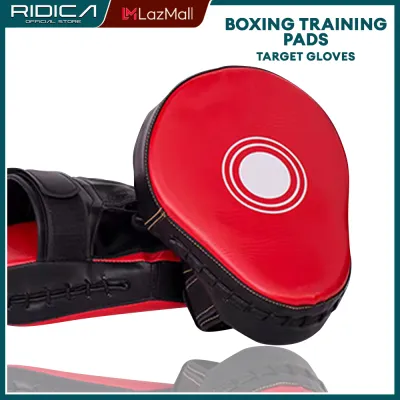
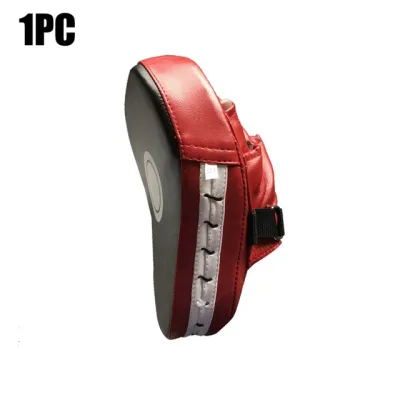
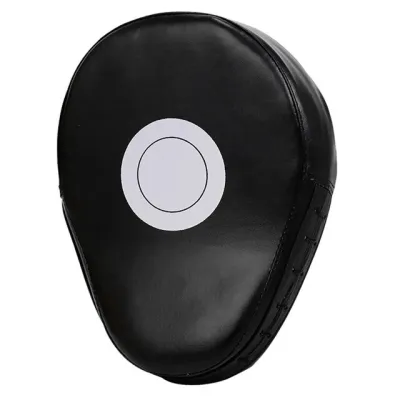
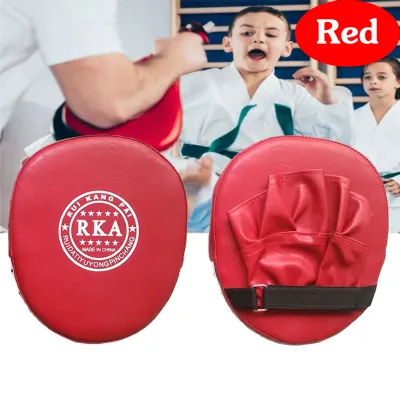
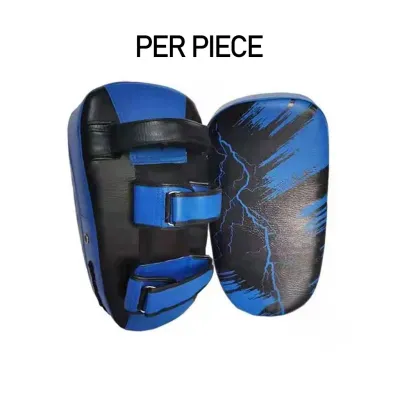
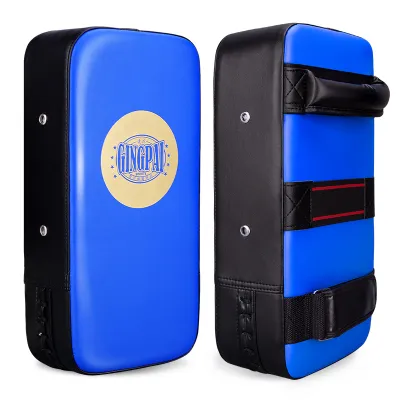
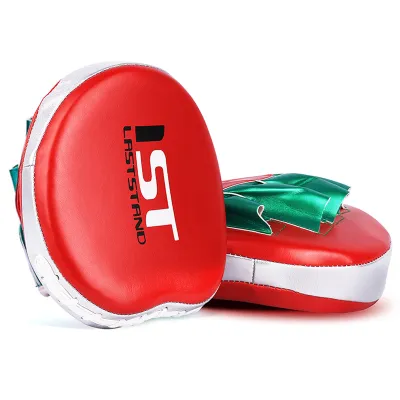
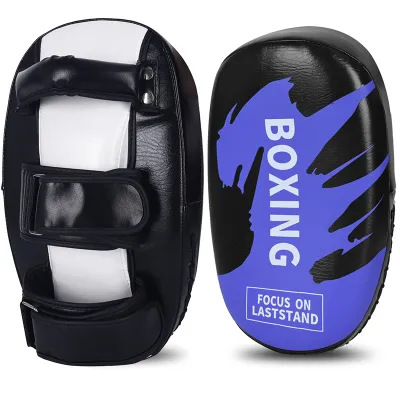
Prices are valid at publication and may change. Please refer to the product page for the latest price.
Storage is another critical factor that depends heavily on your room layout. If you live in a compact condominium or a shared apartment, you may not want bulky training gear permanently on display. You should identify realistic storage options before buying. Consider whether your chosen pads can slide easily under a bed frame, fit inside a closet, or hang neatly on a dedicated wall rack.
Finally, if you are considering fixed installations like wall-mounted target pads, you must check the structural limits of your walls. In many tropical regions, residential walls are constructed from concrete, hollow blocks, or lightweight drywall. Each material requires specific mounting hardware and has different load-bearing capacities. Repeated high-impact forces from heavy punches can crack plaster, loosen anchors, or damage structural framing if the installation is not properly rated for athletic use.
Comparing Boxing Pad Types for Home Use
Different pad designs serve distinct training styles and require varying amounts of physical space. Understanding these differences allows you to select the gear that matches both your athletic goals and your home environment.

Focus Mitts for Precision and Compact Spaces
Focus mitts are small, lightweight targets designed primarily for high-speed hand combinations, defensive slips, and precision training. Because of their compact size, they have a minimal storage footprint and are highly portable. You can easily tuck them into a small drawer or carry them in a backpack, making them an excellent choice for multi-use rooms where space is at a premium.
However, focus mitts have strict operational requirements. They are designed for partner training, meaning you must have a dedicated partner who knows how to hold them correctly. Holding mitts is an active skill; an untrained partner can easily suffer wrist or shoulder strain, or accidentally strike you if they fail to maintain the correct angles and distances.
Furthermore, focus mitts are functionally limited to hand strikes. Their thin padding and small surface area are not designed to absorb the heavy impact of kicks, knees, or elbows. Attempting to use them for lower-body strikes can result in injury to both the striker and the holder, limiting your training repertoire strictly to boxing-style workouts.
Thai Pads for Striking Versatility and Larger Areas
Thai pads are thick, elongated rectangular pads designed to absorb heavy, full-power strikes from punches, kicks, knees, and elbows. Because they cover the holder’s entire forearm, they offer a much larger target area and superior impact absorption. This versatility makes them the standard choice for Muay Thai, kickboxing, and mixed martial arts.
The trade-off for this versatility is their larger physical profile and heavier weight. Thai pads do not bend or compress easily, meaning they require dedicated storage space when not in use. They are difficult to hide away in small rooms and often require a deep closet or a sturdy shelf to keep your living space organized.
Training with Thai pads also demands a wider clearance zone. Because you will be practicing wide-angle roundhouse kicks and dynamic knee strikes, you need a spacious, open floor plan to prevent accidental contact with walls or household objects. Additionally, holding Thai pads is physically demanding. Your training partner must have the physical strength and proper technique to absorb heavy lower-body strikes repeatedly without losing balance or sustaining joint injuries.
Target Pads and Wall Bags for Fixed Installations
For those who train alone, fixed target pads and wall bags offer a practical alternative to partner-held gear. These units are mounted directly to a wall, providing a stable, stationary target that allows you to practice combinations and build punching power without needing anyone else in the room. This setup completely eliminates the need for a training partner.
The primary advantage of a wall-mounted target is its zero-floor-space footprint. Once installed, it sits flush against the wall, leaving your floor area completely clear for other activities. However, this convenience comes at the cost of permanent alteration to your home. Installing these units requires drilling into your walls, which may not be permitted in rental properties or condominiums.
Before mounting any hardware, you must verify the wall’s structural integrity. Mounting a heavy target to simple drywall without securing it to structural studs will quickly result in torn plaster and costly property damage. In homes with concrete or solid masonry walls, you must use heavy-duty masonry anchors and appropriate hammer drills. Additionally, fixed targets restrict your training to specific angles and lack the dynamic, reactive movement of a live partner, meaning you cannot practice defensive head movement or footwork transitions in response to moving targets.
Matching Pad Types to Your Training Goals and Space
Choosing the right gear requires mapping your personal training situation to the strengths and limitations of each pad type. If you do not have a consistent training partner, partner-held pads like focus mitts and Thai pads will sit unused. In this scenario, a wall-mounted target pad or a freestanding heavy bag alternative is the most practical choice to ensure you can actually work out regularly.
If you do have a partner but must share a small living area, you must weigh the trade-offs of multi-purpose gear versus specialized equipment. While curved Thai pads offer the ultimate striking versatility, their bulk can overwhelm a small room. In contrast, a pair of compact, high-density focus mitts allows you to maintain a high-intensity cardio and technical boxing routine without cluttering your home.
To finalize your decision, use this practical checklist to evaluate your space and goals:
- Clearance Check: Do you have at least a 2-meter by 2-meter clear floor area for boxing, or a 3-meter by 3-meter area if incorporating kicks?
- Partner Availability: Do you have a reliable training partner who is trained in proper pad-holding techniques?
- Storage Capacity: Do you have dedicated closet space, or will the pads need to remain visible in your living area?
- Structural Readiness: If choosing a wall-mounted option, is your wall made of solid concrete or does it have accessible structural studs capable of handling high-impact forces?
Installation, Storage, and Safety Checks
Proper installation and maintenance are essential to protect your home from damage and ensure your personal safety during training. If you decide to install a wall-mounted target, always verify your mounting hardware and wall anchors against the manufacturer’s weight and impact specifications. Using the wrong anchors can cause the unit to pull away from the wall mid-workout, leading to sudden injury.
If you cannot confidently verify your wall material, stud locations, or load limits, stop the installation immediately. Consult a qualified local contractor or professional handyman to assess the wall and complete the mounting process safely.
Because tropical climates often bring high humidity and heat, proper storage is vital to prevent material degradation. Boxing pads absorb sweat during training, and if they are stored in damp, unventilated spaces, they can quickly develop mold, unpleasant odors, and structural breakdown of the synthetic or genuine leather. Always wipe your pads down with a damp cloth and mild disinfectant after use, and allow them to air dry completely in a well-ventilated room. Keep them away from direct sunlight, which can dry out and crack the outer casing, and never store them in airtight plastic bags.
Finalize your routine by performing a quick safety check before every training session. Inspect the wrist straps, buckles, and stitching for any signs of fraying or tearing. Press down on the padding to ensure it has not bottomed out or become excessively soft, as degraded padding can fail to protect the holder’s hands and wrists from heavy impacts.
Frequently Asked Questions (FAQ)
Can I practice boxing effectively using only Thai pads?
While you can practice basic boxing combinations on Thai pads, they are not ideal for high-speed, technical boxing training. Thai pads are larger, heavier, and less maneuverable than focus mitts, which can slow down rapid combination drills and make it harder for the holder to offer quick, reactive targets. The flat, rigid surface of standard Thai pads also lacks the ergonomic pocket of a curved focus mitt, making precise hand strikes less comfortable over long sessions.
Do I need a partner to use focus mitts or Thai pads?
Yes, both focus mitts and Thai pads strictly require a training partner to hold them. These tools are designed for dynamic, interactive training where the holder moves, reacts, and feeds targets to the striker. Attempting to prop them up against furniture or strap them to posts is highly unsafe and can lead to joint injuries or property damage. If you do not have a partner, you should look into static wall-mounted targets or freestanding punching bags designed specifically for solo workouts.

Community discussion
Share your experience or ask a question. Comments are reviewed before publication.