
Choosing between a Decathlon dry bag for kayaking versus paddleboarding comes down to how you store your gear and how you transport it to the water. Kayakers require flexible, compressible bags that can squeeze into tight, irregular hull compartments or sit flat under deck bungees. Paddleboarders, on the other hand, need stable, flat-bottomed bags with robust backpack straps that secure easily to an open deck and allow hands-free carrying from the shore. By matching the bag’s physical shape, carrying system, and material thickness to your specific sport, you can keep your dry gear safe from tropical downpours and sudden splashes.
Core Gear Needs: Kayaking vs Paddleboarding
Kayaking and stand-up paddleboarding (SUP) present entirely different physical environments for your gear. In a kayak, space is highly structured but physically constrained. If you paddle a sit-in kayak, your dry bag must fit inside narrow bow or stern hatches, or slide deep into the cockpit beside your legs. This environment demands a highly flexible, elongated bag that can compress into irregular spaces. Even on a sit-on-top kayak, the bag is typically secured under tight deck bungees, requiring a low-profile shape that does not catch the wind or interfere with your paddle strokes.
Paddleboarding, by contrast, offers an open but completely exposed deck. There are no protective hatches, meaning your dry bag sits directly on the board, fully exposed to the elements, intense tropical sun, and washing waves. Because a paddleboard has a flat surface, a rolling or shifting bag can easily disrupt your balance. You need a bag that sits flat and remains centered. Furthermore, paddleboarders must transport all their gear—including a heavy board and paddle—from the vehicle to the water’s edge. This makes hands-free carrying systems, such as backpack straps, a primary necessity rather than a luxury.
Products mentioned in this guide
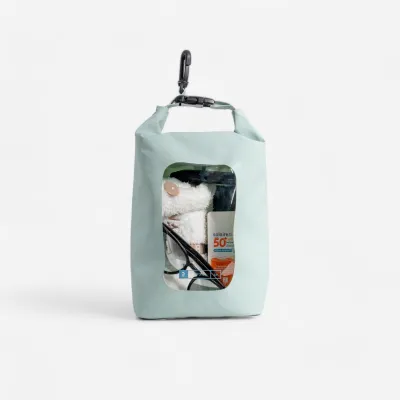
Prices are valid at publication and may change. Please refer to the product page for the latest price.
The nature of water exposure also differs between the two activities. Kayaking often involves continuous, low-level splashing and water pooling in the cockpit or deck recesses. However, if a kayak capsizes, a bag secured to the deck may experience prolonged submersion. On a paddleboard, the bag is elevated slightly above the water line but is highly vulnerable to a complete dunking if you lose your balance and the board flips. Understanding these distinct exposure risks helps you determine whether you need a lightweight splash-proof liner or a heavy-duty, thick-skinned dry bag.
Key Decathlon Dry Bag Features to Evaluate
When browsing Decathlon’s water sports section, you will find dry bags categorized by volume, typically ranging from small 5-liter pouches to large 40-liter backpacks. It is vital to understand that the stated capacity in liters refers to the volume after the roll-top closure has been properly folded down. Rigid items, such as plastic food containers, cameras, or dry boxes, do not conform to the bag’s cylindrical shape. These items create empty, unusable pockets of air, significantly reducing the effective storage space. Always choose a slightly larger capacity than your raw gear volume suggests to allow for these structural inefficiencies.

Carrying systems are another critical feature to inspect. Decathlon designs range from simple single-strap models to fully padded backpack harnesses. A single, adjustable shoulder strap is highly convenient for short walks from a beachside cottage to a kayak launch. However, if you are trekking down to a remote cove in places like El Nido or Anilao, a dual-strap backpack design is far superior. It distributes the weight evenly across your shoulders, keeping your hands free to carry your paddle and board safely over uneven, slippery terrain.
The closure mechanism is the heart of any dry bag’s waterproof integrity. Decathlon dry bags utilize a classic roll-top system secured by heavy-duty plastic buckles. To evaluate these, inspect the stiffness of the top strap; a rigid, reinforced collar makes it much easier to achieve the tight, flat folds necessary to seal out water. Additionally, look for external attachment points such as plastic D-rings, reinforced webbing, or daisy chains. These points allow you to clip carabiners or run bungee cords directly through the bag’s structure, ensuring it remains anchored to your watercraft even in rough surf.
Matching Specifications to Your Activity
Selecting the perfect dry bag requires a systematic approach. By analyzing the physical layout of your watercraft and your transport habits, you can map specific Decathlon design features directly to your primary sport.
Optimizing for Kayaking
For kayaking, the priority is seamless integration with the boat’s existing storage areas. Look for Decathlon dry bags made from lighter, more pliable materials, such as polyurethane-coated fabrics. These materials bend easily, allowing you to squeeze the bag through tight hatch openings or pack it tightly into the curved bow of your kayak. A rigid, heavy-duty PVC bag can be incredibly difficult to manipulate inside a cramped cockpit.
Low-profile, cylindrical shapes are ideal for securing under kayak deck bungees. Ensure the bag features robust external D-rings near the buckle. These rings allow you to clip the bag directly to the kayak’s deck lines using a carabiner, preventing it from floating away if you capsize. When packing, verify that the bag’s loaded shape does not protrude so high that it catches your paddle shaft during high-angle strokes. Keep essential safety gear, such as a bilge pump, signaling whistle, and hydration, in a highly accessible, medium-sized bag right in front of your seat.
Optimizing for Paddleboarding
When optimizing for stand-up paddleboarding, stability and transport convenience are paramount. Prioritize Decathlon dry bags designed with a flat, rectangular, or oval base. A flat-bottomed bag sits securely on the nose of your SUP, resisting the urge to roll side-to-side as you paddle through choppy coastal waters. This stability is crucial for maintaining your personal balance and keeping the board’s center of gravity predictable.
Look for models equipped with comfortable, wide backpack straps. Carrying a paddleboard from a parking lot down to the shoreline is physically demanding; a backpack dry bag allows you to wear your gear comfortably on your back, leaving both hands free to manage the board and paddle against wind gusts. To prevent the bag from acting as a sail on the front of your board, opt for a moderate capacity—typically 10 to 20 liters—or use a modular system of two smaller bags secured flat against the deck rather than one towering 40-liter pack.
Verifying Waterproof Ratings and Material Limits
Before trusting your valuable gear to any dry bag, you must critically assess its official waterproof rating. Decathlon clearly labels its bags with specific water-resistance standards, often indicating splash protection or resistance to brief immersion. Do not assume any roll-top bag is completely waterproof under all conditions. Most standard models are designed to withstand heavy rain, spray, and quick drops into the water, but they are not rated for prolonged submersion or deep diving.
The effectiveness of a roll-top dry bag depends entirely on correct user operation. To achieve the manufacturer’s intended seal, you must roll the top collar tightly at least three times before fastening the buckle. Simply folding it over once or twice will allow water to seep through the top seam under the slightest pressure. Always leave a small pocket of air inside the bag before sealing; this air pocket not only helps maintain the seal’s structure but also ensures the bag will float on the water’s surface if it goes overboard.
Regular maintenance inspections are vital to prevent unexpected gear damage. Before every trip, perform a quick visual check of the bag’s welded seams, looking for any signs of peeling, cracking, or separation. Inspect the interior coating for wear, especially around high-friction areas near the bottom corners. Finally, test the plastic buckles to ensure they snap together securely and do not slip under tension. If you observe any seam separation or fabric punctures, retire the bag from waterproof duties immediately.
Securing and Maintaining Your Bag on the Water
Securing your dry bag properly is just as important as choosing the right model. Never rely on simple friction or the weight of the bag to keep it on your deck. Use high-quality bungee cords, cam straps, or dedicated deck rigging to tie the bag down tightly. Thread the straps directly through the bag’s integrated handle or D-rings so that even if a large wave washes over your deck, the bag remains firmly anchored to the craft.
Protecting the bag’s material during use will significantly extend its lifespan. Avoid dragging your dry bag over sharp rocks, coral, or abrasive concrete boat ramps. Be mindful of rough deck pads on your paddleboard, which can wear down the bag’s outer coating over time. Additionally, the intense tropical sun can degrade synthetic fabrics and weaken welded seams. Whenever you stop for a break on shore, place your dry bag in the shade to minimize prolonged UV exposure.
After a day on the water, especially in saltwater environments, proper maintenance is essential. Rinse the entire bag inside and out with clean, fresh water to remove salt crystals, sand, and organic debris. Hang the bag upside down with the roll-top completely open in a well-ventilated, shaded area to dry. Never store a damp dry bag in a closed closet, as the trapped tropical humidity will quickly encourage mold and mildew growth, which can destroy the waterproof lining.
Frequently Asked Questions (FAQ)
Can I use the same Decathlon dry bag for both kayaking and paddleboarding?
Yes, you can easily use a single Decathlon dry bag for both sports if you select a versatile, mid-sized model. A 10-liter to 20-liter bag equipped with removable shoulder straps offers an excellent compromise. It is small enough to fit inside most kayak hatches or sit comfortably under deck bungees, yet it features the necessary straps for easy transport to your paddleboard launch site. However, keep in mind the trade-offs: a round-bottomed bag may roll slightly on a flat SUP deck, and a larger backpack model might be too bulky to fit comfortably inside a tight kayak cockpit.
Are Decathlon dry bags completely submersible?
Most standard Decathlon roll-top dry bags are designed to protect against splashes, rain, and brief accidental drops into the water, but they are not rated for prolonged or deep submersion. If a bag remains underwater for an extended period, water will eventually seep through the rolled closure. For highly sensitive items like smartphones, car keys, and cameras, you should always use a dedicated, hard-shelled waterproof case or a specialized IPX8-rated pouch. Treat your dry bag as a highly reliable outer protective layer, rather than a guarantee of absolute underwater safety.

Community discussion
Share your experience or ask a question. Comments are reviewed before publication.