
A broken fishing rod tip section does not mean you must discard your entire setup. Finding the correct replacement requires matching the physical dimensions, material composition, and connection type of your original rod. By taking precise measurements and verifying manufacturer specifications, you can restore your rod’s action and sensitivity for your next angling trip. In tropical environments like the Philippines, where high humidity and saltwater exposure can stress gear, ensuring a precise fit prevents structural failure under heavy loads.
Identify Your Current Rod's Base Specifications
Before searching for a replacement fishing rod tip section, you must gather the foundational details of your existing rod blank. Look closely at the section of the rod just above the handle grip. Manufacturers typically print essential details here, including the model number, total length, power rating, and recommended line weight. These markings serve as your primary blueprint for finding a compatible tip.
If the label has worn off due to sun and moisture, you can still determine the necessary specifications by measuring the remaining parts. When a multi-piece rod breaks, a small fragment of the tip section often remains inside the joint or ferrule. Using a digital caliper, measure the outer diameter of this base fragment or the inner diameter of the receiving joint. Recording these measurements in millimeters ensures you have the exact dimensions needed when browsing replacement catalogs.
Products mentioned in this guide
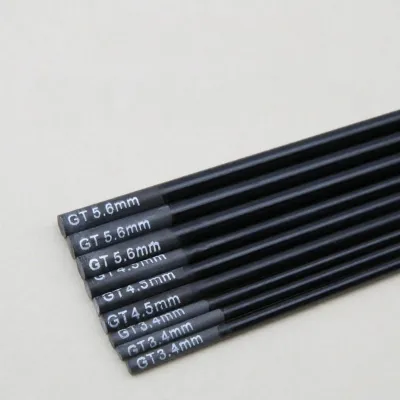
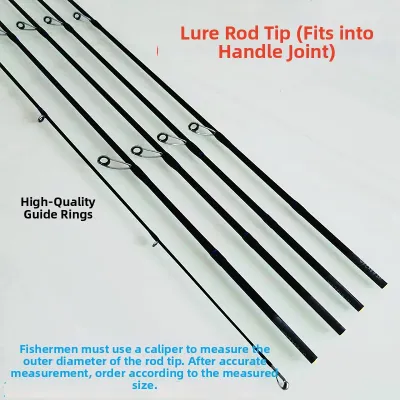
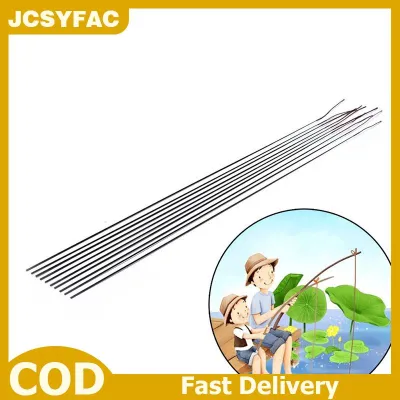
![[COD] EHBqna Fishing rod rod first three sections 50 cm solid rod tip fishing gear accessories](https://img.lazcdn.com/g/p/f9bb5862110eff0f3a186bf599d02d44.jpg_400x400q80.jpg_.webp)
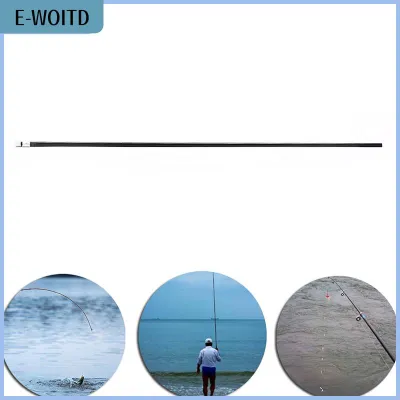
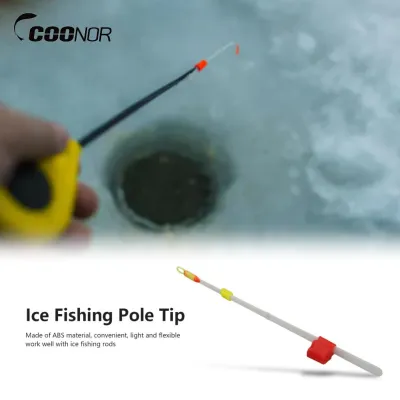
Prices are valid at publication and may change. Please refer to the product page for the latest price.
Decode Tip Section Specs: Size, Action, and Material
Matching the physical size and taper of the replacement tip section is critical to preserving the rod’s original balance. The taper refers to how quickly the rod blank narrows from the base to the very tip. If the replacement tip has a different taper rate than the original, it will create uneven stress points along the blank. Under the strain of a fighting fish, these localized stress concentrations can cause the rod to snap unexpectedly.

The action, or flex profile, of the tip section dictates how the rod behaves during casting and hook sets. A fast-action tip bends primarily in the top third of its length, offering quick hook sets and excellent sensitivity for detecting subtle bites. Moderate and slow-action tips bend deeper down the blank, providing more shock absorption which is highly beneficial when using thin lines or fighting aggressive fish. Choosing a replacement tip with the wrong action can completely alter how your lures present in the water.
Material composition also plays a major role in performance and durability. Graphite tips are highly sensitive and lightweight, making them excellent for detecting light nibbles, though they can be more brittle under sudden impact. Fiberglass tips offer superior durability and flexibility, making them ideal for heavy-duty trolling or bait fishing where ruggedness is prioritized. Composite tips combine both materials to balance sensitivity and strength, so always verify the manufacturer’s material specifications to match your fishing style.
Verify Compatibility and Connection Types
A replacement fishing rod tip section must connect securely to the remaining rod blank to handle the physical forces of casting. Multi-piece rods generally use one of two main connection styles: a spigot ferrule or a slip-over joint. A spigot ferrule features a solid insert on the lower section that slides inside the upper tip section, leaving a small gap to allow for natural wear. A slip-over joint requires the hollow base of the tip section to slide directly over the top of the lower blank.
To verify compatibility, you must check that the male and female ends of the joint fit together snugly without any wobbling. Even a fraction of a millimeter of play inside the joint can cause the sections to twist during a cast or slip apart when fighting a fish. Conversely, a fit that is too tight can crack the female collar when forced together. Always inspect the connection area for structural reinforcement, such as a thread wrap or epoxy coating, which helps prevent the blank from splitting under load.
Consulting the manufacturer’s official compatibility guidelines is the safest way to ensure a proper fit. Many brands design proprietary joint tapers that are unique to specific model lines, meaning generic parts may not seat correctly. Using an unapproved replacement can void any remaining warranty on your rod and increases the risk of structural failure while on the water.
Where to Source and Verify Replacement Tips
When sourcing a replacement fishing rod tip section, your first option should always be the original manufacturer or their authorized local distributors. Purchasing an Original Equipment Manufacturer (OEM) part guarantees that the material, guide spacing, and taper match your rod’s original design. Many reputable tackle shops stock official replacement sections or can order them directly from the brand’s regional distributor.
If an OEM replacement is no longer available because the rod model is discontinued, you may have to consider universal or generic tip kits. When opting for a generic tip, you must meticulously verify that the base diameter, overall length, and guide alignment match your remaining rod section. Be prepared to check the spacing of the line guides, as mismatched guide placement can cause the fishing line to rub against the blank, leading to premature line wear or friction knots.
Before finalizing your purchase or installing a new tip, conduct a thorough physical inspection of the replacement part. Check the alignment of the guides by looking straight down the blank to ensure they form a perfectly straight line. Inspect the epoxy wraps around the guide feet for any cracks, bubbles, or rough edges that could snag your line. Ensuring the finish is smooth and free of manufacturing defects will guarantee reliable performance during your next outdoor adventure.
Frequently Asked Questions (FAQ)
Can I use a tip from a different brand if the diameter matches?
While a matching base diameter is necessary, it does not guarantee that a tip from a different brand will perform safely. Different manufacturers use unique carbon layups, resin systems, and taper designs, meaning two tips with the same diameter can have completely different flex profiles. Mixing brands can result in unbalanced rod loading, poor casting accuracy, and a high risk of breakage at the joint. For the best results and structural safety, always try to source a replacement from the same manufacturer and model line.
How do I safely remove a broken tip section stuck in the ferrule?
To extract a broken fragment stuck inside a female ferrule, start by applying a high-friction grip material, such as a piece of rubber or a clean cork, to twist and pull the piece gently. Avoid using metal pliers, sharp tools, or excessive heat, as these can easily crush the delicate carbon walls or melt the structural resins of the remaining rod blank. If the fragment remains firmly lodged despite gentle pressure, stop immediately and consult a professional rod builder or the manufacturer to avoid permanently damaging your rod.

Community discussion
Share your experience or ask a question. Comments are reviewed before publication.