
A hexagonal camping tent offers an exceptional balance of wind stability, headroom, and floor space, making it an outstanding choice for family camping in the Philippines. Because local campsites often experience sudden tropical downpours, high humidity, and shifting winds, selecting the right tent requires looking beyond basic marketing labels. To find the ideal model, you must evaluate specific structural features, ventilation designs, and weatherproofing ratings that can withstand local conditions.
By understanding how a six-sided structure behaves in the wild, you can make an informed decision that helps keep your family comfortable and secure. This guide will walk you through the essential factors to consider, from calculating realistic floor plans to verifying weather resistance and navigating online marketplaces.
Why a Hexagonal Design Suits Family Camping
The unique geometry of a hexagonal camping tent provides distinct advantages over traditional rectangular or dome structures, especially when housing a group. One of the primary benefits is aerodynamic wind resistance. In open coastal campsites or elevated areas like Tanay or Benguet, wind can pick up suddenly and blow from multiple directions. The six-sided design naturally deflects wind from any angle, distributing the force evenly across the frame and reducing the risk of pole failure.
Products mentioned in this guide
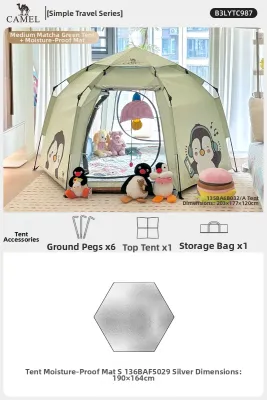
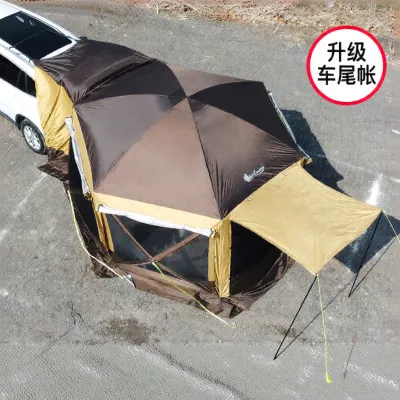
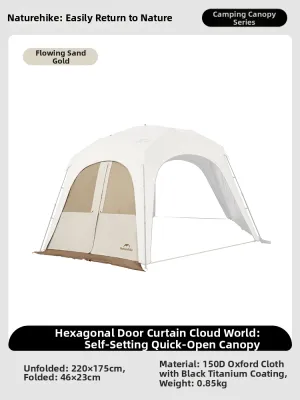
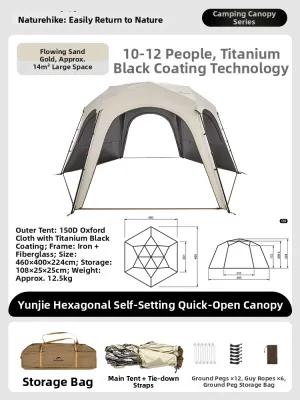
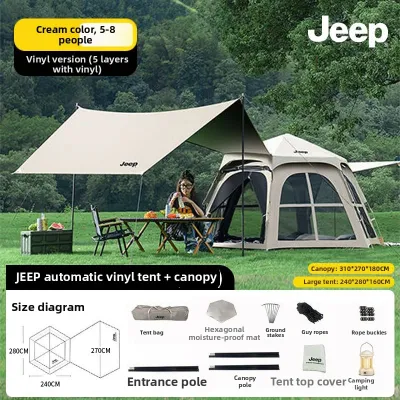
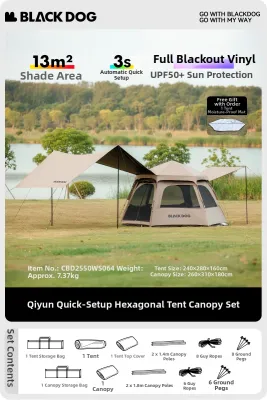
Prices are valid at publication and may change. Please refer to the product page for the latest price.
Another major advantage is the centralized peak headroom. Unlike tunnel tents that slope sharply on the sides, a hexagonal tent typically features a high center point where adults can stand completely upright. This makes daily activities like changing clothes, organizing gear, or managing young children significantly easier and less cramped. The sloping walls also create a sense of openness, making the interior feel much larger than a standard dome tent of equivalent floor area.
Finally, the hexagonal footprint allows for highly efficient floor space utilization. Instead of lining up in a rigid row, family members can arrange their sleeping pads radially or in a semi-circle. This layout leaves a natural central area clear for movement, card games, or quick access to the main door, fostering a more social and comfortable communal environment inside the shelter. The triangular corners that remain unoccupied by sleeping pads serve as excellent storage nooks for backpacks, clothing bags, and personal items.
Calculating the Right Capacity and Floor Plan
When shopping for a family tent, relying solely on the manufacturer’s “person” rating can lead to a cramped and uncomfortable trip. These ratings are typically calculated based on the maximum number of standard sleeping bags that can fit shoulder-to-shoulder with zero clearance. For a family, this layout leaves no room for luggage, changing clothes, or moving around during a rainy day.

To ensure a comfortable experience, a good rule of thumb is to subtract two from the manufacturer’s stated capacity. If you are a family of four, a 6-person hexagonal tent is generally the minimum size you should consider. If you plan to use large air mattresses instead of thin sleeping pads, you may need to scale up even further to an 8-person model to accommodate the wider dimensions.
Before purchasing, measure the dimensions of your existing sleeping gear and compare them to the tent’s floor plan. Keep in mind that the angled walls of a hexagon cut off the corners, meaning rectangular air beds cannot be pushed flush against the edges. You must allocate at least 30 to 50 centimeters of walking space between sleeping setups to prevent family members from stepping on each other during the night.
Additionally, evaluate the tent’s vestibule requirements. A vestibule is an extension of the rainfly that creates a covered porch area outside the inner tent door. In tropical environments, having a dedicated space to store muddy hiking shoes, wet slippers, and bulky storage bins is essential for keeping the main sleeping cabin clean, dry, and free of outdoor debris. Look for models that offer integrated vestibules or extended awnings that can be propped up with poles to create a shaded outdoor living space.
Verifying Weather Resistance for Tropical Campsites
The Philippine climate presents unique challenges for outdoor gear, characterized by intense heat, high humidity, and sudden torrential downpours. To help keep your family dry, you must learn to read and verify the technical specifications on product tags rather than relying on vague promotional claims of being waterproof.
Start by checking the Hydrostatic Head (HH) rating of the tent fabric, which is measured in millimeters. This rating indicates the amount of water pressure the material can withstand before moisture begins to seep through. For reliable protection against heavy tropical rains, look for a rainfly with a minimum HH rating of 1500mm to 2000mm. The tent floor, which faces constant pressure from the ground and the weight of sleeping campers, should have a much higher rating, ideally 3000mm or more, to reduce the risk of ground moisture seeping through. Polyurethane (PU) coatings are standard for achieving these ratings, so verify that the product specifications detail the coating type.
Ventilation is equally critical in humid conditions. A tent made entirely of solid, non-breathable fabric will quickly trap body heat and moisture, creating a stifling environment inside. Look for a hexagonal tent with a high mesh-to-solid fabric ratio. Large mesh windows, a mesh ceiling, and low-level ground vents are essential for encouraging continuous cross-ventilation, allowing warm air to escape while drawing cooler air in from the bottom.
Lastly, examine the coverage of the rainfly. Some budget-friendly tents feature a partial rainfly that only covers the top mesh ceiling. While this allows for great airflow, it offers very little protection against wind-driven rain that can blow sideways through the mesh walls. For family camping, opt for a full-coverage rainfly that extends almost to the ground, ensuring reliable protection during unexpected storms.
Assessing Durability and Setup Convenience
A family camping trip should be a relaxing experience, but a fragile frame or a frustrating setup process can quickly ruin the mood. Inspecting the construction quality and design features of a hexagonal tent before you buy will save you time and stress at the campsite.
Begin by verifying the quality of the seams and stress points. Water is highly likely to penetrate through needle holes in the stitching rather than the fabric itself. Look for manufacturer specifications that explicitly mention factory-taped or heat-sealed seams. Additionally, check that high-tension areas, such as pole intersections, guyline attachment points, and corner grommets, feature reinforced double-layer fabric and heavy-duty stitching. Zippers are another common failure point; look for robust, thick zippers that feature storm flaps to prevent water from leaking through the track.
The material of the tent poles plays a massive role in both durability and weight. Aluminum poles are highly recommended because they offer an excellent strength-to-weight ratio, are highly flexible under wind pressure, and do not rust in humid environments. Fiberglass poles are a more budget-friendly alternative; however, they are heavier, less flexible, and can splinter if subjected to extreme stress. If you choose a model with fiberglass poles, ensure they have sturdy metal ferrule connectors that fit tightly.
Setup convenience is another critical factor, especially if you have to pitch the tent in low light or during a sudden drizzle. Look for user-friendly assembly systems such as color-coded poles and sleeves, or clip-based suspension designs. These features allow you to quickly match each pole to its corresponding attachment point, making the pitching process intuitive enough for a single person to manage if necessary. Instant or pop-up hexagonal tents are also available, though you should verify that their integrated joint mechanisms are sturdy and not prone to jamming.
Building Your Shortlist on E-commerce Platforms
Finding the right hexagonal camping tent often involves browsing online marketplaces and e-commerce platforms. To navigate these sites effectively and avoid low-quality products, you need a structured approach to filtering and evaluating your options.
Start by setting a realistic budget in Philippine Pesos (₱). High-quality family-sized hexagonal tents with reliable waterproofing and durable poles typically range from ₱4,000 to ₱15,000. While cheaper options exist, they often compromise on seam sealing, pole strength, or fabric thickness. Filter your search results by your target capacity and look for listings that clearly state technical specifications like HH ratings and pole materials.
Do not rely solely on the overall star rating of a product. Instead, dive into the verified user reviews and look for recurring complaints. Pay close attention to feedback regarding broken zippers, leaking seams during heavy rain, or poles that snapped during the first setup. Photos and videos uploaded by local buyers are incredibly valuable, as they show the tent pitched in actual Philippine campsites, giving you a realistic view of its size and rainfly coverage.
Finally, check the seller’s return policies and warranty terms. A reputable seller should offer a clear return window for manufacturing defects. It is also highly beneficial to verify if the brand or seller offers replacement parts, such as spare poles, stakes, or rainflies. Having easy access to replacement components ensures that a single broken pole does not force you to discard the entire tent. If the specifications are unclear in the listing, do not hesitate to message the seller directly to confirm the exact materials and ratings before making your purchase.
Safe Installation and Post-Trip Care
Once you have selected and purchased your hexagonal camping tent, proper installation and maintenance are key to helping extend its lifespan and keeping your family safe during your outdoor adventures.
When you arrive at your campsite, take time to select a safe pitching spot. Look for level ground that is free of sharp rocks, roots, and twigs that could puncture the tent floor. Avoid pitching your tent directly under dead tree branches or in low-lying areas where rainwater is likely to pool. If the ground is damp or uneven, laying down a ground tarp or footprint first will provide an extra layer of protection against moisture and physical wear.
Properly tensioning your tent is crucial for its structural integrity. Stake down all six corners of the hexagon securely, ensuring the floor is taut but not overly stretched. Next, extend and secure every guyline. Guylines are not optional; they pull the rainfly away from the inner tent walls, preventing condensation from transferring inside and stabilizing the entire structure against sudden gusts of wind. Use sturdy stakes suitable for the soil type, such as aluminum Y-stakes for firm ground or wider pegs for sandy coastal sites.
After your trip, never pack away a wet or dirty tent. The tropical heat and high humidity in the Philippines create a favorable environment for mold, mildew, and fabric rot, which can destroy the waterproof coating within days. Gently brush off any dirt or sand, and wash dirty spots using a soft sponge and mild soap—never use harsh detergents or washing machines. Always hang your tent, rainfly, and footprint to dry completely in a shaded, well-ventilated area before storing them in a cool, dry place.
Frequently Asked Questions (FAQ)
Do hexagonal tents require a special footprint?
Yes, because of their unique six-sided shape, standard rectangular ground tarps are not ideal for hexagonal tents. If a rectangular tarp is larger than the tent floor, the excess material will stick out, catching rainwater and funneling it directly underneath your tent. It is highly recommended to use a custom-cut hexagonal footprint or trim a larger tarp so that its dimensions sit entirely within the perimeter of the tent floor.
How do I manage condensation inside a multi-person tent?
Condensation occurs when warm, moist breath from campers meets the cooler fabric of the tent walls. To minimize this in humid tropical climates, keep all available mesh windows and ground vents open, even during rain. Ensure that the rainfly is fully tensioned and staked out so that it does not touch the inner mesh body, allowing continuous airflow to carry the moisture away.

Community discussion
Share your experience or ask a question. Comments are reviewed before publication.