
Selecting the right inflatable boat requires matching the vessel’s design to your specific activities, skill level, and the environments you plan to explore. For fishing, stability and puncture resistance are paramount; for family outings, passenger capacity and safety chambers take priority; and for solo paddling, lightweight portability and quick setup are key. In the tropical climate of the Philippines, factors like intense UV exposure, high humidity, and coastal conditions mean you must carefully evaluate materials and specifications before making a choice.
No single inflatable boat excels in every scenario, and equipment can never replace proper water safety training, swimming ability, and sound judgment. Before heading out onto the water, always assess your physical limits, check local weather forecasts, and ensure you have the appropriate safety gear for everyone on board.
Key Features to Look for in a Fishing Inflatable Boat
Anglers require a stable and durable platform that can handle gear, movement, and the occasional sharp object. When evaluating a boat for fishing, the floor design is one of the most critical factors. Rigid drop-stitch floors or aluminum slat floors allow you to stand securely while casting and reeling, whereas soft, non-reinforced inflatable floors are lighter but do not provide enough stability for standing.
Products mentioned in this guide
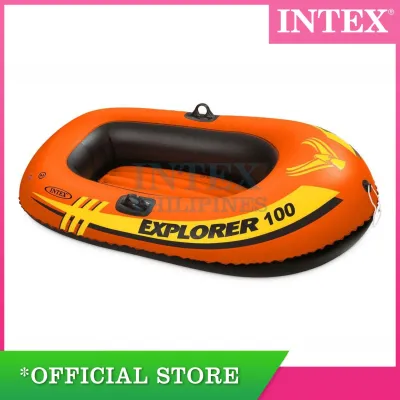
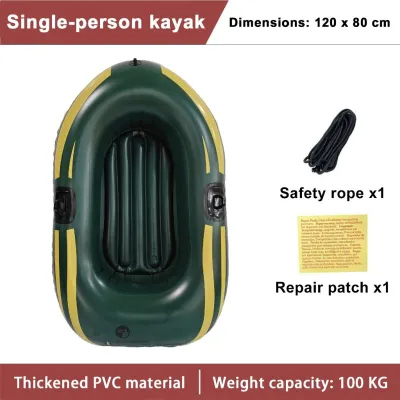
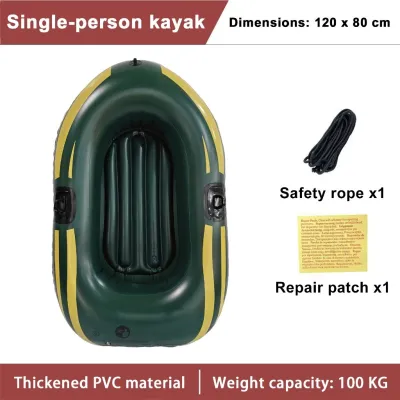
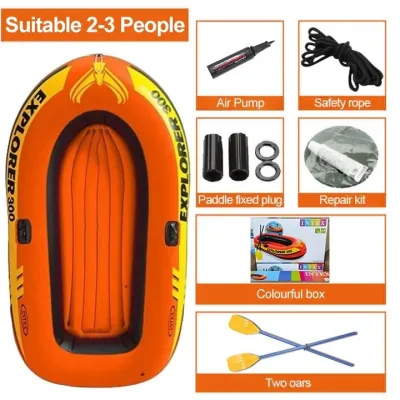
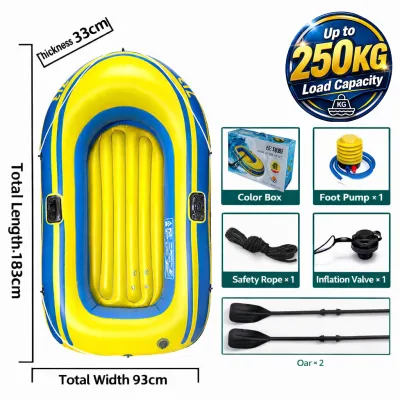
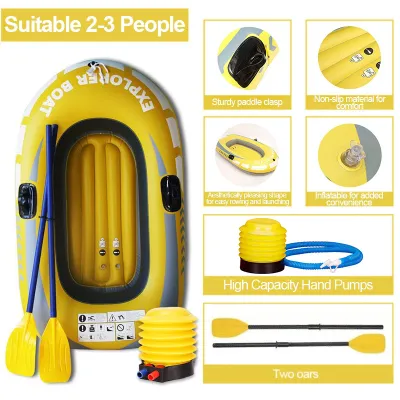
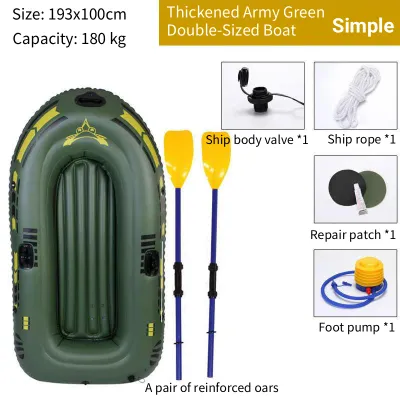
Prices are valid at publication and may change. Please refer to the product page for the latest price.
Gear management is another essential consideration for a successful fishing trip. Look for models that feature integrated mounting points or pre-installed brackets for rod holders, fish finders, and small trolling motors. Having dedicated spaces for your equipment keeps the deck clear and prevents gear from sliding around while you navigate.
Weight capacity limits must be verified on the manufacturer’s specification label before loading your gear. You must account for your own weight, the weight of your tackle boxes, coolers, anchors, and any potential catch. Overloading the boat reduces freeboard—the distance from the water’s surface to the top of the gunwale—which increases the risk of taking on water in choppy conditions.
Because fishing often takes you near rocky shorelines, submerged branches, or sharp coral reefs, material durability is non-negotiable. Look for heavy-duty, multi-layer PVC or polyurethane fabrics with a high denier rating. These materials offer better resistance to accidental punctures from fish hooks, knives, and sharp fins, ensuring you stay safe on the water.
What Makes an Inflatable Boat Ideal for Family Outings
For family beach days and recreational outings, safety, comfort, and ease of use are the primary concerns. You must first determine the maximum passenger capacity and weight limits of the vessel. Ensure the boat can comfortably accommodate all family members with enough space to sit securely without crowding the perimeter.

Safety features should be your top priority when choosing a family boat. Look for models equipped with multiple independent air chambers. This design ensures that if one chamber is accidentally punctured, the remaining chambers retain enough buoyancy to keep the boat afloat and allow you to return safely to shore. Perimeter safety lines, sturdy grab handles, and secure seating arrangements are also essential for keeping children and passengers stable in moving water.
Transport and assembly logistics can make or break a family day trip. Evaluate the packed weight and dimensions of the boat to ensure it fits easily into your vehicle’s trunk or cargo area. Consider how quickly the boat can be inflated and deflated at the shoreline; models that require complex assembly of floorboards may add unnecessary stress to your outing.
Tropical environments expose watercraft to intense sunlight and abrasive sand. Verify that the boat’s material features UV-resistant coatings to prevent the fabric from degrading, fading, or becoming brittle over time. Reinforced hulls also help protect the bottom of the boat when dragging it onto sandy beaches or shallow shores.
Choosing a Lightweight Inflatable Boat for Solo Paddling
Solo explorers need a highly portable and efficient boat that can be managed, launched, and retrieved by a single person. Prioritize compact packed dimensions and a low overall weight. A boat that is too heavy or bulky to carry alone will limit your launching options and quickly lead to physical fatigue before you even reach the water.
Tracking and paddling efficiency are critical when you do not have a partner to help steer. Compare hull shapes and look for tracking features such as removable skegs, directional fins, or drop-stitch keels. These components help the boat travel in a straight line rather than drifting sideways with every paddle stroke, saving you valuable energy on longer journeys.
Decide whether you prefer a paddle-only design or a vessel that can accept a small electric outboard motor. If you choose a motorized option, verify that the transom or motor mount is rated for the specific weight and horsepower of your motor. Keep in mind that adding a motor also increases the overall weight you must carry and manage by yourself.
Setup time is another key factor for solo paddlers. Look for simple valve designs and high-volume manual pumps that allow for quick inflation without excessive physical exertion. A battery-powered electric pump can also be a helpful tool to save your energy for the actual paddling experience.
Evaluating Cross-Scenario Compatibility and Trade-offs
While it is tempting to look for a single inflatable boat that can handle fishing, family trips, and solo paddling, hybrid designs always involve compromises. A wide-beam boat designed for family stability will be slow, heavy, and difficult to paddle solo. Conversely, a narrow, sleek solo kayak will lack the stability required for standing and casting, and it will not accommodate multiple passengers.
Modular accessories can help bridge the gap between different activities. Some versatile base boats allow you to add or remove seats, rod holders, and motor mounts depending on the day’s plans. This modularity lets you customize the boat’s layout, but it still requires you to accept the fundamental limitations of the hull shape.
There is a clear breaking point where attempting to use one boat for everything becomes impractical or unsafe. If you find yourself constantly struggling with heavy gear during solo trips, or if your family feels cramped and unstable on a fishing-focused vessel, it is safer and more practical to invest in specialized watercraft rather than compromising on safety and performance.
Pre-Launch Safety Checks and Maintenance Essentials
Before launching your inflatable boat, perform a thorough visual and tactile inspection of the entire vessel. Check the seams, valves, and high-abrasion areas for any signs of wear, peeling, or air leaks. Ensure that all valves are clean, free of sand, and sealing properly before you begin inflation.
Always inflate the boat to the exact pressure specified on the manufacturer’s label, using a reliable pressure gauge. Keep in mind that ambient temperature changes directly affect air pressure. The hot tropical sun will cause the air inside the chambers to expand, which can over-pressurize the boat; conversely, cool water will cause the air to contract, making the boat feel soft. Monitor the pressure throughout the day and adjust as needed.
Proper post-use care is essential for extending the lifespan of your boat. After every outing, rinse the boat thoroughly with fresh water to remove salt, sand, and organic debris. Allow the boat to dry completely in a shaded area before folding and storing it. Storing a wet or damp boat can lead to mold, mildew, and rapid degradation of the fabric and adhesives.
Stop using the boat immediately if you notice persistent air leaks, seam separation, or structural soft spots that do not hold pressure. Do not attempt to patch major seam failures yourself; instead, consult the manufacturer or a qualified professional repair service to ensure the boat remains safe for future use.
Frequently Asked Questions (FAQ)
Do I need to register my inflatable boat in the Philippines?
Registration requirements typically depend on the boat’s length, motor horsepower, and the specific waterways you plan to navigate. Unpowered paddle craft generally do not require formal registration, but motorized inflatables often do. Always check with local maritime authorities or the Philippine Coast Guard for the most current local regulations before launching.
How long does an inflatable boat typically last?
The lifespan of an inflatable boat varies widely based on material quality, UV exposure, and maintenance habits. High-quality PVC or polyurethane boats can last for several years if properly cared for. Protecting the boat from prolonged sun exposure, rinsing off salt water, and storing it dry are the most effective ways to maximize its usability.
Can I use a standard car tire pump to inflate my boat?
No, standard car tire pumps are designed for high pressure and low volume, which can easily overheat or fail to inflate a large marine chamber. They also lack the correct adapters for marine valves and can easily over-inflate and damage the boat’s seams. Always use manufacturer-approved manual, electric, or battery-powered marine pumps equipped with a reliable pressure gauge.

Community discussion
Share your experience or ask a question. Comments are reviewed before publication.