
Setting up a home boxing corner in a compact space, such as a typical urban condominium or a spare bedroom, requires balancing your training intensity with physical spatial limits. To find the right reflex bag, you must prioritize a compact base diameter, an adjustable telescopic pole, and a highly responsive spring mechanism that keeps the bag’s rebound path predictable. By matching the equipment’s footprint to your actual reach and footwork radius, you can build an effective training setup without damaging your walls or disrupting your living area.
Measuring Your Space for a Home Reflex Bag
Before purchasing any boxing equipment, you must accurately map out the physical boundaries of your training area. A reflex bag does not remain static; its entire purpose is to swing, rebound, and react to your punches, which means the actual space required is significantly larger than the physical footprint of the base. Start by clearing a dedicated circular zone on your floor and using a tape measure to mark a diameter of at least two meters. This gives you enough room to step forward, slide laterally, and pivot without colliding with nearby obstacles.
Next, measure the vertical clearance from the floor to your ceiling. Most adjustable reflex bags require a certain amount of overhead space to accommodate the telescopic pole when it is fully extended to eye level. Ensure that the maximum height of the equipment remains at least 15 centimeters below your ceiling to prevent the top of the spring or the ball from striking the ceiling during high-velocity rebounds.
Products mentioned in this guide
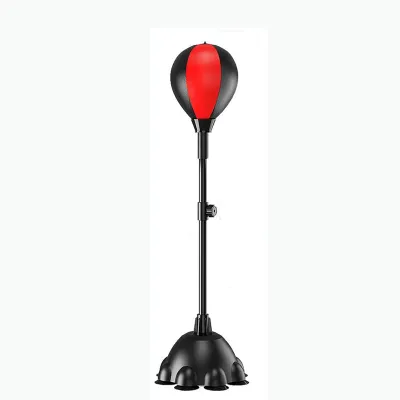
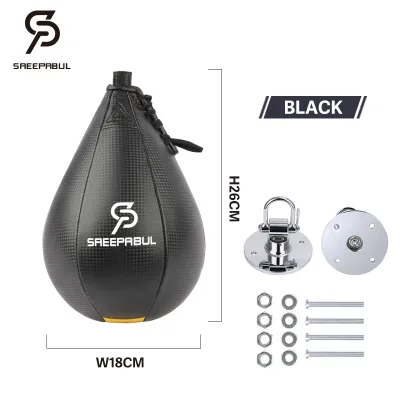
Prices are valid at publication and may change. Please refer to the product page for the latest price.
You must also account for your full arm reach combined with active footwork. When you throw a jab or a cross, your body naturally shifts forward, extending your reach beyond a stationary standing position. If the reflex bag is placed too close to a wall, the ball will strike the wall on its backward swing, which can scuff paint, damage drywall, or disrupt the natural rhythm of your training.
Finally, identify any overhead and peripheral obstacles that could interfere with your movement. In tropical climates, ceiling fans are incredibly common and pose a significant safety hazard if they are positioned directly above your training zone. Look out for low-hanging light fixtures, air conditioning units, curtain rods, and nearby furniture such as bed frames, desks, or glass cabinets. Ensuring a completely clear path for both your body and the swinging bag is essential for a safe home workout.
Choosing the Right Pole Height and Ball Size
Selecting a reflex bag with the correct pole height and ball size is critical for maintaining proper boxing mechanics in a confined space. A telescopic pole is highly recommended for home use because it allows you to customize the height of the target to match your specific stance. For proper form, the center of the striking ball should align with your nose or chin, simulating the head height of an opponent. If your ceiling is low, look for models with a wide adjustment range that can retract sufficiently while still keeping the target at a realistic striking level.

The size and material of the striking ball also play a major role in how much space the equipment consumes during use. Smaller, compact target balls—often filled with dense foam or high-grade synthetic leather—rebound much faster and have a tighter, more controlled swing radius. This compact motion is ideal for small rooms because it limits the distance the ball travels horizontally, allowing you to practice tight slips, rolls, and defensive head movement without needing a massive clearance zone.
In contrast, larger or heavier striking balls tend to swing in wider arcs and require more effort to control. While they offer a larger target for beginners, their wide rebound path can easily bring them into contact with nearby walls or furniture in a cramped room. For tight spaces, prioritizing a smaller, high-speed ball will keep your training focused, fast, and spatially efficient.
Additionally, you should prioritize models that are easily adjustable and detachable. In a multi-purpose room or a shared apartment, you may not want a boxing setup permanently occupying the center of the floor. Choosing a model where the telescopic pole can be quickly unscrewed from the base allows you to store the equipment in a closet or slide it under a bed when your workout is complete, instantly restoring your living space.
Picking a Stable Base for Condo and Apartment Floors
The base is the foundation of your reflex bag, and choosing the right design is essential for balancing stability with floor space. In a tight layout, a massive base can quickly become a tripping hazard and limit your footwork. Compare the base diameters of different models before buying; most compact home units feature a circular base with a diameter of 40 to 50 centimeters, which fits comfortably in corner setups while still providing adequate stability.
You will need to decide between filling the base with water or dry sand. Water is highly convenient for condo dwellers because it is easy to source from a standard bathroom faucet and simple to drain when you need to move or store the equipment. However, water is less dense than sand, and the sloshing motion inside the base can create minor noise and slight base movement during high-intensity workouts.
Dry sand provides significantly more weight and density, making the base much more stable and resistant to sliding. The trade-off is that sand is difficult to transport up to high-rise apartments, messy to fill, and highly challenging to empty when you need to relocate the setup. If you choose sand, ensure you use a funnel and completely dry play sand to prevent clumping inside the base.
Protecting your flooring is another critical consideration, especially if you live in a rental unit with hardwood, laminate, or ceramic tiles. The constant impact of punches causes the heavy base to vibrate and shift slightly, which can scratch delicate wood surfaces or cause tiles to crack over time. To prevent this, always place a high-density rubber mat or interlocking foam tiles beneath the base. This simple addition dampens the vibrations, distributes the heavy weight of the filled base, and significantly reduces the thudding noise that travels through the floor to the neighbors living below you.
Setup Clearances and Safety Checks for Small Rooms
Once you have selected and positioned your reflex bag, performing a thorough safety check is essential before starting your training session. Begin by establishing a clear safety zone around the equipment. Stand next to the unweighted bag and extend your arm fully in every direction; you should be able to pivot 360 degrees and throw punches without your knuckles, elbows, or shoulders coming into contact with any walls, furniture, or low-hanging fixtures.
Next, verify that the base is filled to the manufacturer’s recommended capacity. An underfilled base is highly unstable and can easily slide, tilt, or tip over when struck with off-center or heavy punches. This not only risks damaging your home but can also cause the metal pole to swing unpredictably and strike you or nearby objects. Regularly check the base for any signs of leaks, especially if you are using water in a humid, tropical environment where plastic components can expand or degrade over time.
Finally, pay close attention to your body and movement patterns during your first few workouts. If you find yourself shortening your punches, holding back on your footwork, or tensing your shoulders to avoid hitting nearby walls, your training space is too restrictive. Altering your natural striking form to accommodate a cramped room can lead to poor habits, joint strain, and wrist injuries. If the space feels too tight, relocate the setup to a more open area or adjust the spring tension to keep the ball’s rebound path shorter and more controlled.
Frequently Asked Questions (FAQ)
Can I use a reflex bag in a room with a low ceiling?
Yes, you can use a reflex bag in a room with a low ceiling, provided you check the equipment’s minimum retracted height before purchasing. Ensure that the top of the striking ball aligns with your nose or chin while leaving at least 10 to 15 centimeters of clearance below the ceiling to accommodate the vertical flex of the spring during fast rebounds.
Do I need a special mat for my reflex bag base on hardwood floors?
Yes, using a high-density rubber or foam mat is highly recommended for hardwood floors. The mat protects the wood from scratches and scuffs caused by the shifting base, helps distribute the heavy weight of the filled base, and dampens the vibrations and noise that would otherwise travel through the floor to neighboring units.
Is a water-filled base stable enough for heavy hitting in a small space?
A water-filled base is generally stable enough for speed work and light to moderate punches, but it may slide or tilt under heavy hitting. If you plan to train with high-power strikes, filling the base with dry sand or placing additional sandbags on top of a water-filled base will provide the extra anchoring weight needed to keep it secure.

Community discussion
Share your experience or ask a question. Comments are reviewed before publication.