
Finding the right reflex bag for your home training space depends on balancing the physical footprint of the equipment with the dynamic clearance needed for active movement. Unlike static punching bags, a reflex bag swings rapidly in all directions when struck, requiring a dedicated zone that accommodates both the equipment’s rebound and your own footwork. By carefully measuring your room and selecting the appropriate base and bag size, you can establish a safe, highly effective boxing corner even in a compact living area.
Assessing Your Available Floor Space and Clearance
Setting up a boxing corner at home requires more than just finding an empty corner to place your equipment. A reflex bag is designed to move dynamically, swinging back and forth rapidly after every strike. To train safely and effectively, you must measure your available floor space and calculate the total clearance required for both the equipment’s movement and your own footwork.
Start by measuring the physical footprint of the base, which typically ranges from 40 to 60 centimeters in diameter. However, the base footprint is only the starting point for your measurements. You must also account for the maximum swing radius of the bag head, which depends on the flexibility of the spring and the length of the shaft. When struck with force, the bag can bend up to 45 degrees or more from its center axis, extending the active training zone significantly beyond the static base.
Products mentioned in this guide
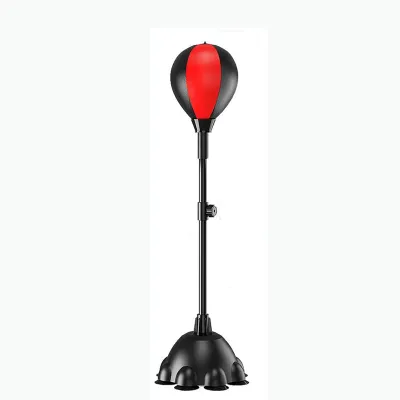
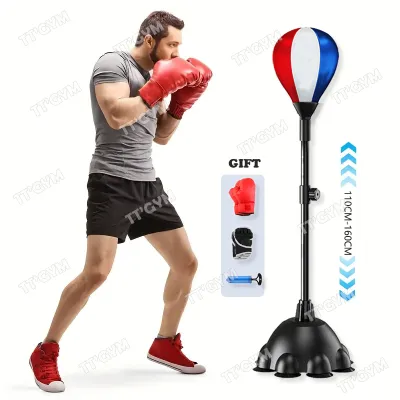
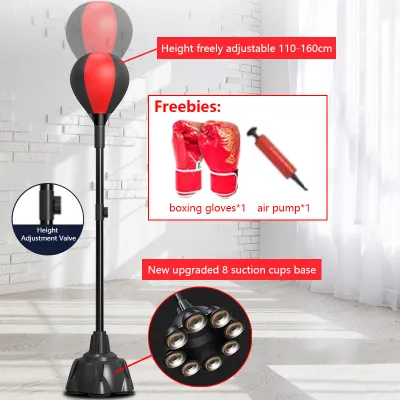
Prices are valid at publication and may change. Please refer to the product page for the latest price.
Beyond the equipment’s physical reach, you must factor in your own dynamic movement space. Boxing training is not static; you will be stepping forward, pivoting, and slipping punches. To avoid colliding with walls, furniture, or fragile home items, aim for a clear training radius of at least 1.5 to 2 meters around the center of the base. In typical homes in the Philippines, this means keeping the setup well away from glass sliding doors, television consoles, or delicate wooden dividers.
Ceiling height is another critical factor that is often overlooked, especially when setting up in a garage, a low-ceilinged bedroom, or a utility area. Many adjustable reflex bags can extend up to 180 centimeters or higher to accommodate taller users. Ensure there is at least 20 to 30 centimeters of clearance between the top of the fully extended bag and your ceiling or any overhead fixtures. Operating a reflex bag too close to a spinning ceiling fan or hanging light fixture can lead to severe equipment damage or personal injury.
Matching Reflex Bag Sizes to Your Room Dimensions
The size of the reflex bag head directly influences both the difficulty of your workout and the amount of space the equipment occupies during use. Smaller, speed-oriented bag heads, often filled with air or dense foam, are excellent for tight spaces because they have a shorter swing radius and require less clearance. These compact targets focus on hand-eye coordination, timing, and rapid slipping, making them ideal for smaller rooms or dedicated training corners.

Larger, heavier bag heads offer a more substantial target and allow for harder punches, but they also require a wider swing clearance. Because of their increased mass, these bags generate more momentum when struck, causing the spring to bend further and the pole to flex more dramatically. If you choose a larger bag head, you must ensure your training area can accommodate this wider, more aggressive rebound path without the bag hitting nearby walls or household items.
Adjustable pole heights offer excellent versatility, allowing multiple family members of different heights to use the same equipment. However, these adjustable mechanisms often feature bulkier locking collars and thicker metal shafts, which can increase the visual weight of the equipment in a shared living space. Fixed-height poles have a sleeker profile but lack adaptability, meaning you must be certain of your height requirements before purchasing.
When the equipment is not in active use, its visual profile and storage options become important considerations for maintaining a tidy home. A tall, upright reflex bag can dominate a small living room or bedroom visually. If you do not have a dedicated home gym, look for models that feature quick-disassembly joints or telescoping poles that can be lowered to their minimum height. This allows you to easily roll or carry the unit into a closet, behind a door, or into a corner of the garage when guests arrive or when the space is needed for daily household activities.
Choosing the Right Base Type for Stability and Footprint
The stability of your reflex bag depends heavily on the type of base and the filling material you choose. Most freestanding bases are hollow plastic chambers designed to be filled with either water or dry sand. Water is the most convenient option to source and fill, especially in residential areas, and it makes the base relatively easy to drain if you need to relocate the equipment. However, water can slosh around during intense workouts, which can cause the base to shift slightly on smooth floors over time.
Dry sand provides significantly more weight and density than water, resulting in a much more stable base that resists sliding or tipping during heavy punching sessions. The trade-off is that sand is much more difficult to pour into the narrow filling hole of the base, often requiring a funnel and some patience. Additionally, once a base is filled with sand, it becomes extremely heavy and difficult to move or empty, making it a semi-permanent fixture in your home.
The placement of the spring mechanism—whether it is located at the very bottom of the shaft near the base or higher up near the middle of the pole—also affects how the base behaves. Low-mounted springs transfer more kinetic energy directly to the base, causing it to vibrate and potentially slide across the floor if not properly weighted. High-mounted springs keep the base relatively quiet and stable but require a wider clearance at the top of the unit as the upper pole swings through a wider arc.
Floor protection is a vital consideration when setting up heavy fitness equipment on home flooring. Hard surfaces like ceramic tiles, polished concrete, or laminate wood can easily scratch, scuff, or even crack under the constant vibration and shifting of a heavy plastic base. Carpeting provides some natural cushioning but can suffer from permanent indentation or friction wear from the base’s edges. Using a dedicated protective barrier is essential to preserve your home’s flooring and reduce the noise transmitted through the floorboards to other rooms.
Setup Tips and Safety Clearances for Home Use
To ensure a safe and productive training environment, position your reflex bag well away from high-traffic walkways, door swings, and common household hazards. A swinging bag placed too close to a hallway or a bedroom door can easily strike someone walking past unexpectedly. Keep the setup clear of sharp corners, glass windows, and electrical appliances to prevent accidental damage during high-energy workouts.
Placing a high-density rubber mat or interlocking foam puzzle tiles under the base is highly recommended for both stability and floor protection. These mats provide excellent grip, preventing the base from slowly migrating across smooth tile or concrete floors during your workout. Additionally, a quality mat helps absorb the vibrations and dampens the thumping noise generated by the spring mechanism, which is particularly beneficial if you live in a multi-story home or a shared apartment building. Spending around ₱1,000 on a high-density rubber mat is a practical investment to safeguard your living space.
In the warm, humid climate of the Philippines, indoor workouts can quickly lead to heavy sweating. Setting up your reflex bag near a window or directly in the path of a stand fan or wall fan helps maintain comfortable airflow. This ventilation is also crucial for preventing sweat from dripping onto the base and creating a slipping hazard on the surrounding floor.
Before starting any training session, establish a quick inspection routine to check the integrity of your equipment. Verify that the locking collars are tight, the spring bolts are secure, and the base cap is firmly sealed to prevent any leaks. If you notice the base shifting significantly, water seeping from the cap, or the pole developing unusual play during use, stop training immediately. Continuing to punch a loose or unstable reflex bag can lead to mechanical failure, causing the metal pole to detach or the base to tip over, potentially resulting in injury or property damage.
Frequently Asked Questions (FAQ)
Can I use a reflex bag in a small apartment or condo?
Yes, you can successfully use a reflex bag in a small apartment or condominium, provided you select a model with a compact base diameter and a smaller bag head. Look for bases that measure under 45 centimeters in diameter to minimize the physical footprint in your living area. Instead of placing the equipment in a multi-use walkway where it can block traffic, dedicate a clear corner of your living room or bedroom for your workouts. Be mindful of the noise generated by the spring rebound, and use a thick rubber mat to dampen vibrations so you do not disturb your neighbors below.
How do I prevent the reflex bag base from scratching my floor?
To protect your home flooring from scratches and scuffs, start by inspecting the bottom of the plastic base before filling it. Manufacturers often leave rough plastic seams or sharp mold edges on the bottom surface, which can be smoothed down with light sandpaper. Always place a high-density rubber gym mat or interlocking foam puzzle mats underneath the entire footprint of the base. This barrier not only prevents direct plastic-to-floor contact but also absorbs the impact energy and stops the heavy base from sliding and grinding against your tiles or wooden floorboards during intense training sessions.

Community discussion
Share your experience or ask a question. Comments are reviewed before publication.