
Selecting the right rubber boat requires balancing your intended water activities, passenger load, and transport capabilities. A boat that is too small will feel cramped and unstable, while an oversized model can be difficult to transport, inflate, and launch without a trailer. To find the ideal match, you must evaluate how the boat’s construction, hull shape, and dimensions align with your specific plans on the water.
For casual recreation in calm, shallow waters, a compact, soft-bottom inflatable is often the most practical choice due to its portability and ease of setup. If your goals involve navigating coastal waves for island hopping or carrying heavy gear for fishing trips, you will need a larger, more rigid platform, such as a rigid inflatable boat (RIB) or a heavy-duty inflatable with a solid floor and a reinforced transom.
Evaluating Rubber Boat Construction and Hull Types
The foundation of any rubber boat is its hull design and material composition, which directly dictate how the vessel handles waves, carries weight, and stores away when not in use. Soft-bottom inflatable boats feature a flexible floor made of fabric or drop-stitch material, allowing the entire structure to roll up into a compact bag. This design is highly portable and fits easily into a standard car trunk, making it excellent for spontaneous outings where storage space is limited.
Products mentioned in this guide
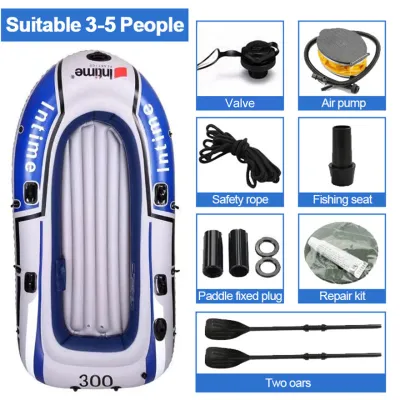
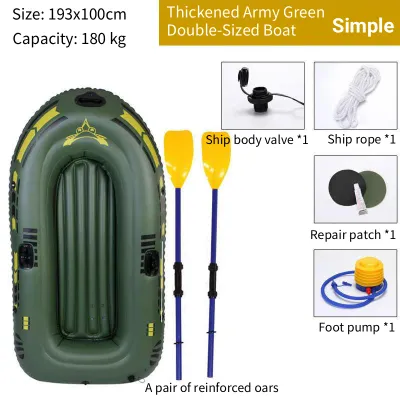
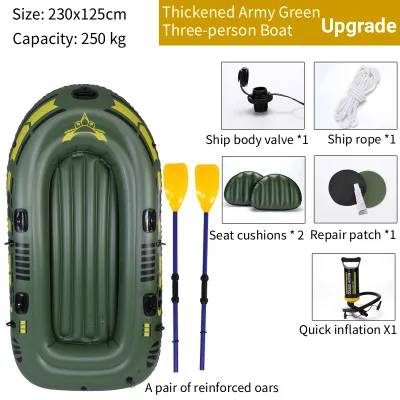
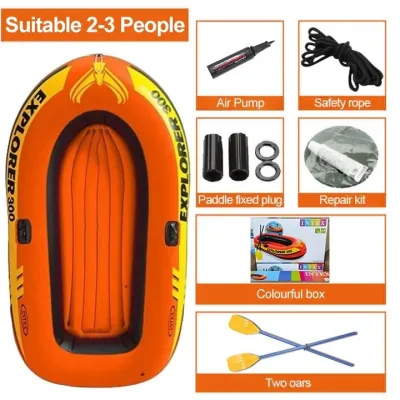
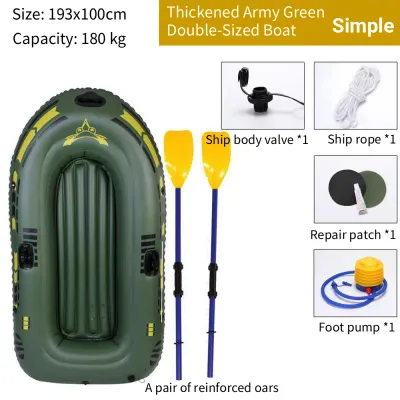
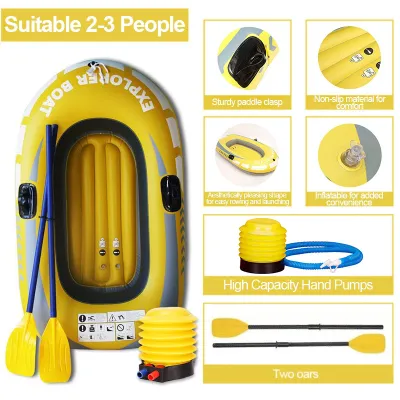
Prices are valid at publication and may change. Please refer to the product page for the latest price.
In contrast, rigid inflatable boats, commonly known as RIBs, combine a solid fiberglass or aluminum hull with inflatable outer tubes. While RIBs offer superior tracking, speed, and wave-handling capabilities in open water, they cannot be folded or rolled up. Choosing a RIB means committing to transport logistics that typically require a dedicated trailer or a robust roof rack system, as well as a dedicated storage space at home.
Between these two extremes lie soft-bottom boats equipped with removable roll-up or interlocking floorboards made of aluminum, wood, or high-pressure drop-stitch material. These hybrid configurations provide a stable, flat standing surface suitable for casting or carrying gear, while still allowing the boat to be disassembled and packed away without a trailer.
When selecting a boat for tropical climates like the Philippines, material durability is a critical factor to verify. Intense sunlight, high humidity, and saltwater can accelerate the degradation of low-quality fabrics. You should check manufacturer labels for material specifications, specifically looking for heavy-duty PVC with UV-resistant coatings or premium chlorosulfonated polyethylene which offers higher resistance to heat and abrasion.
Hull shapes also play a decisive role in performance and stability. Flat-bottom inflatables offer excellent initial stability in calm, shallow waters and require less power to plane, but they tend to ride rough and splash in choppy conditions. V-hull designs cut through waves smoothly, providing a more comfortable ride in open coastal waters, while pontoon-style catamaran hulls offer exceptional stability for stationary activities like fishing.
Sizing Your Boat for Specific On-Water Activities
Choosing the correct boat size involves looking beyond the simple passenger rating listed on the manufacturer’s capacity plate. The maximum capacity plate indicates the absolute limit of weight and passengers the boat can safely carry under ideal conditions, but it does not represent comfortable, usable space. For a comfortable experience, especially when carrying gear, coolers, or safety equipment, it is generally wise to select a boat rated for at least one or two more people than your typical passenger count.

Fishing Trips
Anglers require a stable, spacious platform that can accommodate fishing gear, bait buckets, coolers, and rod holders without crowding the deck. A rubber boat measuring between 3.0 to 4.2 meters in length provides the necessary deck space for one or two anglers to cast safely and store equipment. Wider beams are preferable, as they increase lateral stability when you stand up to cast or reel in a catch.
The floor material is another critical consideration for fishing; aluminum or rigid drop-stitch floors prevent hooks, knives, and spiny fish from puncturing the boat’s air chambers. Additionally, you must check the transom strength and motor compatibility if you plan to mount an outboard motor or a trolling motor. A reinforced marine-grade plywood or fiberglass transom is essential for securing a motor and handling the torque generated when navigating tidal currents or reaching offshore fishing spots.
Island Hopping and Coastal Cruising
Island hopping and coastal cruising expose your boat to open-water chop, tidal currents, and sudden weather changes. For these activities, safety and wave-handling capability are paramount, requiring a boat length of at least 3.6 to 4.8 meters. Larger boats bridge the gaps between waves more effectively, reducing the pitching and rolling motion that can cause discomfort or seasickness.
A deep V-hull or a RIB design is highly recommended for coastal trips, as it cuts through waves rather than riding over them, keeping passengers drier and safer. These longer journeys also demand integrated storage compartments to keep personal items, electronics, and extra fuel dry and secure. Ensure the seating configuration provides secure handholds and comfortable positioning for passengers during extended transits across open water.
Casual Family Recreation
For relaxed afternoons in calm bays, lakes, or slow-moving rivers, a smaller and lighter rubber boat is often the most enjoyable option. Models ranging from 2.5 to 3.3 meters are easy to inflate, launch, and maneuver, making them ideal for families who want a straightforward, low-stress water experience. These boats can be quickly set up on the beach or dock without requiring specialized launching ramps.
When choosing a recreational boat for family use, prioritize safety features over speed or high-end performance. Look for models with multiple independent air chambers, which ensure that the boat remains buoyant even if one chamber is accidentally punctured. High-pressure drop-stitch floors provide a firm surface that feels stable underfoot for children, while sturdy grab lines running along the perimeter of the tubes offer secure handholds for anyone swimming nearby.
Matching the Boat to Your Motor and Transport Logistics
Before purchasing a rubber boat, you must ensure that its physical dimensions and weight align with your transport capabilities and any motor you plan to use. Every inflatable boat has a strict maximum horsepower (HP) and engine weight rating specified by the manufacturer. Exceeding these limits can damage the transom, cause the bow to rise dangerously, or even flip the boat, so you must verify these ratings on the transom plate before pairing a motor.
Transport logistics can quickly turn a great boat into a burden if not planned carefully. If you do not own a trailer, you must check the deflated dimensions and folded weight of the boat to ensure it fits comfortably inside your vehicle’s trunk or on a roof rack. Keep in mind that heavy-duty materials and rigid floorboards add significant weight, which may require two people to lift and assemble safely.
In the Philippines, motorized vessels are subject to local maritime regulations, registration, and licensing requirements. If you plan to attach an outboard motor to your rubber boat, you should consult the Maritime Industry Authority (MARINA) or the Philippine Coast Guard (PCG) to verify the necessary permits, safety equipment mandates, and operator licensing rules. Operating an unregistered motorized vessel can lead to fines and restrict your access to popular coastal destinations.
Pre-Purchase Verification and Safety Boundaries
A thorough pre-purchase inspection is essential to ensure you are investing in a safe, durable vessel. Examine the seam construction carefully; welded seams generally offer superior longevity and heat resistance compared to glued seams, which can weaken over time in hot, humid environments. Check the quality of the inflation valves, ensuring they are standard marine-grade valves (such as Halkey-Roberts valves) that prevent air leakage and are easy to replace if damaged.
Always verify that the boat package includes a high-quality, marine-grade repair kit containing patches and adhesive compatible with the boat’s specific material. Before your first launch, consult the manufacturer’s manual to understand the exact inflation pressures required for the tubes and floor, as under-inflation can cause the boat to flex excessively in waves, while over-inflation in hot weather can cause the air to expand and damage the seams.
It is vital to remember that no matter how well-constructed your rubber boat is, it cannot replace proper safety gear, navigation training, or sound weather judgment. Before heading out, always check local weather forecasts and sea conditions, and establish clear stop conditions, such as rising winds or incoming storms. Ensure that every passenger is equipped with a properly fitted personal flotation device (PFD), and carry essential safety gear, including a manual bilge pump, oars, a signaling whistle, and a reliable communication device.
Frequently Asked Questions (FAQ)
How long does a rubber boat typically last?
The lifespan of a rubber boat depends heavily on the materials used, environmental exposure, and maintenance habits. To maximize longevity, you should check the manufacturer’s warranty terms and follow specific care instructions, which typically include rinsing the boat with fresh water after saltwater use, avoiding harsh chemical cleaning agents, and storing the boat dry in a cool, shaded area away from direct sunlight.
Can I use a standard car tire pump to inflate a rubber boat?
No, you should not use a standard car tire pump to inflate a rubber boat. Car tire pumps are designed for high-pressure, low-volume inflation and can easily overheat or cause localized over-inflation that damages the boat’s valves or seams. Instead, always use a pump specifically designed for marine inflatables, which delivers high volume at low pressure, and use a pressure gauge to verify the exact PSI or kPa recommended by the manufacturer.

Community discussion
Share your experience or ask a question. Comments are reviewed before publication.