
To fit a small condo unit in the Philippines—typically ranging from 20 to 40 square meters—the ideal treadmill must balance a compact physical footprint with the safety requirements of your workout routine. Selecting the right tridmill machine for a high-rise home requires analyzing how the equipment folds, how much noise it generates, and where it can be safely stored when not in use. By prioritizing space-saving designs like walking pads or compact folding models, you can maintain an active lifestyle without overcrowding your living room or disrupting your neighbors.
Measuring Your Condo Space for a Treadmill
Condo living in urban centers like Metro Manila requires creative spatial planning. Before purchasing, accurately assess your available floor space, clearances, and structural limits. Start by measuring the exact area where you plan to operate the machine, and compare these measurements against the active footprint of the models you are considering. It is a common mistake to only look at the folded dimensions; you must ensure the room can accommodate the machine when it is fully extended and in use.
Safety clearance is the most critical measurement. Manufacturers generally recommend leaving at least 1.5 to 2 meters of completely unobstructed space behind the running belt, along with at least 0.5 meters of clearance on both sides. This safety zone ensures that if you trip or fall while the belt is moving, you will be thrown safely onto the floor rather than pinned against a wall, furniture, or glass windows. Blocking emergency exit paths or placing the machine too close to high-traffic zones can turn your workout area into a household hazard.
Products mentioned in this guide
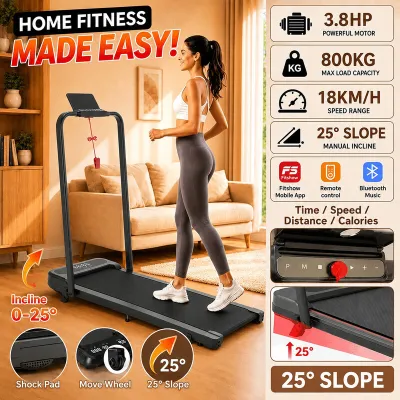
![[COD] Foldable Manual Home Treadmill with Adjustable Slope LED Display Anti-Slip Running Belt Free Twist Disc & Resistance Rope Space Saving Walking Machine for Home Fitness Exercise](https://img.lazcdn.com/g/p/1446617c7dcf63717d1a1640b68a647e.jpg_400x400q80.jpg_.webp)
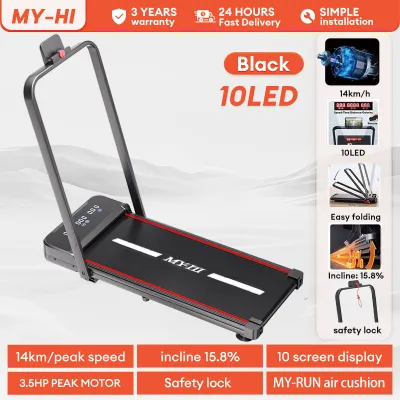
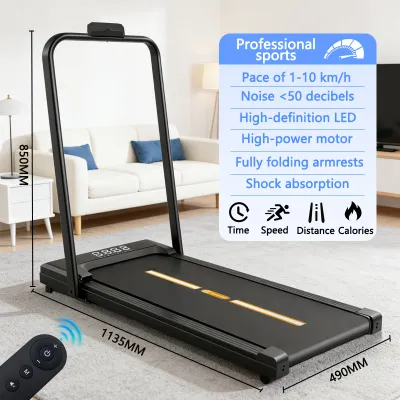
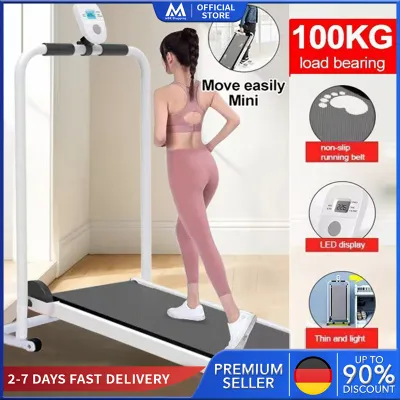
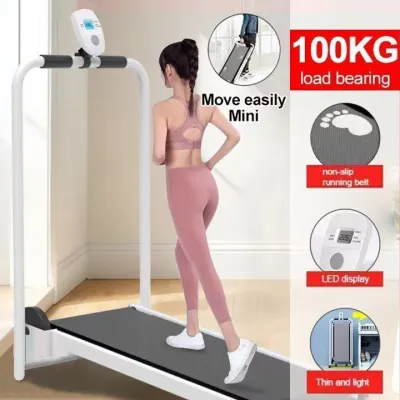
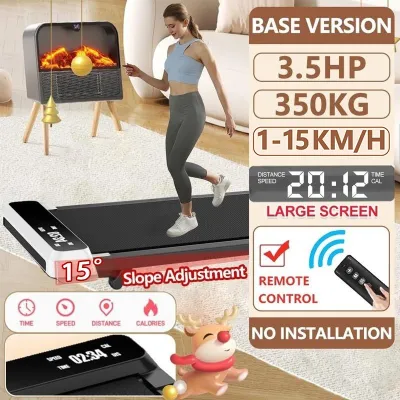
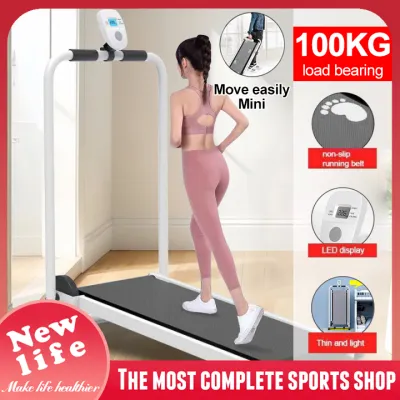
Prices are valid at publication and may change. Please refer to the product page for the latest price.
Next, map out the delivery route from the building’s entrance to your unit. Measure the height and width of the service elevator doors, the clearance in the corridors, and the dimensions of your unit’s front door frame. Many heavy-duty fitness machines are shipped in large, non-bendable boxes that cannot navigate tight hallway corners or small elevator cabs. Verifying these dimensions beforehand prevents delivery failures.
Ceiling height is another factor that is easily overlooked. To determine if your ceiling is high enough, add your own height to the treadmill’s deck height, which typically ranges from 15 to 25 centimeters. If you plan to use a model with an incline feature, add an extra 15 centimeters to account for the maximum elevation. Ensure there is still a comfortable gap of at least 15 to 20 centimeters above your head to prevent accidental head strikes during high-intensity workouts.
Matching Treadmill Types to Limited Floor Plans
Choosing the right type of tridmill machine depends heavily on your primary fitness goals and the layout of your condo. Walking pads, compact folding treadmills, and non-folding units each offer distinct advantages and spatial trade-offs. Understanding these differences allows you to select a machine that aligns with your daily routine without dominating your limited floor space.

Walking pads are the most compact option available, making them highly popular for studio apartments and small one-bedroom units. These ultra-slim devices are designed primarily for light walking or brisk power walking, with speed limits usually topping out around 6 kilometers per hour. Because they lack bulky consoles and often feature folding frames or flat profiles, they can easily slide under a bed, behind a sofa, or inside a closet when your workout is finished.
For those who want to jog or run, a traditional folding treadmill is a necessity. These machines feature more powerful motors, sturdier frames, and integrated handrails that are essential for safety at higher speeds. When active, they require a larger footprint, but their decks fold upward hydraulically to save floor space when stored. While they are highly versatile, folded treadmills still stand quite tall and can block natural light or look visually imposing in a small room.
The dimensions of the running belt itself represent a direct trade-off between machine size and user safety. A belt that is too narrow or short restricts your natural stride and increases the risk of stepping off the side. For walking, a belt width of 40 centimeters and a length of 100 centimeters is generally sufficient. However, if you plan to run, you will need a wider belt of at least 45 centimeters and a length of 120 centimeters to accommodate your longer stride safely.
Essential Features for Compact and Shared Living
Operating fitness equipment in a shared residential building requires careful consideration of your neighbors. In typical Philippine condo developments, units share walls and floors, meaning noise and vibrations can easily travel to adjacent homes. Prioritizing specific design features can help you maintain a peaceful relationship with your neighbors while enjoying your workouts.
Noise reduction and vibration dampening are essential features to look for. The sound of a running motor combined with the impact of your feet striking the deck can create low-frequency vibrations that penetrate concrete floors. To minimize this, choose a machine equipped with a high-quality deck cushioning system designed to absorb impact shock. Additionally, placing a dense, heavy-duty rubber equipment mat underneath the machine is highly effective at absorbing vibrations and protecting your condo’s flooring from scratches.
Portability and ease of handling are also crucial for daily usability. Look for models equipped with multi-directional transport wheels, which allow you to roll the machine across tile, vinyl, or laminate flooring without straining your back. If you choose a folding model, prioritize a hydraulic or soft-drop folding mechanism. This system uses gas shocks to lower the heavy deck slowly and safely to the floor, preventing sudden drops that could damage your tiles or injure pets and children.
Finally, consider the design of the console and accessory storage. Large, bulky consoles with massive side arms add unnecessary physical and visual weight to your living space. A minimalist console with a built-in tablet holder allows you to use your own smartphone or tablet for entertainment and tracking, reducing the overall size of the machine. Some modern compact models even feature folding handrails with integrated LED displays, keeping the entire profile sleek and unobtrusive.
Common Space Planning Mistakes to Avoid
When setting up a home gym in a confined space, minor layout mistakes can lead to safety hazards or damaged equipment. Being aware of these common pitfalls helps you create a functional and secure workout environment.
The most critical mistake is placing the treadmill flush against a wall or directly in front of furniture. If you lose your footing while running, the moving belt will carry you backward instantly. Without a proper safety clearance zone behind the machine, you risk being trapped and pressed against the wall by the spinning belt, which can cause severe friction burns and physical trauma. Always maintain the recommended rear clearance, even if it means placing the machine in a more prominent position in the room.
Another frequent error is ignoring the ventilation needs of the treadmill’s motor. Tucking the machine into a tight corner, behind heavy drapes, or inside a small utility closet during use restricts airflow around the motor housing. In the warm and humid climate of the Philippines, restricted ventilation can cause the motor to overheat rapidly, leading to electrical shorts, blown fuses, or permanent damage to the internal electronics. Ensure there is adequate air circulation around the motor cover during every workout.
Lastly, poor cord management can create serious tripping hazards in a small condo. Avoid running the power cord across main walkways or high-traffic paths. Do not use light-duty household extension cords, as they cannot safely handle the electrical current required by a treadmill motor and can pose a fire risk. Position the machine close to a dedicated wall outlet, and ensure the cord is secured and kept clear of the folding mechanisms to prevent it from being pinched or severed.
Frequently Asked Questions (FAQ)
Can I use a treadmill on a condo balcony?
Placing a tridmill machine on a condo balcony is generally not recommended due to environmental risks. The high humidity, salt air, direct tropical sunlight, and sudden heavy rain showers common in the Philippines can quickly damage sensitive electronic consoles, rust metal frames, and void your manufacturer’s warranty. Even if your balcony is covered, wind-blown moisture can still reach the machine, creating a severe electrical shock hazard. Additionally, you must verify your building’s balcony weight limits with the property management office, as balconies are often designed with lower load capacities than interior living spaces.
Do walking pads provide a good workout compared to standard treadmills?
Walking pads are highly effective for increasing daily activity levels, burning calories, and reducing sedentary time, but they serve a different purpose than standard treadmills. They typically have lower speed limits, often capping out at 6 kilometers per hour, and do not offer incline options or sturdy handrails for balance. If your fitness goals involve high-intensity running, cardiovascular conditioning, or hill training, a traditional folding treadmill is a safer and more versatile option. However, if your goal is to stay active while working at a desk or watching television, a walking pad is an excellent, space-saving alternative.

Community discussion
Share your experience or ask a question. Comments are reviewed before publication.