
A whistle is one of the most essential tools on a youth football field, serving as the primary voice of authority, safety, and instruction. Whether managing a chaotic training session under the tropical sun or teaching young players the basics of positioning, the right whistle ensures that instructions are heard instantly over the din of shouting players and cheering parents. However, a whistle that works well for an adult coach can be entirely unsuitable, or even hazardous, for a young child. Selecting the appropriate model requires balancing sound projection, physical safety, and ease of use based on who will be blowing it.
Identifying Whistle Needs: Coach vs. Young Player
The demands placed on a whistle vary dramatically depending on whether it is held by a youth coach or a young player. For a coach, the primary objective is clear communication across a large, open-air football pitch. Outdoor fields in the Philippines often contend with high ambient noise, from nearby traffic to sudden tropical downpours. A coach needs a whistle that projects a sharp, high-decibel sound capable of cutting through these distractions instantly to stop play or gather players. The physical design must also allow the coach to keep their hands free to demonstrate drills, hold a clipboard, or gesture to players.
In contrast, when a child uses a whistle during practice or mini-games, the priorities shift toward safety, physical comfort, and hygiene. Young players have smaller lung capacities, meaning they cannot easily produce the high air pressure required to operate heavy-duty professional whistles. A child’s whistle must be highly responsive, requiring minimal effort to produce a clear sound. Furthermore, safety is paramount; children are more prone to running with a whistle in their mouth or dropping it in the dirt, which introduces choking hazards, dental risks, and hygiene concerns. Understanding these distinct roles prevents the mistake of handing a professional-grade referee whistle to a seven-year-old player.
Products mentioned in this guide
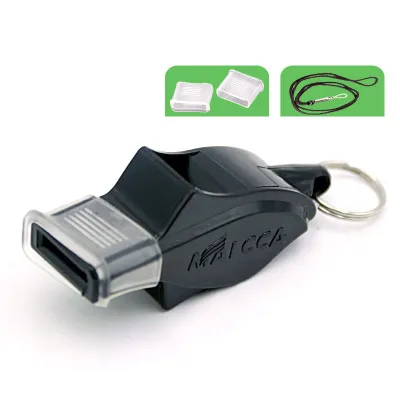
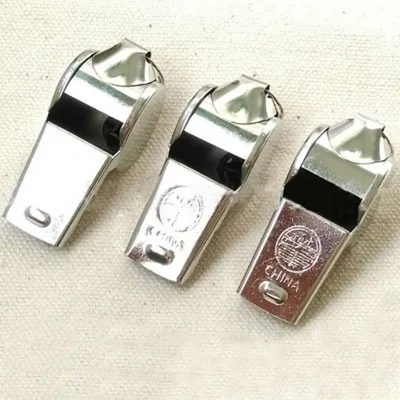
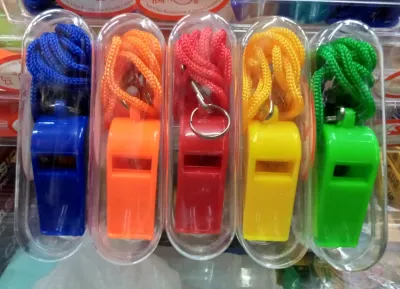
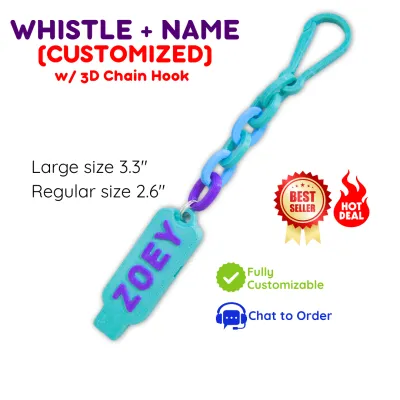
Prices are valid at publication and may change. Please refer to the product page for the latest price.
Comparing Whistle Types for Football Scenarios
When evaluating whistles for youth football, three primary designs emerge: pealess whistles, traditional pea whistles, and electronic whistles. Each design offers distinct advantages and limitations depending on the weather, the age of the user, and the specific training scenario.

Pealess whistles are widely considered the standard for outdoor sports. Instead of relying on a small internal ball to create a trilling sound, pealess whistles use engineered air chambers to produce a sharp, piercing tone. This design is exceptionally reliable in wet conditions, as there is no internal pea to get stuck or waterlogged during sudden afternoon rain showers. For coaches, a pealess whistle offers consistent performance and high volume, though it requires a strong, sudden burst of air to operate effectively, which can be difficult for very young children to manage.
Traditional pea whistles contain a small cork or plastic ball inside the chamber. As air passes through, the ball moves rapidly, creating the classic vibrato or trill sound associated with traditional sports. These whistles are often easier for children to blow because they can produce a recognizable sound with less lung power. However, they carry inherent risks in youth sports. The internal pea can easily jam if dirt, grass, or saliva enters the chamber, rendering the whistle silent at a crucial moment. Additionally, in humid tropical climates, moisture can accumulate inside the chamber, causing cork peas to degrade or stick over time.
Electronic whistles represent a modern alternative that completely eliminates the need for oral contact. Operated by a simple push-button, these hand-held devices use battery power to emit a loud, consistent electronic beep. This design is highly hygienic, making it an excellent choice for training sessions where multiple coaches or young assistant referees might need to share the same signaling device. Electronic whistles also allow the user to control the volume or tone with a switch, reducing the risk of ear strain. The primary trade-offs are the reliance on working batteries and a slightly bulkier shape that must be carried in the hand rather than held between the teeth.
What Youth Football Coaches Should Look For
For a youth football coach, selecting a whistle involves looking for specific features that support long hours on the pitch. Sound projection is the first consideration. A coach’s whistle should have a high pitch and a decibel level that can be heard clearly across a standard football field, even during windy conditions. Look for models designed to direct sound forward, away from the coach’s own ears, to prevent auditory fatigue over a long weekend tournament.
Ergonomics and carrying options are equally important for active coaches. A whistle with a cushioned mouth grip, often made of soft thermoplastic, allows the coach to hold the whistle comfortably between their teeth without straining their jaw or damaging their teeth. This hands-free capability is vital when demonstrating kicking techniques or managing training cones. Additionally, coaches should look for durable, impact-resistant plastics or rust-proof metals that can withstand being dropped on hard ground or exposed to intense sunlight and sweat.
Finally, consider the attachment mechanism. A high-quality lanyard with an adjustable slider ensures the whistle stays close to the chest without swinging wildly during sudden movements. Some coaches prefer wrist lanyards or finger-grip models, which provide quick access without the discomfort of a neck cord during hot, humid training sessions.
How to Choose a Safe Whistle for Kids
When selecting a whistle specifically for kids to use during practice, safety must guide every decision. The material of the whistle should be non-toxic, BPA-free, and lead-free, as children will inevitably chew on the mouthpiece. Look for whistles with smooth, rounded edges and a soft, food-grade silicone or rubber cover over the mouthpiece. This cushioning protects developing teeth and gums from accidental impacts if another player bumps into the child while they are blowing the whistle.
Volume control is another critical factor for younger users. Children often blow whistles close to their own ears or those of their teammates. To protect sensitive, developing hearing, choose a whistle designed to produce a moderate volume level rather than a piercing professional tone. Some youth-specific whistles are engineered to cap the maximum decibel output, ensuring the sound remains safe even when blown with maximum effort.
Carrying safety is the final piece of the puzzle. Standard lanyards worn around the neck pose a serious strangulation hazard if a child trips, falls, or has the cord snagged by another player during a fast-paced drill. For children, always opt for a breakaway lanyard equipped with a safety clasp that instantly releases under tension. Alternatively, wrist lanyards or finger-grip attachments keep the whistle secure without placing any cords around the child’s neck.
Hygiene, Maintenance, and Field Safety
Maintaining sports equipment is essential for health, especially in warm, humid environments where bacteria and mold can thrive. Whistles require regular, thorough cleaning to prevent the buildup of saliva, dirt, and germs. After every practice session, wash plastic and metal whistles with warm water and mild dish soap. For a deeper clean, soak the whistle in a mixture of water and a small amount of vinegar, then rinse it thoroughly with clean water and allow it to air dry completely before storing it.
Proper storage is also key to longevity. Avoid leaving whistles in damp gear bags or hot car trunks, as extreme heat can warp plastic components and degrade rubber mouth grips. Store the whistle in a ventilated pouch or a clean, dry compartment of a coaching bag. Before every training session, perform a quick visual check. Inspect the whistle for any cracks, deep teeth marks, or loose parts. If a plastic whistle shows signs of cracking or if the breakaway clasp on a lanyard is damaged, replace the item immediately to prevent choking or injury on the field.
Frequently Asked Questions (FAQ)
Can a standard sports whistle damage a child's hearing?
Yes, standard sports whistles can produce sound levels exceeding 110 decibels, which can cause temporary or permanent hearing damage with prolonged or close-range exposure. Children have more sensitive ears than adults, making them highly vulnerable to loud, sudden noises. To prevent auditory discomfort or injury, children should only use whistles designed for lower volume outputs, and they must be instructed never to blow a whistle directly next to another person’s ear. If a practice session requires loud signaling, coaches should maintain a safe distance from the players before blowing the whistle.
Are finger whistles safer than lanyard whistles for young players?
Finger whistles are generally much safer for young players than traditional neck lanyards. A finger whistle attaches directly to the fingers using an adjustable strap or grip, completely eliminating the risk of neck strangulation during active play. This design also keeps the whistle easily accessible without dangling, reducing the chance of a child tripping over the cord or having the whistle swing into their face. If a lanyard must be used, it should always feature a quick-release breakaway clasp that opens immediately when pulled.

Community discussion
Share your experience or ask a question. Comments are reviewed before publication.