
Building a complete yoga accessories set requires selecting a roller that aligns with your individual practice level, physical recovery goals, and environmental conditions. In the Philippines, where high humidity and tropical temperatures can affect both your body’s flexibility and the durability of your gear, choosing the right roller is essential for a safe and effective practice. The ideal roller should not only complement your existing yoga mat and blocks but also match your personal pain tolerance and specific recovery needs. By evaluating core materials, surface textures, and structural dimensions, you can find a tool that transitions seamlessly from a gentle pre-practice warm-up to deep, targeted myofascial release.
Identifying Your Practice Level and Recovery Goals
Before adding a roller to your wellness collection, you must assess your physical needs, current flexibility, and recovery intensity. A roller is not a one-size-fits-all accessory; a model that works perfectly for an advanced athlete might cause significant discomfort or even muscle guarding for a beginner. If your primary goal is gentle, restorative yoga, your body will require a highly forgiving surface that supports passive stretching and mild circulatory stimulation. Conversely, if you engage in intense physical training or power yoga, you may need a firmer tool capable of addressing deep tissue recovery and stubborn muscle knots.
Your current level of flexibility and overall pain tolerance should guide your initial selection. When muscle tissue is tight or unaccustomed to self-myofascial release, applying excessive pressure can trigger a protective contraction, defeating the purpose of the exercise. Beginners or those recovering from minor strains should prioritize softer, more compliant materials that allow the nervous system to relax. As your tissue tolerance improves and your muscles become more pliable, you can gradually transition to firmer options that offer deeper penetration.
Products mentioned in this guide
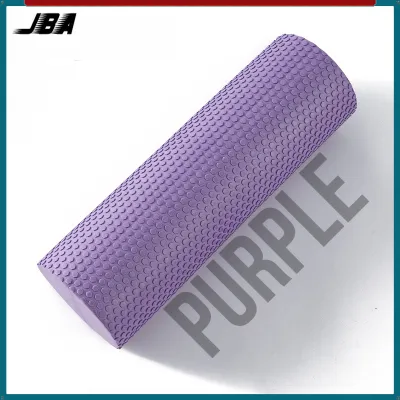
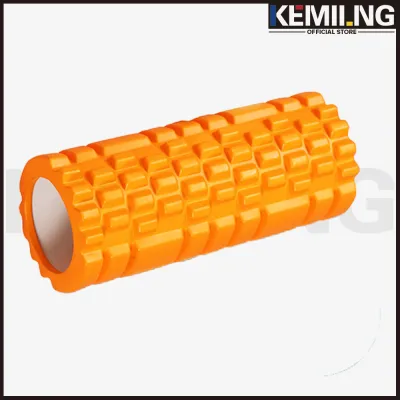
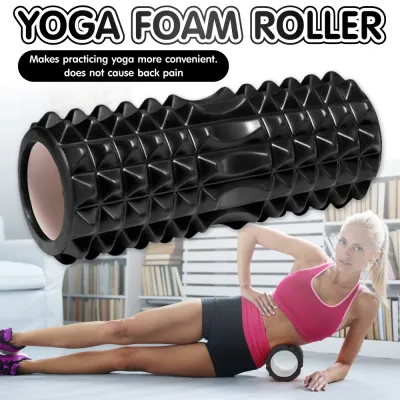
Prices are valid at publication and may change. Please refer to the product page for the latest price.
It is also helpful to define the primary use case for your roller within your daily routine. If you plan to use it as a pre-practice warm-up tool, you will want a surface that quickly stimulates blood flow and mobilizes joints without causing localized fatigue. For post-practice recovery, the focus shifts to flushing out metabolic waste and lengthening fatigued muscle fibers. Alternatively, if you are looking for passive support during restorative poses—such as elevating your hips or supporting your spine—the roller must offer stable, comfortable alignment without shifting or collapsing under your body weight.
Finally, identify the specific areas of tension you experience most frequently. Broad muscle groups, such as the quadriceps and latissimus dorsi, generally respond well to wide, smooth surfaces that distribute your body weight evenly. If your tension is concentrated in smaller, highly localized areas like the calves, glutes, or outer thighs, a targeted, textured surface may be necessary to pinpoint those specific trigger points. Understanding these physical variables ensures that your roller serves as a beneficial extension of your practice rather than a source of unnecessary strain.
Comparing Core Yoga Roller Materials and Textures
The material and surface design of a roller directly dictate its firmness, durability, and suitability for different practice styles. In tropical climates, these material characteristics also influence how the roller handles sweat, humidity, and wear over time. The following sections break down the primary types of rollers available, comparing their structural properties and ideal user profiles to help you narrow down your choices.

| Roller Type | Material | Firmness Level | Ideal User Profile |
|---|---|---|---|
| Smooth Foam | Standard Polyethylene (PE) or EVA | Soft to Medium | Beginners, Restorative Yoga, Low Pain Tolerance |
| Textured Grid | High-Density EVA with Hollow Core | Medium to Firm | Intermediate Practitioners, Active Recovery |
| Natural Cork | Compressed Natural Cork | Firm to Extra-Firm | Eco-Conscious Users, Deep Tissue, Alignment |
| High-Density | Expanded Polypropylene (EPP) | Extra-Firm | Advanced Practitioners, Deep Myofascial Release |
Selecting the right material ensures that the pressure applied to your muscle tissues is both therapeutic and manageable. Furthermore, understanding how these materials respond to frequent use and environmental factors will help you invest in an accessory that maintains its shape and hygiene over the long term.
Smooth and Standard-Density Foam Rollers
Smooth, standard-density foam rollers are typically constructed from polyethylene (PE) or soft ethylene-vinyl acetate (EVA). These rollers are highly recommended for beginners, individuals engaging in gentle restorative yoga, or anyone with a lower pain tolerance. The smooth, uniform surface distributes your body weight evenly across a broad area, providing gentle pressure that stimulates circulation without overwhelming the nervous system or causing acute discomfort.
While these rollers are excellent for introducing your body to myofascial release, they do have structural limitations. Over time, standard-density foam can compress, lose its cylindrical shape, and develop permanent indentations, especially when subjected to daily use. Additionally, because the surface is completely flat, it lacks the precision required to target deep, localized muscle knots or stubborn adhesions in thicker muscle groups.
Textured and Grid-Surface Rollers
Textured and grid-surface rollers feature molded patterns, ridges, and knobs on their outer layer, usually supported by a rigid hollow core. These variations are designed to mimic the hands of a massage therapist, with flat areas simulating the palms and raised ridges mimicking the fingers. This design is highly effective for intermediate to advanced practitioners who require targeted myofascial release to address specific muscle tightness.
The primary benefit of a grid roller is its ability to channel blood and oxygen through the tissues as you roll, promoting faster recovery. However, these textured surfaces apply highly concentrated pressure, which can be intense. You should avoid using highly textured rollers on highly sensitive areas, bony prominences, or the lower back, as the concentrated pressure can cause bruising or irritate underlying nerves.
Cork and Natural Material Rollers
Cork rollers are crafted from compressed natural cork, offering a highly sustainable, eco-friendly alternative to synthetic foam. Cork provides a very firm, unyielding surface that is exceptional for deep tissue work, structural alignment, and passive support in restorative poses. Because cork is naturally antimicrobial and resistant to moisture, it is particularly well-suited for the humid climate of the Philippines, resisting the buildup of mold, mildew, and odors.
The main trade-off with cork is its weight and rigidity. Cork rollers are significantly heavier than hollow-core synthetic options, making them less convenient for carrying to a local studio. They also offer virtually no give, meaning they require a high level of tissue tolerance and proper technique to avoid discomfort during use.
High-Density and Extra-Firm Rollers
High-density rollers, often made from expanded polypropylene (EPP) or solid, closed-cell EVA, are engineered for maximum firmness and durability. These rollers are designed primarily for advanced practitioners, athletes, or individuals working under the guidance of a physical therapist. They do not compress under heavy loads, making them highly effective for breaking down severe adhesions in thick, dense muscle groups like the IT band, glutes, and calves.
Because these rollers deliver intense, deep-tissue pressure, they must be used with caution. Incorrect application or excessive pressure on delicate structures can lead to bruising, muscle strain, or nerve compression. If you are new to rolling or have sensitive tissues, it is best to build up your tolerance on a standard-density roller before upgrading to a high-density model.
Integrating the Roller Into Your Existing Yoga Gear
To build a cohesive and functional yoga accessories set, your roller should complement the other tools in your collection, such as your mat, blocks, and straps. The physical interaction between your roller and your yoga mat is a crucial starting point. If you use a thick, highly cushioned mat, a softer roller may sink too deeply, reducing its effectiveness and stability. Conversely, pairing a firm cork or high-density roller with a thin travel mat on a hard floor can create an unforgiving surface; using a standard 4mm to 6mm dense yoga mat provides the ideal balance of traction and cushioning.
You can also combine your roller with yoga straps to enhance your stretching and recovery routines. For example, while lying on your back with the roller positioned under your hips for passive elevation, a strap can be looped around your foot to assist in a gentle, supported hamstring stretch. This combination allows you to maintain proper spinal alignment while targeting specific muscle groups without straining your arms or shoulders. Always verify that your roller is stable on your mat before performing any combined movements.
Storage and portability are practical considerations, especially in tropical environments where humidity can affect gear longevity. If you frequently travel to studios or practice outdoors, a lightweight, hollow-core roller that fits inside a standard yoga bag is highly convenient. For home studios, ensuring your roller is stored in a well-ventilated area prevents moisture buildup. If you prefer a cohesive aesthetic, matching the natural texture of a cork roller with cork blocks and an organic cotton strap creates a visually calming and environmentally conscious practice space.
Essential Sizing and Specification Checks
When selecting a roller, the physical dimensions and core construction are just as important as the material. Rollers generally fall into three primary length categories, each serving distinct roles in a wellness routine. Full-length rollers, measuring approximately 36 inches, are the most versatile option for home use. Their long profile allows you to lie down with the roller aligned vertically along your entire spine, providing excellent support for chest-opening stretches, posture correction, and full-body rolling without the risk of slipping off the edges.
Mid-size rollers, typically ranging from 18 to 24 inches, offer a practical compromise between versatility and portability. They are wide enough to accommodate both legs or your entire back when positioned horizontally, yet they are compact enough to store easily in a closet or carry in a medium-sized gear bag. These are ideal for targeted limb work, such as rolling out the quadriceps, hamstrings, or calves, without taking up excessive floor space.
Travel-size rollers, which are usually around 12 inches or shorter, prioritize maximum portability and isolated muscle focus. While they are too short for full-body spinal alignment or broad back rolling, they are highly efficient for on-the-go recovery, quick pre-run warm-ups, or targeting specific areas like the feet and forearms. Their compact size makes them easy to pack into a backpack or carry-on luggage for travel.
In addition to length, you must evaluate the core structure of the roller. Hollow-core rollers feature a rigid plastic inner tube surrounded by a foam outer layer, making them lightweight, highly durable, and resistant to warping. They also allow you to store smaller items, like a yoga strap or a hand towel, inside the core to save space. Solid-core rollers, on the other hand, provide a consistent, uniform density throughout the entire cylinder, offering a traditional feel and excellent structural longevity under heavy, daily use.
Safe Rolling Techniques and Equipment Care
Using a roller safely requires an understanding of your body’s anatomy and the limitations of self-myofascial release. You should never roll directly over joints, such as the knees, elbows, or ankles, as this can put unnecessary stress on ligaments and tendons. Additionally, avoid rolling the lumbar spine (lower back) and the neck without professional guidance; these areas lack the protective cage of the ribs, leaving the spine and delicate nerves vulnerable to hyperextension and compression. Instead, focus on the large muscle groups surrounding these areas, such as the glutes, upper back, and shoulders.
Always listen to your body’s signals during a rolling session. While mild discomfort or a “good hurt” is common when releasing tight muscles, you must stop immediately if you experience sharp pain, numbness, tingling, or a radiating sensation. These symptoms indicate that you are compressing a nerve or blood vessel, or that the muscle tissue is being damaged. Keep your rolling movements slow and controlled, spending no more than 30 to 60 seconds on any single tight spot, and remember to breathe deeply to help your nervous system relax.
Proper maintenance is essential to keep your roller hygienic and durable, especially in hot, humid climates. For closed-cell synthetic foam rollers (such as high-density EVA or EPP), wipe the surface down after each use with a damp cloth and a mild, non-abrasive soap solution to remove sweat and oils. Avoid harsh chemical cleaners that can degrade the foam. For porous materials like natural cork, use a very lightly dampened cloth and allow the roller to air dry completely in a well-ventilated space before storing it.
To prevent material degradation, warping, or fading, always store your roller away from direct sunlight, extreme heat, and damp corners. Leaving a synthetic roller in a hot car or next to a sunny window can cause the foam to soften, lose its shape, or become brittle. By maintaining a clean, dry storage environment, you ensure that your roller remains a safe, supportive, and long-lasting component of your yoga accessories set.
Frequently Asked Questions (FAQ)
Can I use a yoga roller if I have a pre-existing back injury?
A yoga roller is a wellness and recovery tool, not a substitute for professional medical treatment or physical therapy. If you have a pre-existing back injury, such as a herniated disc, spinal stenosis, or chronic joint instability, you must consult your doctor or a physical therapist before using a roller. While gentle, passive restorative poses supported by a soft roller may be approved for some individuals, active rolling directly along the spine is generally restricted for those with back injuries. A professional can guide you on safe, targeted movements that support your recovery without risking further irritation or injury to the spinal structures.
How often should I replace my yoga roller?
The lifespan of a roller depends on its material, the frequency of use, and how well it is maintained. You should inspect your roller regularly for observable signs of wear, such as permanent compression, deep indentations, flaking material, or a noticeable loss of structural integrity. Standard-density foam rollers typically degrade faster under heavy use than high-density or natural cork options. If your roller no longer provides its original level of firmness, has warped into an oval shape, or fails to support proper alignment during your practice, it is time to replace it to ensure your routines remain safe and effective.
Is a hollow-core roller better than a solid one?
Neither design is universally superior; the best choice depends on your specific priorities regarding portability, durability, and texture. Hollow-core rollers are generally lighter, making them easier to transport, and they often feature textured outer grids that provide varied pressure zones. Their rigid inner core also prevents them from losing their shape over time. Solid-core rollers offer a uniform, consistent density across the entire surface, which some practitioners prefer for predictable, even pressure. If you prioritize portability and targeted texture, a hollow-core roller is ideal; if you prefer uniform firmness and traditional solid construction, a solid-core model is the better fit.

Community discussion
Share your experience or ask a question. Comments are reviewed before publication.