
Choosing the right boxing mitts depends on whether you prioritize absorbing heavy power shots, running fast defensive drills, or sharpening pinpoint accuracy. For trainers and athletes working in warm, humid environments, selecting the correct design is not just a matter of preference—it directly impacts joint health, training longevity, and the overall flow of your workouts. Curved mitts excel at catching heavy punches and protecting the pad holder’s wrists, flat mitts offer a versatile surface for high-volume speed combinations, and target mitts serve as specialized tools for elite precision.
By understanding how these three distinct shapes alter the mechanics of impact, you can select a pair that matches your specific role in the gym. Whether you are a coach holding pads for hours every day or a fitness enthusiast training with a partner, the right equipment prevents unnecessary fatigue and keeps your sessions productive. Let’s break down the structural differences, performance trade-offs, and key verification steps to guide your next purchase.
How Mitt Shape Dictates Training Flow and Comfort
The physical shape of a boxing mitt dictates how kinetic energy travels from the striker’s glove through the pad and into the trainer’s hand, wrist, and shoulder. When a punch connects with a flat surface, the force is distributed evenly across the flat plane, requiring the trainer to actively resist the impact by pushing back at the exact moment of contact. This constant resistance can quickly fatigue the forearm muscles and strain the wrist joint during extended training sessions.
Products mentioned in this guide
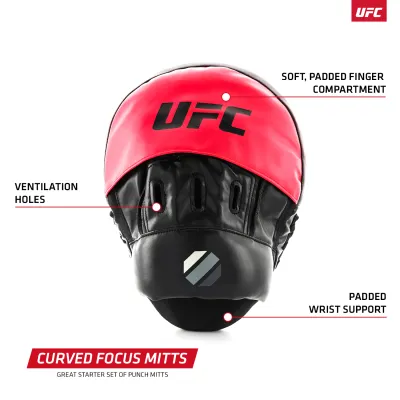
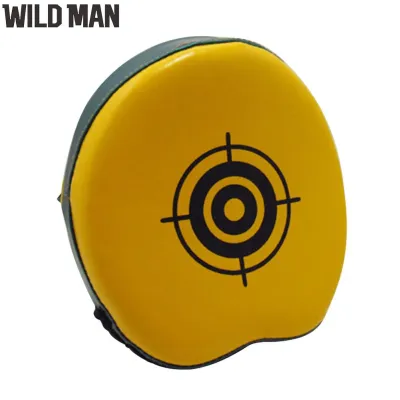
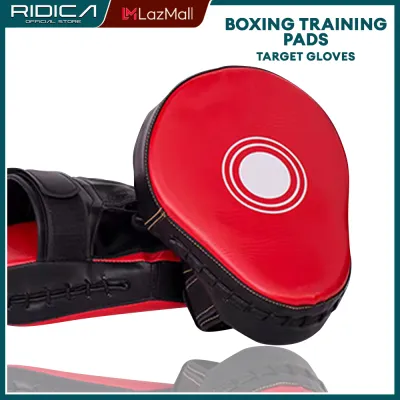
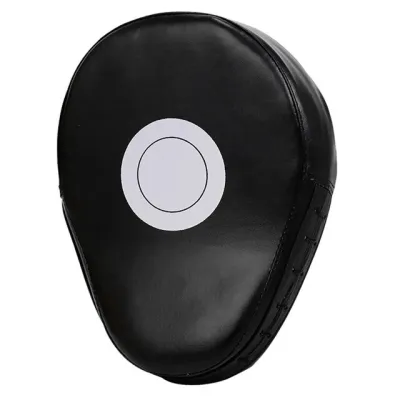
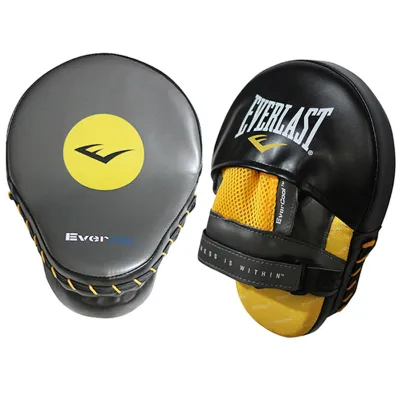
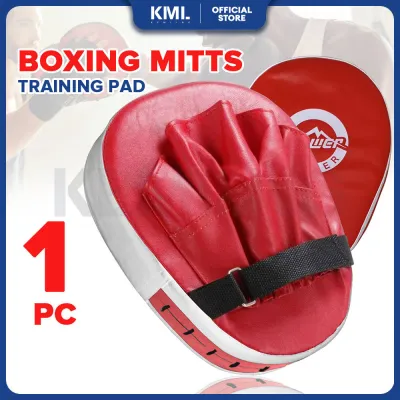
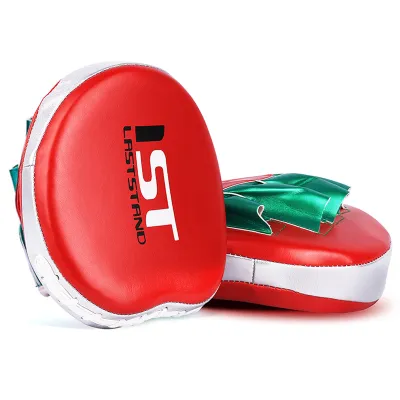
Prices are valid at publication and may change. Please refer to the product page for the latest price.
In contrast, curved mitts feature an ergonomic, cupped design that naturally cradles the incoming glove. This curvature channels the force of the blow toward the center of the pad, aligning the impact with the natural anatomical structure of the trainer’s hand. Because the pad “catches” the punch, the trainer does not have to exert as much forward force to stabilize the mitt, significantly reducing joint stress and shoulder fatigue.
Target mitts, often referred to as mini-mitts or air mitts, take a completely different approach by minimizing the surface area entirely. These compact pads prioritize speed and precision over shock absorption, featuring a small, dense target zone that forces the striker to focus on perfect knuckle alignment and distance control. Understanding these mechanical differences is essential for choosing a tool that supports your training goals without causing chronic strain.
Curved Mitts: Maximizing Power and Trainer Comfort
Curved mitts are the industry standard for general coaching, heavy sparring preparation, and power-focused training sessions. The primary advantage of the curved design is its superior ability to absorb high-impact force from heavy punches, hooks, and uppercuts. The pre-curved pocket naturally positions the trainer’s hand in a slightly flexed, strong gripping posture, which minimizes the risk of the wrist hyperextending under heavy loads.

For trainers who hold pads for multiple clients or athletes daily, curved mitts are indispensable for long-term joint protection. The thick, multi-layered foam padding is strategically distributed to cushion the palm and wrist, absorbing the brunt of the shock before it can travel up the arm. This makes them highly suitable for catching punches from heavier weight classes or power-focused fighters who throw with maximum intent.
However, the added protection of curved mitts comes with a few trade-offs. The extra padding and ergonomic structure make these mitts bulkier and heavier than their flat or target counterparts. This added weight can slow down a trainer’s hand speed during rapid, complex combinations, making it more challenging to simulate fast-paced defensive scenarios. Additionally, the curved pocket can sometimes mask minor alignment errors made by the striker, as the cupped shape tends to catch off-center punches that would otherwise slip off a flat surface.
Flat Mitts: Prioritizing Speed, Volume, and Defensive Drills
Flat mitts are designed for high-speed training, rapid-fire combinations, and dynamic defensive drills. Because they lack the bulky, cupped structure of curved designs, flat mitts are generally lighter and more streamlined, allowing the trainer to move their hands quickly and fluidly. This agility makes them the preferred choice for practicing slip-and-counter routines, ducking, rolling, and simulating incoming strikes that the boxer must actively avoid.
For trainers focusing on timing, rhythm, and cardiovascular conditioning, flat mitts offer an excellent platform. The uniform, flat surface provides immediate tactile feedback to both the trainer and the striker. If a punch is thrown at an incorrect angle or with poor knuckle alignment, it will slide or glance off the flat surface rather than being caught in a pocket, instantly highlighting areas where the boxer needs to refine their technique.
The primary limitation of flat mitts is their reduced capacity for shock absorption. Because the flat surface does not cup the glove, the trainer’s wrists and elbows must absorb a higher percentage of the impact force. Over time, catching heavy power shots on flat mitts can lead to joint soreness and repetitive strain injuries. Therefore, flat mitts are best reserved for light-to-medium impact speed work, technical flow drills, and training sessions where volume and movement are prioritized over raw power.
Target Mitts: Refining Precision and Strike Angles
Target mitts are highly specialized training tools designed specifically to refine a boxer’s accuracy, hand-eye coordination, and spatial awareness. Featuring an ultra-compact surface area—often only slightly larger than a closed fist—these mitts leave virtually no room for error. They force the striker to slow down, focus on their target, and deliver punches with pinpoint precision rather than relying on broad, sweeping movements.
Coaches use target mitts to simulate the tight, fleeting openings that occur during a real bout, such as slipping a punch and counterattacking through a narrow gap in an opponent’s guard. Because they are incredibly lightweight, target mitts allow the trainer to change angles rapidly, forcing the boxer to constantly adjust their stance, distance, and punch trajectory. This makes them an invaluable asset for advanced students who have already mastered basic punching mechanics and need to sharpen their competitive edge.
Despite their technical benefits, target mitts are not suitable for general training or beginner pad work. The minimal surface area and thin padding provide very little protection for either the trainer’s hands or the striker’s knuckles if a punch lands off-center. Attempting to throw full-power shots at target mitts can easily result in missed targets, jammed fingers, or wrist injuries, meaning they should be used strictly for controlled, technical accuracy drills.
Decision Framework: Matching Mitt Design to Your Routine
To select the ideal boxing mitts for your gym routine, you must balance your primary training goals with the physical comfort of the person holding the pads. If your training sessions involve a mix of heavy power punching and rapid speed combinations, you may need to prioritize different features depending on your primary role.
| Mitt Type | Primary Use Case | Best Training Focus | Wrist Support Level | Precision Requirement |
|---|---|---|---|---|
| Curved Mitts | Heavy power punching, daily coaching | Joint protection, power hooks, uppercuts | High (Ergonomic pocket) | Moderate |
| Flat Mitts | Speed combinations, defensive drills | Timing, volume, slip-and-counter | Moderate (Requires active resistance) | High |
| Target Mitts | Precision training, advanced coaching | Pinpoint accuracy, angle adjustments | Low (Minimal padding) | Very High |
Use these straightforward decision rules to guide your purchase:
- Choose Curved Mitts if you are a trainer holding pads for long sessions, work regularly with heavy hitters, or need to protect your wrists and elbows from repetitive impact stress.
- Choose Flat Mitts if your training revolves around high-volume speed drills, rapid defensive movement, and developing a quick, rhythmic flow with your training partner.
- Choose Target Mitts if you are an advanced martial artist or coach looking to sharpen accuracy, practice tight defensive counters, and refine exact strike angles.
- Verify first if your training routine mixes multiple disciplines, such as kickboxing or Muay Thai. Standard boxing mitts are not designed to absorb the heavy impact of shin kicks or knee strikes; for multi-discipline training, specialized hybrid pads or Thai utility pads are highly recommended to prevent injury.
Build Quality and Fit: What to Verify Before You Buy
Once you have determined the best shape for your training style, you must evaluate the construction quality and fit of the mitts to ensure safety and durability. In warm, humid climates, gear is subjected to intense sweat and moisture, which can rapidly degrade materials and cause the hands to slip inside the compartments.
First, check the outer shell material. Genuine leather offers the highest level of durability and naturally molds to the shape of your hand over time, making it an excellent investment for daily gym use. However, high-quality synthetic leathers, such as microfiber, are highly resistant to moisture absorption and are easier to wipe clean after a sweaty session. Look for models that feature mesh ventilation panels or moisture-wicking inner linings to keep your hands dry and maintain a secure grip.
Next, inspect the internal padding and wrist support mechanisms. High-density layered foam or gel-infused padding is essential for dispersing shock effectively. Verify that the mitts feature a wide, adjustable hook-and-loop wrist strap or a reinforced buckle system to lock your wrist in a neutral position. The internal hand compartment should fit snugly without pinching your fingers, and a padded ball or wedge under the palm is highly recommended to help you maintain a secure, natural grip during high-impact training.
Frequently Asked Questions (FAQ)
Can I use the same mitts for both boxing and Muay Thai?
While you can use standard boxing mitts for punch-heavy Muay Thai drills, they are not suitable for absorbing kicks, elbows, or knee strikes. Muay Thai kicks carry significantly more kinetic energy than punches, and the smaller surface area of boxing mitts leaves the trainer’s forearms and face exposed to stray strikes. For multi-discipline training, verify the manufacturer’s specifications for impact ratings, or invest in thicker, elongated Thai pads designed specifically to handle the diverse striking angles of kickboxing.
How do I know if the mitts offer enough wrist support?
To evaluate wrist support, inspect the mitt’s closure system and internal hand pocket before committing to regular use. Look for wide, adjustable wrist straps that wrap securely around the joint, preventing lateral movement under impact. When trying them on, the internal palm dome should allow your hand to cup naturally, and your wrist should remain straight and aligned with your forearm. Test the stability by having a partner deliver light, controlled strikes to the center of the pad; if you feel your wrist bending backward or twisting, the mitts do not provide adequate support for your hand size or strength level.

Community discussion
Share your experience or ask a question. Comments are reviewed before publication.