
Choosing the right basketball requires looking closely at technical specifications to ensure the ball performs well on your preferred court. The Decathlon BT500 is a popular mid-range option designed for players seeking a balance between durability and control. To determine if this ball fits your playing style, you need to examine its cover material, size, grip design, and internal construction.
In tropical climates like the Philippines, where outdoor concrete courts are common and high humidity affects grip, these specifications become even more critical. A ball that excels on a polished indoor wooden court might wear down quickly on rough asphalt, while a highly durable outdoor ball might lack the soft touch needed for competitive indoor leagues. Understanding how to verify these features will help you make an informed decision before heading to the checkout counter.
Cover Material: Matching the Surface to Your Court
The outer cover of the basketball is your primary point of contact, directly influencing how the ball bounces, feels, and resists wear. When shopping for the Decathlon BT500, you should first inspect the product label or official online listing to identify the specific cover material used for that particular model variant. Decathlon often produces different versions of their basketballs, ranging from rugged rubber to softer polyurethane (PU) or synthetic leather.
Products mentioned in this guide
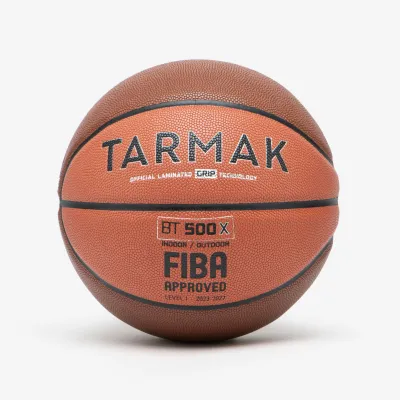
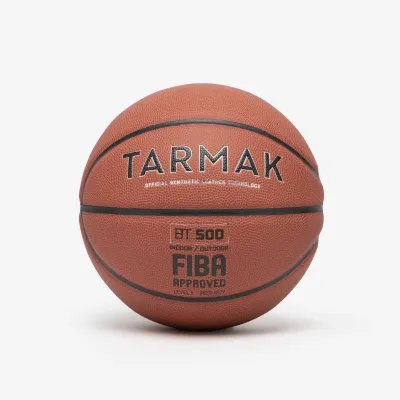
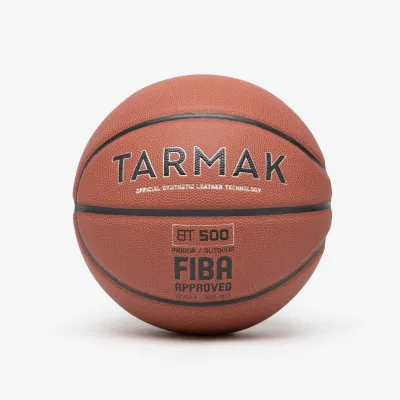
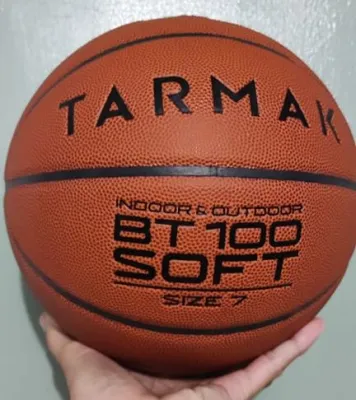
Prices are valid at publication and may change. Please refer to the product page for the latest price.
If the specific BT500 model you are looking at features a rubber cover, it is engineered primarily for outdoor durability. Rubber covers withstand the abrasive friction of concrete, cement, and asphalt courts, making them ideal for local streetball and neighborhood barangay courts. However, rubber tends to feel stiffer and offers less cushion during high-intensity play.
Conversely, if the model uses a PU or synthetic leather cover, it is designed to mimic the soft, tacky feel of professional game balls. Synthetic leather provides excellent grip and a cushioned feel, which is highly beneficial for indoor wooden courts. The trade-off is that synthetic covers wear down much faster when exposed to rough outdoor surfaces, which can peel or scuff the material.
To evaluate the quality of the cover material in person, perform a quick visual and tactile check. Run your fingers across the surface to ensure the pebble texture is consistent without any flat spots or bald patches. Inspect the seams where the panels meet; the edges should be cleanly bonded to the carcass without any visible glue residue or lifting corners.
Size and Weight: Verifying the Right Fit for Your League
Playing with the correct basketball size is essential for developing proper shooting mechanics and ball-handling skills. Before purchasing, locate the size indicator printed directly on the surface of the ball or on its packaging. Basketballs are standardized into specific sizes to match different age groups, genders, and league regulations.

A Size 7 ball is the standard size for men’s competitive play, typically suitable for players aged 15 and older. If you are buying a ball for women’s leagues or intermediate youth players (usually ages 12 to 14), you should look for a Size 6 ball, which has a slightly smaller circumference and lighter weight. For younger players, a Size 5 ball is the standard recommendation to help them build hand strength and proper form.
Once you have identified the correct size, you must verify the ball’s inflation and bounce response. A properly inflated basketball should bounce back to approximately waist height when dropped from shoulder level. Always refer to the manufacturer’s recommended pressure range, which is typically stamped near the inflation valve, to avoid over-inflating and warping the ball.
Grip and Channels: Evaluating Handling and Shot Control
A basketball’s grip determines how well you can control the ball during fast-paced dribbling, passing, and shooting. When examining the Decathlon BT500, pay close attention to the depth and width of the black channels, or grooves, that run across the ball. Deeper channels allow your fingertips to find natural leverage, which significantly improves your control when aligning your hands for a shot.
The surface texture, or pebbling, also plays a vital role in sweat management. In hot and humid conditions, sweat can quickly turn a smooth ball slick and difficult to handle. Raised, pronounced pebbles help channel moisture away from your palms, maintaining a reliable grip even during intense, sweaty games.
To test the grip under realistic conditions, try a simple dry and dusty hand test. Rub a small amount of dust or dry soil onto your hands, then pick up the ball. A high-quality grip will still allow you to hold the ball securely without it slipping easily from your grasp, indicating how the ball will perform on dusty outdoor courts.
Internal Construction: Checking Air Retention and Shape
What lies beneath the cover of the basketball determines its lifespan, shape retention, and how often you will need to pump it. The innermost layer is the bladder, which holds the air. When checking the specifications, look for whether the ball utilizes a butyl bladder or a standard rubber bladder. Butyl bladders are highly recommended because they retain air pressure significantly longer than natural rubber, reducing the need for daily inflation.
Surrounding the bladder is the winding or carcass layer, which is typically made of polyester or nylon threads wrapped tightly around the core. This structural layer is crucial because it reinforces the bladder, ensuring the ball maintains a perfect spherical shape even after thousands of hard bounces against the backboard and rim. Without a strong winding layer, a basketball can easily develop lumps or become lopsided.
Before making your purchase, conduct a quick visual inspection of the valve area. The valve should be flush with the surface of the ball and free of any cracks or debris. Gently press around the valve to ensure there are no slow air leaks, which can ruin the playability of the ball over time.
Decision Checklist: Matching Specs to Your Playing Needs
To choose the right Decathlon BT500 variant, you must match its verified specifications with your primary playing environment and skill level. If you play mostly on outdoor concrete courts, prioritize a rubber-covered model that can handle rough surfaces without wearing out. If you primarily play indoors on hardwood or polished vinyl, look for a synthetic leather or PU model to maximize your grip and control.
Keep in mind that while synthetic leather models offer superior feel, they may fall short in high-level, professional indoor tournaments where official leather game balls are required. Additionally, using a synthetic model on rough outdoor asphalt will drastically shorten its lifespan, leading to premature peeling.
Finally, always check the price tag in ₱ at your local Decathlon branch or online store, and review the retailer’s warranty and return policy before finalizing your purchase. This ensures you are covered in the rare event of a manufacturing defect, such as a faulty valve or a bladder that fails to hold air during your first few games.
Frequently Asked Questions (FAQ)
How often should I check the air pressure?
You should check your basketball’s air pressure before every major play session using a reliable pressure gauge. Changes in temperature and natural air seepage can cause the ball to lose pressure over time, affecting its bounce. Always inflate the ball to the specific PSI range printed directly near the inflation valve for optimal performance.
Can I use an outdoor basketball on indoor courts?
Yes, you can use an outdoor basketball on indoor courts, but it may not offer the best performance. Outdoor rubber balls can feel overly grippy or stiff on polished wood, and they tend to pick up fine dust quickly, which makes them slippery. Conversely, using an indoor-specific ball outdoors will rapidly degrade its soft synthetic cover.

Community discussion
Share your experience or ask a question. Comments are reviewed before publication.