
Selecting a shark diving flashlight requires balancing clear underwater visibility with respectful marine life observation. In the tropical waters of the Philippines, where deep drop-offs, underwater volcanic structures, and nutrient-rich currents create diverse diving environments, your choice of equipment directly impacts both safety and the quality of your experience. While observing these apex predators is a highlight for many divers, sharks are highly sensitive to sudden changes in light. Choosing the right gear involves evaluating adjustable lumens, beam angles, depth ratings, and color temperatures to match your specific dive profile. Remember, no piece of equipment can replace formal dive training, excellent buoyancy control, and strict adherence to local marine sanctuary guidelines.
Brightness and Beam Angle: Balancing Visibility and Marine Behavior
Lumens measure the total light output of your flashlight, but higher output is not always better for shark encounters. Extremely bright, high-lumen beams can startle sensitive marine life, causing sudden defensive movements, or they can attract dense clouds of phototactic plankton and baitfish that block your view. To prevent this, look for flashlights that feature adjustable brightness levels or multiple power modes. This allows you to use a lower, less intrusive setting when a shark approaches, preserving natural behaviors while still providing enough illumination for safe observation.
Beam angle determines how the light spreads through the water column. A wide beam, typically between 60 and 120 degrees, is excellent for situational awareness, allowing you to monitor the surrounding water and track large, moving shadows without needing to swing your light rapidly. Conversely, a narrow beam of 8 to 15 degrees is highly focused and useful for cutting through murky water, but it creates a harsh hotspot that can easily disturb a resting shark. Dual-beam or adjustable-focus models offer the flexibility to switch between these modes depending on your proximity to the marine life.
Products mentioned in this guide
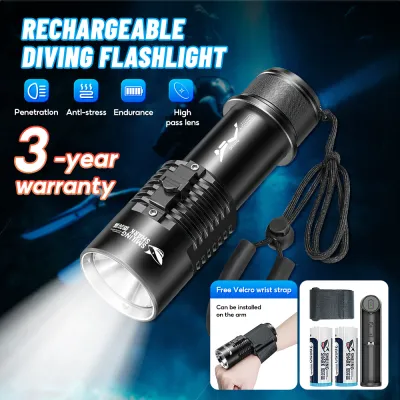

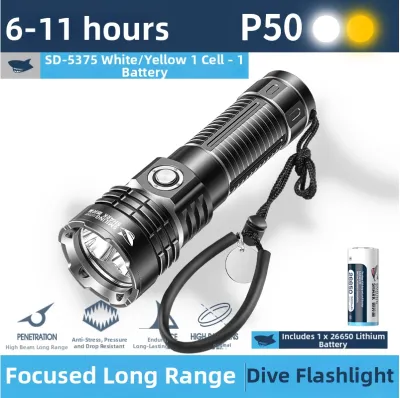
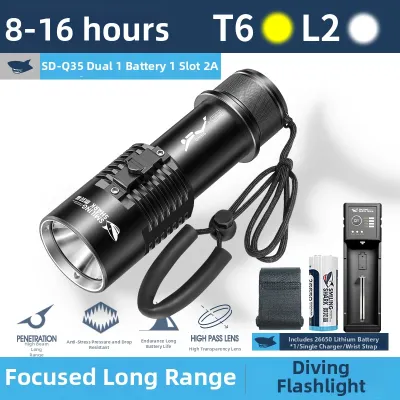
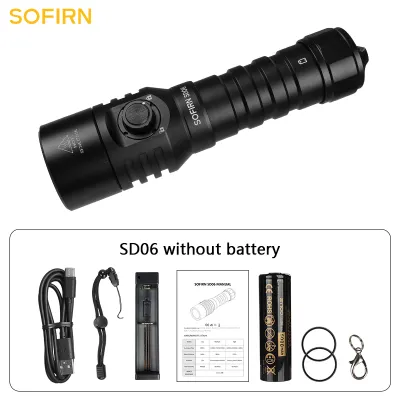
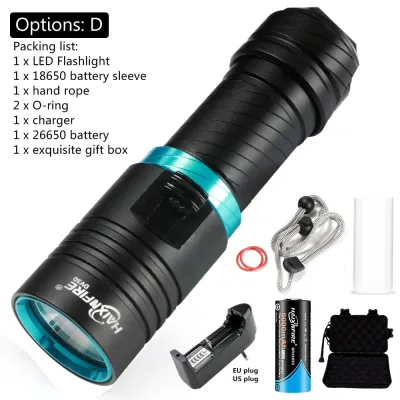
Prices are valid at publication and may change. Please refer to the product page for the latest price.
Backscatter is a common challenge in nutrient-rich tropical waters. When a wide, high-intensity beam is pointed directly ahead, the light reflects off suspended organic matter, creating a blinding wall of white spots in your field of view. Angling your light slightly away from the center of your vision or using a tighter, more focused beam can minimize this reflection. This technique ensures a clearer view of the shark and helps prevent the light from shining directly into the animal’s eyes.
Depth Rating and Build Quality: Matching Your Dive Profile
Your flashlight must be rated to withstand the pressures of your planned dive profile. For deep morning dives or technical profiles in deep channels, select a flashlight with a maximum operating depth that comfortably exceeds your planned limits. A safety margin of at least 20 to 30 meters beyond your target depth is a prudent standard to prevent housing failure and water ingress under pressure.

The tropical marine environment is highly corrosive due to warm, high-salinity waters. Check for robust, corrosion-resistant materials such as hard-anodized aluminum or high-grade marine polymers. Double or triple O-ring seals are essential for keeping the battery compartment dry. Because high humidity during surface intervals can trap moisture inside the housing, regular inspection and lubrication of these seals with manufacturer-approved silicone grease are vital maintenance steps.
Switch mechanisms must operate reliably under pressure without creating potential leak points. Magnetic slider or push-button switches are common because they do not require a physical hole through the light casing. Before purchasing, verify that the switch is easy to operate while wearing your diving gloves, as stiff or overly recessed buttons can be difficult to manipulate with wet hands in dynamic underwater environments.
Color Temperature and Burn Time: Enhancing Clarity and Safety
Color temperature, measured in Kelvin (K), dictates the color appearance of the light beam. Cool white lights, often rated above 6,000K, can make underwater colors look washed out or unnaturally blue, and they tend to exacerbate backscatter. Warm or neutral white lights, ranging from 4,000K to 5,000K, offer better color rendering, bringing out the natural gray, bronze, and white tones of a shark’s skin while penetrating particulate-heavy water more effectively.
Burn time refers to how long the battery can sustain the light on a single charge. It is critical to distinguish between maximum output runtime, which might only last a short period on the highest setting, and regulated output, which maintains a consistent brightness level over a longer duration. Always verify that the flashlight’s burn time on your preferred operating setting exceeds your planned dive time by a safety reserve of at least 50 percent.
Battery selection is highly relevant when traveling to remote island destinations. Rechargeable lithium-ion batteries offer excellent power density but require reliable electricity to recharge. If you are diving from a liveaboard or staying at a remote eco-resort with limited generator hours, verify the charging requirements and carry spare, pre-charged batteries in protective cases to ensure you are never left without a light source.
Building Your Shark Diving Flashlight Checklist
To finalize your gear selection, match the flashlight’s specifications directly to your itinerary. For deep morning dives where light is scarce, prioritize a high depth rating and a neutral color temperature to cut through the dim, deep-blue water. For shallow reef flats where reef sharks rest under ledges, a compact light with a wide, adjustable beam is highly practical.
Ergonomics play a major role in underwater safety and comfort. Ensure the flashlight has a textured grip to prevent it from slipping out of wet hands. A secure lanyard attachment point is non-negotiable; securing the light to your wrist or buoyancy control device (BCD) prevents accidental loss over deep drop-offs.
Before every dive, perform a systematic verification of your equipment. Test the switch functionality, inspect the O-rings for hair, sand, or salt crystals, apply a light coat of grease if dry, and confirm the battery is fully charged. Never enter the water with a light that shows signs of salt buildup or wear around the seals.
Frequently Asked Questions (FAQ)
Can a flashlight beam provoke or attract sharks?
Sharks are generally indifferent to artificial light, but sudden, high-intensity beams shone directly into their eyes can startle them, causing sudden defensive or evasive movements. Additionally, bright lights can attract small phototactic organisms, plankton, and baitfish. This concentration of prey may indirectly draw the attention of predatory sharks. To maintain a safe and respectful encounter, always use adjustable brightness settings, start on the lowest power mode, and avoid pointing the beam directly at the shark’s head.
Do I need a primary dive light or just a backup for daytime shark dives?
For daytime shark dives, a compact backup or secondary light is usually sufficient. While you do not need a high-powered primary light to navigate in broad daylight, a smaller light is incredibly useful for peering into dark crevices, under coral overhangs, or inside small caves where nurse sharks or white-tip reef sharks often rest during the day. However, if you are planning deep dawn dives or exploring deep walls where natural light fades rapidly, a robust primary light becomes an essential safety tool for signaling your buddy and maintaining situational awareness.

Community discussion
Share your experience or ask a question. Comments are reviewed before publication.