
Setting up an effective football training session requires selecting gear that matches your specific coaching goals, player age groups, and pitch conditions. The choice between flat disc cones, tall rigid cones, and flexible pop-up cones directly impacts drill flow, player safety, and equipment longevity. There is no single option that suits every training scenario; flat discs excel in tight agility work, tall cones provide clear boundaries for large grids, and flexible options offer crush-proof safety for high-traffic areas. Selecting the right type requires matching the cone’s physical profile to your specific drills, player age group, and field conditions.
In tropical environments like the Philippines, coaches must also account for intense sun exposure, heavy seasonal rains, and varying pitch surfaces. A cone that performs well on a dry indoor court might slide on a wet, muddy natural grass field, while cheap plastics can quickly warp under midday heat. Understanding the structural differences and practical limitations of each cone type ensures your training sessions run smoothly without constant interruptions to reset or replace damaged gear.
Understanding the Three Main Types of Football Cones
Flat Disc Cones
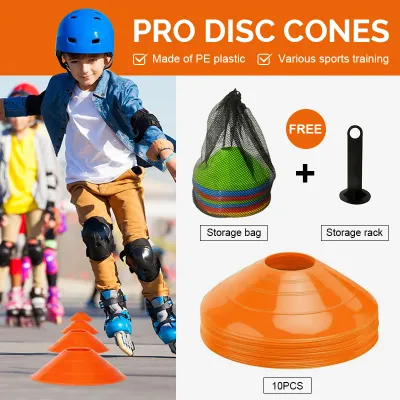
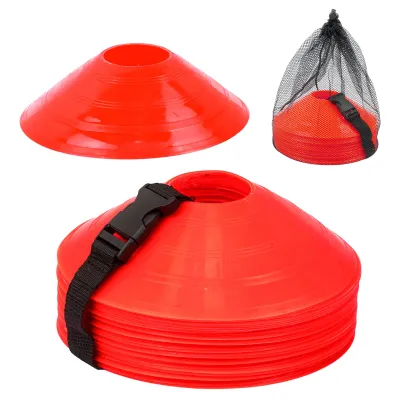
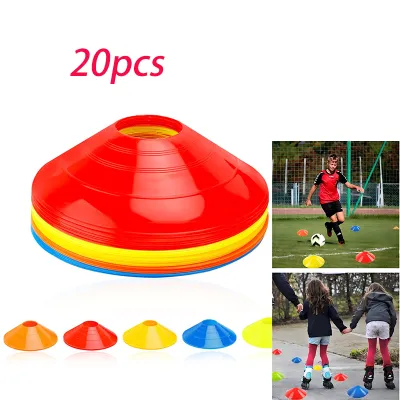
Flat disc cones are low-profile markers that typically stand about two inches high with a wide, stable base. Their primary advantage is their minimal height, which allows a football to roll directly over them without significantly changing path or bouncing unpredictably. This makes them indispensable for close-ball control, rapid dribbling weaves, and tight agility ladders where players must make quick, micro-adjustments with their feet.
Products mentioned in this guide
Prices are valid at publication and may change. Please refer to the product page for the latest price.
However, their low profile means they can easily disappear from view on poorly manicured natural grass or from across a full-sized pitch. Additionally, if left in the intense tropical sun, lower-quality plastics may warp or curl at the edges, creating a subtle tripping hazard that coaches must monitor.
Tall Rigid Cones
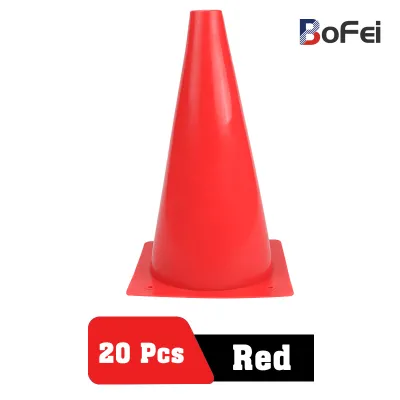
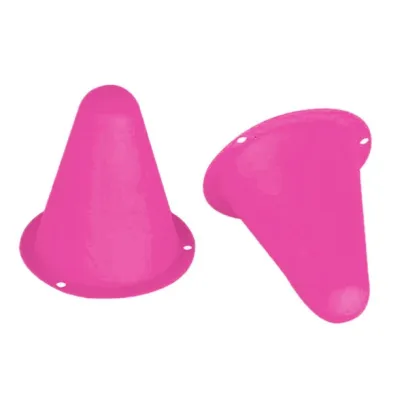
Traditional tall cones, usually ranging from 6 to 12 inches or more, serve as highly visible landmarks on the training pitch. Made from rigid plastics like polyethylene, they provide a strong visual anchor that players can easily spot from fifty yards away. They are the standard choice for marking out-of-bounds lines, setting up large rondo grids, or acting as physical obstacles that players must run around rather than step over.
The main drawback of rigid cones is their vulnerability to physical damage. When a player wearing firm-ground or soft-ground cleats steps directly onto a rigid cone, the plastic is highly susceptible to cracking or shattering. They also have high wind resistance, meaning a strong gust during the monsoon season can easily send them tumbling across the pitch unless they are slotted or weighted.
Flexible and Pop-Up Cones
Designed specifically to address the durability issues of rigid cones, flexible and pop-up cones are made from collapsible materials like soft PVC or thermoplastic rubber (TPR). When stepped on, these cones flatten completely under the player’s weight and immediately pop back into their original shape once the pressure is released. This makes them exceptionally safe for high-traffic drill areas and youth training sessions where falls and collisions are frequent.
They are also highly favored by traveling coaches because they can be compressed or folded down, taking up significantly less space in an equipment bag. On the downside, prolonged exposure to intense UV rays can cause the flexible materials to fade or become sticky, and their lightweight nature makes them prone to shifting in strong winds.
Key Comparison Dimensions for Your Training Setup
Visibility and Field Conditions
When selecting cones, visibility is your first line of defense against chaotic drills. On natural grass pitches—which can vary from lush green to dry brown depending on the season—bright orange, neon yellow, or vibrant pink cones offer the best contrast. On artificial turf or indoor wooden courts, you may need to switch colors to avoid blending into the pre-existing line markings.

Height is also a critical factor; if you are running tactical drills that require players to scan the entire field, tall cones are necessary to keep the boundaries visible at a distance. For close-quarters footwork, low-profile discs keep the player’s focus downward on the ball. Always verify product specifications for high-visibility or fluorescent additives that help the markers stand out during late-afternoon sessions or under dim floodlights.
Durability and Impact Resistance
The lifespan of your training gear depends heavily on the materials used. When browsing online marketplaces or local sports shops, check the product labels for material designations like PE (polyethylene), PVC (polyvinyl chloride), or TPR (thermoplastic rubber). PE is common in rigid cones and offers decent structure but low impact resistance. PVC and TPR are typical in flexible cones, providing excellent crush resistance and flexibility.
Consider the age and intensity of your players; senior players training in cleats will quickly destroy standard rigid cones, making flexible alternatives a more cost-effective long-term investment. Additionally, look for UV-stabilized materials to prevent the plastic from becoming brittle and cracking under the harsh tropical sun.
Portability and Storage
Transporting equipment to and from the pitch can be a logistical challenge, especially for coaches who rely on public transport or have limited storage space. Flat disc cones are highly portable, often coming with a plastic or metal spindle (or strap) that keeps dozens of discs stacked neatly in a compact footprint. Tall rigid cones stack well but take up significant vertical space, requiring a dedicated gear bag or a large car trunk.
Flexible pop-up cones offer a middle ground; while they are larger than disc cones, their ability to collapse flat allows you to pack them tightly without damaging them. Evaluate the quality of the included carrying accessories, such as mesh bags or heavy-duty straps, as these will undergo significant wear and tear over a season.
Matching Cone Types to Specific Football Drills
Low-profile disc cones are the gold standard for agility and dribbling drills. Because they sit flush with the ground, they force players to keep their heads up and scan the field rather than staring directly at their feet to avoid tripping. If a player makes a mistake during a rapid weave, their foot or the ball will simply glide over the disc, allowing the drill to continue without interruption or injury.
For tactical positioning, small-sided games, and boundary marking, tall cones are irreplaceable. They provide a clear vertical plane that defines the limits of the playing area, helping players develop spatial awareness and understand positioning. Using flat discs for boundaries in a fast-paced scrimmage often leads to players stepping out of bounds without realizing it, disrupting the flow of the game.
In youth academy sessions, safety is the primary concern. Young players are still developing their coordination and are highly likely to trip, fall, or step directly onto markers. Flexible or pop-up cones are ideal here, as they eliminate the risk of a child falling onto a sharp, cracked piece of rigid plastic.
A smart coaching strategy is to combine different cone types to maximize your budget. For example, you can use a few tall rigid cones to mark the outer corners of a training grid, and use cheaper, highly portable flat discs to mark the internal passing gates or agility paths. This hybrid setup provides excellent visual structure while keeping equipment costs manageable.
How to Build Your Training Cone Kit
Choose flat disc cones if your training focuses heavily on individual technical skills, close-ball control, and rapid footwork. They are also the best choice if you need a highly portable kit that fits easily into a standard backpack for personal practice sessions.
Choose tall rigid cones if you regularly coach large groups, run tactical scrimmages, or need to set up clear, long-distance boundaries on expansive fields where low-profile markers would be invisible.
Choose flexible/pop-up cones if you manage youth teams, conduct high-intensity drills where players frequently step on markers, or need durable equipment that can survive heavy impact without needing constant replacement.
Verify first if you are purchasing bulk sets. Before committing to a purchase, check local sports retailers for bundle deals priced in ₱. Verify if the package includes a durable carrying strap or mesh bag, and check the retailer’s return or replacement policy for any units that arrive warped or damaged.
Maintenance and Storage Tips to Extend Cone Lifespan
To get the most out of your investment, establish a simple maintenance routine. After training on muddy or wet pitches, wash your cones with mild soap and water to remove dirt, grass clippings, and abrasive sand. Avoid using harsh chemical solvents, as these can degrade the plasticizers in flexible cones, making them sticky or brittle.
Always ensure your cones are completely dry before stacking or packing them away. Storing damp plastic in a sealed bag in a humid environment creates a breeding ground for mold, mildew, and unpleasant odors.
Store your equipment in a cool, shaded area away from direct sunlight when not in use. Prolonged exposure to UV rays is the leading cause of color fading and material degradation in sports plastics.
Finally, conduct a quick inspection before the start of each training block. Check rigid cones for micro-cracks that could split open during a drill, and test flexible cones to ensure they still retain their shape-recovery tension.
Frequently Asked Questions (FAQ)
Can I use tall cones for agility drills?
While it is physically possible to use tall cones for agility drills, it is generally not recommended for high-speed, close-quarters footwork. Tall cones present a significant tripping hazard; if a player clips a 12-inch rigid cone at high speed, it can cause a nasty fall or ankle sprain. Furthermore, navigating around tall obstacles forces players to alter their natural stride length and center of gravity, which can negatively impact the biomechanical efficiency of the agility drill. It is safer and more effective to reserve tall cones for boundaries and use low-profile discs for tight footwork.
How many football cones do I need for a full team session?
The number of cones required depends on your squad size and the complexity of your training plan. For individual technical stations, plan for approximately 10 to 20 disc cones per player or small group to set up dribbling pathways and agility grids. For team-wide tactical sessions and small-sided games, you will typically need 20 to 40 cones to mark out boundaries, end zones, and neutral gates. As a rule of thumb, always purchase a kit with a 10% to 20% surplus to account for cones that inevitably get lost, damaged, or blown away during windy outdoor sessions.

Community discussion
Share your experience or ask a question. Comments are reviewed before publication.