
Selecting the right diving flashlight requires balancing brightness, light spread, and pressure resistance against your specific underwater environment. For typical recreational dives in clear tropical waters, a light offering around 1,000 lumens with a tight spot beam helps pierce through crevices and highlight marine life. If you plan to capture underwater photos or navigate low-visibility areas, a wider flood beam is essential to illuminate a broader field of view. Above all, the flashlight must carry a certified depth rating that comfortably exceeds your planned dive profile to withstand the immense pressure of the deep.
Decoding Lumens and Beam Angle for Underwater Visibility
Water absorbs and scatters light much faster than air, which directly impacts how your flashlight performs once submerged. Manufacturers often advertise peak lumens, which represent the maximum brightness the LED can produce at the moment of activation. However, you should look for the rated or continuous lumens, which indicate the stable light output the device can maintain as the battery drains and heat builds up. In the warm, plankton-rich waters of tropical reefs, suspended particles can reflect light back into your eyes, making high-intensity beams less effective if not properly focused.
The beam angle determines how that light is distributed through the water column. A narrow spot beam, typically between 8 and 15 degrees, concentrates the light into a tight, intense column. This design is ideal for cutting through murky water, signaling your dive buddy, or peering into deep coral crevices. Conversely, a wide flood beam, often ranging from 60 to 120 degrees, distributes light evenly across a large area. Flood beams are the preferred choice for underwater videography and photography because they eliminate harsh hot spots and mimic natural ambient light.
Products mentioned in this guide
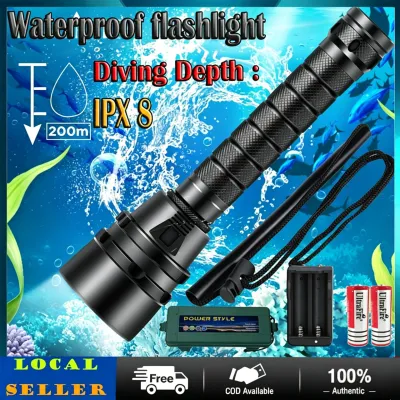
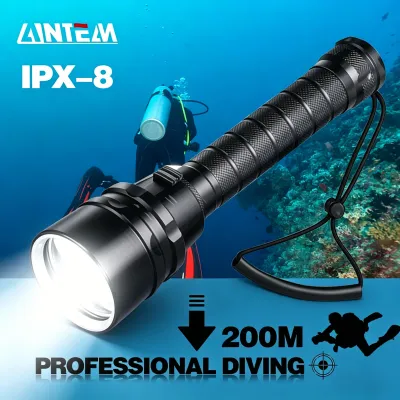
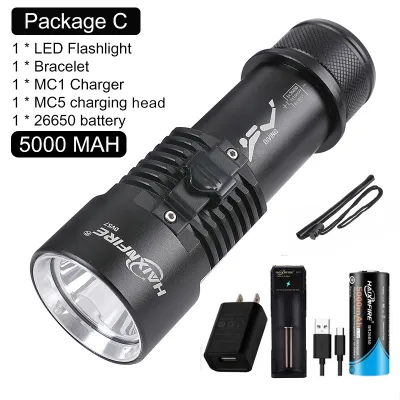
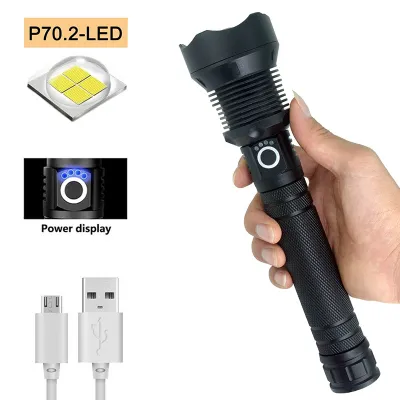
Prices are valid at publication and may change. Please refer to the product page for the latest price.
Choosing between these configurations depends heavily on local water clarity. In high-turbidity environments where silt or organic matter is suspended, a wide beam can cause severe backscatter, reflecting light off particles and obscuring your view. In these conditions, a tight spot beam is far more effective because it minimizes the illuminated volume of water between your eyes and the subject. For versatile diving, many modern lights offer dual-beam functionality, allowing you to switch between spot and flood modes depending on the immediate surroundings.
Understanding Depth Ratings and Pressure Limits
Never confuse a standard water-resistant flashlight with a dedicated submersible dive light. Everyday tactical lights or outdoor headlamps are often rated IPX7 or IPX8, which only guarantees protection against temporary submersion in shallow water. True diving flashlights are engineered to withstand continuous, high-pressure environments and are explicitly labeled with a maximum depth rating, such as 100 meters or 150 meters. Operating a light beyond its certified limit can compress the housing, crack the lens, or force water past the seals, causing immediate electronic failure.

To ensure water stays out, diving flashlights rely on specialized O-ring seals located at the threaded joints. High-quality dive lights typically utilize double or triple O-ring configurations to provide redundant layers of protection against pressure. When evaluating a flashlight, inspect the manufacturer specifications to confirm the depth rating has been verified through standardized hydrostatic pressure testing. A visual check of the O-rings before every dive is essential to ensure they are free of sand, hair, or salt crystals that could compromise the seal.
Selecting a flashlight with a depth rating that exceeds your planned dive profile provides a critical safety margin. Although a recreational diver might only descend to 30 meters, using a light rated to 100 meters accounts for dynamic pressure spikes that occur during rapid descents or accidental impacts. The physical stress on the flashlight body increases by approximately one atmosphere of pressure for every 10 meters of depth. A robust depth rating ensures the structural integrity of the aluminum or polycarbonate casing remains uncompromised under these compounding forces.
Matching Specifications to Your Diving Profile
Your diving profile should dictate the specific technical features you prioritize when shopping for a light. For casual daytime recreational diving in clear tropical waters, a compact light is primarily used to restore lost red wavelengths and illuminate hidden marine life under ledges. In contrast, night diving, cave exploration, and wreck diving demand a highly reliable primary light with a longer burn time and a dependable switch mechanism. Technical divers often require multiple lights, including a heavy-duty primary canister light and at least two compact backup lights.
Environmental conditions also play a major role in how you configure your lighting setup. In pristine, high-visibility tropical destinations, a moderate-output light with a wider beam can beautifully illuminate expansive coral gardens. However, if you frequently dive in coastal areas prone to heavy runoff or algae blooms, you will need a high-intensity, narrow-beam light to maintain visual contact with your buddy and navigate safely. Always adjust your expectations for visibility based on local seasonal changes and tidal movements.
Every dive plan should clearly distinguish between the roles of your primary and secondary lights. A primary dive light is typically larger, features a higher lumen output, and offers a substantial battery capacity to last the entire duration of the dive. A secondary or backup light is designed to be compact, lightweight, and easily stowed in a buoyancy compensator device (BCD) pocket. The backup light serves as a critical safety redundancy, designed to be switched on immediately if your primary light fails during a night or overhead-environment dive.
Verifying Build Quality and Secondary Features
Beyond lumens and depth ratings, the physical construction of a diving flashlight determines its longevity in harsh marine environments. Look for housings made from hard-anodized aluminum or high-strength polycarbonate, which offer excellent resistance to saltwater corrosion and impact. Aluminum bodies also act as efficient heat sinks, helping to dissipate the heat generated by high-output LEDs when used underwater. Ensure all metal components are thoroughly rinsed with fresh water after every saltwater dive to prevent salt buildup and galvanic corrosion.
The design of the power switch is another critical factor for usability and reliability. Magnetic slide switches and rotary bezel switches are highly popular in dive lights because they do not require a physical opening through the flashlight casing, minimizing potential leak points. If you prefer a push-button switch, ensure it is large enough to operate easily while wearing thick neoprene dive gloves. The switch should also feature a locking mechanism to prevent the light from accidentally turning on inside your gear bag, which can cause extreme overheating.
Finally, verify the battery specifications and realistic burn times before committing to a purchase. Many manufacturers list burn times based on the lowest output setting, so you must check the expected run-time when operating the light on its highest setting. Rechargeable lithium-ion batteries are standard for modern dive lights due to their high energy density and consistent power delivery. Always carry fully charged spares and verify that the battery compartment is completely sealed off from the main electronics to prevent total failure in the event of a minor flood.
Frequently Asked Questions (FAQ)
How should I maintain the O-rings on my diving flashlight?
To maintain the O-rings, carefully remove them using a blunt tool to avoid scratching the grooves. Inspect them under bright light for any cracks, flattening, or debris like sand and hair. Clean the O-rings and the receiving grooves with a lint-free cloth, then apply a thin, even coat of manufacturer-approved silicone grease. Avoid over-lubricating, as excess grease can attract sand and dirt, which compromises the watertight seal.
Can I use a regular high-lumen tactical flashlight for diving?
No, standard tactical flashlights are not designed to withstand the hydrostatic pressure of deep water. While they may carry a basic water-resistance rating, their seals and switch mechanisms will compress and fail under pressure, leading to immediate flooding. Additionally, tactical lights rely on air cooling to prevent overheating, whereas diving flashlights are designed to be cooled by the surrounding water and can quickly overheat if turned on dry land.

Community discussion
Share your experience or ask a question. Comments are reviewed before publication.