
Selecting a diving headlight in the Philippines requires matching the light’s technical specifications to the specific aquatic environment, whether you are exploring the shallow coral gardens of Anilao, navigating the deep wrecks of Coron, or entering the complex cave systems of Samar. A diving headlight—often mounted on a mask, helmet, or hand mount—provides hands-free illumination, but no single model fits every underwater scenario. Your choice must balance beam angle, depth rating, battery reliability, and environmental conditions to ensure safety and visibility.
Before purchasing any underwater lighting equipment, recognize that gear cannot replace proper training, physical preparation, and sound underwater judgment. Water sports, particularly night diving and overhead environment exploration, carry inherent risks that require specialized instruction. A reliable light source is a critical tool, but understanding its limits and knowing when to call off a dive are the most important skills any diver can possess.
Understanding Dive Light Requirements by Activity
Underwater visibility is highly dynamic, influenced by depth, time of day, and water conditions. In the tropical waters of the Philippines, divers encounter a wide range of environments, from crystal-clear open ocean to sediment-heavy coastal areas. Understanding how light behaves underwater is the first step in selecting an appropriate diving headlight.
Products mentioned in this guide
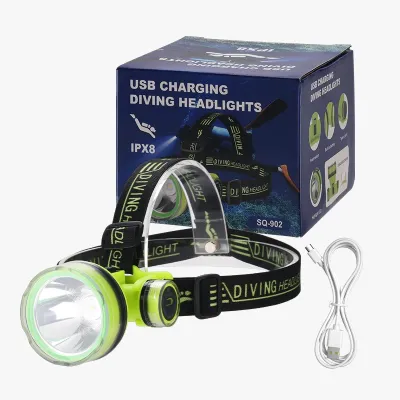
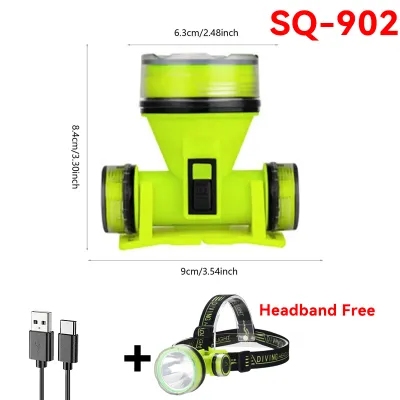
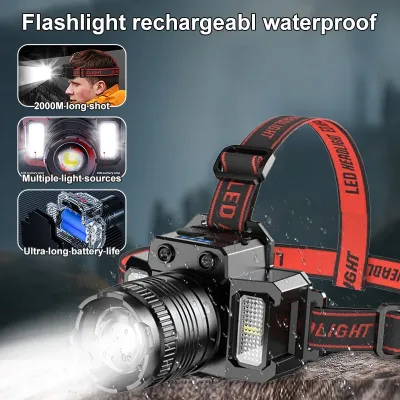
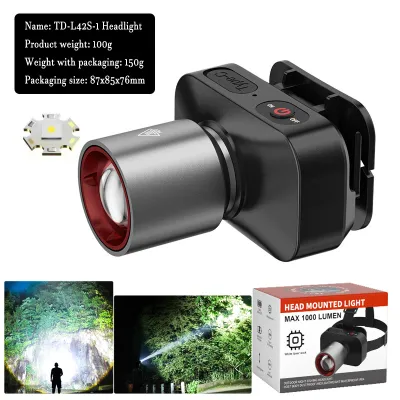
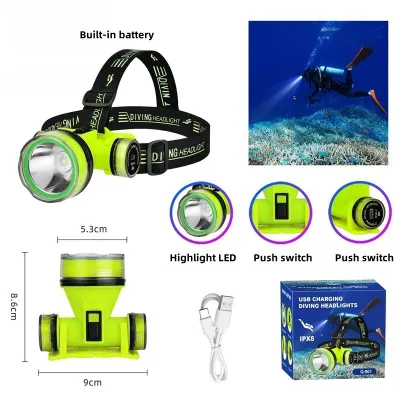
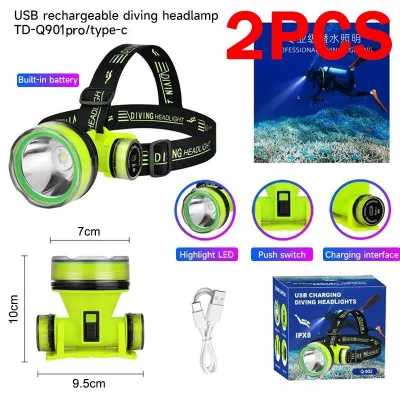
Prices are valid at publication and may change. Please refer to the product page for the latest price.
During daytime dives, ambient sunlight penetrates the upper layers of the water column, but water quickly absorbs warmer wavelengths of light. By the time you reach a depth of ten meters, reds and oranges disappear, leaving the underwater landscape dominated by blues and greens. In this context, a diving headlight serves as an ambient light supplement, restoring the natural, vibrant colors of corals and marine life at close range.
For night dives, wreck penetration, or cave exploration, a diving headlight transitions from a color-restoring accessory to your primary source of illumination. In these scenarios, you rely entirely on your light to navigate, monitor your gauges, and communicate with your dive buddy. The absence of natural light means that any equipment failure can lead to immediate disorientation, highlighting the critical need for reliable gear.
Environmental factors such as water clarity and particulate matter significantly impact light penetration. Tropical waters can experience sudden drops in visibility due to plankton blooms, tidal currents, or runoff from heavy rains. Suspended particles in the water act like tiny mirrors, reflecting light directly back into your eyes—a phenomenon known as backscatter. A light that is too bright or has an overly wide beam can worsen backscatter, severely reducing your effective visibility.
Relying on a single light source during any dive that requires artificial illumination is a significant safety risk. Standard safety protocols dictate that divers should always carry a primary light and at least one, if not two, independent backup lights. If your primary headlight fails due to a flooded housing or a depleted battery, you must be able to transition to a backup light immediately without panic.
Key Specifications to Evaluate Before Buying
Evaluating a diving headlight requires looking beyond basic marketing claims and understanding the technical specifications that dictate underwater performance. Comparing these metrics objectively allows you to select a light that matches your specific diving style and safety requirements.

The beam angle determines how the light is distributed underwater. A wide flood beam, typically ranging from 70 to 120 degrees, distributes light evenly across a broad area, making it excellent for general situational awareness, reef observation, and underwater photography. Conversely, a tight spot beam, usually between 5 and 15 degrees, concentrates the light into a narrow, intense column. Spot beams are highly effective for cutting through murky water, signaling buddies over long distances, and illuminating deep crevices.
Understanding the difference between lumens and candela is crucial for predicting how a light will perform underwater. Lumens measure the total amount of light emitted by the source in all directions, while candela measures the intensity of the light in a specific direction. A headlight with high lumens but low candela will produce a soft, wide wash of light that is easily scattered by suspended particles. A light with high candela, even with moderate lumens, will project a tight, piercing beam that maintains visibility in challenging conditions.
Power source and burn time are critical safety considerations that require careful calculation. Most modern diving headlights utilize rechargeable lithium-ion batteries due to their high energy density and consistent power delivery. When planning your dive, always verify the manufacturer’s specified burn time at your intended output level. To maintain a safe margin, your light’s battery life should exceed the planned dive duration by at least 50 percent, accounting for potential delays, navigation errors, or battery degradation.
Mounting options and ergonomics directly affect your comfort and safety underwater. Headlights can be mounted on diving helmets, attached to mask straps, or secured to the back of the hand using a Goodman glove. A mask-mounted light must be lightweight and perfectly balanced to prevent the mask from pulling away from your face and causing leaks. Helmet mounts provide excellent stability for technical diving but add bulk, while hand mounts offer the flexibility of hands-free operation with the ability to easily aim the beam by moving your wrist.
Selection Framework by Diving Type
To choose the right diving headlight, you must match the technical specifications of the device to the specific demands of your dive profile. Different underwater activities require distinct balances of beam shape, brightness, and mounting configurations to ensure both safety and enjoyment.
Recreational Reef and Night Diving
Recreational diving on shallow to moderate reefs, especially at night, focuses on observing marine life and navigating familiar terrain. For these activities, a diving headlight with a wide-to-medium beam angle (approximately 40 to 60 degrees) is highly suitable. This spread provides a natural field of view, allowing you to appreciate the reef structure and spot nocturnal creatures without having to constantly sweep your head back and forth.
Moderate light output is preferred for recreational night dives, typically ranging between 500 and 1,000 lumens. High-intensity beams can startle or blind marine life, causing fish to flee or behave erratically, which disrupts the natural ecosystem. Additionally, moderate output helps minimize backscatter in coastal waters where suspended organic matter is common, ensuring a clearer view of your immediate surroundings.
Ergonomics and ease of use are paramount when selecting a light for recreational night diving. Look for headlights that feature simple, one-handed operation, such as a large push-button or a rotating bezel switch that can be easily manipulated even while wearing thick neoprene gloves. Quick-release mounts are highly beneficial, allowing you to quickly detach the light from your mask or headband to hand it to a buddy or use it as a handheld torch when inspecting tight crevices.
Technical and Cave Exploration
Technical diving and cave exploration represent high-risk environments where light is a primary life-support system. In these overhead environments, where direct access to the surface is impossible, lighting equipment must meet the most rigorous standards of durability, reliability, and performance.
A technical diving headlight must feature a tight, high-intensity spot beam, ideally between 5 and 10 degrees. This concentrated beam is necessary for cutting through extreme depths and long distances, allowing you to identify potential hazards well in advance. Furthermore, a tight beam is the primary tool for underwater communication in technical diving, as specific light movements are used to signal emergency status, direction changes, or confirmation to team members.
Redundancy and power management are non-negotiable in cave and technical diving. Your primary headlight must be supported by a redundant power system, and you must carry at least two independent backup lights. Burn-time calculations must be strictly managed, ensuring that the primary light can operate at full capacity for the entire duration of the penetration and exit phases, plus a substantial safety reserve. Many technical divers prefer canister lights, where the heavy battery pack is mounted on the harness and connected via a cable to a lightweight light head on the hand or helmet.
The construction of a technical diving headlight must withstand extreme pressure and physical impact. Anodized aluminum housings provide excellent durability and heat dissipation, which is critical for high-output LEDs. Switching mechanisms must be robust and designed to prevent accidental activation or deactivation; magnetic slide switches or heavy-duty rotary switches are commonly utilized because they do not rely on physical openings that could compromise the waterproof seals.
Pre-Purchase Checks and Maintenance Basics
The reliability of a diving headlight depends heavily on systematic pre-dive checks and consistent post-dive maintenance. Because saltwater and high pressure are incredibly destructive to electronic equipment, establishing a strict care routine is essential for preventing gear failure and extending the lifespan of your light.
Before every dive, conduct a thorough inspection of the headlight’s O-rings, which serve as the primary barrier against water intrusion. Open the battery compartment and remove the O-rings using a blunt tool to avoid scratching the groove. Inspect the rings for any signs of cracking, flattening, or debris such as sand, hair, or salt crystals. Clean the O-rings and their matching grooves with a lint-free cloth, apply a thin film of high-quality silicone grease to keep the rubber pliable, and reseat them carefully without twisting.
Battery maintenance is especially critical in the humid, tropical climate of the Philippines, where moisture can accelerate corrosion. Always check the battery terminals for any signs of green or white oxidation before inserting the cells. Store your batteries in a cool, dry place when not in use, and never leave them inside the headlight housing for extended periods, as slow discharge can lead to leakage and permanent damage to the internal circuitry. Follow the manufacturer’s guidelines regarding charging cycles, avoiding both complete depletion and prolonged overcharging.
Post-dive care must be performed immediately after exiting the water to prevent salt crystallization and corrosion. Soak the entire headlight in clean, warm freshwater for at least 15 to 30 minutes to dissolve any accumulated salt. While the light is submerged, operate the switches and rotating bezels several times to flush out trapped saltwater and sand from the moving parts. After soaking, dry the exterior of the light thoroughly with a clean towel before opening any compartments, ensuring that no water droplets fall onto the battery terminals or internal electronics. Store the light in a well-ventilated, shaded area away from direct sunlight.
Frequently Asked Questions (FAQ)
Can I use a regular camping headlamp for shallow night snorkeling or diving?
No, you should never use a standard camping headlamp for diving or snorkeling, even in very shallow water. Camping headlamps are typically rated using the Ingress Protection (IP) system, where an IPX8 rating indicates resistance to temporary immersion, usually up to a depth of one to two meters for a limited duration. These lights are designed to withstand rain, splashes, or brief drops into water, but they are not engineered to resist the continuous, multi-directional pressure experienced underwater.
When subjected to the pressure of even a shallow dive, the seals of a standard camping headlamp will quickly fail, leading to immediate flooding, short circuits, and potential battery rupture. Furthermore, the optical lenses of camping lights are optimized for air, meaning their beams will become highly diffused and ineffective when submerged. True diving headlights are specifically engineered with heavy-duty double O-rings, thick pressure-resistant lenses, and robust housings designed to withstand depth pressures of 40 meters or more.
How do I prevent my diving headlight from fogging up inside the lens?
Fogging on the inside of a diving headlight lens occurs when warm, humid air is trapped inside the housing during assembly. When the light is submerged in cooler water, the temperature of the outer housing drops rapidly, causing the moisture suspended in the warm air inside to condense on the inner surface of the lens. This condensation creates a misty layer that diffuses the beam and reduces the light’s effectiveness.
To prevent internal fogging, always assemble and seal your diving headlight in a cool, dry, air-conditioned environment whenever possible, as this minimizes the amount of moisture trapped inside the housing. If you must change batteries on a humid boat deck or beach, try to do so quickly and out of direct sunlight. Some manufacturers allow the placement of small, specialized silica gel desiccant packs inside the battery compartment; if your light has sufficient space and the manufacturer approves, using these packs can effectively absorb residual moisture and keep your lens clear throughout the dive.

Community discussion
Share your experience or ask a question. Comments are reviewed before publication.