
An oversized or “big ball” volleyball is an excellent specialized training tool if your primary goal is to build confidence, master basic hand-eye coordination, or ease beginners into the sport without the physical intimidation of a hard, fast-moving standard ball. Deciding between the two depends entirely on your current skill level, age, and specific training objectives.
Quick Answer: Is an Oversized Volleyball Right for You?
An oversized volleyball is designed to maximize the contact area during early developmental drills, featuring a larger circumference and a softer, lighter construction. This makes it highly suitable for young children, absolute beginners, and players working on foundational forearm passing mechanics. However, it is strictly a specialized training tool and not a replacement for official match play. If you are preparing for competitive leagues or refining advanced techniques like high-speed setting and spiking, you should stick to a standard regulation ball.
Signs a Big Ball Volleyball Fits Your Training Goals
Identifying whether you or your players will benefit from an oversized volleyball starts with observing daily struggles on the court. If beginners frequently mis-hit the ball, struggle to track its trajectory through the air, or flinch during receiving drills, these are clear indicators that a standard ball may be too advanced for their current comfort level. The physical sting of a heavy, high-velocity ball can discourage young athletes, making a softer, larger alternative highly beneficial.
Products mentioned in this guide
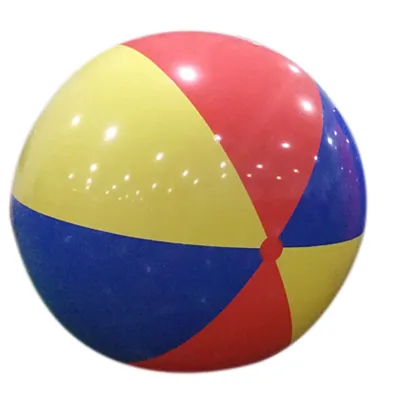
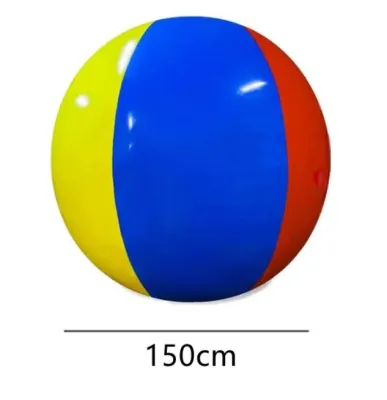
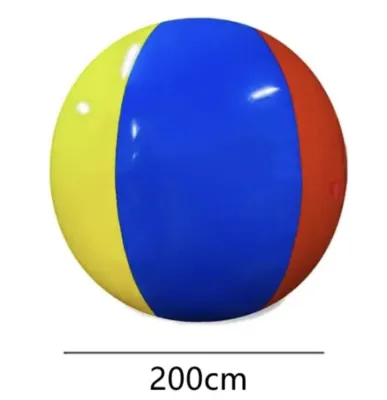
Prices are valid at publication and may change. Please refer to the product page for the latest price.

The primary mechanical advantage of a big ball volleyball is its increased surface area. This larger target zone significantly increases the margin for error during forearm passing and receiving drills. Instead of worrying about a precise contact point on the wrists, novice players can focus on their footwork, knee bend, and platform angle. This structural support helps establish correct muscle memory before transitioning to more demanding equipment.
Furthermore, oversized balls move slightly slower through the air due to increased wind resistance, especially in open-air barangay courts or outdoor recreational spaces. This slower pace gives players extra split-seconds to read the ball’s path, adjust their body positioning, and execute a controlled pass. For youth players and absolute beginners, this extra time is crucial for developing spatial awareness and hand-eye coordination without feeling overwhelmed by the speed of the game.
Ultimately, the goal of using an oversized ball is to build a positive association with the sport. When players experience early success with consistent rallies, their confidence grows rapidly. This psychological boost is just as important as physical training, keeping players engaged and motivated to continue practicing their foundational skills.
When to Stick With a Standard Regulation Volleyball
While oversized balls are excellent for early development, they can become a hindrance if used past their intended purpose. Advanced training scenarios—such as refining spike timing, developing setting precision, and simulating realistic match play—strictly require a standard regulation volleyball. The weight, aerodynamics, and bounce of a standard ball are calibrated for high-performance play, and training with anything else can distort a player’s spatial judgment.
Overusing an oversized ball during competitive preparation carries a real risk of developing improper mechanics. Because a larger ball behaves differently when struck, players may develop altered timing or incorrect wrist snap habits that do not translate to a regulation ball. For example, setters who train exclusively with a larger, lighter ball may struggle to generate enough finger strength and quick release when handed a standard, heavier model.
Additionally, official games, standard school leagues, and advanced club practices in the Philippines strictly mandate regulation-sized equipment. Transitioning to competitive play requires absolute familiarity with how a standard ball reacts to the hands, the net, and the court surface. If a player’s muscle memory is calibrated to a larger target, they may experience a sudden drop in accuracy and performance during actual matches.
Therefore, if your training goals involve tactical team drills, defensive positioning against fast attacks, or preparing for upcoming tournaments, you must stick to standard equipment. The oversized ball should be treated as a stepping stone, not a permanent fixture in an advanced athlete’s gear bag.
Matching Ball Size to Age, Skill, and Drills
To get the most out of your training gear, it is essential to align the ball size with the player’s age, physical development, and specific practice drills.
Age and Physical Development
- Ages 5 to 9: Young children with smaller hands and developing shoulder strength benefit immensely from oversized, lightweight balls. These balls reduce the risk of wrist fatigue and joint strain during early play.
- Ages 10 to 12: This transitional phase can utilize a mix of oversized balls for introducing new techniques and light regulation balls to prepare for standard play.
- Ages 13 and Above: Players in this bracket generally have the hand size and physical strength to handle standard regulation balls, though oversized models remain useful for specific rehabilitation or specialized coordination drills.
Drill Alignment
- Forearm Passing (Digging): Highly compatible with oversized balls. The larger surface area allows players to focus entirely on platform stability and body angling.
- Serving Basics: Oversized balls help beginners learn the contact point for underhand and basic overhand serves without the ball slipping off the hand.
- Setting and Spiking: Most effectively practiced with standard balls. The precise finger placement required for setting and the rapid wrist snap needed for spiking cannot be accurately developed with an oversized ball.
Transition Readiness Checklist Coaches and parents can monitor specific milestones to determine when a player is ready to move from an oversized ball to a standard regulation model:
- The player consistently contacts the ball on the correct part of their forearms during passing drills.
- The player shows no physical hesitation or fear of impact when receiving a served ball.
- The player can easily track the ball's flight path and move their feet to get behind it before it lands.
- The player has developed sufficient wrist and shoulder strength to pass a standard ball over the net without straining.
Key Specs to Verify Before You Buy
When shopping for a big ball volleyball on an online marketplace or at a local sporting goods store, verifying the product specifications is crucial to ensure safety and durability.
First, check the manufacturer’s stated circumference and weight. An oversized training ball should clearly list its dimensions on the packaging or product description. Ensure the weight is appropriate for the target player; some oversized balls are intentionally lightweight to prevent injury, while others maintain a standard weight to build strength.
Second, pay close attention to the material composition. For tropical climates like the Philippines, where high humidity and outdoor concrete courts are common, look for durable synthetic leather or heavy-duty composite covers. If you plan to play outdoors, verify that the material is moisture-resistant and can withstand rough surfaces without peeling or scuffing. For indoor use, a softer foam-backed cover is highly suitable for minimizing impact sting.
Finally, inspect the valve types and inflation requirements. A high-quality valve is essential for maintaining consistent air pressure, especially in hot weather which can cause air to expand and leak. Always use a reliable pump with a pressure gauge to inflate the ball to the manufacturer’s recommended pressure. Over-inflating an oversized ball can make it rock-hard, defeating its purpose as a soft training aid, while under-inflating it will ruin its bounce and flight path.
Frequently Asked Questions (FAQ)
Can I use a big ball volleyball for official beach or indoor matches?
No, you cannot use an oversized volleyball for official competitive matches. Governing bodies for both indoor and beach volleyball mandate strict regulations regarding the exact circumference, weight, and internal pressure of match balls. Oversized balls are designed solely as training aids, developmental tools, or recreational toys and are not permitted in sanctioned league play or tournaments.
How do I know when a player is ready to switch to a standard volleyball?
A player is ready to transition when they demonstrate consistent forearm passing mechanics, accurate visual tracking, and zero hesitation or fear when receiving the ball. To ensure a smooth adjustment, introduce the standard ball gradually. You can alternate between the oversized ball and the standard ball during practice sessions, allowing the player’s muscle memory to adapt without losing confidence.

Community discussion
Share your experience or ask a question. Comments are reviewed before publication.