
Deciding whether to upgrade to a big size yoga mat depends on how your physical frame and movement patterns interact with standard mat dimensions. While a standard mat accommodates many practitioners, it can feel highly restrictive if you find yourself constantly stepping off the edges or adjusting your alignment to stay on the material. In tropical climates like the Philippines, where high humidity often leads to sweaty, high-traction practices, slipping off your mat onto a bare, dusty tile or concrete floor is not just a distraction—it can disrupt your balance and compromise your safety.
A larger mat provides a dedicated, clean boundary that supports your entire range of motion. However, bigger is not always better for every yogi. By evaluating your physical measurements, analyzing your specific practice style, and weighing the practical trade-offs of a heavier mat, you can determine if an oversized option is a necessary investment or an unnecessary logistical burden.
Signs Your Current Yoga Mat Is Restricting Your Practice
One of the most immediate indicators that you need a larger mat is the frequent sensation of running out of space during your flow. If your hands or feet regularly slip off the edges during wide-stance poses like Warrior II or Downward-Facing Dog, your mat is failing to provide the boundary you need. This edge-slipping is particularly common when practicing in warm, humid environments where sweat reduces grip, making a secure, unconstrained surface even more critical.
Products mentioned in this guide
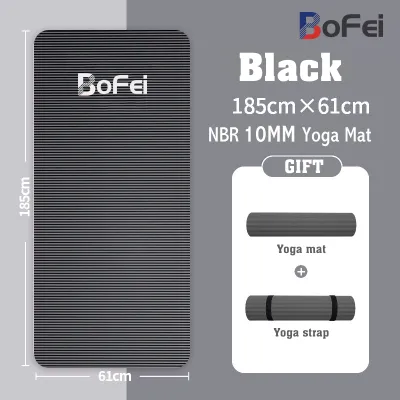
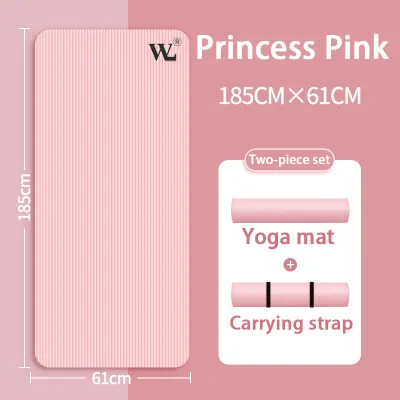
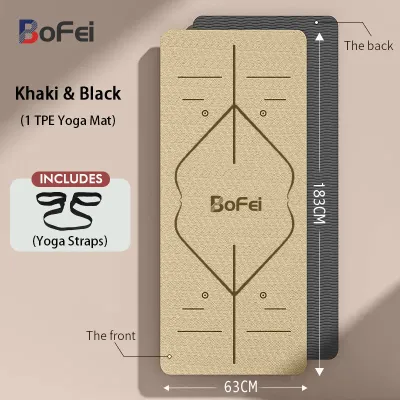
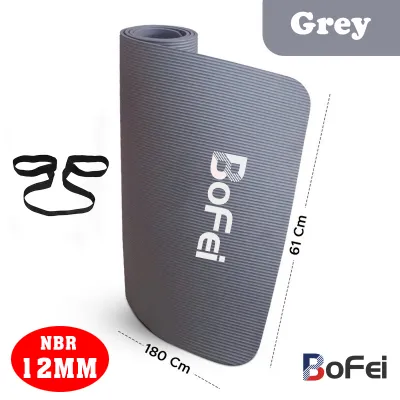
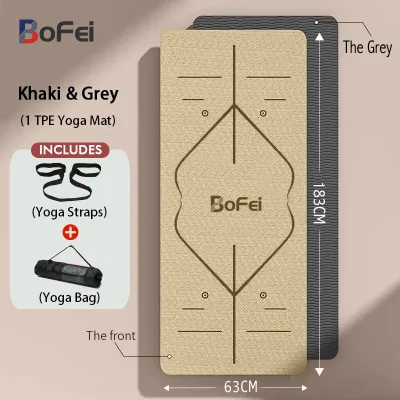
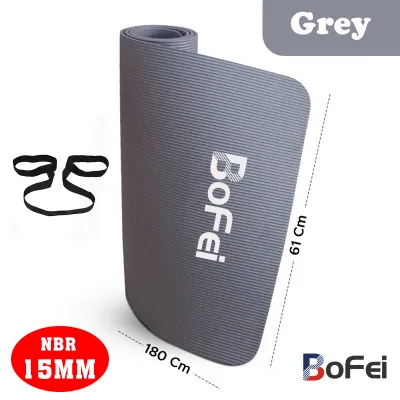
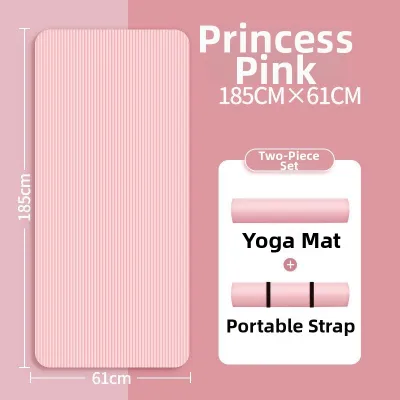
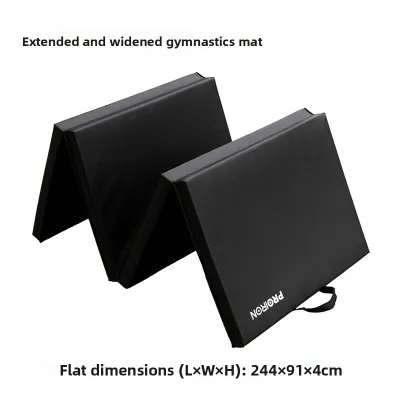
Prices are valid at publication and may change. Please refer to the product page for the latest price.
Another telling sign is the need for constant micro-adjustments during transitions. If you have to pause mid-vinyasa to crawl backward or forward because your head or feet are about to touch the floor, your practice loses its meditative rhythm. A mat should facilitate continuous movement, not force you to mentally calculate your spatial coordinates after every transition.
Physical discomfort during floor work also points to size limitations. When kneeling, lunging, or lying down near the edges of a standard mat, your joints may press directly into the hard floor. In many homes with tiled or polished concrete floors, stepping or resting off the mat means exposing your knees, elbows, or ankles to cold, unforgiving surfaces, which can lead to bruising or joint strain over time.
Evaluating Your Height and Wingspan for Mat Length
To determine if your body requires a larger mat, you must compare your physical dimensions against standard industry sizes. A standard yoga mat typically measures 68 inches (173 cm) to 72 inches (183 cm) in length and 24 inches (61 cm) in width. While these dimensions work well for individuals of average height, they quickly become restrictive for taller practitioners or those with a wide wingspan.

A reliable way to assess compatibility is the lie-down rule of thumb, which you can test during Savasana (corpse pose). When lying completely flat and relaxed, both your head and your heels should rest comfortably on the mat’s surface. If your head hangs off the top edge or your heels rest on the bare floor, your mat is too short, which prevents complete physical relaxation and spinal decompression.
Your wingspan, which closely correlates with your height, also dictates your lateral space requirements. Taller practitioners, generally those standing 5’10” (178 cm) or taller, naturally have a wider stance and a broader reach. For these individuals, a standard 24-inch width does not allow for proper shoulder-width alignment in poses like Plank or Cobra without placing the hands on the floor outside the mat’s borders.
Matching Mat Dimensions to Your Practice Style
Your preferred style of yoga plays a massive role in determining the ideal mat size. Dynamic, high-energy practices such as Vinyasa, Ashtanga, or Power Yoga involve rapid transitions, jump-backs, and wide lateral movements. For these styles, a larger mat acts as a safety net, ensuring that your hands and feet land on a high-traction surface even during ambitious, fast-paced sequences.
Conversely, slow-paced and restorative practices have different spatial demands that also benefit from extra surface area. Yin Yoga and Restorative Yoga involve holding passive floor poses for extended periods, often utilizing multiple props such as bolsters, blocks, and blankets. A wide, long mat keeps both your body and your supportive props clean and elevated off the floor, preventing blocks from sliding away on slick tiling.
If your practice consists primarily of stationary, upright, or highly controlled disciplines like gentle Hatha or chair yoga, a standard-sized mat is usually entirely sufficient. In these practices, movements are compact and vertical, meaning you do not need to claim as much floor space to maintain stability and alignment. For these practitioners, the simplicity of a standard mat outweighs the need for extra square footage.
Practical Trade-offs of Upgrading to a Big Size Mat
While the luxury of extra space is appealing, upgrading to a larger mat introduces several logistical challenges that you must consider. The most significant trade-off is weight and bulk. Larger mats require more raw material, which substantially increases their overall weight—especially if you choose dense materials like natural rubber or heavy-duty PVC. Carrying a heavy, oversized mat during a daily commute on public transport or walking in tropical heat can quickly become exhausting.
Storage and transport compatibility also present hurdles. Most standard yoga bags, backpacks, and carrying straps are designed specifically for 24-inch-wide mats. If you purchase an extra-wide mat, you will likely need to invest in a specialized, larger bag or a heavy-duty strap system, adding to your overall expenditure. At home, a larger mat requires more floor space to unroll, which can be a challenge in compact living rooms or shared bedrooms.
Finally, material density and thickness interact with larger dimensions to affect both portability and your budget. A thick, large-format mat is highly comfortable but incredibly bulky to roll up, often resembling a small mattress rather than a portable fitness accessory. If portability is your primary concern, you may need to compromise by selecting a thinner large mat, though this will reduce the cushioning benefits for your joints.
Final Decision Checklist: Is a Big Size Mat Right for You?
Before purchasing a larger mat, review this quick decision-making framework to ensure it aligns with your lifestyle and physical needs:
- Physical Indicators: Do your hands or feet regularly slip off your current mat during standard poses?
- The Savasana Test: Do your head or heels touch the bare floor when lying down completely flat?
- Practice Style: Do you practice dynamic flows with jump-backs, or restorative styles requiring multiple props?
- Commute & Storage: Are you practicing primarily at home, or do you need to carry your mat on long commutes?
If you answer yes to the physical and practice-style questions, a larger mat will likely transform your practice. If you are still hesitant, try attending a class at a local studio that offers oversized rental mats, or borrow one from a friend to experience the difference in spatial freedom firsthand. If portability is your absolute priority, stick with a standard mat and focus on refining your spatial awareness and centering your movements.
Frequently Asked Questions (FAQ)
What are the typical dimensions of a big size yoga mat?
While standard mats are typically 68 to 72 inches long and 24 inches wide, big size yoga mats generally start at 74 to 84 inches (188 to 213 cm) in length. Their width also increases significantly, usually ranging from 26 to 30 inches (66 to 76 cm). Some specialized home-practice mats are designed as large squares, measuring up to 72 by 72 inches, though these are intended strictly for stationary home setups rather than travel.
Can I use a big yoga mat in a crowded studio class?
Using an oversized yoga mat in a crowded studio requires careful spatial awareness and etiquette. In busy classes where floor space is limited, a very wide or exceptionally long mat can easily encroach on your neighbor’s practice area. If you plan to use a larger mat in a studio setting, try to arrive early to secure a corner or back-row spot where your mat’s footprint will not disrupt the alignment of the rest of the class.

Community discussion
Share your experience or ask a question. Comments are reviewed before publication.