
Choosing between an Ekaiou diving flashlight and competing brands depends on matching verified manufacturer specifications to your specific dive environments in the Philippines, rather than relying on unverified marketing claims. Whether you are exploring the vibrant coral gardens of Anilao, navigating the historic shipwrecks of Coron, or descending along the deep walls of Tubbataha, your underwater light is a critical piece of safety and exploration gear. This guide will help you evaluate beam angles, depth ratings, build materials, and handling features so you can make a safe, condition-specific decision before investing your hard-earned Philippine Pesos (₱).
Underwater visibility and environmental conditions vary dramatically across the Philippine archipelago, meaning a single flashlight model may not suit every dive. To find the right balance of performance and value, you must look past generic brand promises and analyze how specific technical features perform under pressure. By understanding the physics of light underwater and the mechanical demands of saltwater environments, you can objectively compare any dive light on the market.
Identifying Your Lighting Needs for Local Dive Conditions
The diverse marine landscapes of the Philippines demand different lighting characteristics depending on your planned activities. For night reef dives, where the goal is to observe nocturnal marine life without startling sensitive creatures, a wide beam angle is highly beneficial. A soft, diffused floodlight illuminates a broad field of view, allowing you to spot camouflaged octopuses or hunting moray eels in your peripheral vision. Using an overly intense, narrow spot beam in these environments can blind marine life and create harsh shadows that ruin the visual experience.
Products mentioned in this guide
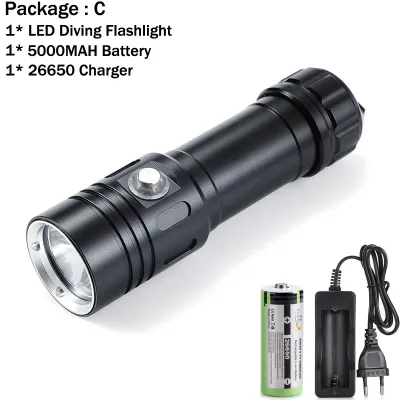
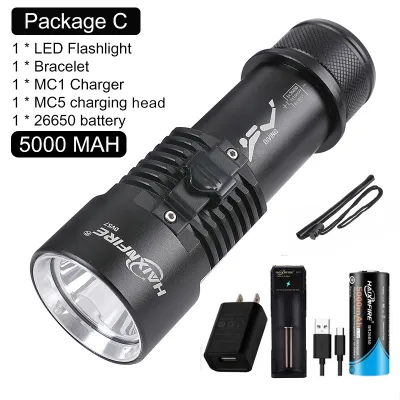
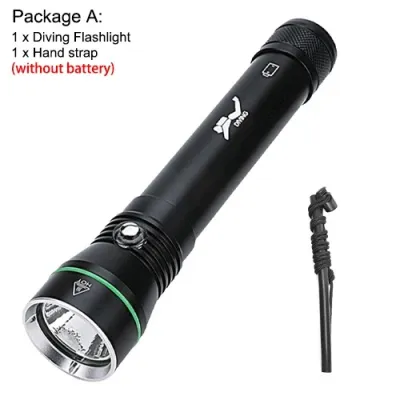
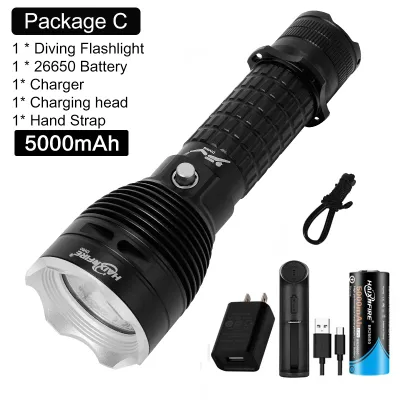
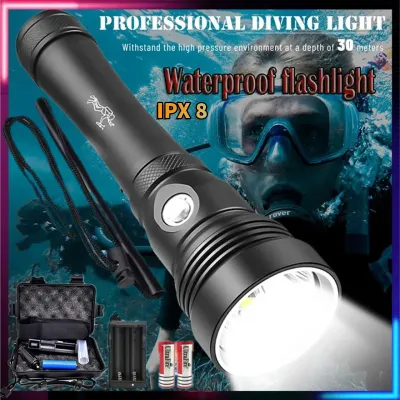
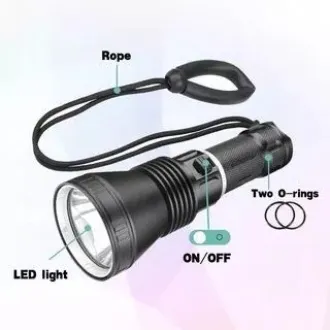
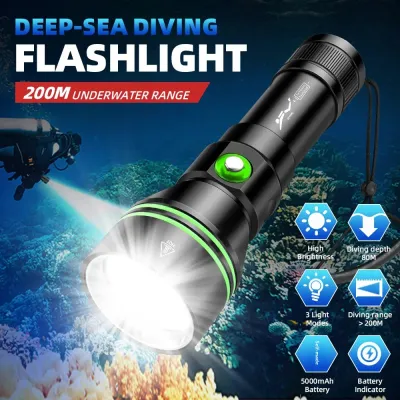
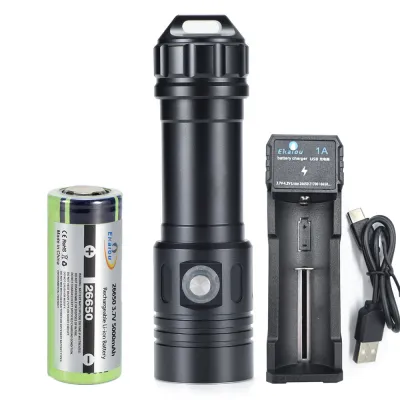
Prices are valid at publication and may change. Please refer to the product page for the latest price.
Conversely, exploring overhead environments like the shipwrecks of Coron or the underwater caves of Samar requires a completely different lighting profile. In these dark, enclosed spaces, a tightly focused spot beam with high candela is essential. A narrow beam cuts through the darkness to illuminate distant structures, guide lines, and potential hazards. It also serves as a vital signaling tool, allowing you to communicate clearly with your dive buddy through standardized light patterns against the wreck walls.
Water visibility and suspended particulate matter also play a major role in how your light behaves underwater. During the rainy season or near sandy muck-diving sites, water can be filled with plankton, silt, and organic runoff. If you use a powerful floodlight in low-visibility water, the light reflects off these particles and bounces directly back into your eyes—a phenomenon known as backscatter, which is highly similar to driving through thick fog with high-beam headlights. A narrow, concentrated beam minimizes backscatter by illuminating only a small column of water directly in front of you.
Finally, you must determine whether you need a primary light or a secondary backup light based on your dive profile. For shallow, daytime recreational dives where you simply want to peek under ledges or restore the red spectrum to corals, a compact, lower-lumen light is perfectly adequate. However, if you are planning deep wall dives, night dives, or any penetration dives, carrying a reliable primary light alongside a dedicated, independent backup light is a non-negotiable safety standard. If your primary light floods or experiences a battery failure, your backup light is your only lifeline back to the surface or exit point.
Core Specifications to Verify Before Comparing Brands
When comparing an Ekaiou diving flashlight against alternative brands, the first step is to look past promotional titles and verify the actual technical specifications listed in the official product manuals. Start by evaluating the lumen output in relation to the beam angle. Lumens measure the total amount of light emitted by the source, but they do not tell you how that light is distributed. A light boasting thousands of lumens might disperse that energy so widely that it feels dim underwater, whereas a lower-lumen light with a highly focused reflector can project a piercing beam over a long distance.

Depth ratings are another critical specification that requires careful verification. Look for lights that explicitly state an IPX8 rating or provide a specific depth limit in meters, such as 60 meters or 100 meters. Always ensure that the manufacturer’s rated depth exceeds your maximum planned dive depth by a comfortable safety margin. For standard recreational diving, which is limited to 40 meters, a light rated to 60 meters or more provides a necessary buffer against the increased pressure of deep water. Never take a light beyond its certified depth, as the pressure will compress the seals and cause immediate flooding.
Battery chemistry and expected burn time are equally vital, especially for multi-dive days or liveaboard trips where charging opportunities may be limited. High-performance dive lights typically utilize rechargeable lithium-ion batteries, such as 18650 or 26650 cells, due to their high energy density and stable voltage output. Review the manufacturer’s manual to see how long the light can run on its maximum setting before the brightness begins to drop. A reliable dive light should offer a consistent burn time that comfortably outlasts your longest planned dive, with some reserve power remaining.
You should also examine the charging mechanism and how it affects the physical integrity of the light. Some dive flashlights feature direct USB charging ports hidden beneath a threaded cap, while others require you to remove the batteries entirely to charge them in an external cradle. While direct USB charging is highly convenient, external charging is often preferred by experienced divers. Removing the batteries allows you to inspect them for signs of swelling or corrosion, and it prevents you from having to expose the delicate internal electronics of the flashlight to humid tropical air more than necessary.
Build, Handling, and Saltwater Maintenance Requirements
The physical construction of a dive light dictates how well it will survive the harsh, corrosive nature of saltwater and the physical impacts of boat dives. When comparing brands, look closely at the switch mechanism used to turn the light on and off. Common designs include magnetic slide switches, rotary twist bezels, and mechanical push-buttons. Magnetic switches are highly popular because they do not require a physical hole through the flashlight body, eliminating a common point of water entry. However, magnetic switches can trap fine volcanic sand—which is abundant in many Philippine dive destinations—potentially causing the switch to jam if not thoroughly rinsed.
Rotary switches, which require you to twist the light head to turn it on, are incredibly reliable and simple, but they can be difficult to operate with one hand or while wearing thick neoprene gloves. Push-button switches offer easy one-handed operation but rely on internal springs and O-rings that must withstand high pressure. Whichever style you choose, verify that you can easily operate the switch in the water, even when your hands are wet, cold, or gloved.
Regardless of the brand you select, the longevity of your dive light depends almost entirely on your post-dive maintenance routine. Saltwater is highly corrosive, and as it evaporates, it leaves behind sharp salt crystals that can tear delicate rubber seals. After every single dive, you must rinse your flashlight thoroughly in clean, fresh water, operating the switch several times while submerged to flush out trapped salt and sand. Once dry, open the battery compartment to inspect the O-rings for any signs of flattening, cracking, or debris.
Proper O-ring care is the single most effective way to prevent your light from flooding. Periodically remove the O-rings using a soft tool (never a sharp metal object that could scratch the groove), clean them with a lint-free cloth, and apply a very thin coat of high-quality silicone grease. The grease is not a sealant itself; rather, it keeps the rubber supple and helps it slide smoothly into place to form a watertight barrier. Additionally, verify that the flashlight body is made of a durable material like hard-anodized aluminum, which provides excellent impact resistance and helps dissipate the heat generated by high-powered LEDs.
Decision Framework: Matching the Right Light to Your Profile
To make your final decision, you must match the verified capabilities of the Ekaiou diving flashlight or any alternative brand to your personal diving profile and budget. Choose the Ekaiou diving flashlight if its verified specifications, beam profile, and price point align with your recreational diving needs and verified user manuals. If you are a recreational diver who primarily conducts daytime reef dives, occasional night dives, or muck-diving excursions, a budget-friendly option that meets basic depth and lumen requirements can offer excellent value without the premium price tag of technical gear.
On the other hand, you should choose established alternative brands if your diving activities demand specialized technical features. If you are training for deep trimix dives, technical wreck penetration, or professional underwater videography, you will require lights with highly specific beam angles, high Color Rendering Index (CRI) ratings, or redundant battery canisters. Furthermore, established brands often provide verified local warranty support and readily available replacement parts, such as custom O-rings and battery caps, which can be crucial if you need a quick fix before a major dive trip.
Ultimately, safety must be your absolute priority when selecting underwater lighting. If you encounter a product where the specifications are unclear, conflict with safety standards, or lack verifiable depth ratings, stop and consult a qualified dive professional or the manufacturer before taking it into the water. A flashlight failure at depth is not merely an inconvenience; in low-visibility or overhead environments, it can quickly escalate into a serious safety hazard. By focusing on verified technical specifications and maintaining your gear diligently, you can ensure that your chosen light keeps your Philippine underwater adventures safe and brightly illuminated.

Community discussion
Share your experience or ask a question. Comments are reviewed before publication.