
Quick Answer: Which Outboard Motor Is Better for Small Boats?
Choosing the right outboard motor for your kayak or inflatable boat depends entirely on your primary boating environment, trip duration, and local logistics. There is no single option that excels in every scenario, as both electric and gas propulsion systems serve fundamentally different operational needs.
Electric outboard motors are the ideal choice for short, calm-water trips, localized fishing, and quiet recreation. They excel in portability, offer near-silent operation, and require almost zero mechanical maintenance. If you primarily launch from locations with reliable electrical access and stick to sheltered bays, lakes, or slow-moving rivers, an electric setup provides a clean and user-friendly experience.
Gas outboard motors are superior for extended ranges, higher speeds, and remote exploration where charging infrastructure is non-existent. If you plan to navigate strong coastal currents, travel between islands, or carry heavy payloads over long distances, the high power-to-weight ratio and instant refueling of a gas motor are indispensable.
Products mentioned in this guide
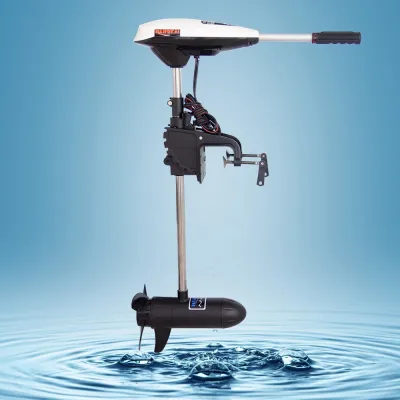
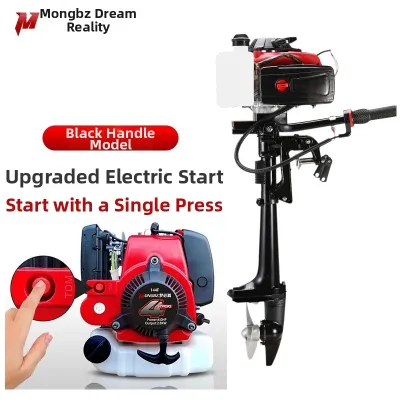
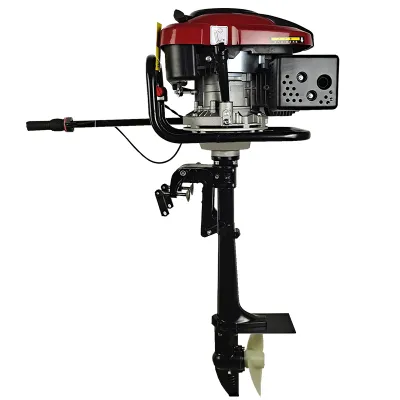
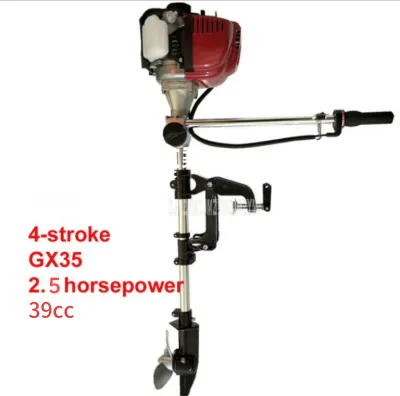
Prices are valid at publication and may change. Please refer to the product page for the latest price.
Core Differences Between Electric and Gas Outboard Motors
To make an informed decision, you must first understand how these two propulsion systems generate power and how manufacturers rate their performance. Gas and electric motors use entirely different engineering principles to push your watercraft through the water.

Gas outboard motors rely on internal combustion engines, which are typically available in two-stroke or four-stroke configurations. These motors convert liquid fuel into mechanical energy, driving a propeller through a traditional gearbox. Gas outboards are rated in horsepower (HP), a standard unit of power that directly correlates to high-speed performance and the ability to overcome heavy resistance from wind or water currents.
Electric outboard motors utilize battery-powered electric motors, which are often brushless for improved efficiency and durability. Instead of horsepower, electric motors designed for small boats are usually rated in pounds of thrust (lbs). Thrust measures the static force the motor can exert to move a stationary object, which is highly effective for moving heavy loads at low, consistent speeds but does not translate directly to high top-end speeds.
Before purchasing any outboard motor, you must verify your specific boat’s maximum transom weight and horsepower capacity. This information is typically found on the manufacturer’s capacity plate or in the owner’s manual. Installing a motor that exceeds these limits can compromise the structural integrity of your transom, cause the bow to rise dangerously, or even lead to swamping.
Portability, Weight, and Transom Limits
Small watercraft like kayaks and inflatable boats are highly sensitive to weight distribution. Adding an outboard motor changes how your boat sits in the water, which directly impacts your stability, tracking, and overall safety.
Gas outboard motors concentrate all of their weight directly on the transom. A small 2.5-horsepower gas motor typically weighs between 13 and 18 kilograms. While this may seem manageable, hanging this weight off the absolute stern of a lightweight kayak or small inflatable creates a significant lever arm. This rear-heavy distribution can cause the bow to ride high in the water, making the vessel highly susceptible to wind catching the underside and flipping the boat, especially when accelerating.
Electric outboard motors present a different weight distribution challenge. The motor head and shaft assembly are often exceptionally light, sometimes weighing less than 5 to 8 kilograms, which puts very little stress on the transom. However, the battery bank required to power the motor is heavy. A standard 100-amp-hour (Ah) lead-acid marine battery can weigh between 25 and 30 kilograms.
To maintain a safe center of gravity, you must store these heavy batteries inside the hull of the kayak or in the center of the inflatable boat, rather than near the transom. This requires running long, heavy-gauge battery cables from the motor to the battery compartment. While this distribution keeps the boat balanced and stable, carrying a heavy battery box down a shoreline or dock requires significant physical effort.
Always calculate your total payload before heading out. The combined weight of the motor, fuel or batteries, safety gear, tackle, and passengers must remain well below the maximum weight capacity specified by your boat’s manufacturer. Overloading your boat reduces freeboard—the distance from the water line to the top of the gunwale—increasing the risk of taking on water in choppy conditions.
Runtime, Range, and Refueling vs. Recharging
Your choice of motor dictates how far you can travel and how easily you can extend your trip if plans change. In tropical coastal environments, where sudden tidal shifts and afternoon winds can create challenging head currents, understanding your range is a critical safety factor.
Gas outboard motors offer unmatched range and refueling convenience. A typical small gas motor can run for several hours on a single internal fuel tank of one to two liters. If you need to extend your trip, you can carry a lightweight, sealed plastic jerry can with extra fuel. Refueling takes only a couple of minutes on the water, allowing you to cover vast distances, explore remote island groups, or navigate long river runs without worrying about getting stranded.
Electric outboard motors are strictly limited by the capacity of your battery bank. Once your battery is depleted, you must rely on manual paddle power to return to shore. Recharging a marine battery requires access to a stable electrical grid (typically 220V in the Philippines) and can take anywhere from 4 to 12 hours depending on the charger’s output and the battery chemistry.
To avoid getting stranded, you must calculate your expected round-trip distance using battery amp-hour (Ah) ratings rather than relying on generic “hours of use” marketing claims. You can estimate your runtime by dividing your battery’s usable capacity by the motor’s current draw at your desired speed. For example, if your electric motor draws 30 amps at full throttle and you are using a lithium battery with 80 Ah of usable capacity, you will have approximately 2.6 hours of run time at maximum speed.
Keep in mind that environmental variables heavily influence your actual range. Running against a strong current or fighting a stiff headwind increases the motor’s workload, which rapidly drains your battery or consumes fuel at a much faster rate. Always plan your trips using the “rule of thirds”: use one-third of your fuel or battery capacity to travel out, one-third to return, and keep one-third in reserve for unexpected emergencies.
Maintenance, Storage, and Long-Term Upkeep
Operating marine equipment in a tropical, high-humidity, and high-salinity environment requires diligent maintenance to prevent premature failure. Saltwater and humidity are highly corrosive, and each motor type demands a specific upkeep routine.
Gas outboard motors require regular mechanical maintenance to remain reliable. Because they use internal combustion engines, you must perform routine oil changes, replace spark plugs, and inspect the water pump impeller to ensure proper cooling. Furthermore, modern gasoline often contains ethanol, which attracts moisture from the humid tropical air. This moisture can cause phase separation in the fuel tank, leading to clogged carburetor jets and starting difficulties. To prevent this, you must use fuel stabilizers, regularly clean the carburetor, and drain the fuel system before long-term storage.
Electric outboard motors require very little mechanical maintenance because they have fewer moving parts and no fuel systems, spark plugs, or oil. However, they demand strict battery care to ensure longevity. Lead-acid and AGM batteries must never be discharged below 50% of their capacity, as deep discharging permanently damages their ability to hold a charge. Lithium Iron Phosphate (LiFePO4) batteries can handle deeper discharges but require specialized chargers and must be stored at specific voltage levels in a cool, dry place.
Regardless of which motor type you choose, you must protect the electrical connections and metal components from saltwater corrosion. After every outing in saltwater, thoroughly rinse the entire motor with fresh water. For gas motors, this includes flushing the internal cooling passages using a flushing attachment or a freshwater bucket. For electric motors, wipe down the shaft, bracket, and control head, and apply a marine-grade anti-corrosion spray or dielectric grease to all electrical terminals and battery connections.
Noise, Vibration, and the On-Water Experience
Beyond technical specifications and maintenance schedules, the choice between gas and electric power fundamentally changes your sensory experience on the water. This can impact your comfort, your ability to spot wildlife, and your success when fishing.
Electric outboard motors operate almost silently. The only sound you will hear is the gentle hum of the propeller spinning and the water rippling against your hull. This quiet operation is a massive advantage for anglers, as it allows you to navigate shallow flats, mangrove channels, and quiet coves without spooking fish. It also enhances safety by allowing you to hear environmental cues, such as approaching vessels, breaking waves, or changing weather patterns, while making it easy to converse with your passengers.
Gas outboard motors produce significant noise, exhaust fumes, and physical vibration. Even modern four-stroke engines, which are much quieter than older two-stroke models, generate a constant rumble that can become fatiguing over several hours of continuous use. The physical vibration can travel through the hull of a lightweight kayak or inflatable, causing minor discomfort over long distances. Additionally, the smell of exhaust fumes can accumulate when idling or traveling downwind, which can detract from the natural outdoor experience.
Decision Framework: Which Motor Should You Buy?
To finalize your decision, evaluate your typical boating activities, your physical capabilities, and your local infrastructure against the specific strengths of each motor type.
Choose Electric if:
- You prioritize quiet operation: You want a peaceful, silent experience for wildlife photography, bird watching, or stealthy fishing in shallow waters.
- You take short, localized trips: Your typical outings last only a few hours, and you stay within a safe paddling distance of your launch point.
- You have easy charging access: You can easily transport your batteries to a secure location with reliable electrical power to recharge them overnight.
- You want low maintenance: You prefer a simple, plug-and-play system that does not require handling gasoline, changing oil, or cleaning carburetors.
- You use a lightweight kayak: Your watercraft has a low transom weight limit, and you can easily distribute the battery weight inside the hull.
Choose Gas if:
- You need maximum range and speed: You plan to travel long distances, cross open bays, or navigate coastal waters with strong currents and tides.
- You explore remote areas: You launch from locations without electrical power and need the ability to run continuously by simply pouring in more fuel from a jerry can.
- You carry heavy payloads: You operate a larger inflatable boat with multiple passengers, heavy dive gear, or extensive camping equipment.
- You want a self-contained system: You prefer not to deal with heavy, bulky battery boxes and long wiring runs inside your boat's cockpit.
- You have secure storage: You have a dedicated garage, shed, or well-ventilated space to store the motor and fuel cans safely away from living areas.
Verify First:
Before making any purchase, always cross-reference the physical weight of your chosen motor and its power output with your specific kayak or inflatable boat’s manufacturer specifications. Ensure your transom mount is rated for the specific torque and weight of the motor, and verify that your total onboard weight—including passengers, gear, motor, and fuel or batteries—does not exceed the safe payload limit of your vessel.
Frequently Asked Questions (FAQ)
Can I use a standard car battery for an electric outboard motor?
No, you should not use a standard car battery to power an electric outboard motor. Car batteries are starting batteries designed to deliver a very high current for a few seconds to start an engine, after which they are immediately recharged by an alternator. They have thin lead plates that will rapidly degrade, warp, and fail if they are subjected to continuous, deep discharges.
Instead, you must use a dedicated deep-cycle marine battery, such as an AGM, gel, or Lithium Iron Phosphate (LiFePO4) battery. Deep-cycle batteries are engineered with thicker solid plates designed to deliver a steady, continuous flow of electricity over many hours and can withstand hundreds of repeated discharge and recharge cycles without losing capacity.
Do I need to register a small outboard motor in the Philippines?
Yes, under local maritime guidelines, motorized watercraft operating in Philippine waters generally require registration. You should check the latest regulations from the Maritime Industry Authority (MARINA) and your local municipal government regarding the registration of small recreational watercraft and outboard motors.
Requirements can vary significantly depending on the overall length of your boat, the horsepower or thrust rating of your motor, and whether you use the vessel strictly for private recreation or for commercial purposes like tourism or fishing. Additionally, many local government units (LGUs) enforce specific safety equipment mandates, such as requiring life jackets for all passengers, which you must comply with before launching.

Community discussion
Share your experience or ask a question. Comments are reviewed before publication.