
Choosing a scooter for adult commuting or recreation comes down to balancing convenience, physical effort, and daily logistics. While both electric and manual kick scooters offer excellent alternatives to sitting in heavy traffic, they serve vastly different lifestyles. The right choice depends on how far you need to travel, your physical fitness goals, and the specific rules of the spaces you navigate every day.
By evaluating your daily route, storage limitations, and budget, you can identify which option integrates seamlessly into your routine. This guide breaks down the essential factors to help you make an informed decision.
Assess Your Daily Commute and Terrain Needs
Your daily travel distance is the most critical factor when choosing a scooter for adult commuting. If your round-trip commute is under three kilometers, a manual kick scooter is highly practical and requires no charging. For longer distances, the physical demand of manual kicking increases significantly, making an electric motor a more reasonable choice for daily travel.
Products mentioned in this guide
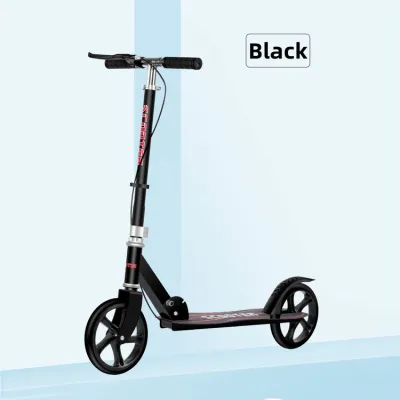
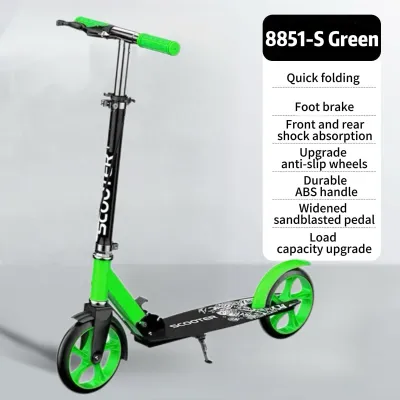
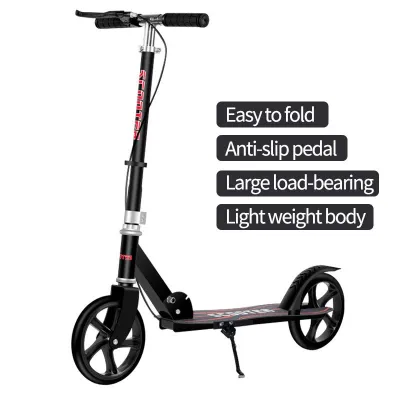
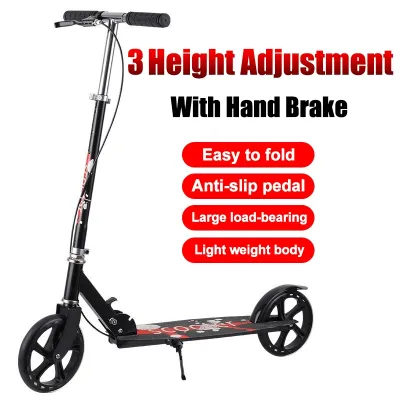
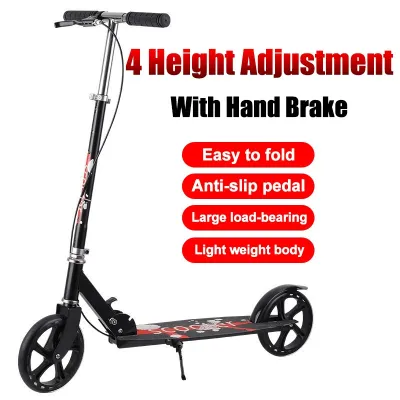
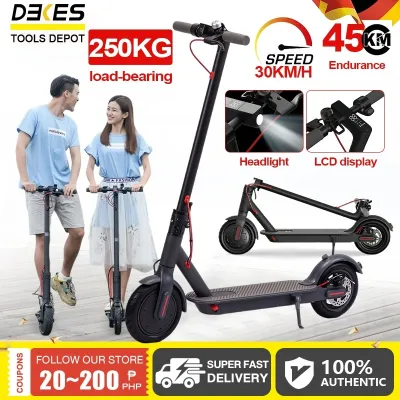
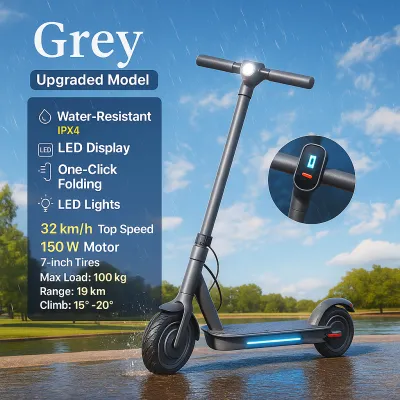
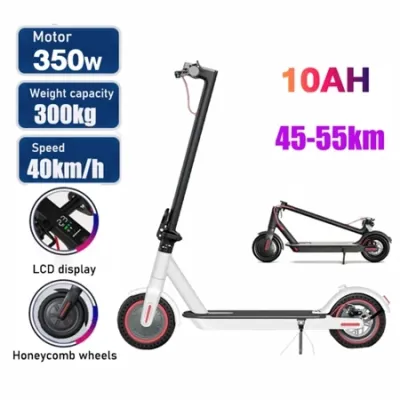
Prices are valid at publication and may change. Please refer to the product page for the latest price.
Elevation changes along your route also dictate the type of scooter you need. Steep hills can turn a manual ride into an exhausting climb that strains your legs. If your route features constant inclines, you will want to check the manufacturer’s climbing grade specifications on electric models to ensure they can handle the slope without stalling.
Local regulations and building policies in the Philippines heavily influence where and how you can ride. Electric scooters are often restricted to designated bike lanes, local barangay roads, or specific lanes on major thoroughfares, and riders must follow national transportation guidelines. Manual kick scooters generally face fewer public road restrictions, but you must still navigate carefully around pedestrians on sidewalks and shared pathways.
Surface conditions require careful equipment matching to ensure a safe ride. Potholes, cracked asphalt, and uneven paving stones require robust wheel designs. If your route is uneven, check the manufacturer’s specifications for wheel size and suspension. Larger pneumatic tires or built-in suspension systems help absorb shocks, whereas small, solid polyurethane wheels on basic kick scooters are best reserved for pristine, flat surfaces.
Evaluate Your Fitness Goals and Physical Effort
Deciding between these two scooter types requires looking at how much physical effort you want to exert. A manual kick scooter acts as an active cardiovascular workout that engages your core, calves, and glutes. If you want to integrate low-impact exercise into your daily commute, a manual model serves as an excellent fitness tool.

Your workplace environment and dress code should also guide your choice. In a hot, humid tropical climate, riding a manual kick scooter over moderate distances will likely cause you to sweat. If your office lacks shower facilities or you must arrive in formal attire, an electric scooter allows you to glide to your destination with minimal physical exertion, keeping you presentable for your morning meetings.
Physical stamina and joint health are equally important considerations. Continuous pushing off the ground can place repetitive stress on your ankles, knees, and lower back. If you have joint sensitivities or physical limitations, the steady, motorized glide of an electric scooter offers a more comfortable, low-impact transit option that does not aggravate existing injuries.
Compare Portability, Storage, and Daily Handling
Evaluating the physical footprint of your scooter ensures it fits into your living and working spaces. Manual kick scooters are inherently lightweight, often weighing between 4 to 7 kilograms, making them easy to fold and carry. Electric scooters, packed with heavy lithium-ion batteries and hub motors, typically start at 12 kilograms and can easily exceed 20 kilograms.
Multi-modal transit requires a scooter that you can manage during transitions. If your daily commute involves boarding the MRT, LRT, or public buses, you must be able to fold and lift your scooter quickly. Check the folded dimensions in the product specifications to ensure the unit fits comfortably under a train seat, in a car trunk, or inside a tight office cubicle.
Daily handling also depends on your physical ability to lift the scooter over obstacles. Carrying a heavy electric scooter up multiple flights of stairs in an office building or over a pedestrian footbridge can quickly become exhausting. Before purchasing, verify the folding mechanism’s ease of use and test whether you can comfortably lift the specific model’s weight with one hand.
Review Budget, Maintenance, and Long-Term Costs
Your initial budget is a major deciding factor, as the price difference between manual and electric models is substantial. Manual kick scooters are highly affordable, requiring a relatively low upfront investment in Philippine Pesos (₱). Electric scooters carry a premium price tag due to the cost of batteries, motors, and electronic controllers.
Long-term maintenance needs vary significantly between the two types. Kick scooters have very few moving parts, meaning upkeep is usually limited to tightening loose bolts, cleaning wheel bearings, and replacing worn brake pads. Electric scooters require diligent battery care, motor inspections, and occasional electronic troubleshooting, which may require professional servicing.
Do not forget to factor in the cost of essential safety accessories. Regardless of which scooter type you choose, you must budget for a high-quality helmet, high-visibility lights for night riding, and a heavy-duty lock. For electric models, you may also need to budget for specialized replacement parts, such as inner tubes or proprietary tires, based on the manufacturer’s recommendations.
Make Your Choice: A Lifestyle Decision Matrix
To finalize your decision, map your primary daily activities to the unique strengths of each scooter type. A manual kick scooter is the ideal match if your commute is short, you want to incorporate daily exercise, you need to carry your ride onto crowded public transport, and you prefer a low-maintenance, budget-friendly option. This setup works best for last-mile transit in flat, urban areas.
An electric scooter is the better choice if your commute exceeds three kilometers, your route features steep hills, you must arrive at work sweat-free, and you have secure ground-level storage or elevator access. This option serves well as a primary commuting vehicle that can keep pace with bicycle traffic in designated lanes.
Certain conditions serve as immediate dealbreakers for each type. Avoid electric scooters if your apartment building or workplace enforces strict indoor bans on lithium-ion batteries, or if you lack a safe place to charge the unit. Avoid manual kick scooters if your route consists of high-speed roads where keeping a slow pace compromises your safety, or if you suffer from chronic joint pain.
Once you have selected the right type, your next step is to verify the manufacturer’s warranty terms, especially regarding battery and motor coverage for electric models. Check the availability of authorized service centers in your area to ensure you can easily source replacement parts, and review the retailer’s return policy before making your final purchase.
Frequently Asked Questions (FAQ)
Do I need a license or registration to ride an electric scooter in the Philippines?
Under current national transportation guidelines, registration and licensing requirements depend on the vehicle’s maximum speed and motor wattage. Low-speed personal mobility devices used on private properties, barangay roads, or designated bicycle lanes generally do not require a driver’s license. However, you must check the latest local government unit ordinances, as some cities enforce specific registration rules, helmet mandates, and strict route limitations for motorized scooters.
Can I ride a kick scooter in the rain?
Riding any scooter in wet weather introduces safety risks. Wet pavement significantly reduces tire traction, which increases your braking distance and heightens the risk of slipping on painted road markings or metal utility covers. While manual kick scooters do not have sensitive electronic components that can short-circuit, riding in the rain can degrade wheel bearings and cause rust. If you get caught in a downpour, thoroughly dry the deck, folding joints, and wheel bearings afterward to maintain smooth mechanical performance.

Community discussion
Share your experience or ask a question. Comments are reviewed before publication.