
Starting your roller skating journey is incredibly exciting, but before you glide onto the pavement, securing the right safety equipment is your absolute first step. A complete beginner protective gear set—consisting of a helmet, knee pads, elbow pads, and wrist guards—is essential to shield your joints and head from inevitable falls. However, simply wearing the gear is not enough; it must fit precisely to offer any real protection.
Before strapping on your skates, remember that protective equipment is a safety net, not a substitute for proper training, balance practice, and learning how to fall safely. Knowing your physical limits and practicing on flat, smooth surfaces away from traffic will keep you safe as you build confidence. Equipment cannot replace training or judgment, so always prioritize skill progression alongside your safety gear.
Determining Which Protective Gear Pieces You Actually Need
When you are learning to balance on eight wheels, falls are a natural part of the learning curve. A standard beginner protective gear set targets the areas most vulnerable to impact during common loss-of-balance scenarios. For most beginners, the instinctive reaction to a forward fall is to reach out with the hands, which places immense pressure on the wrists and palms. Similarly, falling forward or dropping to your knees can cause painful scrapes or joint bruising without proper knee pads.
Products mentioned in this guide
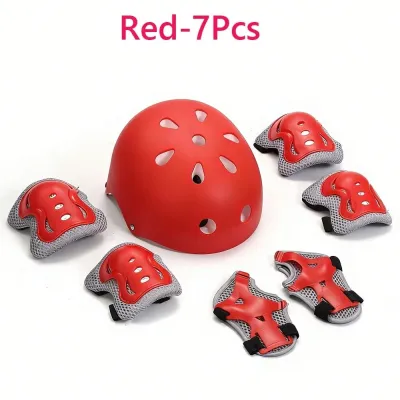
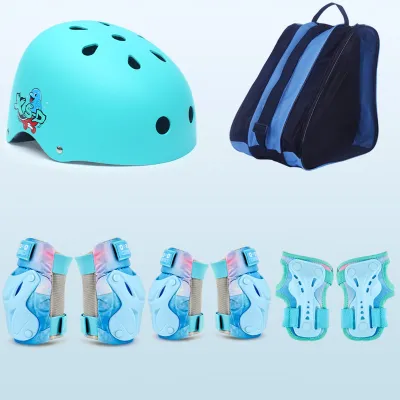
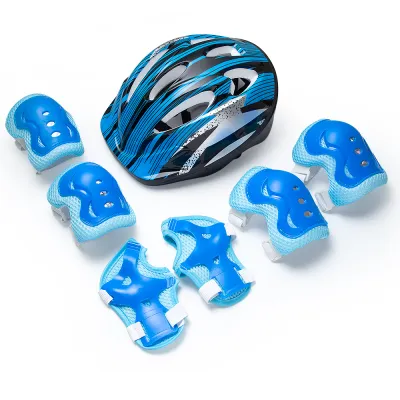
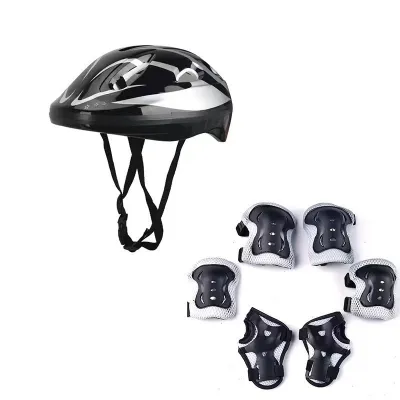
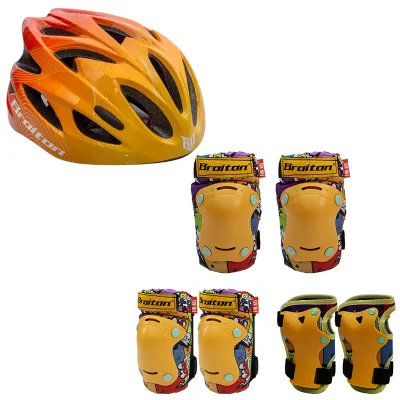
Prices are valid at publication and may change. Please refer to the product page for the latest price.
Backward falls present a different set of risks, often leading to impacts on the elbows, tailbone, or the back of the head. This is why a certified helmet and robust elbow pads are non-negotiable components of your setup. Each piece of gear is engineered to absorb and distribute the force of these impacts, preventing direct contact between your bones and the hard asphalt.
Depending on your skating environment and personal comfort, you might consider expanding your gear set. If you are practicing on rough outdoor pavements, steep inclines, or near obstacles, adding padded shorts (hip and tailbone protectors) can offer valuable peace of mind. For absolute beginners who feel highly anxious about falling, these extra layers can build confidence, but your core focus should always remain on mastering basic stopping and falling techniques first.
Verifying the Correct Fit for Your Helmet
Your helmet is the single most critical piece of safety equipment you will wear, making a precise fit absolutely paramount. To begin your visual and physical check, place the helmet flat on your head; it should sit level, covering your forehead. A good rule of thumb is that the front rim should sit approximately two finger-widths above your eyebrows. If the helmet tilts backward, exposing your forehead, or tilts too far forward, obstructing your vision, it cannot protect you correctly.

Next, examine the strap configuration. The side straps should form a clean “V” shape directly beneath each earlobe. Fasten the chin strap and adjust it until it is snug but comfortable; you should only be able to fit one or two fingers between the strap and your chin. When you open your mouth wide, you should feel the helmet pull down slightly on your head, indicating a secure hold.
To verify that the helmet will not shift during a fall, perform the shake test. Shake your head vigorously from side to side, then nod up and down. The helmet should remain firmly in place without sliding or rotating. If it moves independently of your skin, it is too loose. Always check the inner product label and manufacturer specifications for recognized safety certifications rather than assuming a thick foam lining automatically guarantees sufficient protection.
Testing the Fit and Mobility of Knee and Elbow Pads
Knee and elbow pads must strike a delicate balance between secure placement and comfortable joint mobility. When trying on these pads, pay close attention to how they attach to your limbs. Many modern pads feature a slip-on sleeve design combined with adjustable hook-and-loop straps, while others rely solely on straps. The sleeve or straps should feel snug enough to compress the surrounding muscle without pinching, binding, or restricting your blood circulation.
To test their stability, perform a deep bend test. Bend your knees and elbows fully as if you are tucking into a low skating stance. During this movement, the hard plastic cap must remain perfectly centered over the kneecap or elbow joint. If the pad slips down, twists to the side, or leaves a gap exposing the joint, the fit is too loose, or the pad shape is incompatible with your body.
Additionally, evaluate the closure mechanisms and inner lining. The straps should have enough excess length to fasten securely without dangling, which could present a tripping hazard. Because skating in warm, tropical climates can lead to rapid sweat buildup, check that the inner lining is made of breathable, moisture-wicking fabric to prevent skin irritation and keep the pads from sliding around on sweaty skin.
Ensuring Wrist Guards Offer Proper Support and Dexterity
Wrist guards are uniquely designed to prevent hyperextension of the wrist during a forward fall while protecting your palms from painful road rash. To check the fit, slide your hand into the guard and locate the rigid plastic splint. This splint must align perfectly with the natural heel of your palm and the crease of your wrist. If the splint sits too high or too low, it will fail to support the joint and could cause discomfort.
Once the straps are fastened, test your finger mobility. You should be able to wiggle your fingers freely and make a complete fist without resistance. While the guard is meant to restrict the backward bending of your wrist, it should still allow enough dexterity for you to adjust your skate laces, carry a water bottle, or hold your phone in an emergency.
Finally, monitor your hand circulation. Keep the wrist guards on for five to ten minutes while standing. If you experience any numbness, tingling, or if your fingertips begin to feel cold or change color, the straps are too tight or the guard is compressing a nerve. Loosen the straps slightly or try a larger size to ensure safe, comfortable blood flow.
Evaluating When to Adjust, Maintain, or Replace Your Gear
Protective gear does not last forever, and riding with compromised equipment can put you at serious risk. Establish a regular visual inspection routine before every skating session. Look closely for hairline cracks in the plastic caps of your knee and elbow pads, torn or stretched-out elastic straps, frayed stitching, and permanently compressed foam padding. If any of these signs are present, the gear’s ability to absorb impact is severely reduced.
Helmets require even stricter replacement standards. Most skate helmets are designed to manage a single major impact. If you experience a hard fall where your helmet hits the ground, you must replace it immediately, even if there are no visible cracks on the outer shell. The internal protective foam can collapse permanently upon impact, rendering it useless for future falls.
To maximize the lifespan of your gear, practice proper cleaning and storage. Sweat accumulation contains salts and oils that can degrade elastic straps and foam over time. Hand-wash your pads regularly using mild soap and cool water, then allow them to air-dry completely in a well-ventilated area. Avoid leaving your gear in direct sunlight or inside a hot car, as extreme heat can warp plastic shells and weaken adhesives.
Frequently Asked Questions (FAQ)
Can I use a bicycle helmet for roller skating?
While a bicycle helmet is better than no protection at all, it is generally not ideal for roller skating. Traditional bicycle helmets are designed to protect against single, high-speed forward impacts and sit higher on the head. Skate helmets, by contrast, extend lower down the back of the skull to protect against backward falls, which are highly common in roller skating. Always check the manufacturer specifications to see if a helmet is dual-certified for both cycling and roller sports before using it on wheels.
Should I buy a bundled protective gear set or individual pieces?
For most beginners, buying a pre-packaged protective gear set is highly convenient and cost-effective, as it provides all the essential pads in one matching package. However, if your body proportions do not fit standard sizing charts—for example, if you require large knee pads but small wrist guards—buying individual pieces is the safer choice. A perfect fit on individual items is always preferable to a poorly fitting bundled set, as loose or overly tight pads cannot protect you effectively.

Community discussion
Share your experience or ask a question. Comments are reviewed before publication.