
Selecting a diving flashlight requires looking past simple brightness numbers to evaluate how a light performs under pressure, in dark waters, and over long runtimes. The most critical specifications to check are the sustained lumen output, the beam angle, the certified depth rating, the battery runtime profile, and the physical switch design. By verifying these technical details against your typical diving conditions, you can ensure your light remains a reliable safety tool rather than a liability when you descend.
Whether you are researching a specific diveng flashlight or comparing various dive light models, understanding the technical specifications is critical for underwater safety and visibility. Selecting the right equipment requires looking beyond marketing claims to evaluate how lumens, depth ratings, beam types, and battery systems perform in real diving conditions. This guide breaks down the core specifications you need to verify, helping you build a reliable shortlist tailored to your diving environment and skill level.
Understanding Lumens and Beam Types for Underwater Visibility
When evaluating light output, distinguish between peak and rated lumens. Manufacturers often advertise peak lumens, which represent a temporary burst of brightness that the light can only sustain for a few minutes before thermal regulation steps down the output to prevent overheating. To understand actual performance during a typical dive, check the specifications for sustained or rated lumens on high or medium modes.
Products mentioned in this guide
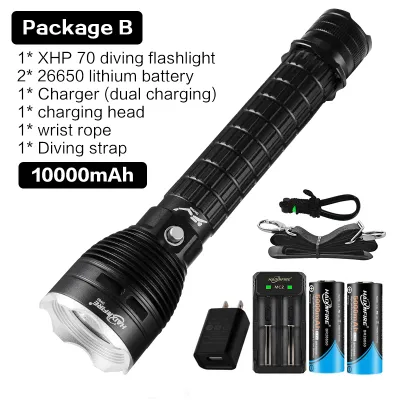
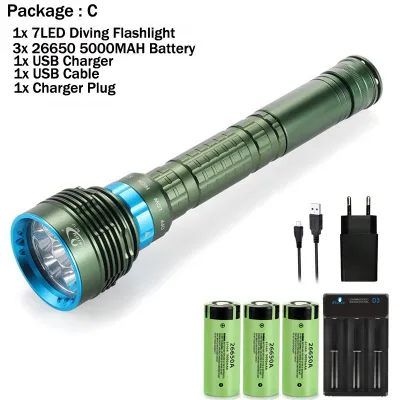
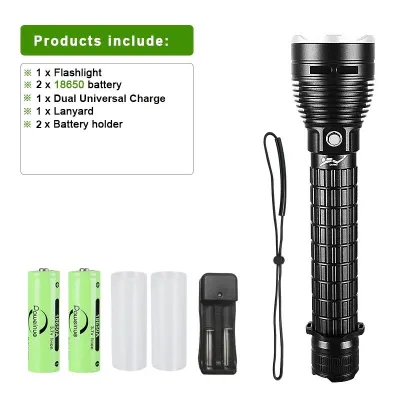
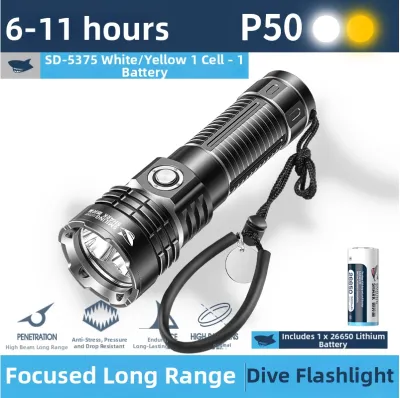
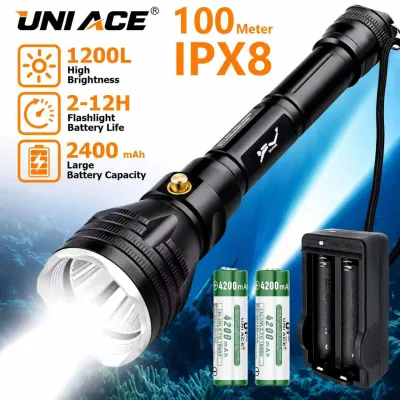
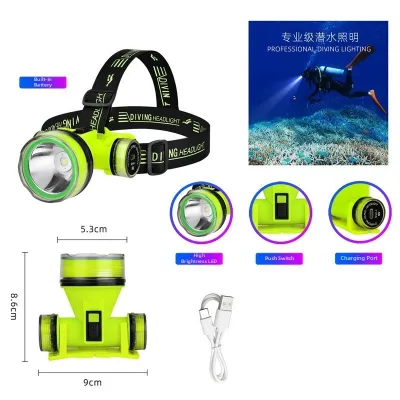
Prices are valid at publication and may change. Please refer to the product page for the latest price.
The choice between a spot beam and a flood beam depends on your diving environment. A spot beam, featuring a narrow angle of 5 to 15 degrees, concentrates light into a tight column, making it ideal for cutting through murky water, pointing out specific marine life, or exploring caves and wrecks. In contrast, a flood beam offers a wide angle of 60 to 120 degrees, providing broad, even illumination that is perfect for wide-angle night diving and underwater photography.
Water turbidity and suspended particulate matter also dictate the ideal beam width. In low-visibility waters, such as those affected by seasonal rains or heavy silt, a wide flood beam can cause severe backscatter, reflecting light directly back into your eyes and reducing visibility. For these challenging conditions, a tight spot beam is far more effective at penetrating the haze.
Decoding Depth Ratings and Pressure Resistance
A diving flashlight must have an explicit depth rating, which is fundamentally different from standard IPX water-resistance ratings used for surface electronics. While an IPX8 rating only guarantees protection against shallow, temporary submersion, a true dive light is engineered to withstand continuous hydrostatic pressure. Always verify that the manufacturer’s certified depth rating matches or exceeds your planned maximum diving depth, leaving a conservative safety margin.

The integrity of a dive light relies heavily on its O-ring sealing mechanism. High-quality models typically utilize double or triple O-ring seals at every joint where water could potentially enter. When reviewing product specifications, check for the presence of these redundant seals and verify the manufacturer’s guidelines regarding pressure resistance and seal maintenance.
Over time, exposure to pressure, saltwater, and UV rays will degrade even the best seals. A flashlight should be retired from deep dives or sent for professional servicing if you notice any visible flattening, cracking, or hardening of the O-rings. Additionally, if a light is accidentally dropped or subjected to depths beyond its rated limit, the structural integrity of the lens or casing may be compromised.
Evaluating Battery Life and Power Sources
Battery life is a critical safety factor that varies significantly depending on the brightness mode you select. A flashlight that boasts high lumen output may drain its battery within 30 minutes on the maximum setting. To avoid being left in the dark, examine the manufacturer’s runtime charts to verify how long the battery will last on medium or low settings, which are often perfectly adequate for night dives.
Choosing between rechargeable lithium-ion systems and disposable batteries involves weighing convenience against performance. Rechargeable lithium-ion batteries, such as 18650 or 21700 cells, offer superior power density and maintain a consistent voltage output throughout most of the discharge cycle. However, when traveling by air, you must comply with airline regulations regarding lithium-ion batteries in carry-on luggage. Disposable alkaline batteries are easier to source in remote areas but perform poorly in cooler waters and suffer from a rapid voltage drop.
To prevent sudden light failure underwater, prioritize flashlights equipped with reliable power indicators. Look for models that feature multi-color LED indicators or low-battery warning signals that change color or flash when the charge drops below a certain percentage. This feature ensures you have ample warning to signal your buddy and begin a safe, controlled ascent.
Checking Build Quality and Underwater Handling
Saltwater is highly corrosive, making material selection a primary consideration for durability. Look for dive lights constructed from marine-grade materials, such as hard-anodized aluminum (Type III anodization) or high-strength engineering polymers. These materials resist corrosion and protect the internal electronics from the physical impacts common on dive boats and rocky entries.
The design of the switch mechanism is another critical factor. Standard clicky switches can become locked under high pressure or prove difficult to operate when wearing thick neoprene gloves. Magnetic slider switches, rotary switches, or oversized mechanical push-buttons are much easier to manipulate under pressure and are less prone to mechanical failure. Ensure the switch includes a lock-out feature to prevent the light from turning on accidentally inside your gear bag.
Practical handling features can prevent you from losing your light during a dive. Check for integrated lanyard attachment points, textured grips that remain secure when wet, and anti-roll bezels that prevent the light from rolling off flat surfaces on a moving boat. A secure wrist lanyard or a bolt snap attachment is essential for keeping the light connected to your buoyancy control device when not in use.
Building Your Diving Flashlight Shortlist
To select the right light, align your choices with a priority matrix based on your primary diving activities. Recreational reef divers generally benefit from a compact, versatile light with a medium beam angle and a reliable 60-minute runtime. Technical divers require a high-power primary light with a tight spot beam and extended battery life, supplemented by at least one compact backup light. Underwater photographers should prioritize high-lumen flood lights with a high Color Rendering Index to capture natural marine colors.
When balancing your budget, avoid compromising on critical safety features. While cheaper options on online marketplaces may seem appealing, they often lack verified depth ratings, thermal protection circuitry, and reliable sealing. Investing in a reputable brand ensures that the light has undergone rigorous pressure testing and features the build quality necessary to protect your safety underwater.
Before making a final decision, complete a pre-purchase checklist to ensure long-term usability. Verify the availability of replacement parts, such as manufacturer-specific O-ring kits and compatible chargers, which are essential for ongoing maintenance. Additionally, check the warranty terms and confirm whether there is a local distributor or service center in your region.
Frequently Asked Questions (FAQ)
Can I use a regular waterproof flashlight for scuba diving?
Standard waterproof flashlights, even those with high IPX ratings, are only designed for shallow, temporary submersion and cannot withstand the immense hydrostatic pressure of scuba diving. Using a non-rated flashlight underwater will almost certainly result in seal failure, flooding, and permanent damage to the electronics, potentially leaving you without light during a dive. Always use equipment that is explicitly rated and tested for your target diving depths.
How do I maintain the O-rings on my diving flashlight?
To maintain a reliable seal, inspect the O-rings before every dive by removing them with a plastic tool to check for dirt, sand, hair, or physical damage. Clean the O-rings and the grooves with a lint-free cloth, then apply a thin, even coat of manufacturer-recommended silicone grease to keep the rubber flexible. Never use petroleum-based lubricants, as they can degrade the rubber, and replace the O-rings immediately if you detect any flattening, cracking, or wear.

Community discussion
Share your experience or ask a question. Comments are reviewed before publication.