
Deciding whether Shannaier roller skates are a suitable choice for starting your skating journey in the Philippines depends heavily on a close, physical inspection of the specific model you choose. While these skates are widely available on local ecommerce platforms at budget-friendly prices, entry-level gear requires careful verification to ensure it provides the necessary safety and structural support. For a beginner navigating local paved barangay courts, park paths, or smooth indoor rinks, a skate must do more than just look appealing; it must actively protect your ankles and joints from strain. By understanding what to look for in terms of boot stiffness, plate rigidity, and wheel specifications, you can determine if a particular pair of Shannaier skates will support your learning progression or if you should invest in a more robust alternative.
What Beginners Actually Need in a First Pair of Skates
To learn roller skating safely, your equipment must meet specific structural baselines. The most critical component is ankle support. When standing on wheels, your ankles naturally want to roll inward, a common issue known as pronation. A high, stiff cuff made of reinforced plastic or structured synthetic leather is essential to hold your ankle upright. Without this rigid support, your muscles will fatigue rapidly, increasing the risk of painful strains during your first few sessions.
Beyond the boot, wheels and bearings dictate how safely you move. For beginners in the Philippines practicing on outdoor surfaces like concrete basketball courts or rough asphalt, wheel hardness (durometer) is incredibly important. Softer wheels, typically rated between 78A and 82A, absorb the vibrations of uneven ground and provide a grippier ride to help you maintain balance. Harder wheels are better suited for smooth indoor rinks but can feel slippery on dusty outdoor concrete. A wheel size between 58mm and 62mm offers a low center of gravity, making balancing much easier.
Products mentioned in this guide
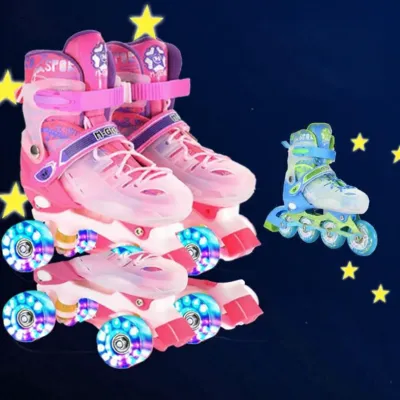
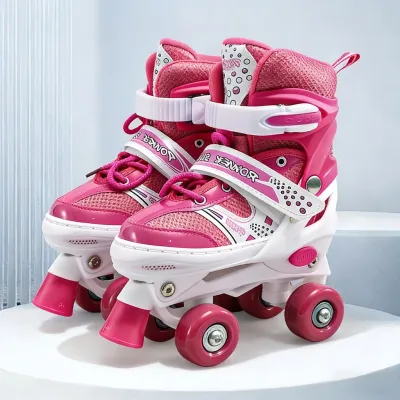
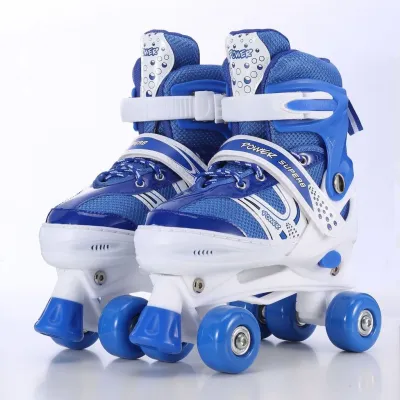
Prices are valid at publication and may change. Please refer to the product page for the latest price.
Finally, a beginner skate must feature reliable stopping power and secure closure systems. Quad skates require a sturdy toe stop, while inline skates need a dependable heel brake. These components must be securely attached to the chassis and made of high-friction material that grips the ground. To keep your foot locked firmly in place, the skate should utilize a multi-point closure system, combining traditional laces with micro-adjustable ankle buckles and mid-foot power straps. This lockdown prevents your heel from lifting inside the boot, ensuring controlled steering and stopping.
How to Check if Shannaier Skates Meet Beginner Standards
Because budget-friendly brands like Shannaier can vary in manufacturing batches, you must perform a hands-on inspection or carefully analyze the product specifications before purchasing. Start by assessing the boot construction. Physically press the sides of the ankle cuff; if the material collapses easily under moderate hand pressure, it will not provide sufficient support. Look for models featuring a reinforced plastic outer skeleton or a thick, stiff vinyl boot. Additionally, feel the interior padding. A beginner boot needs dense foam lining that cushions your ankle bones against the hard outer shell, preventing painful friction points.

Next, turn the skate over to examine the chassis, also known as the plate or frame. This structural backbone holds the wheels and transfers your weight. On entry-level skates, plates are typically made of either engineered nylon or aluminum alloy. If inspecting a nylon plate, check that it is thick and rigid, with no visible warping. For aluminum plates, ensure there are no sharp, unfinished edges or thin, flimsy sections that could bend under pressure. A flexing plate wastes your pushing energy and can cause the wheels to misalign, making it difficult to skate in a straight line.
You must also verify the wheel and bearing specifications, which are often printed directly on the components or listed on the packaging. Look for markings indicating the wheel hardness and bearing rating, such as ABEC-5 or ABEC-7. Spin each wheel with your hand; they should spin freely and quietly without wobbling. If the wheels feel plasticky or fail to spin smoothly, they may struggle to roll over minor outdoor debris like pebbles common on local pathways. Lastly, check the toe stop. Ensure it is made of a rubberized compound rather than hard, slippery plastic, and verify that the mounting bolt is threaded securely into the plate without any play.
Evaluating Fit, Comfort, and Overall Value
Finding the correct fit is paramount when purchasing your first pair of skates, especially when ordering online. Do not rely on your standard local shoe size, as skate sizing conventions vary significantly between brands. Instead, place your foot flat on a piece of paper, trace the outline, and measure the exact distance from your heel to your longest toe in millimeters. Compare this measurement directly to the specific sizing chart provided by the seller. A skate that is too loose will cause your foot to slide, leading to blisters and a loss of control, while a skate that is too tight will pinch your toes and cause painful cramping.
Consider the tropical climate of the Philippines when evaluating comfort and lining materials. Skating is an intense physical workout, and high humidity means your feet will sweat. Look for skates with breathable mesh panels or moisture-wicking liners that help manage heat buildup. When you first try on the skates, expect a brief break-in period where the materials conform to your feet, but be wary of immediate, sharp pressure points against your ankle bones or arches. If the boot causes intense pain within five minutes of standing still, it is unlikely to become comfortable over time.
When weighing the value of Shannaier skates, compare the upfront cost in ₱ against the potential need for immediate upgrades. If a budget-friendly pair costs around ₱1,500 to ₱3,000 but requires you to immediately purchase better wheels or bearings to skate safely, the total investment might quickly approach the price of a mid-tier brand. However, if the out-of-the-box components meet the basic safety and structural checks outlined above, they can serve as a highly cost-effective way to test your interest in the sport before committing to premium equipment.
When to Look for Alternative Roller Skate Options
There are clear indicators that should prompt you to bypass entry-level models in favor of more established, specialized brands. If you perform a physical check and observe structural weaknesses—such as a plastic chassis that visibly bows when you stand on it, or a boot cuff that allows your ankle to bend sideways at an extreme angle—do not ride them. Skating on structurally compromised gear hinders your learning progress and increases the risk of sudden equipment failure, which can lead to severe falls.
Your intended skating environment also dictates whether basic recreational skates are sufficient. If you plan to skate on rough, unpaved barangay roads, steep hills, or eventually transition to high-impact tricks at a local skatepark, basic entry-level skates will not withstand the stress. These environments demand heavy-duty aluminum frames, high-rebound polyurethane wheels, and reinforced boots designed for impact absorption. Attempting aggressive maneuvers or skating on highly abrasive surfaces with recreational gear will rapidly degrade the components and compromise your safety.
Finally, if the product listing or packaging lacks essential technical details, safety certifications, or clear sizing guides, treat this as a major warning sign. A reputable manufacturer will always provide clear specifications regarding weight limits, material compositions, and safety standards. When in doubt, stop and consult a local skate shop or a qualified skating instructor. They can offer personalized advice based on your body type, local skating venues, and skill goals, helping you avoid costly purchasing mistakes.
Frequently Asked Questions (FAQ)
Do I need to buy additional protective gear when starting out?
Yes, purchasing high-quality protective gear is absolutely non-negotiable for beginners, regardless of the skate brand you choose. At a minimum, your safety kit must include a certified helmet, wrist guards, knee pads, and elbow pads. Falls are an inevitable part of the learning process as you develop your balance and muscle memory. Wrist guards are particularly critical, as instinctively reaching out to break a fall is the most common cause of beginner skating injuries. Ensure all pads fit snugly and securely without slipping out of place during movement, while still allowing a full range of joint motion.
Can I upgrade the wheels or bearings on entry-level skates later?
Most entry-level roller skates allow you to upgrade individual components as your skills improve. Before purchasing replacement parts, verify that the skate uses standard axle sizes (typically 8mm) and has enough frame clearance to accommodate different wheel diameters. Standard 608 bearings can easily be swapped out for higher-precision options to achieve a smoother, more effortless roll. Upgrading to high-quality polyurethane wheels tailored to your specific skating surface—whether soft wheels for rough outdoor asphalt or harder wheels for indoor rinks—is an excellent, cost-effective way to extend the life of your skates as you progress.

Community discussion
Share your experience or ask a question. Comments are reviewed before publication.