
Choosing the right exercise mat is a highly personal decision that directly impacts your comfort, safety, and performance. The ideal thickness of your exercise mat depends entirely on your workout style, joint sensitivity, and where you train. There is no single “perfect” thickness; instead, you must balance the need for joint cushioning against the stability required for balance and standing poses.
In many homes across the Philippines, workouts take place on hard tile, polished concrete, or hardwood floors. These surfaces offer excellent stability but provide zero natural shock absorption, making your choice of mat thickness even more critical. Whether you are practicing yoga in a humid room, performing high-intensity interval training (HIIT) on your patio, or carrying your gear to a local fitness studio, finding the right balance of padding and support is key to a successful routine.
Understanding Exercise Mat Thickness Categories
Exercise mats generally fall into three broad categories based on their physical characteristics and intended use. Understanding these classifications helps you narrow down your options before looking at specific materials or brands.
Products mentioned in this guide
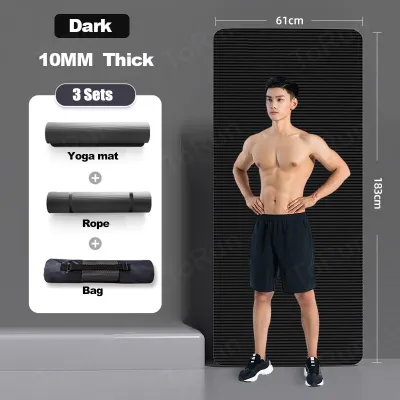
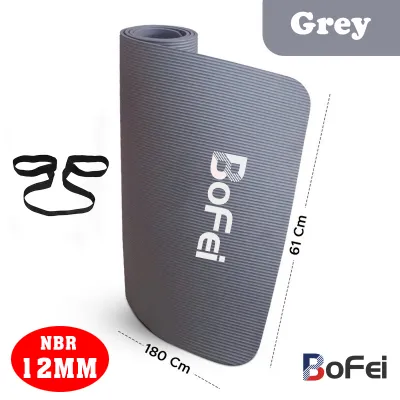
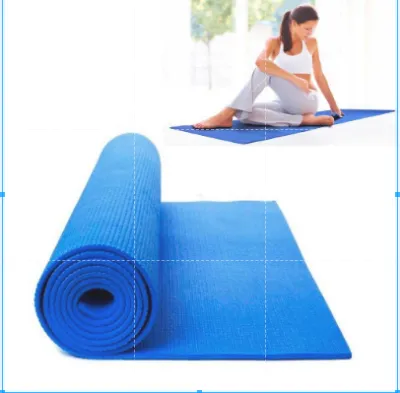
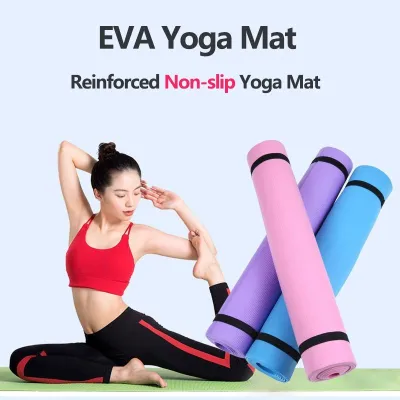
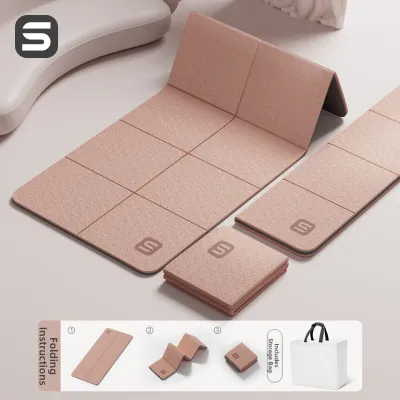
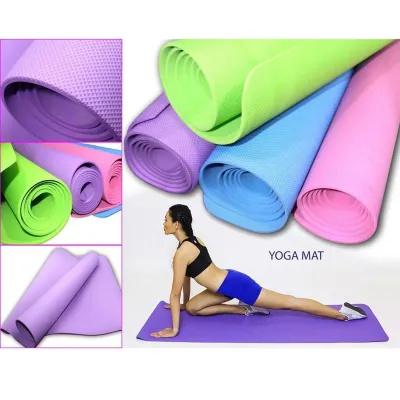
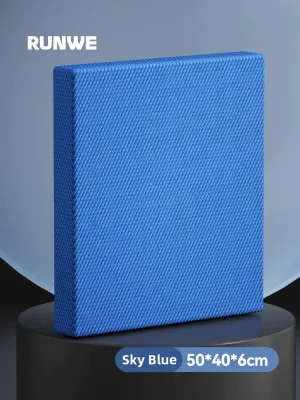
Prices are valid at publication and may change. Please refer to the product page for the latest price.
The first category consists of ultra-thin or travel mats. These pads are designed for maximum portability and are often thin enough to be folded into a square rather than rolled. They offer high ground feedback, meaning you can feel the solid floor beneath you, which is excellent for stability. However, they provide minimal cushioning, making them less suitable for floor-heavy workouts unless layered over another mat.
The second category is the standard or mid-range mat, which is the most common type found in fitness centers and home gyms. These mats strike a practical balance between portability and comfort. They offer enough cushioning to protect your spine and joints during basic floor exercises while remaining thin and firm enough to support standing balance poses without causing your ankles to wobble.
The third category includes thick or extra-cushioned mats. These pads prioritize joint comfort above all else, absorbing heavy impacts and protecting sensitive pressure points from hard floors. While they are incredibly comfortable for lying down or kneeling, their soft, shifting surfaces can make balancing on one foot highly challenging, and they are significantly bulkier to store and transport.
Matching Mat Thickness to Your Workout Type
To select the right mat, you must match its thickness to the specific physical demands of your exercise routine. Different movements require different levels of ground contact and joint protection.

For balance-focused routines like Vinyasa yoga, Hatha yoga, or Pilates balance work, stability is paramount. A thinner or standard mat keeps your feet closer to the solid ground, preventing your ankles from rolling and helping you maintain proper alignment during standing poses. If your mat is too thick and squishy, your feet will sink into the material, forcing your stabilizing muscles to work twice as hard just to keep you upright.
Conversely, high-impact or floor-heavy routines demand more substantial cushioning. Workouts like classical Pilates, core conditioning, or floor aerobics involve rolling on your spine, kneeling, or resting your elbows and tailbone on the floor. For these activities, a thicker pad is essential to prevent bruising, friction burns, and joint discomfort against hard tile or concrete surfaces.
If your routine is a mix of both standing balance and floor work, a standard mat paired with a small, foldable secondary cushion is a highly effective compromise. This setup allows you to enjoy solid stability for standing work while adding targeted padding under your knees or tailbone only when needed. Alternatively, you can simply fold your standard mat in half during kneeling poses to double the cushioning temporarily.
Factoring in Joint Support and Material Density
Your personal joint sensitivity is a critical factor when choosing a mat, but thickness is only half of the equation. To get the best support, you must also understand the relationship between thickness and material density.
If you experience discomfort in your knees during lunges or your wrists during planks, you may naturally gravitate toward the thickest mat available. However, a very thick mat made of low-density foam can easily “bottom out” under your weight. This means the foam compresses completely under pressure, leaving your joints pressing directly against the hard floor despite the mat’s apparent thickness.
On the other hand, a slightly thinner mat made of high-density material, such as natural rubber or dense polyurethane, can offer superior joint support. Because the material is dense, it resists complete compression, keeping your joints suspended and cushioned even during high-pressure movements.
When shopping, always check the manufacturer’s specifications for density ratings or recommended use cases rather than assuming a thicker mat is automatically more supportive. High-density mats are heavier, but they provide a much more stable and protective surface for both joints and balance.
Practical Checks Before You Buy
Before making a final decision, run through a few practical checks to ensure your chosen mat fits your lifestyle and workout environment.
First, verify the exact thickness and material claims on the product label or official online store description. Do not rely solely on product photos, which can sometimes distort the actual scale of the pad.
Second, consider your storage and transportation habits, especially in warm, humid climates like the Philippines. Thicker mats are heavier, bulkier, and more difficult to roll tightly, which can make commuting to a local studio or storing the mat in a small space highly inconvenient. Furthermore, in humid weather, you must ensure your mat can be easily cleaned and dried; thicker mats made of open-cell foam can absorb sweat and moisture, making them harder to dry and more prone to harboring odors if not properly maintained.
Finally, if possible, visit a physical sporting goods store to test the mat’s actual feel under your hands or knees. If buying online, confirm the retailer’s return policy so you can exchange the mat if it does not meet your comfort and stability expectations.
Frequently Asked Questions (FAQ)
Can I use a thick mattress or bed pad instead of an exercise mat?
Using a household mattress or bed pad for workouts is not recommended due to safety and performance risks. Bedding lacks the necessary surface grip, which significantly increases your risk of slipping during dynamic movements or standing poses. Additionally, the uneven density and soft structure of a mattress can cause your ankles to roll, creating tripping hazards and potential joint strain.
Does a thicker mat always mean better quality?
No, a thicker mat is not a direct indicator of premium quality or durability. Thickness is simply a design feature tailored to specific exercise styles and comfort preferences. A high-quality mat is defined by its material integrity, slip resistance, and how well it matches your specific workout type and joint support needs.

Community discussion
Share your experience or ask a question. Comments are reviewed before publication.