
Selecting the right Fairtex gloves for a home heavy bag setup depends on your striking power, training frequency, and wrist stability rather than a single universal model. Because home training often lacks real-time coaching corrections, your gear must provide reliable impact absorption and structural support. This guide outlines how to evaluate Fairtex glove specifications—focusing on padding density, cuff design, and material durability—to match the specific demands of repetitive heavy bag work.
Core Requirements for Home Heavy Bag Work
Training on a heavy bag at home introduces unique physical demands that differ significantly from working with a partner or hitting focus mitts in a commercial gym. A heavy bag is a dense, stationary target that offers substantial resistance and reactive force upon impact. When you strike a bag weighing 30 to 50 kilograms, the kinetic energy does not disperse easily; instead, a significant portion of that force travels directly back through your knuckles, wrists, and elbows. Without the dynamic give of a trainer’s mitts, your joints absorb the brunt of every repetition.
This constant feedback makes equipment forgiveness a primary safety factor, especially during solo home sessions. In a typical gym class, a coach can instantly spot a dropping wrist or an improper fist alignment. At home, minor technical errors can go unnoticed over hundreds of weekly strikes, gradually straining the delicate tendons in your wrist. Consequently, your gloves must act as a structural safeguard, reinforcing proper alignment even when fatigue begins to compromise your form.
Products mentioned in this guide
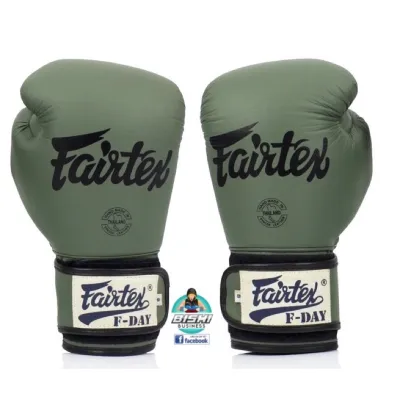
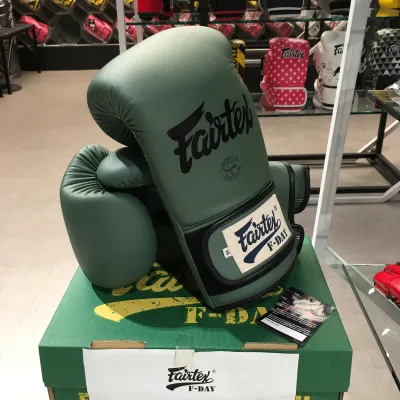

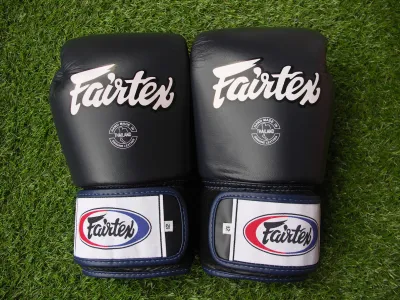
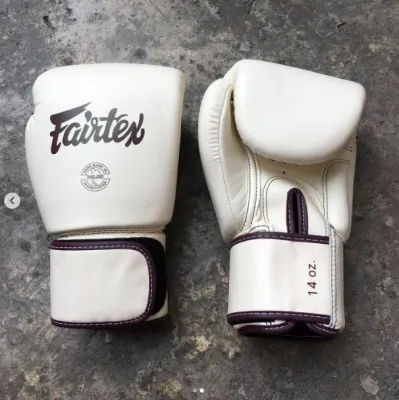
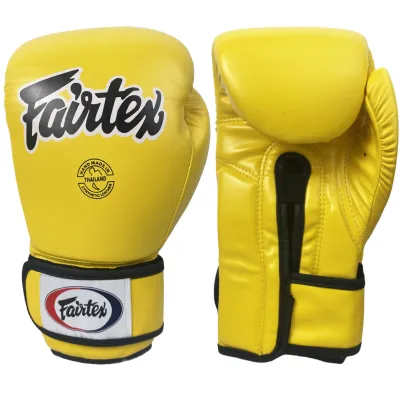
Prices are valid at publication and may change. Please refer to the product page for the latest price.
Your weekly training volume and impact frequency also dictate how quickly both your body and your gear will wear down. High-volume training—such as hitting the bag three or more times a week—accelerates the breakdown of internal foam padding. If you use gloves with insufficient shock dispersion, the padding will quickly bottom out, leaving your knuckles vulnerable to bruising and surface abrasions. Balancing your training intensity with the structural limits of your gear is essential for long-term, injury-free progress.
Evaluating Fairtex Glove Designs for Bag Impact
When browsing the Fairtex catalog, it is easy to get overwhelmed by the variety of model codes and aesthetic designs. To make an informed decision for your home gym, you must look past the marketing labels and analyze the physical architecture of each glove. Fairtex offers distinct designs ranging from compact, traditional Muay Thai styles to highly padded, Western-style boxing gloves, each serving a different training purpose.

To find the right match, you should check the manufacturer’s official specification sheets and product labels for details on foam composition and distribution. Understanding how the brand distributes weight across the hand compartment will help you determine whether a specific model can handle the repetitive, high-impact nature of heavy bag training.
Padding Density and Knuckle Protection
The primary defense against knuckle damage is the density and structure of the glove’s internal padding. For heavy bag work, you should verify that the gloves feature a multi-layer foam system or high-density latex padding. High-density foam is engineered to absorb and disperse the shock of hard impacts, preventing the force from concentrating on a single knuckle.
It is crucial to differentiate between gloves optimized for focus mitts and those built specifically for heavy bags. Mitt gloves often feature thinner, softer padding designed to provide crisp auditory feedback and high tactile sensitivity. While satisfying to hear, this thinner profile offers minimal protection against a dense, unyielding heavy bag. For home bag work, prioritize thicker, more resilient padding profiles that prioritize shock dispersion over sensory feedback.
Before committing to a pair, perform a manual fit check while wearing your standard hand wraps. Put the gloves on, make a tight fist, and feel the distance between your knuckles and the outer striking surface. Your knuckles should feel deeply cushioned, with no hard spots or areas where your fingers press directly against the outer leather. If you can easily feel the outer shell of the glove with your knuckles when squeezing your fist, the padding is too thin or soft for heavy bag training.
Cuff Length and Wrist Alignment
Wrist injuries are among the most common setbacks in home boxing, making the glove’s cuff design a critical evaluation point. Fairtex gloves generally feature either a standard short cuff or an extended, rigid cuff. Short cuffs are traditional in Muay Thai to allow maximum wrist mobility for clinching and catching kicks, but they offer less structural support against lateral wrist bending during heavy punches.
For dedicated heavy bag training, an extended cuff design is highly recommended because it acts as a splint, keeping your hand and forearm aligned. When evaluating the closure system, look for a wide, high-tensile Velcro strap that wraps securely around the wrist joint. A wider strap distributes the tension evenly, preventing the glove from shifting or twisting when you land off-center hooks or uppercuts.
However, you must remember that even the most supportive cuff is only a supplement to proper technique. No glove can completely protect a wrist that bends upon impact due to poor alignment. Always focus on landing with the two largest knuckles and keeping your wrist straight, using the glove’s structural support as a secondary safety net rather than a replacement for disciplined form.
Material and Durability Checks for Repetitive Use
The tropical climate of the Philippines presents unique challenges for sports gear, particularly regarding humidity and sweat management. When selecting your gloves, carefully review the official material descriptions. Fairtex utilizes several outer materials, including premium genuine leather, microfiber, and high-grade synthetic leather. Genuine leather offers classic durability and molds to your hand over time, but it requires regular conditioning to prevent cracking in humid environments. Microfiber is an excellent alternative, offering high tensile strength, excellent abrasion resistance against rough canvas bags, and a lower susceptibility to moisture damage.
The inner lining of the glove is just as important as the outer shell for long-term durability. Check the product specifications for moisture-wicking linings and quick-drying fabrics. In a humid home environment, sweat can easily saturate the inner foam, leading to bacterial growth, unpleasant odors, and rapid material degradation. A high-quality lining helps pull moisture away from your skin, allowing the gloves to dry more efficiently between training sessions.
Additionally, conduct a thorough visual inspection of the glove’s construction details. Look for double-stitched seams along high-stress areas, such as the base of the thumb and the edges of the cuff. The thumb should be fully attached to the main body of the glove to prevent hyperextension or accidental catching on the bag. Reinforced stitching and secure thumb attachments are reliable indicators of a glove built to withstand years of repetitive impact. While premium gloves may require an investment of ₱5,000 to ₱8,000, the durability they offer against daily wear makes them highly cost-effective.
Sizing and Fit for Solo Home Training
Choosing the correct glove size is essential for ensuring both safety and comfort during solo training sessions. Because you will not have a coach on hand to verify the fit, you must rely on objective measurements. Start by cross-referencing your body weight and hand circumference with the manufacturer’s official ounce (oz) recommendation chart. For heavy bag work, adults typically require 12 oz, 14 oz, or 16 oz gloves, depending on their physical size and striking power. Heavier gloves contain more protective padding, making them safer for high-impact training.
Always measure and fit your gloves while wearing your hand wraps. Hand wraps are non-negotiable for heavy bag work, as they compress the small bones in your hand and secure your wrist. When trying on the gloves with wraps, check for adequate finger mobility; you should be able to open your hand slightly and close it into a natural fist without extreme resistance. The palm area should conform comfortably to your hand shape without bunching up.
Pay close attention to the heel lock, which is the area where the glove grips the base of your palm. If your hand slides around inside the glove when you move your wrist, the fit is too loose, which can lead to friction burns and joint instability. Conversely, if your fingers feel completely cramped or you experience numbness, the glove is too small and will restrict blood circulation, leading to premature fatigue and discomfort.
Maintenance and Safety Checks for Your Home Setup
To protect your investment and maintain a hygienic training space, establish a strict post-training care routine. After every session, wipe down the exterior of your gloves with a damp cloth to remove sweat and salt buildup. Never leave your gloves inside a closed gym bag; instead, open the cuffs wide and place them in a well-ventilated area away from direct sunlight. You can use specialized glove deodorizers or cedar inserts to absorb internal moisture and prevent the growth of mold, which thrives in warm, humid climates.
Your safety also depends on the condition of your home training environment. Before you begin punching, perform a quick inspection of your heavy bag setup. Ensure that the ceiling mount, wall bracket, or free-standing base is completely secure and free of structural cracks. Check the bag itself for settling; over time, the filling inside a heavy bag can slide downward, creating an incredibly hard, concrete-like bottom section and a hollow top section. If the bag has settled, roll or beat it to redistribute the filling evenly.
Finally, know when to listen to your body and your gear. If you notice that the foam over your knuckles has become permanently compressed, flat, or lumpy, it is time to replace your gloves immediately. Continuing to strike a heavy bag with compromised padding can lead to chronic joint pain. If you experience persistent wrist pain or notice that your heavy bag is swinging wildly and unpredictably, stop training immediately to adjust your technique or secure your equipment.
Frequently Asked Questions (FAQ)
Can I use the same Fairtex gloves for heavy bag and sparring?
It is highly discouraged to use the same pair of gloves for both heavy bag training and sparring. Heavy bag work constantly compresses and hardens the internal foam padding, reducing its ability to absorb impact safely. If you use those same compacted gloves to spar with a partner, you risk causing serious injury to your training partner due to the hardened striking surface. Sparring gloves should be kept exclusively for partner work to preserve their soft, protective qualities.
How do I know when my heavy bag gloves need replacing?
You can identify the need for replacement through several clear physical signs. Inspect the knuckle area; if the padding feels soft, hollow, or allows you to feel your knuckles directly through the outer shell, the foam has degraded. Other warning signs include cracked outer leather or microfiber, torn inner linings that expose the raw foam, and persistent, sour odors that do not go away after thorough drying. If the wrist strap no longer holds its tension securely, the glove can no longer protect your joints and should be retired.

Community discussion
Share your experience or ask a question. Comments are reviewed before publication.