
Choosing between feather and nylon shuttlecocks is one of the most important decisions you will make before stepping onto the badminton court. Your choice directly impacts your playing budget, how often you need to replace your gear, and the overall quality of your rallies. While feather shuttlecocks represent the traditional standard for competitive play, nylon alternatives offer practical advantages that make them highly appealing for recreational players.
To make the right purchase, you must look beyond the price tag and examine how each material behaves under different playing conditions. By understanding the trade-offs in flight physics, durability, and environmental sensitivity, you can select the option that best matches your skill level and playing frequency.
Core Differences in Flight, Speed, and Feel
The most significant difference between feather and nylon shuttlecocks lies in their aerodynamics. A natural feather shuttlecock is constructed with 16 overlapping feathers inserted into a cork base. This unique design creates a natural spin during flight, which stabilizes the shuttlecock and produces a distinct deceleration pattern known as the parachute effect. When you hit a feather shuttlecock, it accelerates rapidly off the racket strings and then slows down quickly as it reaches the peak of its arc, allowing for precise drop shots and tight net play.
Products mentioned in this guide
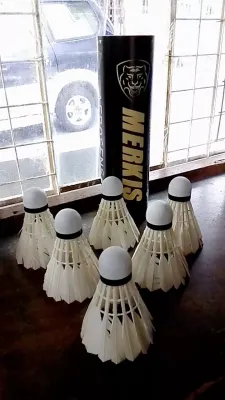
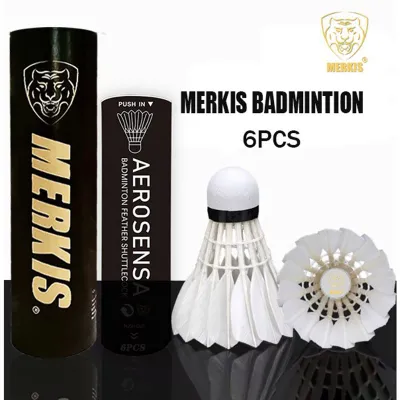
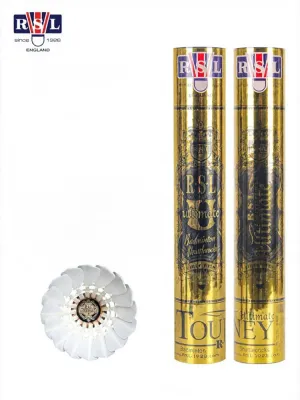
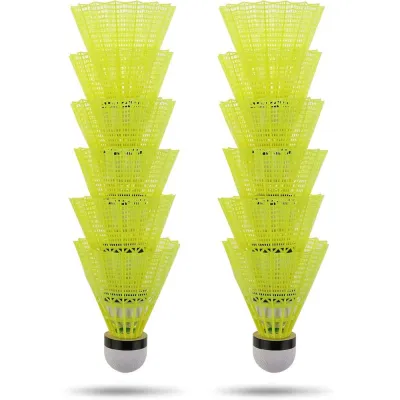
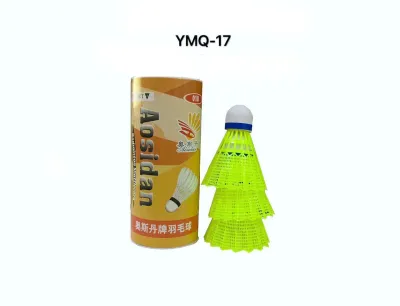
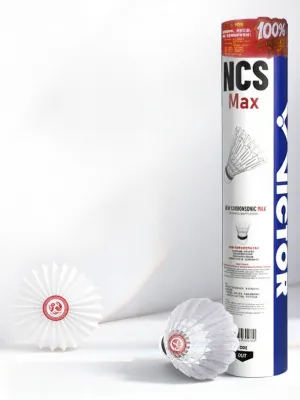
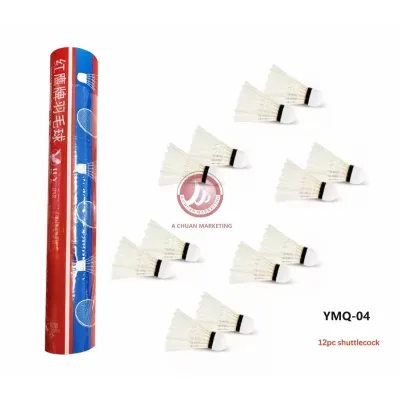
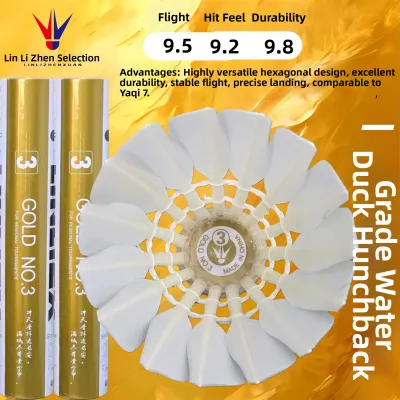
Prices are valid at publication and may change. Please refer to the product page for the latest price.
Nylon shuttlecocks, on the other hand, utilize a molded synthetic skirt designed to mimic the shape of natural feathers. Because the synthetic material is more uniform and less flexible than natural feathers, it does not flare or collapse in the same dynamic way. Consequently, a nylon shuttlecock tends to follow a more parabolic flight path. It retains its speed longer during its descent, which can make defensive clears fly deeper and occasionally go out of bounds if you do not adjust your hitting power.
The physical sensation at the moment of impact also differs greatly between the two materials. Hitting a feather shuttlecock produces a crisp, solid feel and a satisfying sound that provides immediate sensory feedback on the quality of your stroke. Nylon shuttlecocks often feel slightly heavier or stiffer upon impact. This stiffness can transmit more vibration through the racket shaft to your wrist and elbow, which is an important consideration for players prone to joint fatigue.
These aerodynamic differences directly influence how you execute specific shots on the court. Net drops require more delicate touch and control when using nylon, as the synthetic skirt does not grip the air as effectively as natural feathers. Conversely, baseline clears require less physical effort with a nylon shuttlecock due to its sustained flight speed, making it easier for players to push their opponents to the back of the court.
Durability, Lifespan, and Cost Efficiency
When evaluating the long-term value of your badminton gear, durability is a primary factor. Feather shuttlecocks are notoriously fragile. The thin shafts of natural feathers can easily crack or snap, especially during high-intensity play or when struck off-center. Once a single feather is broken or severely bent, the shuttlecock loses its aerodynamic balance, causing it to wobble in the air and rendering it unusable for consistent play.

Nylon shuttlecocks are engineered for exceptional resilience. The synthetic skirt can withstand repeated impacts, bending, and stretching without losing its structural shape. While a nylon shuttlecock will eventually wear out—usually due to the skirt tearing away from the cork base or the plastic becoming permanently warped—it can easily survive multiple matches and even several weeks of casual play.
Several physical factors on the court can accelerate the wear and tear of your shuttlecocks. Mishits, where the racket frame strikes the feathers instead of the cork, are the leading cause of premature feather breakage. Racket clashes during doubles play can also instantly destroy a feather shuttlecock. Nylon skirts are far more forgiving of these common playing errors, making them highly practical for learning environments.
From a financial perspective, the upfront cost of a tube of shuttlecocks must be weighed against the actual cost per hour of play. In the Philippines, where indoor court fees and equipment costs are key considerations for regular players, managing your badminton budget is essential. While a tube of premium feather shuttlecocks might require a higher initial investment and last only a few games, a tube of high-quality nylon shuttlecocks can last for dozens of sessions. Beginners who use feathers may find themselves replacing multiple shuttlecocks per game, leading to a very high cost per hour, whereas nylon keeps ongoing expenses predictable and low.
Matching the Shuttlecock to Your Skill Level and Play Frequency
Selecting the right shuttlecock is not about finding a universal winner, but rather about matching the equipment to your current skill level and how often you play. Beginners and casual players who hit the court once or twice a week should generally prioritize durability and forgiveness. At this stage, developing hand-eye coordination and consistent stroke mechanics is more important than micro-adjustments in flight trajectory. Nylon shuttlecocks are highly recommended for this group because they withstand the frequent mishits typical of learning players while keeping replacement costs minimal.
Intermediate players who play regularly and have developed consistent hitting techniques often find themselves at a crossroads. If you are starting to practice advanced techniques like sliced drops, deceptive net spins, and high-speed drives, you may begin to feel limited by the flight characteristics of nylon. For this group, a balanced approach works best. You might choose to use nylon shuttlecocks during high-intensity practice drills to save money, and switch to entry-level feather shuttlecocks for social matches where flight precision enhances the quality of the game.
Advanced and competitive players require the highest level of aerodynamic consistency and authentic feel. At a high level of play, even a minor wobble in the shuttlecock’s flight can disrupt a precise drop shot or a fast defensive block. For these players, feather shuttlecocks are indispensable. The precise control, sharp deceleration, and crisp feedback of natural feathers are essential for executing tournament-grade strategies, making the higher replacement rate a necessary trade-off for peak performance.
Environmental and Storage Considerations
The tropical climate of the Philippines, characterized by high humidity and elevated temperatures, has a direct impact on how shuttlecocks perform and how long they last. Natural feathers are highly sensitive to moisture levels in the air. High humidity can make the feathers absorb moisture, increasing their overall weight and causing them to fly slower. Conversely, playing in dry, air-conditioned sports complexes can dry out the natural oils in the feathers, making them brittle and highly susceptible to snapping on the very first smash.
Nylon shuttlecocks are also affected by temperature fluctuations, though in a different manner. In hot, non-airconditioned indoor courts, the synthetic plastic of a nylon skirt can soften and become more pliable. This softening can cause the skirt to expand more during hard hits, altering its speed rating and making it fly slower. In cooler environments, the plastic stiffens, which can increase the flight speed and make the impact feel harder on your racket strings.
To preserve the condition of your shuttlecocks and extend their lifespan, proper storage is essential. Always store your shuttlecock tubes vertically with the cork ends pointing downward to prevent the feathers or skirts from warping under their own weight. Keep your gear bag in a cool, dry place away from direct sunlight, and avoid leaving it inside a hot car trunk, as extreme heat can degrade the adhesives holding the feathers to the cork or warp synthetic nylon skirts.
For feather shuttlecocks, introducing a small amount of moisture to the tube before playing can help restore flexibility to dry feathers. Some players use specialized humidifying accessories or gently expose the feather end of the tube to water vapor for a brief period. Be careful to avoid getting the cork base wet, as excess moisture can soften the cork and permanently damage the shuttlecock’s balance.
Final Decision Framework: Which One to Buy?
To finalize your purchase, use this practical decision framework to determine which shuttlecock type aligns with your current playing situation:
Choose feather shuttlecocks if:
- You are actively training for or participating in official tournaments that require natural feathers.
- You have developed consistent hitting technique and rarely strike the shuttlecock with your racket frame.
- Your playing budget comfortably accommodates the frequent replacement of worn-out shuttlecocks.
- You prioritize precise flight control, authentic impact feel, and optimal net play over durability.
Choose nylon shuttlecocks if:
- You play primarily for recreation, fitness, or social fun with friends and family.
- You are still mastering your stroke mechanics and want a forgiving material that survives frequent mishits.
- You want to minimize your ongoing badminton expenses and maximize the lifespan of each tube.
- You play in varied environmental conditions without access to specialized storage or humidification tools.
Before making a bulk purchase, always verify the specific rules of your local club or the sports center where you play. Some organized groups have established preferences or strict guidelines regarding which shuttlecock type is allowed during social sessions. Additionally, check the current stock and specifications with authorized local sports retailers to ensure you are purchasing genuine products designed for your specific playing environment.
Frequently Asked Questions (FAQ)
Can I use nylon shuttlecocks for official tournaments?
Most official tournaments sanctioned by national or international badminton associations require the use of natural feather shuttlecocks to ensure standardized flight dynamics and performance. However, local amateur leagues, school sports meets, and casual club tournaments in the Philippines may permit high-quality nylon shuttlecocks to manage event costs and ensure matches run smoothly without constant interruptions for gear replacement. Always consult the specific tournament’s official rulebook or contact the organizing committee to verify their equipment requirements before registering.
How do I prepare feather shuttlecocks before playing?
To extend the lifespan of feather shuttlecocks, you can humidify them to make the natural feathers less brittle. A common method is to gently expose the feather end of the open tube to water vapor—such as holding it over a cup of warm water or using a specialized shuttlecock humidifier—allowing the feathers to absorb a small amount of moisture. This process makes the feather shafts more flexible and resilient against hard impacts. Be careful to keep the cork base dry, as moisture can soften the cork, alter the weight distribution, and ruin the shuttlecock’s flight balance. Always refer to the manufacturer’s guidelines for recommended care routines.

Community discussion
Share your experience or ask a question. Comments are reviewed before publication.