
Upgrading or replacing a mountain bike suspension fork on a strict budget of ₱5,000 requires a careful balance of practical expectations and technical verification. In the Philippines, where tropical downpours, high humidity, and varied road-to-trail conditions test the limits of cycling gear, finding a reliable fork means focusing on structural integrity and basic mechanical functionality rather than advanced tuning features. At this price point, riders can find functional, entry-level forks suitable for light cross-country trails, gravel paths, and daily commutes, provided they verify compatibility and inspect the components thoroughly before installation.
Setting Realistic Expectations for a ₱5,000 Suspension Fork
At ₱5,000 or less, the vast majority of suspension forks utilize a steel coil spring system rather than an adjustable air chamber. Coil springs are highly reliable and require minimal maintenance, but they lack the easy adjustability of air forks. With an air fork, a rider can adjust the stiffness by changing the air pressure with a shock pump to match their exact body weight. With a coil fork, the spring rate is fixed; lighter or heavier riders must accept the pre-installed spring tension, though some models offer a basic preload dial to slightly adjust initial sag.
Damping systems in this budget tier are typically rudimentary. Many entry-level forks rely on simple mechanical lockouts or basic hydraulic cartridges that lack external rebound adjustment. Rebound damping controls how quickly the fork returns to its original length after compressing over an obstacle. Without adjustable rebound, a budget fork may feel bouncy or “springy” on rapid, successive bumps, as the fork returns to its full extension without controlled resistance. The lockout lever, usually located on top of the right fork leg, is highly useful for climbing paved hills or commuting, as it temporarily prevents the fork from compressing and wasting rider energy.
Products mentioned in this guide
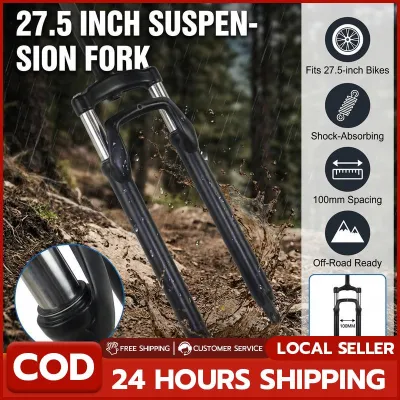
122 Lazada user ratings
Good product quality, Great value for money, Excellent shock absorption,
It really looks great, I fell in love with it as soon as I saw it.
Fast shipping service, High-quality durable material,
Good product quality, High-quality durable material,
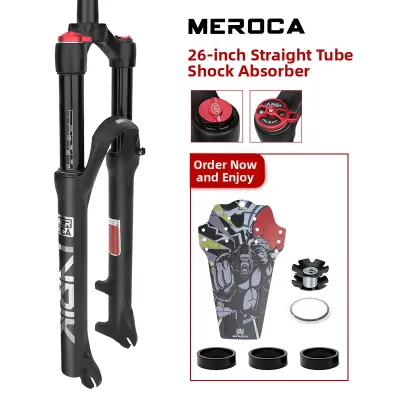
1 Lazada user ratings
recieved the parcel late and had guarantee compensation in the form of lazrewards, mtb fork is lightweight and seems durable, have yet to in…Read full reviewShow less
recieved the parcel late and had guarantee compensation in the form of lazrewards, mtb fork is lightweight and seems durable, have yet to install and test for break-in to know performance
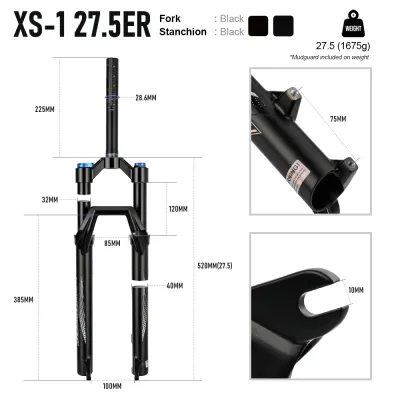
8 Lazada user ratings
Salamat Seller maganda! Maayos pagkakabalot! Manilis pang dumating!! Salamat din lazada!!! 10⭐️ akin!! Para sa akin highly recommended kayo!!
not a ragusa brand as the stock indicates
Steel construction ensures durability,
ok nman may kunti lang gasgas pero tnx
sulit sa presyo 👍👍👍
Prices are valid at publication and may change. Please refer to the product page for the latest price.
Material choices also dictate the weight and durability of these budget components. High-end forks use lightweight aluminum or magnesium alloys for both the upper stanchions and lower legs, often keeping the total weight under 2 kilograms. In contrast, a suspension fork under ₱5,000 frequently features steel stanchions paired with aluminum or alloy lowers. This combination increases the overall weight of the bike, often pushing the fork’s weight to 2.5 kilograms or more. While steel stanchions are robust and highly resistant to bending, they are susceptible to surface rust if exposed to persistent tropical humidity and rain without proper lubrication and cleaning.
Key Specifications to Verify Before Buying
Before purchasing any budget suspension fork, verifying physical compatibility with your existing mountain bike frame is critical. The most common point of failure in compatibility is the steerer tube. Older or entry-level frames typically use a 1-1/8 inch straight steerer tube, whereas modern trail frames utilize a tapered steerer tube that measures 1-1/8 inches at the top and 1.5 inches at the base. Installing a tapered fork into a straight head tube is generally impossible without specialized external cup headsets, which can alter the bike’s geometry and add unexpected costs. To avoid this, remove your current fork and measure the diameter of the steerer tube with a caliper before ordering.

Wheel size and tire clearance are equally vital parameters. Suspension forks are engineered for specific wheel diameters, typically 26-inch, 27.5-inch, or 29-inch. Installing a 27.5-inch wheel on a 26-inch fork is highly dangerous, as the tire may contact the fork crown during full compression, causing an abrupt stop and potential crash. Additionally, pay close attention to the manufacturer’s specified maximum tire width. In muddy tropical conditions, a tire that is too wide for the fork arch will trap mud, debris, and small stones, which can lock up the front wheel or rapidly wear down the paint and structural material of the fork lowers.
The interface between your wheel hub and the fork must also match perfectly. Most budget mountain bikes under ₱5,000 utilize a standard 9mm quick-release (QR) axle with a 100mm spacing. Higher-end or modern trail forks often use 15mm thru-axles (either 100mm or 110mm Boost spacing), which require a completely different wheel hub design. If your current wheelset uses a quick-release skewer, ensure the replacement fork specifically features open dropouts designed for QR axles. Similarly, verify the brake mounting style; almost all modern budget forks use post-mount disc brake tabs, but some older frames or retrofits may still require V-brake bosses.
Finally, consider the suspension travel length, which typically ranges from 80mm to 120mm in this price category. It is tempting to buy a fork with more travel to handle rougher terrain, but increasing the travel by more than 20mm over your bike’s original design can severely compromise handling. A longer fork raises the front end, slackens the head tube angle, and raises the bottom bracket. This shift can make the bike feel sluggish when steering, prone to front-wheel lift during steep climbs, and can place excessive stress on the frame’s head tube joint, potentially leading to structural failure.
Navigating Local Marketplaces and Avoiding Pitfalls
Purchasing bicycle components online in the Philippines requires a vigilant approach to filter out counterfeit or substandard products. Many online marketplaces feature unbranded suspension forks with generic labels or misleading descriptions that claim high-end performance at impossibly low prices. To protect yourself, scrutinize the seller’s rating and read customer reviews carefully, looking specifically for photos uploaded by buyers that show the actual product received. Be wary of listings that use stock photos exclusively or have reviews that seem repetitive or translated automatically, as these can indicate fraudulent listings.
Warranty support and spare part availability are critical factors that distinguish reliable budget brands from generic alternatives. A reputable budget fork manufacturer will offer a clear warranty period, even if it is limited to six months or a year. Before finalizing your purchase, check if the seller or local distributor provides replacement parts, such as wiper seals, bushings, or replacement lockout cartridges. If a fork uses proprietary, non-standard seals that cannot be sourced locally, a simple oil leak or worn seal could render the entire fork useless, forcing you to buy another replacement.
When managing a strict ₱5,000 budget, remember that the purchase price of the fork is not the only expense. Online orders often incur shipping fees, which can be substantial for bulky items like a suspension fork, especially if shipped to provinces outside Metro Manila. Additionally, if you do not possess specialized bike tools—such as a crown race setter, a star nut installer, and a pipe cutter to trim the steerer tube—you will need to budget for professional installation at a local bike shop. This service typically requires a modest labor fee, which must be factored into your total expenditure to ensure you stay within your financial limit.
Inspection Checklist for Entry-Level Forks
Once your new suspension fork arrives, conducting a thorough physical inspection before mounting it to your bicycle is essential for safety and performance. Begin with a meticulous visual check of the stanchions, which are the inner tubes that slide into the lower legs. The surface coating on these tubes must be perfectly smooth, uniform, and free of scratches, pitting, or discoloration. Any imperfection on the stanchion surface will quickly tear the rubber dust seals, allowing dirt and moisture to enter the lower legs and causing internal wear that ruins the fork’s performance.
Next, test the external adjusters and mechanical controls to verify their functionality. Turn the preload adjuster dial on the left fork leg and the lockout lever on the right leg through their full range of motion. The dials should rotate smoothly without binding, and the lockout lever should engage with a distinct, tactile click or firm stop. If the controls feel loose, spin indefinitely without stopping, or require excessive force to turn, the internal cartridges or spring assemblies may be misaligned or defective from the factory.
Perform manual compression cycles by placing the fork dropouts on a clean, protected surface, gripping the crown, and pushing down firmly. The fork should compress and rebound smoothly without any grinding, sticking, or excessive friction. Listen closely for unusual knocking, clicking, or rattling sounds, which can indicate loose internal components or an improperly seated coil spring. Additionally, inspect the area around the wiper seals at the top of the lower legs after compression; there should be no visible oil pooling or heavy grease streaks, which indicate failing seals.
If you observe any structural or functional anomalies during this inspection, stop immediately. Do not cut the steerer tube, install a star nut, or mount the fork to your frame, as doing so will void your return privileges with most online sellers. If you notice cracks near the dropouts, misaligned brake mounts, or a loose steerer tube joint, these are critical safety hazards. In such cases, initiate a return or exchange through the e-commerce platform immediately, or take the fork to a qualified professional mechanic at a local bike shop for a professional safety assessment.
Frequently Asked Questions (FAQ)
Is a rigid fork a safer choice than a cheap suspension fork?
For riders who primarily travel on paved roads, smooth gravel, or well-maintained dirt paths, a rigid steel or aluminum fork is often a highly reliable and practical alternative to a budget suspension fork. Rigid forks are significantly lighter, often saving over a kilogram of weight compared to a heavy coil suspension fork. Because they have no moving parts, they eliminate the risk of seal failure, oil leaks, or mechanical play, requiring virtually zero maintenance. However, if your riding regularly includes rough, rocky, or root-filled trails, a budget suspension fork remains the better choice to reduce hand fatigue and maintain front-wheel traction, provided you stay within the fork’s intended usage limits and perform regular maintenance.
How do I maintain a budget coil fork to extend its lifespan?
Extending the lifespan of an entry-level coil suspension fork requires simple, consistent maintenance that does not demand specialized tools. After every ride, especially in dusty or muddy conditions common in the Philippines, use a clean, damp microfiber cloth to wipe away dirt, mud, and moisture from the stanchions and wiper seals. Avoid using high-pressure water hoses or pressure washers directly near the fork seals, as this can force water and grit past the rubber lips and into the lower legs, leading to internal rust and rapid wear. Periodically check that the axle bolts or quick-release skewers are tightened to the correct torque, and apply a few drops of silicone-based lubricant to the stanchions to keep the seals pliable and sliding smoothly.

Community discussion
Share your experience or ask a question. Comments are reviewed before publication.