
Selecting the right flotation safety gear is a critical decision for anyone engaging in water sports across the coastal waters, lakes, and rivers of the Philippines. Whether you are exploring the vibrant reefs of Batangas, paddleboarding in the calm lagoons of El Nido, or operating a private boat for island-hopping excursions, having reliable safety equipment on hand can prevent minor accidents from turning into major emergencies. However, a traditional throwable life ring is not a one-size-fits-all solution for every water activity.
To make an informed purchase, you must understand the distinct roles of throwable rescue devices versus wearable personal flotation devices (PFDs). Tropical conditions—characterized by intense sunlight, high humidity, and corrosive saltwater—require careful evaluation of materials, certifications, and maintenance practices. Equipment alone cannot replace proper water safety training, situational awareness, and sound judgment. Before heading out, always assess your swimming ability, check local weather advisories, and know when to call off an activity due to rough seas or strong currents.
Clarifying Your Needs: Life Rings vs. Personal Flotation Devices
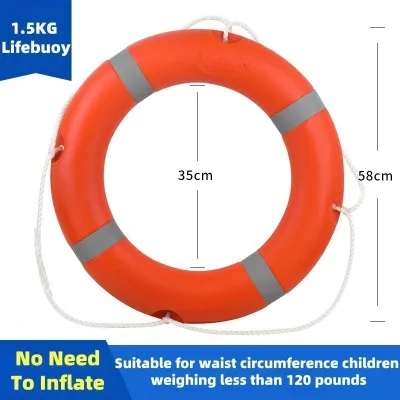
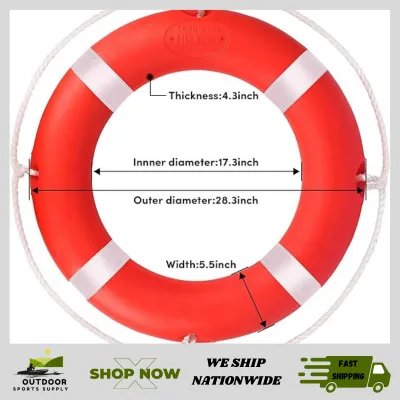
Understanding the functional differences between throwable life rings and wearable flotation devices is the first step in planning your water safety strategy. A traditional life ring, often referred to as a ring buoy, is classified as a throwable rescue device. Its primary purpose is to be cast from a stable platform—such as a boat, dock, or shoreline—to a conscious person who is struggling in the water. Once thrown, the victim grasps the ring to stay afloat while being pulled to safety using an attached retrieval line. Because it requires active gripping, a life ring is not suitable for unconscious victims or those exhausted by prolonged exposure.
Products mentioned in this guide
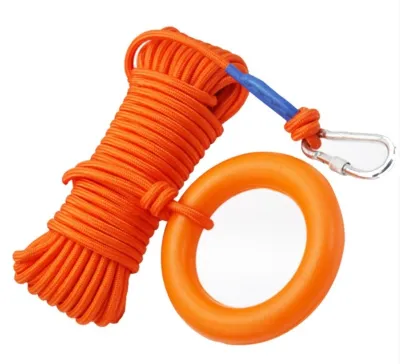
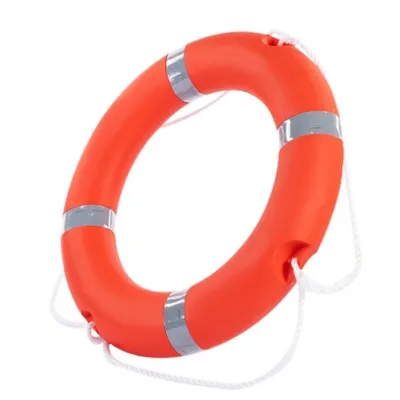
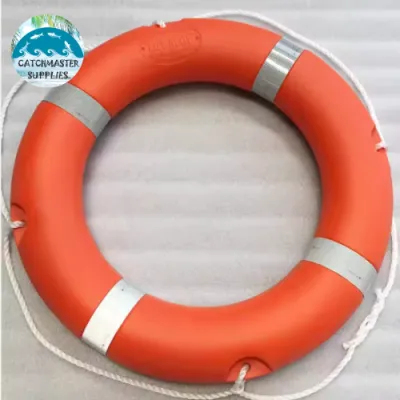
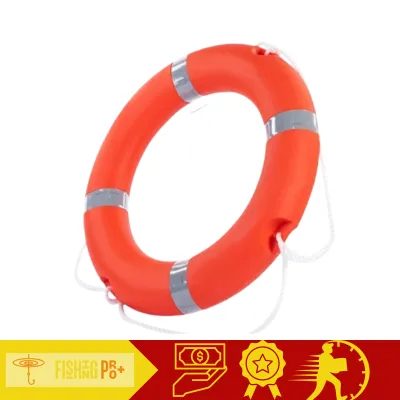

Prices are valid at publication and may change. Please refer to the product page for the latest price.
For active water sports where you are highly likely to fall into the water, wearable personal flotation devices (PFDs) or life jackets are indispensable. Activities like wakeboarding, jet skiing, kayaking, and windsurfing involve rapid movement and unpredictable falls. In these scenarios, a throwable life ring is impractical because it cannot be deployed quickly enough to help a fallen rider. A wearable PFD provides continuous, hands-free buoyancy, keeping your head above water even if you are disoriented or injured upon impact. Relying on a throwable ring as your primary safety measure during high-speed water sports is a dangerous miscalculation.
It is also vital to distinguish certified safety gear from recreational swim rings and open-water tow floats. A standard inflatable swim ring purchased for pool lounging is a toy, not a life-saving device, and should never be used in open water or during sports. Conversely, an open-water swim buoy or tow float is a specialized, lightweight inflatable bag that swimmers strap around their waist. While it provides excellent visibility to passing boats and offers a temporary resting platform, it is not designed or certified to support a non-swimmer in an emergency rescue situation.
Essential Features to Evaluate in a Life Ring
When evaluating a throwable life ring for purchase, the core construction material is your primary indicator of reliability. High-quality rescue rings are typically constructed from closed-cell foam, such as polyurethane or expanded polystyrene, which is then encased in a tough, weather-resistant outer shell made of vinyl or hard polyethylene. Closed-cell foam is highly durable because it contains tiny, sealed air pockets that do not absorb water, ensuring the ring retains its buoyancy even if the outer shell is punctured or scraped against sharp rocks. In contrast, inflatable rescue rings are highly vulnerable to punctures from marine debris, barnacles, or equipment hooks, making them less reliable in rugged environments.

Buoyancy rating is another critical specification that must be verified on the product label. Buoyancy is measured in Newtons (N) or pounds of lift, representing the force required to keep a person’s head and shoulders above water. For adult rescue in coastal or rough waters, a standard ring buoy should offer a minimum buoyancy of approximately 70 to 110 Newtons (about 16.5 to 24 pounds of lift). When selecting a ring, verify that the manufacturer’s specified weight limit and buoyancy rating align with the physical profile of the passengers or participants you intend to protect.
Finally, inspect the grab lines and reflective panels installed on the ring. A compliant life ring must feature a secure, heavy-duty perimeter grab line made of floating rope, typically polypropylene, which is secured at multiple points around the outer edge. This line allows a victim in the water to easily grab the ring from any angle. Additionally, look for high-visibility retroreflective tape panels, preferably SOLAS (Safety of Life at Sea) grade. These reflective strips are essential for locating a victim during low-light conditions, heavy rain, or nighttime rescue operations, as they bounce searchlight beams directly back to the rescue vessel.
Matching Flotation Gear to Your Water Activity
Matching your flotation equipment to the specific environment and activity ensures that you have the right tool ready when an emergency arises. For boating, island-hopping tours, and dockside installations, rigid, certified ring buoys are the industry standard. These rings are heavy enough to be thrown accurately across a distance, even against strong sea breezes. They should be mounted in highly visible, unobstructed brackets on the vessel’s exterior and equipped with a dedicated, tangle-free floating retrieval line. This setup allows the crew to quickly deploy the ring to a passenger who has fallen overboard.
For open-water swimming, snorkeling, and free diving along coastal reefs, traditional rigid life rings are too bulky to carry. In these situations, a brightly colored inflatable tow float or swim buoy is the most practical choice. These devices are designed to drag behind the swimmer with minimal resistance, providing a high-visibility marker for motorized boats and bangkas operating nearby. If a swimmer experiences leg cramps or fatigue, they can hug the float to rest. However, swimmers must recognize that these floats are personal aids and do not replace the need for a buddy system or swimming competency.
For paddle sports such as kayaking, stand-up paddleboarding (SUP), and river rafting, wearable PFDs are the primary safety requirement. Storing a rigid life ring on a kayak or paddleboard is difficult due to limited deck space, and deploying it while trying to balance a paddle is highly inefficient. Instead, paddlers should wear a low-profile, high-mobility life jacket designed specifically for paddling. For group paddling trips, carrying a rescue throw bag—a compact bag containing floating rope that can be thrown to a capsized paddler—is a far more effective throwable rescue option than a rigid ring buoy.
Verifying Safety Certifications and Avoiding Toys
To ensure your safety gear will perform reliably under pressure, you must learn to identify genuine safety certifications and avoid low-quality imitations. Look for permanent, legible certification markings printed or molded directly onto the body of the life ring. Recognized international standards include SOLAS certification, United States Coast Guard (USCG) approval, or European CE marks. These certifications indicate that the product has undergone rigorous testing for buoyancy retention, flame resistance, oil resistance, and structural integrity under extreme environmental stress.
Be highly vigilant against non-compliant gear, which is frequently sold on online marketplaces and in general retail stores. These products often mimic the appearance of professional rescue rings but lack the structural integrity required for emergencies. Carefully read the product packaging and labels for warning disclaimers. If you find phrases such as “Not a life-saving device,” “For pool use only,” or “Use only under adult supervision,” the item is a recreational toy. Relying on such toys in open water or during sports activities poses a severe safety risk, as their materials can split, deflate, or degrade rapidly when exposed to saltwater and tropical heat.
Before finalizing a purchase, verify the manufacturer’s specifications by checking the product’s model number against official certification databases or manufacturer documentation. Ensure that the weight limits, material composition, and buoyancy ratings are clearly stated. A reputable safety manufacturer will always provide detailed product sheets outlining these specifications. Avoid purchasing any flotation device that lacks clear branding, batch numbers, or official safety markings, as these are common indicators of uncertified, low-grade manufacturing.
Inspection, Care, and Storage Guidelines
Regular maintenance and proper storage are essential to keep your flotation gear in peak operating condition, especially in the harsh tropical climate of the Philippines. Perform a thorough visual inspection of your life ring before every water outing. Check the outer shell for signs of UV degradation, such as fading, cracking, or chalking, which can weaken the material and lead to water absorption. Inspect the perimeter grab line for fraying, rot, or loose attachment points, and ensure that the reflective tape panels are firmly adhered and free of dirt or salt crust.
After every use in saltwater or sandy environments, rinse the life ring thoroughly with clean, fresh water. Salt crystals can act as an abrasive, gradually wearing down the outer shell and grab lines, while sand can trap moisture and promote mold growth. Use a mild, non-abrasive soap and a soft brush to clean off organic debris, algae, or oil residue. Avoid using harsh chemical solvents, bleach, or high-pressure washers, as these can dissolve protective coatings, damage the reflective tape, or compromise the structural integrity of the internal foam.
Proper storage is critical to preventing premature material breakdown. Store your life ring in a cool, dry, and well-ventilated area away from direct sunlight when it is not in use. Prolonged exposure to intense tropical heat and UV radiation accelerates the aging of plastics, vinyl, and foam, significantly reducing the lifespan of the device. Never store the ring under heavy equipment or compress it in tight storage compartments, as constant pressure can deform the closed-cell foam, permanently reducing its buoyancy and effectiveness during a rescue.
Frequently Asked Questions (FAQ)
Are inflatable life rings safe for open water sports?
Inflatable life rings are generally not recommended for open water sports or emergency rescue situations. Unlike solid closed-cell foam rings, inflatable devices rely entirely on an airtight chamber to maintain buoyancy. If the chamber is punctured by coral, sharp rocks, fishing hooks, or boat hardware, the device will deflate and lose its flotation capability instantly. Additionally, the lightweight nature of an uninflated or partially inflated ring makes it extremely difficult to throw accurately against strong coastal winds. For reliable safety in open water, solid, non-inflatable ring buoys or certified wearable PFDs are the industry standard.
What are the legal requirements for life rings on private boats?
To ensure full compliance with maritime safety laws, boat owners should consult the Philippine Coast Guard (PCG) or local maritime authorities for the most current regulations. Generally, the mandatory safety equipment, including the number and type of throwable flotation devices like life rings, depends on the vessel’s length, passenger capacity, and intended operating zone. Larger private vessels typically require at least one approved throwable device equipped with a floating retrieval line of a specified length, kept in an instantly accessible location. Keeping your vessel compliant not only avoids penalties but also ensures you are prepared for unexpected emergencies.

Community discussion
Share your experience or ask a question. Comments are reviewed before publication.