
Finding the right size electric treadmill for a condominium or a compact home gym requires balancing your fitness goals with the physical realities of limited floor space. While a standard electric treadmill for adult users provides a convenient way to stay active indoors, its physical footprint is only one part of the equation. To ensure safe operation, easy storage, and a comfortable stride, you must account for safety clearances, ceiling heights, and structural limits before making a purchase. Selecting the ideal machine involves measuring your dedicated workout zone, understanding how folding mechanisms function, and verifying that the treadmill’s specifications match your physical requirements.
Measuring Your Available Space and Clearance Requirements
Before browsing equipment specifications, you must accurately measure the floor area where you plan to operate the treadmill. It is a common mistake to measure only the physical dimensions of the machine; in practice, the operational length is always greater than the treadmill’s static length. As an adult runs, their stride naturally extends slightly beyond the rear of the belt, and any sudden change in pace requires a physical buffer zone to prevent contact with walls or furniture.
Ceiling height is another critical factor that is frequently overlooked in modern condominium units, where ceiling clearances can be relatively low. When you stand on a treadmill, the deck height elevates you by 15 to 30 centimeters off the floor. If you plan to use an incline feature, this elevation increases even further during your workout. To calculate the minimum ceiling height required, add the height of the tallest user to the maximum deck height of the treadmill, and then add a safety margin of at least 30 centimeters to prevent head injuries.
Products mentioned in this guide
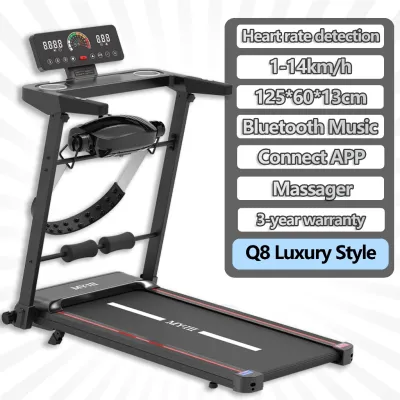
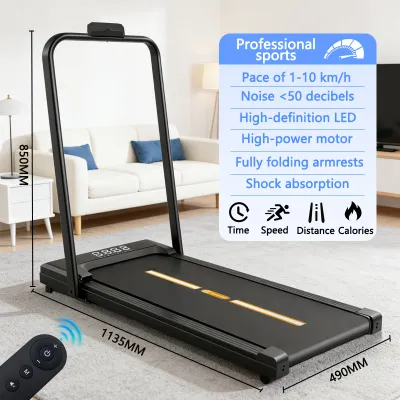
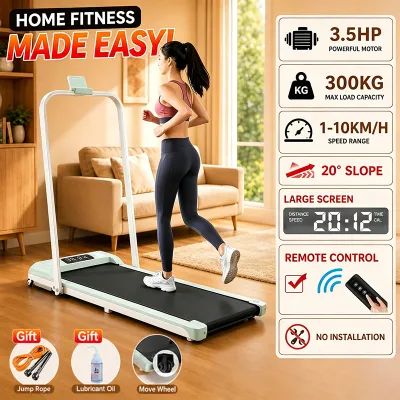
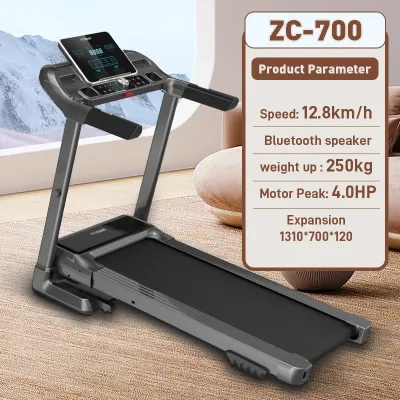
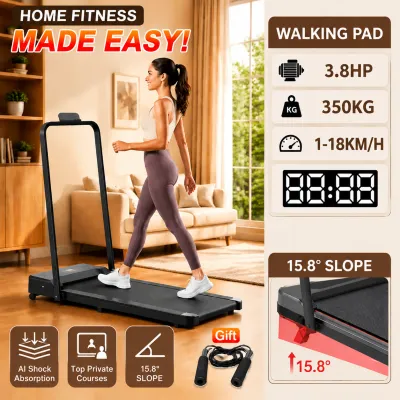
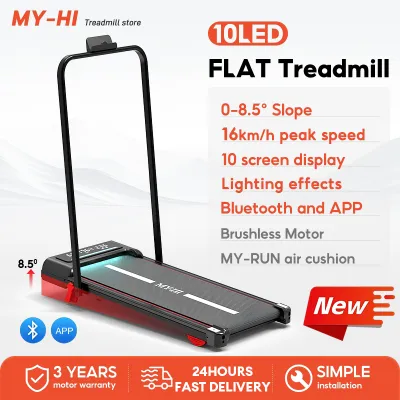
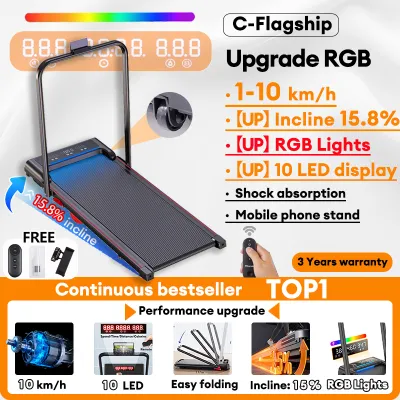
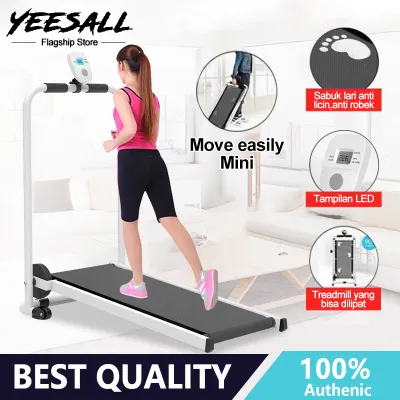
Prices are valid at publication and may change. Please refer to the product page for the latest price.
Safety clearances around the sides and rear of the machine are non-negotiable for preventing serious injury. If you lose your balance, slip, or need to step off the moving belt quickly, you must have unobstructed space to land safely. Most manufacturers recommend maintaining a clear safety zone of at least 1 to 2 meters behind the treadmill and at least 0.5 meters on each side. Placing a treadmill flush against a wall or in a tight corner increases the risk of being trapped or pinned against the wall by the moving belt if you fall.
Understanding Treadmill Footprints and Folding Mechanisms
When shopping for a compact space, you will encounter both folding and non-folding electric treadmills. Understanding the difference between the operational footprint and the folded footprint is essential for managing your daily living space. The operational footprint is the actual floor area the machine occupies while unfolded and ready for use, whereas the folded footprint represents the space it takes up when stored vertically. If your workout area serves a dual purpose, such as a living room or a home office, a folding model allows you to reclaim valuable floor space when you are not exercising.

However, folding mechanisms vary significantly in design, and you must evaluate them based on your physical ability to deploy and store the machine safely. Some folding treadmills feature hydraulic assist or soft-drop systems that slowly lower the deck to the floor with minimal manual effort. Manual folding models require you to lift and secure the heavy running deck yourself, which can be physically demanding and potentially hazardous if the locking pin is not engaged correctly. Always verify the locking mechanism’s design to ensure it can be operated safely by all intended users in your household.
While folding treadmills offer excellent space-saving benefits, they can sometimes compromise on stability and weight capacity compared to their non-folding counterparts. Compact, ultra-folding designs often feature lighter frames and narrower running belts to make them easier to move and store. A lighter frame may vibrate or wobble during high-speed running, which can affect your balance and increase wear on the machine. Before choosing a highly compact model, check the frame construction and ensure the folding joints lock securely to provide a stable running platform.
Key Specifications to Check for Adult Users in Compact Spaces
To ensure an electric treadmill for adult users is both safe and effective, you must carefully verify the dimensions of the running belt. A belt that is too narrow or too short can restrict your natural running stride and increase the risk of stepping off the edge of the belt. For walking, a belt width of 40 centimeters and a length of 120 centimeters may suffice, but for running, an adult typically requires a belt that is at least 45 to 50 centimeters wide and 130 to 150 centimeters long. Matching the belt size to your height and stride length ensures a comfortable and safe workout.
The treadmill’s motor is another vital specification that directly impacts performance and longevity, especially in compact models. Look for the continuous horsepower (CHP) rating rather than the peak horsepower, as CHP indicates the motor’s ability to deliver sustained power during continuous use. For adult running, a motor with at least 2.0 to 2.5 CHP is generally recommended to handle the constant impact and weight without overheating. In warm and humid tropical climates, compact treadmill motors can struggle with heat dissipation, making a robust CHP rating even more critical for long-term durability.
Additionally, you must review the maximum user weight capacity specified by the manufacturer and compare it against the heaviest intended user. It is highly recommended to choose a treadmill with a weight capacity that exceeds the user’s actual weight by a safety margin of at least 15 to 20 kilograms. Operating a treadmill close to its maximum weight limit puts excessive strain on the motor, belt, and deck, which can lead to premature mechanical failure and a less smooth running experience.
Delivery, Assembly, and Placement Considerations
The logistics of bringing a heavy fitness machine into a condominium or small home can present unexpected challenges. Before finalizing your purchase, you must measure the dimensions of all entry points, including elevator doors, elevator cabins, narrow hallways, and your unit’s front door. Many high-quality treadmills are delivered in large, heavy boxes that cannot be easily maneuvered around tight corners. Ensuring that the packaged machine can physically fit through these spaces will prevent delivery failures and the need for complicated returns.
Once inside your home, you must assess the floor load limits and take steps to mitigate noise and vibration. Treadmills generate significant impact noise that can easily travel through concrete floors and disturb neighbors living in the units below you. Placing a high-density, anti-vibration rubber mat underneath the treadmill is highly recommended to absorb impact energy, protect your flooring, and reduce noise transmission. Additionally, check your condominium association’s guidelines regarding home gym equipment to ensure compliance with any noise or weight restrictions.
Finally, ensure that your chosen workout spot has convenient access to a dedicated, grounded electrical outlet. Electric treadmills draw a substantial amount of power, especially when starting up or operating under heavy loads. Relying on thin extension cords or multi-plug adapters can cause voltage drops, overheat the cords, and potentially damage the treadmill’s sensitive electronic console or motor controller. Plugging the machine directly into a grounded wall outlet ensures a stable power supply and reduces electrical hazards in your home.
Frequently Asked Questions (FAQ)
Can I place an electric treadmill directly on hardwood or tile flooring?
Placing an electric treadmill directly on hardwood or tile flooring is not recommended due to the risks of scratching, slipping, and excessive noise transfer. The heavy weight of the machine combined with the high-impact vibrations of running can cause the treadmill’s feet to scratch or dent hardwood, or even crack ceramic tiles. Additionally, a smooth tile surface can cause the treadmill to slide slightly during intense workouts, compromising your safety. To protect your floors and keep the machine stable, always check the treadmill manual for specific mat thickness and material requirements, and place a high-density protective mat under the unit.
Are under-desk or walking pads a viable alternative to standard treadmills?
Under-desk walking pads can be a viable alternative for light activity, but they have distinct functional differences compared to standard electric treadmills for adults. Walking pads are designed primarily for low-speed walking, typically capping their speeds at 6 to 8 kilometers per hour, and they generally lack incline options and robust handrails. They also feature lower weight capacities and shorter, narrower belts that do not accommodate an adult’s running stride. If your fitness goal is high-intensity running or cardiovascular training, a standard electric treadmill is necessary; however, if you simply want to increase your daily step count while working at a desk, a walking pad offers a highly compact, easily storable solution.

Community discussion
Share your experience or ask a question. Comments are reviewed before publication.