
Finding the right electric walking pad for a compact condominium requires balancing your personal fitness needs with the physical realities of limited floor space. Typically, a compact walking pad with an overall footprint of approximately 120 to 140 centimeters in length and 50 to 60 centimeters in width can integrate smoothly into most small condo layouts. However, selecting the right machine involves more than just checking if it fits on your living room floor; you must also account for safety clearances, storage height, and how easily the unit can be moved when guests arrive.
In tight urban living spaces, every square meter is valuable. A walking pad that is too large can quickly turn a functional living room into an obstructed, frustrating obstacle course. By understanding how to measure your space, decode manufacturer specifications, and evaluate folding mechanisms, you can maintain an active lifestyle without compromising the comfort and flow of your home.
Measure Your Available Floor and Storage Space
Before browsing online listings or visiting a showroom, you must establish the exact physical boundaries of your workout zone. Start by measuring the floor area where you plan to use the electric walking pad. It is not enough to measure a space that matches the machine’s exact dimensions; you must also factor in safety clearance. Manufacturers generally recommend leaving at least 0.5 to 1 meter of clear, unobstructed space behind the walking pad to prevent injuries in case of a sudden stop or loss of balance. Additionally, ensure there is enough lateral clearance so your arms can swing naturally without hitting walls, bookshelves, or television stands.
Products mentioned in this guide
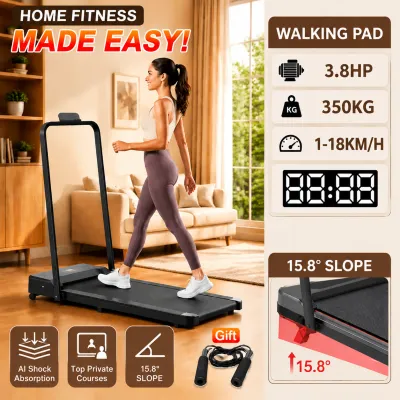
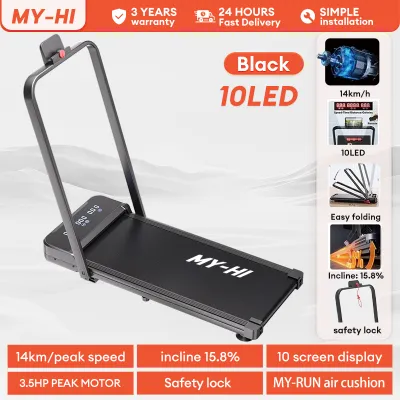
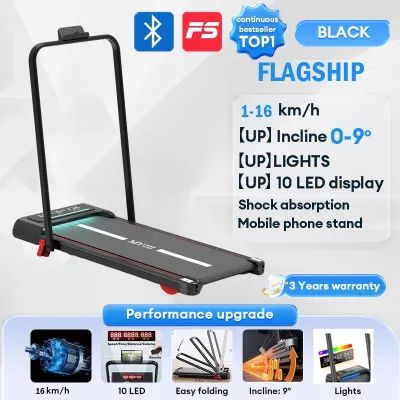
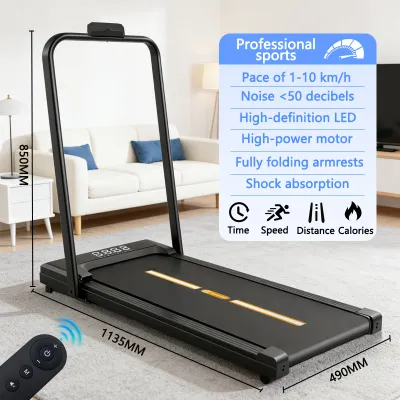
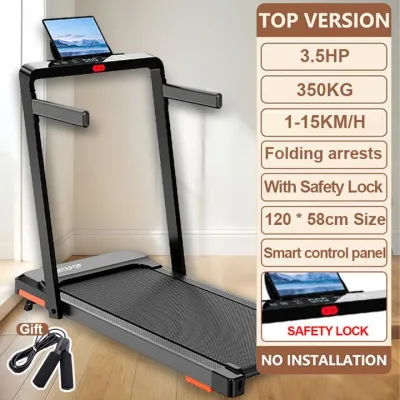
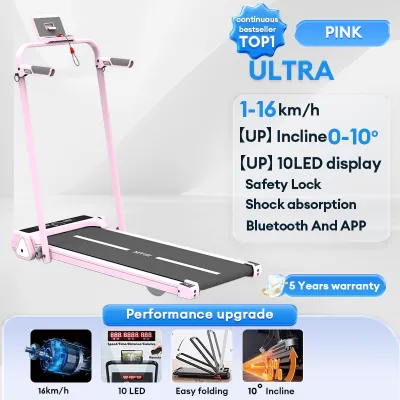
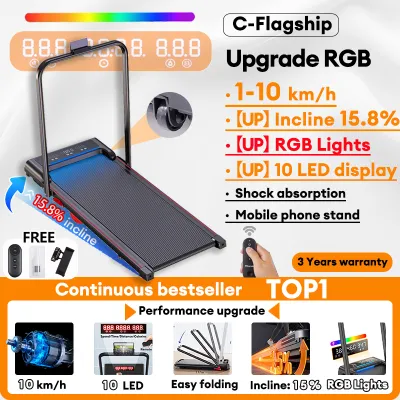
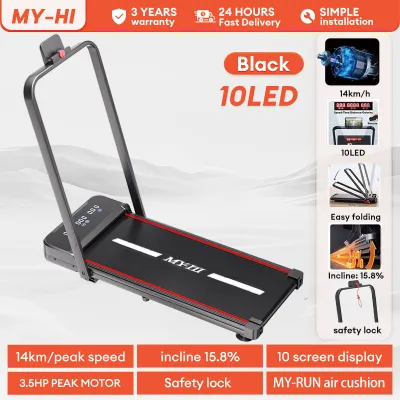
Prices are valid at publication and may change. Please refer to the product page for the latest price.
Next, map out the path the equipment will take from your front door to its final destination. Condominium living often involves navigating narrow hallways, tight corners, and compact elevators. If you need to move the walking pad between different rooms or store it in a utility closet, measure the width of every doorway and the turning radius of your corridors. A heavy or overly long machine can easily become wedged in a tight hallway, causing damage to your walls or the equipment itself.
Finally, evaluate your intended storage locations. If you plan to slide the walking pad under a sofa or bed, measure the vertical clearance from the floor to the lowest point of the furniture frame. Do not rely on visual estimates, as central support legs or sagging upholstery can reduce the actual clearance. If you plan to store the unit vertically in a closet or behind a door, measure the available depth and height, keeping in mind that some models require a flat wall surface to lean against safely.
Decode Walking Pad Dimensions and Footprints
When reviewing product specifications, it is crucial to distinguish between the running belt area and the overall machine footprint. The running belt area refers only to the usable walking surface. For a comfortable walking stride, taller users generally require a longer belt, while shorter users can comfortably use a more compact deck. However, the overall footprint of the machine will always be larger than the belt size due to the space required for the motor housing, side rails, and frame structure. Always use the overall dimensions when planning your floor layout.

User weight capacity is another specification that directly influences the physical size and weight of the walking pad. Machines designed to support higher weight limits typically feature thicker steel frames, wider side rails, and larger, more robust motors. These heavy-duty components naturally increase the overall width, length, and weight of the unit. If you require a higher weight capacity, prepare to allocate a slightly larger footprint and ensure you can manage the additional physical weight of the machine during setup and storage.
Do not overlook the physical protrusions that can add unexpected centimeters to the manufacturer’s listed dimensions. Motor covers at the front of the deck often sit higher than the rest of the walking surface, which can prevent the unit from sliding under low-clearance furniture even if the rest of the deck fits. Similarly, integrated handrails, console brackets, and adjustment knobs can add to the overall width or folded thickness. Carefully review the detailed dimensional drawings provided by the manufacturer to identify these potential clearance obstacles.
Evaluate Folding Mechanisms and Mobility Features
Folding mechanisms vary significantly among electric walking pads, and the right choice depends entirely on your condo’s storage layout. Some models feature a 180-degree folding deck that folds completely in half, drastically reducing the storage length and allowing the unit to fit into shallow closets or small corners. Other models do not fold the deck itself but allow the handrail to fold down flat against the walking surface. If you have ample floor space under your bed or sofa, a non-folding deck with a fold-down handrail is often easier to slide out and set up quickly.
Mobility features are essential for making a walking pad practical in a small home. Look for units equipped with high-quality, built-in transport wheels at the front of the frame. These wheels allow you to tilt the machine and roll it into place without lifting the entire weight. In the Philippines, many condos feature delicate flooring materials such as laminate, vinyl planks, or engineered wood. Ensure the transport wheels are made of a non-marring material like polyurethane to prevent scratching or scuffing your floors during daily transitions.
Before finalizing your choice, verify the total weight of the folded unit and assess whether you can comfortably handle it. While transport wheels assist with rolling, you will still need to lift one end of the machine to maneuver it under furniture or stand it upright. If the unit is too heavy for your physical strength, you may find yourself leaving it permanently on the floor, defeating the purpose of buying a compact, storable fitness machine. If you live alone, prioritizing a lightweight model with robust wheels is often more beneficial than choosing a heavier, feature-rich alternative.
Plan for Safety, Ventilation, and Noise Control
Operating motorized fitness equipment in a compact, shared residential building requires careful consideration of safety, ventilation, and acoustics. Electric motors generate heat during operation, which must dissipate to prevent overheating and prolong the lifespan of the machine. In tropical climates with high ambient temperatures and humidity, proper ventilation is even more critical. Avoid placing the motor housing directly against walls, heavy drapes, or plush rugs that can block air intake vents. Always maintain the manufacturer-specified clearance around the motor cover during your workouts.
Using a dedicated equipment mat under your walking pad is highly recommended for condo dwellers. A high-density rubber or PVC mat serves multiple purposes: it protects your flooring from scratches and indentation marks, catches any lubricating oil or dust from the belt, and prevents the machine from shifting or sliding during use. Furthermore, a quality mat acts as a barrier that absorbs the low-frequency vibrations generated by your footsteps, preventing them from traveling through the concrete floor slab to the unit below.
Noise control is a vital aspect of maintaining good relations with your condo neighbors. While brushless motors generally operate more quietly than traditional brushed motors, the primary source of noise is often the impact of your feet on the deck. To minimize this sound, choose a walking pad with integrated shock absorption or cushioning zones beneath the belt. Additionally, keeping your walking speed moderate and maintaining the belt’s lubrication according to the instruction manual will keep mechanical friction and noise to a minimum.
Common Space-Matching Mistakes to Avoid
One of the most common mistakes buyers make is purchasing a walking pad based solely on the advertised belt size while ignoring the total physical footprint. A compact belt might seem ideal for a small room, but if the machine features wide side rails, a bulky motor housing, or a non-detachable console, the actual space required can be significantly larger than expected. Always base your spatial planning on the maximum external dimensions of the machine in both its fully extended and folded states.
Another frequent oversight is failing to plan for the power cord and outlet placement. Electric walking pads draw a significant amount of power and should be plugged directly into a grounded wall outlet rather than a thin extension cord or a multi-plug adapter, which can pose a fire hazard. Before purchasing, locate your nearest wall outlet and check the length of the machine’s power cord. Ensure the cord can reach the outlet safely without stretching across high-traffic walkways where it could become a tripping hazard or get stepped on, which can damage the internal wiring.
Finally, never assume that all foldable walking pads can stand upright safely without dedicated support. While some models are designed to stand vertically on their own, many require a flat wall to lean against, a specialized wall mount, or a safety strap to prevent them from tipping over. In a busy condo, an unsecured vertical walking pad can easily be knocked over by pets, children, or accidental bumps, leading to serious injury or property damage. If you plan to store your unit vertically, verify that the model is certified for freestanding storage or invest in the recommended safety brackets.
Frequently Asked Questions (FAQ)
Can I use an electric walking pad on a condo balcony?
Using an electric walking pad on a condo balcony is generally not recommended unless the balcony is fully enclosed, climate-controlled, and protected from the elements. Most walking pads are designed strictly for indoor use and lack the necessary Ingress Protection (IP) ratings to resist moisture, dust, and high humidity. Exposure to blowing rain, morning dew, or direct sunlight can rapidly degrade the walking belt, corrode the electrical components, and void your warranty. Additionally, you must verify the structural weight limits of your balcony and ensure the surface is perfectly level, as an uneven floor can cause the belt to drift and damage the motor.
Do I need a special mat under the walking pad?
Yes, placing a specialized equipment mat under your walking pad is highly beneficial, especially in a condominium setting. A dense mat protects your condo’s flooring from scratches, scuffs, and pressure marks caused by the weight of the machine and the impact of your stride. It also helps dampen the operational noise and vibrations that can easily travel through concrete floors to neighboring units. When choosing a mat, ensure its thickness does not block the motor’s ventilation vents or interfere with the movement of the walking belt, and follow the manufacturer’s guidelines regarding approved floor coverings.

Community discussion
Share your experience or ask a question. Comments are reviewed before publication.