
Choosing the right Victor badminton backpack requires balancing your racket capacity, shoe storage, and accessory needs against the demands of your playing schedule. In the tropical climate of the Philippines, where high humidity and sudden downpours are common, your gear bag does more than just carry equipment; it protects your rackets from tension loss and keeps your damp apparel separate from dry gear. By focusing on verified manufacturer specifications, compartment layouts, and ergonomic designs, you can select a backpack that keeps your tournament gear organized and secure.
Assess Your Gear Capacity Needs
Before browsing specific models, you must calculate your exact storage requirements based on your typical playing habits. A single casual session at a local court requires far less gear than a weekend-long tournament. If you only play recreationally once or twice a week, you might only need to carry two rackets, a tube of shuttlecocks, and a water bottle. However, competitive players often need to carry four to six rackets to ensure they have backups with different string tensions or in case of a mid-match breakage.
In the Philippines, the intense heat and humidity mean you will likely sweat through multiple shirts during a single session. This requires carrying extra apparel, including spare jerseys, shorts, socks, and towels. Your backpack must have enough volume to accommodate these extra fabric items without crushing your rackets or squeezing your shuttlecock tubes. If you plan to shower at the sports complex after your games, you will also need dedicated space for toiletries and a wet bag to isolate your damp clothes.
Products mentioned in this guide
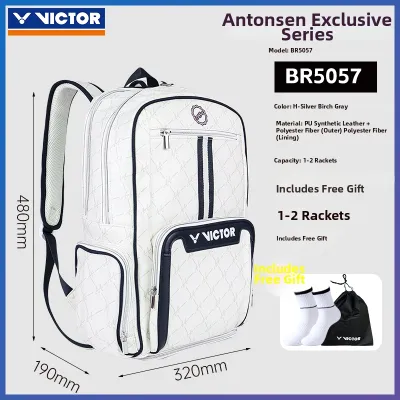
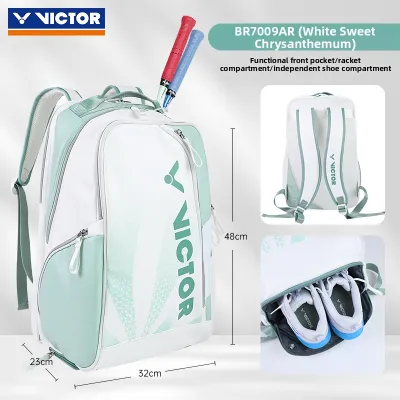
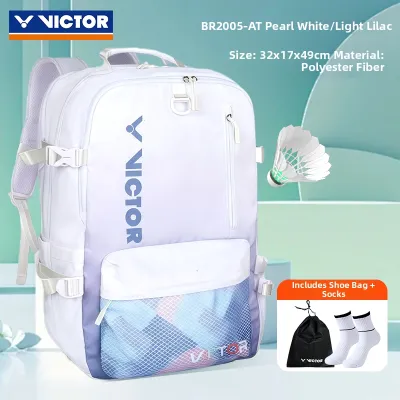
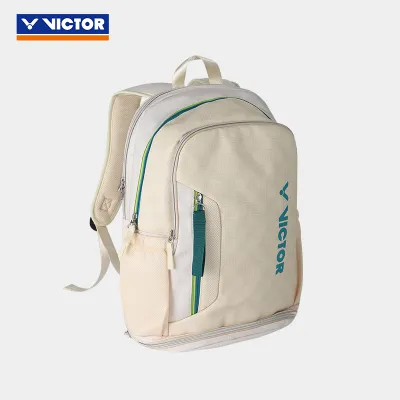
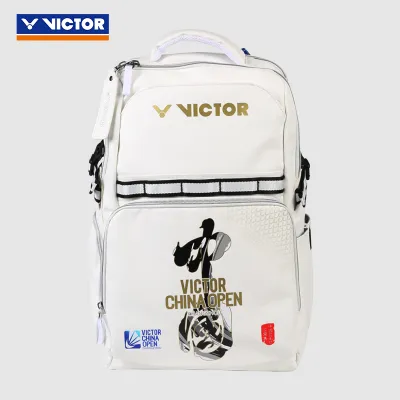
Prices are valid at publication and may change. Please refer to the product page for the latest price.
Because badminton rackets are approximately 675 millimeters in length, they require a compartment specifically designed to accommodate their long shafts and heads. Some backpacks feature a dedicated racket compartment that fully encloses the rackets, while others allow the handles to protrude from the top, secured by specialized zippers or a protective sleeve. If you choose a model where the handles stick out, ensure the zippers are designed to stay locked in place under tension so they do not slide open during your commute.
Shoe storage is another critical factor that dictates the size of your backpack. Court-specific badminton shoes should not be worn outside the venue to preserve their grip and prevent dirt from damaging the court surface. This means you must carry your shoes to and from the venue inside your bag. Look for a backpack that features an isolated shoe compartment. In warm, humid conditions, placing sweaty shoes directly next to clean clothes or rackets can lead to odor buildup and moisture damage. A dedicated compartment keeps dirty soles away from your apparel and strings.
Keep in mind that shoe compartments typically occupy space inside the main compartment of the backpack. When your shoes are inside, the available volume for other gear is reduced. If you have larger shoe sizes, verify that the shoe compartment is spacious enough to accommodate your footwear without putting excessive pressure on other items in the bag. A bottom-entry or side-entry shoe pocket is highly convenient, but you must plan your packing sequence to ensure everything fits comfortably.
Beyond rackets and shoes, your daily accessories require organized space. A standard tournament setup includes multiple tubes of shuttlecocks, replacement grips, grip powder, wristbands, and towels to manage sweat. You also need to account for hydration, requiring external pockets that can securely hold large water bottles or sports drink flasks. If you play immediately after work or school, your backpack must also accommodate a change of clothes, toiletries, and perhaps a laptop or personal electronics, making internal dividers highly valuable.
Key Features to Check in Victor Backpacks
When evaluating Victor backpacks, pay close attention to the racket compartment design. Manufacturers often specify the maximum number of rackets a compartment can hold, typically ranging from two to six. If you carry multiple rackets, look for models that feature thermal insulation linings. These specialized linings are designed to shield your rackets and strings from extreme temperature fluctuations, which can cause string tension to drop rapidly or damage the racket frame. Verify these claims by checking the product tags for specific thermal technology labels.

Shoe compartment ventilation is equally vital for maintaining gear hygiene. A simple zippered pocket is often not enough; look for compartments that feature mesh panels, metal eyelets, or dedicated ventilation vents. These design elements allow air to circulate, helping to dry out damp shoes and prevent the growth of mold and bacteria. This is especially important in tropical environments where humidity levels remain high throughout the year, making natural drying inside a sealed bag nearly impossible.
The materials used in the backpack’s construction determine its longevity and weather resistance. Examine the manufacturer’s specifications for high-denier polyester or nylon fabrics, which offer excellent tear resistance. Look for water-resistant coatings or laminated zippers that help protect your expensive gear during sudden rain showers. Heavy-duty zippers, particularly those with double sliders and lockable loops, provide smooth operation and added security when traveling between different sports complexes.
The base of the backpack is another area that requires durable materials. Since players frequently set their bags down on dusty court floors, concrete benches, or even damp outdoor surfaces, the bottom of the bag should be reinforced with a water-resistant, easy-to-clean material like tarpaulin or heavy-duty polyurethane. This prevents moisture from seeping upward into your clean clothes and makes it simple to wipe away dirt and dust after a long day at the courts.
Ergonomics should never be overlooked, especially when carrying a fully loaded tournament bag. A heavy load of rackets, shoes, and water can strain your shoulders and back. Look for wide, padded shoulder straps that distribute weight evenly across your shoulders. An adjustable chest strap helps stabilize the load during transit, while a breathable, padded back panel with air channels keeps your back cool and dry. Check the product images and specification sheets to confirm these comfort features are present before making a decision.
For players who commute on motorcycles, scooters, or public utility vehicles, ergonomic stability is a safety priority. A backpack that shifts side to side can affect your balance while riding. An adjustable chest strap and a snug fit against your back ensure that the bag remains secure, even when navigating busy city streets. Breathable air-mesh padding on the back panel is also essential to prevent excessive sweating during warm daytime commutes.
Matching Backpack Styles to Player Profiles
Casual and club players who frequent local courts for friendly matches generally benefit from compact, streamlined backpacks. These models typically feature a dedicated slot for two to three rackets, a main compartment for a change of clothes, and basic side pockets for accessories. They are lightweight, easy to carry on a motorcycle or public transit, and take up minimal space in court-side seating areas. For this profile, simplicity and ease of transport are the primary priorities.
Student-athletes often require a multi-functional backpack that can transition seamlessly from the classroom to the training hall. If you fall into this category, look for a backpack that includes a dedicated laptop sleeve alongside the racket and shoe compartments. This allows you to carry your academic essentials and sports gear in a single bag, eliminating the need to carry multiple packs throughout the school day. Ensure the laptop compartment is well-padded and isolated from any damp gear.
Competitive and tournament players require high-capacity models designed to handle heavy gear loads. If you participate in multi-day leagues or tournaments, you need a backpack that can organize six or more rackets, multiple changes of athletic wear, extra towels, and a comprehensive selection of accessories. These bags often feature a structured, rectangular design that stands upright, allowing easy access to different compartments. They also include specialized pockets for valuables, wet clothes, and multiple tubes of shuttlecocks, ensuring everything has its designated place.
These structured, rectangular backpacks—often referred to as tournament backpacks—offer the advantage of keeping your gear neatly stacked. Unlike traditional teardrop-shaped bags where items tend to pile up at the bottom, rectangular bags utilize vertical space more efficiently. This makes it much easier to locate specific items, such as a fresh grip or a roll of athletic tape, in the middle of a high-pressure match without having to unpack your entire bag.
Travel and transit considerations are crucial if you frequently play in different cities or travel for regional tournaments. If you plan to use your backpack as carry-on luggage, check the external dimensions against standard airline limits for overhead bins or under-seat storage. A backpack that is too bulky may need to be checked, risking damage to your rackets. Additionally, consider how easily the bag fits into tight venue lockers or car trunks, ensuring you can transport your gear safely without crushing the racket frames.
How to Verify Authenticity and Purchase Safely
To ensure you are purchasing a genuine Victor backpack that is covered by a local warranty in the Philippines, always buy from authorized sporting goods retailers, official brand stores, or reputable online mall flagship shops. Counterfeit sports gear is common, and fake bags often suffer from poor stitching, weak zippers, and lack proper thermal insulation or structural padding. Purchasing from official channels guarantees that the materials and construction meet the brand’s quality standards.
Price is often a strong indicator of authenticity. If you encounter a high-end Victor backpack priced significantly lower than the average market rate—such as a premium tournament bag offered for under ₱1,000—it is highly likely to be a counterfeit product. Genuine materials, thermal linings, and durable zippers carry manufacturing costs that make extremely low prices unrealistic. Investing in a genuine bag ensures that your expensive rackets are properly protected and that the bag will last for multiple seasons.
Upon receiving your backpack, perform a physical inspection to verify its authenticity. Genuine Victor products typically feature official holographic tags, serial numbers, or authenticity QR codes that you can scan or verify on the manufacturer’s official website. Check the quality of the brand logos; genuine logos are cleanly printed or embroidered without loose threads or misspellings. The zippers should glide smoothly, and the fabric should feel durable and substantial, rather than thin or plasticky.
Before completing your purchase, carefully review the seller’s return policy, warranty terms, and receipt requirements. A reputable seller will provide a clear return window in case of manufacturing defects, such as broken zippers or faulty stitching. Keep your official receipt or digital invoice secure, as this is usually required to claim warranty services or exchanges. Understanding these terms beforehand protects your investment and ensures a hassle-free resolution if any issues arise with your new gear bag.
Frequently Asked Questions (FAQ)
Can I wash my Victor badminton backpack in a washing machine?
You should check the internal care label of your specific Victor backpack for exact washing and drying instructions. As a general rule, machine washing is not recommended because the agitation and spinning cycles can damage the bag’s structural padding, thermal linings, and water-resistant coatings. Instead, spot clean the exterior and interior of the backpack using a damp cloth, mild soap, and lukewarm water. Allow the bag to air dry completely in a shaded, well-ventilated area away from direct sunlight before storing your gear inside.
How do I protect my rackets from heat damage inside the backpack?
To protect your rackets from heat damage, utilize the thermal-insulated compartment of your Victor backpack if it is equipped with one. Avoid leaving your backpack inside a hot parked vehicle or in direct sunlight for extended periods, as extreme heat can weaken the racket frame and cause string tension to drop significantly. When you are not actively playing, store your backpack in a cool, dry, indoor environment. If your bag does not have a thermal lining, consider wrapping your rackets in a soft towel or thermal sleeve for added protection during transit.

Community discussion
Share your experience or ask a question. Comments are reviewed before publication.