
Choosing between a fish claw and a landing net is not a matter of finding a universal winner, but rather matching your landing tool to the physical limits of your fishing rod, reel drag, and the specific lures you cast. Your landing tool is the final link in the fishing chain, and using the wrong one can lead to snapped rod tips, lost fish, or severe hand injuries from exposed hooks. By analyzing how your rod power, reel size, and bait configuration interact with these tools, you can make an informed decision that protects both your gear and your catch.
In tropical environments like the Philippines, where high humidity and saltwater exposure are constant factors, gear durability and material choice become even more critical. Whether you are targeting local freshwater species like dalag (snakehead) and apahap (barramundi) in inland waterways, or casting from a kayak along coastal reefs, your landing method must align with your specific setup. A fish claw—often referred to as a fish lip gripper—and a traditional landing net serve the same ultimate purpose but achieve it through completely different mechanical means.
Understanding the Core Differences
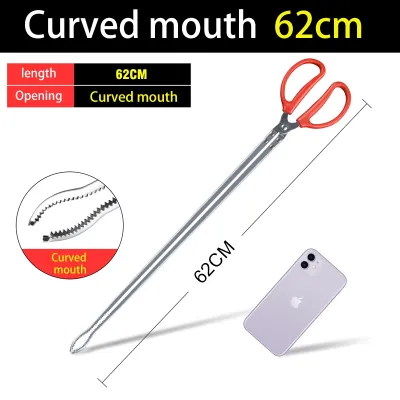
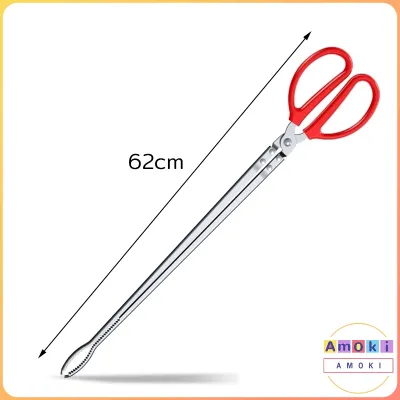
A fish claw operates on a mechanical clamp system, typically utilizing spring-loaded metal or heavy-duty plastic jaws that lock onto the lower lip of a fish. This tool is designed for direct, one-handed control, allowing you to secure the fish’s jaw and lift or hold it steady without touching the body. Because it grips a specific bony structure, it relies on the fish having a sufficiently tough jaw to withstand the pressure of the clamp.
Products mentioned in this guide
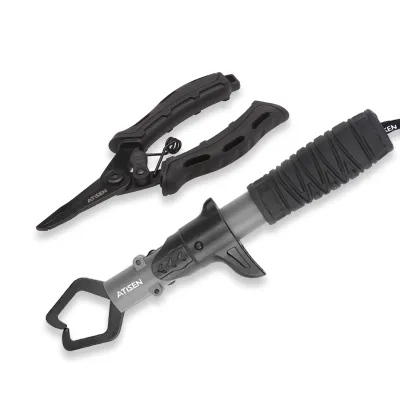
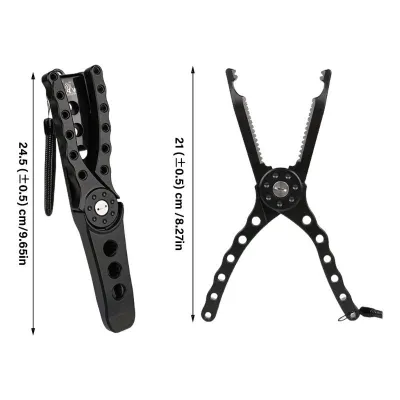
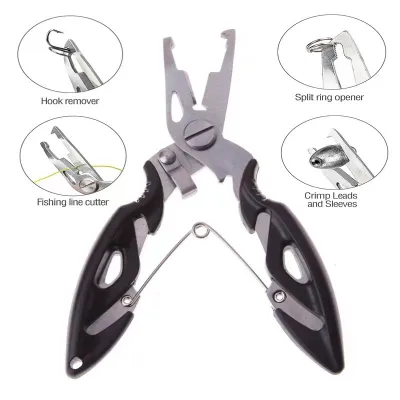
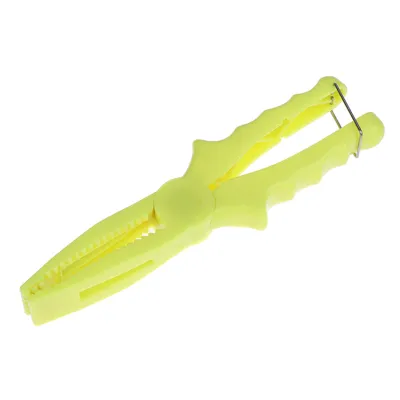
Prices are valid at publication and may change. Please refer to the product page for the latest price.
In contrast, a landing net uses a wide hoop and a suspended mesh bag to scoop the entire fish out of the water. This mechanism distributes the fish’s weight evenly across the mesh, eliminating localized pressure points on the jaw or gills. The net supports the fish’s body horizontally, which is the natural orientation for aquatic life, making it a highly stable option for larger or more fragile species.
Portability and deployment speed vary significantly between the two tools. A fish claw is highly compact, often measuring less than thirty centimeters, and can be clipped directly to a belt, life jacket, or kayak console. This makes it exceptionally easy to deploy with one hand while managing a rod with the other. A landing net, even a folding or telescoping model, requires more storage space and can be cumbersome to maneuver on a crowded boat deck, a narrow kayak, or when trekking through dense shoreline vegetation.
Matching the Tool to Your Rod Power and Reel Size
Your rod’s power rating and your reel’s drag settings dictate how much lifting force you can safely apply during the final stages of a fight. When using light to medium-power rods, attempting to lift a fish directly out of the water using a fish claw can easily result in gear failure. Because a claw requires you to get close to the fish, anglers often wind the line in too far, creating an acute angle at the rod tip—a scenario known as high-sticking.

High-sticking concentrates the entire load on the weakest, thinnest section of the rod blank rather than distributing it down to the powerful butt section. Under this localized stress, even a high-quality graphite or fiberglass rod can snap instantly. Furthermore, if the fish thrashes while suspended from a claw, the sudden shock loads can damage the line guides or exceed the reel’s drag limits, causing gears to slip or line to snap.
For heavy-power rods and larger reels, such as those used for heavy cover or offshore trolling, the gear is built to handle substantial leverage. However, even with heavy tackle, a landing net remains the safer option for oversized catches. Before using a fish claw to hoist any fish completely out of the water, it is essential to check the manufacturer specifications of your rod for its maximum deadlift weight. If the fish exceeds this rating, or if you are unsure of the limit, always use a landing net to support the weight rather than relying on the rod to lift the fish within claw range.
Considering Your Bait Type and Hook Configuration
The type of lure and the configuration of its hooks are critical safety factors when choosing your landing tool. Hard baits, such as crankbaits, minnows, and poppers, are typically equipped with multiple treble hooks. When a fish is hooked on a treble-equipped lure, there are almost always several exposed, razor-sharp hook points thrashing outside the fish’s mouth.
Using a fish claw on a fish with exposed treble hooks is highly risky. A sudden shake of the fish’s head can easily drive an exposed hook directly into your hand or wrist while you attempt to align the claw with the lower lip. A landing net minimizes this danger by keeping your hands at a safe distance. The net bag secures both the fish and the loose hooks, though you must be prepared for the hooks to tangle in the mesh. Opting for a rubber-coated net bag greatly reduces this tangling issue, allowing for faster hook removal.
Conversely, single-hook setups, such as soft plastics rigged on jig heads, Texas rigs, or single-hook spinnerbaits, are ideal candidates for a fish claw. Because there is only one hook point—which is usually firmly embedded inside the mouth—the risk of a stray hook catching your hand is minimal. The fish claw allows you to quickly clamp the lip, stabilize the fish, and use pliers to remove the single hook with minimal fuss, making the entire process fast and efficient.
Fish Handling and Conservation Impact
For anglers practicing catch and release, the physical impact of the landing tool on the fish is a primary concern. A fish’s body is covered in a protective slime coat that acts as a barrier against bacteria, parasites, and infections. Traditional knotted nylon nets can abrasively scrape this slime coat away and split delicate fins. To minimize this damage, conservation-minded anglers should use knotless, rubber-coated landing nets, which gently support the fish without stripping its natural defenses.
The physical structure of the fish’s jaw also dictates which tool is appropriate. Species with tough, bony jaws, such as barramundi or groupers, can tolerate the localized pressure of a fish claw when supported correctly. However, species with delicate mouth structures, such as threadfin salmon or certain freshwater panfish, can suffer severe jaw tearing or dislocation if held by a claw.
Regardless of the tool you choose, minimizing air exposure and handling time is vital for survival rates. If you use a fish claw, avoid holding the fish vertically by the jaw alone, as this forces the internal organs downward and can cause permanent skeletal damage. Always use a wet hand to support the fish’s belly horizontally. If using a net, keep the fish submerged in the water within the net bag while you prepare your camera or pliers, ensuring the fish continues to receive oxygen.
Decision Framework: Which Tool Should You Use?
To finalize your gear selection, evaluate your typical fishing scenarios against a clear set of operational rules. You should choose a fish claw if you primarily target species with tough, bony jaws, use single-hook rigs like jigs or soft plastics, and require a highly portable, one-handed tool for quick releases from a kayak or shore. This setup is highly efficient for rapid, low-contact handling when fishing in tight spaces.
You should choose a landing net if you frequently fish with treble-hook lures, utilize light to medium-power rods that cannot handle vertical lifting stresses, or prioritize the safe release of fragile species. The net provides a protective cradle that manages both the fish’s weight and the hazard of loose hooks, making it the more forgiving tool for a wide variety of angling situations.
Before heading out, always verify the specific physical characteristics of your target species and check local fishing regulations. Some managed fisheries or conservation zones mandate the use of specific knotless net materials and strictly prohibit the use of lip-gripping devices to protect local fish populations. Budgeting between ₱500 and ₱2,500 can secure a reliable, corrosion-resistant version of either tool at local tackle shops or online marketplaces, ensuring you are properly equipped for your next adventure.
Frequently Asked Questions (FAQ)
Can I use a fish claw to lift the fish completely out of the water?
Lifting a heavy fish vertically out of the water solely by a fish claw is not recommended. This position puts immense strain on the fish’s jaw joint and can cause internal organ damage due to gravity pulling the unsupported body weight downward. Additionally, if the fish thrashes while suspended, the sudden movement can snap your rod tip if you are holding it at an awkward angle. If you must lift the fish, always place a wet hand under its belly to support its weight horizontally.
What type of landing net is best for catch and release?
The most effective landing net for catch and release is one featuring a knotless, rubber-coated mesh bag. Rubber coating prevents the net from absorbing the fish’s protective slime coat and reduces the likelihood of fins splitting or hooks tangling in the fibers. Ensure the hoop size and bag depth are large enough to accommodate your target species comfortably without forcing the fish to fold double, which can cause spinal stress.

Community discussion
Share your experience or ask a question. Comments are reviewed before publication.