
Choosing between a compact Flashfish walking pad and a traditional, full-size treadmill comes down to how you want to move, where you live, and what you want to spend. If your primary goal is to accumulate daily steps while working at a standing desk or watching television, a walking pad offers a streamlined, space-saving solution. However, if your fitness routine demands high-speed running, intense interval training, or steep incline climbs, a traditional full-size treadmill remains an indispensable piece of equipment.
To make the right choice for your home, you must carefully weigh several practical factors. These include your available floor space, your specific fitness objectives, and your budget. While a walking pad is highly convenient for light daily activity, a full-size treadmill provides the structural stability and motor power required for serious athletic training.
Space, Storage, and Setup Requirements
Evaluating your physical environment is the first step in deciding which machine will fit into your daily routine. A compact walking pad features a remarkably small footprint, typically measuring less than half the length and width of a standard gym treadmill. Because they lack bulky upright consoles and permanent handrails, these slim devices are designed to lay completely flat on the floor.
Products mentioned in this guide
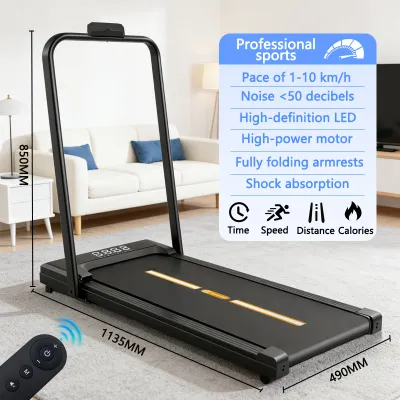
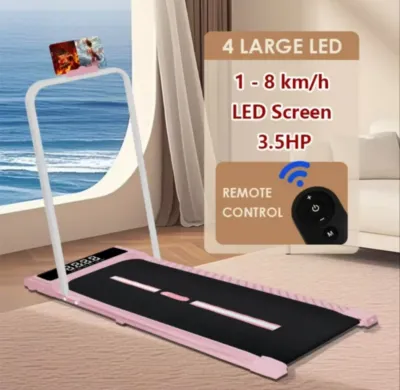
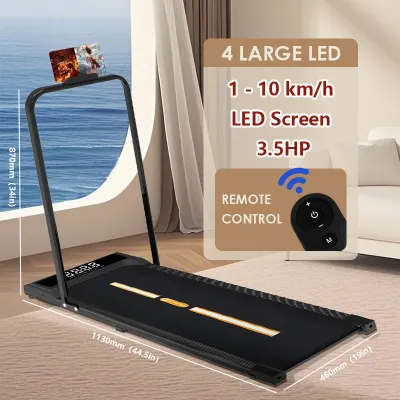
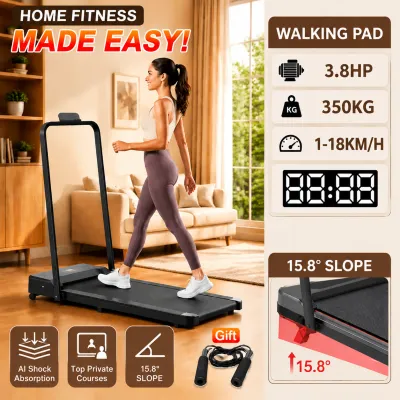
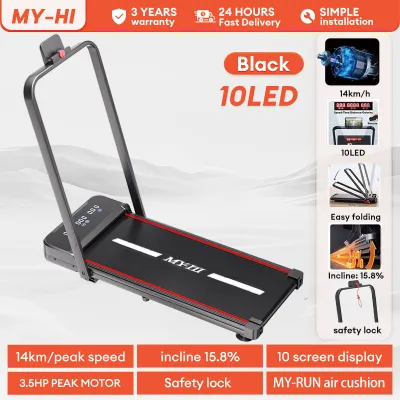
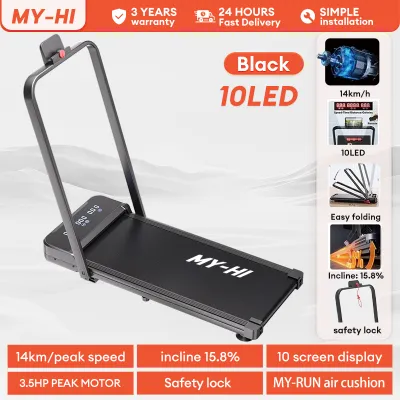
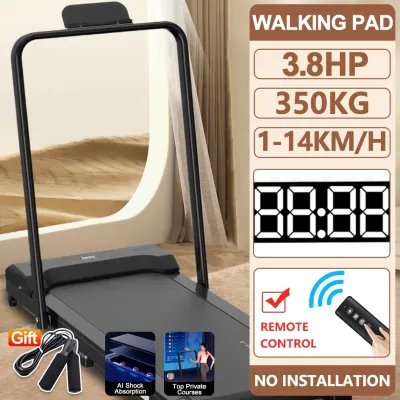
Prices are valid at publication and may change. Please refer to the product page for the latest price.
Storage flexibility is one of the biggest advantages of a walking pad. After completing your workout, you can easily slide the unit under a bed, beneath a sofa, or upright against a wall. In tropical climates like the Philippines, where indoor humidity can sometimes be high, storing electronic fitness equipment off the floor or in well-ventilated areas is a smart way to protect internal components from moisture and dust buildup.
In contrast, a full-size treadmill is a substantial piece of equipment that often requires a dedicated, permanent location in your home. Even folding models, which allow the running deck to lock in an upright position, still occupy a significant amount of vertical and horizontal space. These machines are heavy, often weighing upwards of 60 to 80 kilograms, meaning they are difficult to relocate without assistance.
Before purchasing any equipment, it is essential to measure your intended workout area. Ensure you have at least two feet of clearance on both sides of the machine and at least three to four feet of open space behind the running belt for safety. Additionally, check your ceiling height; a full-size treadmill deck sits higher off the ground than a walking pad, which can limit overhead clearance for taller users in rooms with low ceilings.
Fitness Goals and Workout Intensity
Your physical training objectives should dictate the mechanical capabilities of the machine you choose. Walking pads are engineered specifically for low-to-moderate intensity workouts, with maximum speeds that generally top out between 6 km/h and 10 km/h. They feature flat decks, meaning you cannot perform incline training to simulate outdoor hills or increase cardiovascular intensity without increasing your speed.

A full-size treadmill offers a much wider range of athletic possibilities. With top speeds that frequently reach 16 km/h or higher, these machines are built to accommodate fast running, sprinting, and high-intensity interval training (HIIT). Most full-size models also feature motorized or manual incline adjustments, allowing you to target different muscle groups and burn more calories without putting extra stress on your joints.
Motor power is a critical specification to verify before making your decision. Walking pads typically utilize smaller motors designed for light, continuous walking. If you attempt to run on a motor that lacks sufficient continuous horsepower (CHP), you risk overheating the machine and shortening its lifespan. Full-size treadmills feature larger, more robust motors that can handle the repeated impact of a running stride and support heavier user weight capacities over longer sessions.
The dimensions of the running belt also directly impact your safety and comfort. Walking pads feature shorter and narrower belts, which are perfectly adequate for a standard walking stride but can feel highly restrictive if you try to run. A full-size treadmill provides a longer, wider deck that allows you to take long, natural strides without the fear of stepping off the side or back of the moving belt. Always check the manufacturer’s rated weight limit and recommended continuous usage times to ensure the machine matches your physical profile.
Features, Controls, and Usability
The user interface and control systems differ significantly between these two types of cardio equipment. Walking pads prioritize a minimalist design, often omitting a traditional console entirely. Instead, they display basic metrics like speed, distance, and time on a small LED screen built into the base of the machine, and they are controlled via a handheld remote control or a smartphone application.
Full-size treadmills feature comprehensive consoles positioned at eye level. These consoles often include built-in workout programs, quick-speed adjustment buttons, tablet holders, and integrated heart rate sensors on the handrails. Some premium models even offer interactive touchscreens that allow you to stream virtual running routes or participate in live fitness classes.
Safety mechanisms are another vital consideration, particularly if you have children or pets in your household. Full-size treadmills come equipped with sturdy, permanent handrails and a physical safety key that clips to your clothing, instantly stopping the belt if you fall or lose your balance. Many walking pads do not have handrails, requiring you to maintain your balance independently, though some models include a folding safety bar that must be raised to unlock higher speeds.
Noise levels can also impact your workout experience, especially if you live in a shared apartment or a multi-story home. Because walking pads operate at lower speeds and use smaller motors, they generally produce less noise than a full-size treadmill. However, the sound of your feet impacting the deck can still transmit through concrete floors; using a thick rubber equipment mat underneath either machine is highly recommended to dampen vibrations and protect your flooring.
Budget, Maintenance, and Long-Term Value
Financial considerations play a major role in determining which machine offers the best long-term value for your household. In the Philippines, walking pads are highly popular due to their accessible price point, typically ranging from ₱8,000 to ₱18,000 on major online marketplaces. This makes them an excellent, low-risk investment for individuals who want to test the waters of home fitness without committing a large sum of money.
Full-size treadmills represent a much larger financial commitment. Entry-level models often start around ₱25,000, while high-quality, durable machines designed for regular running can easily exceed ₱50,000. While the upfront cost is higher, a well-built treadmill can withstand years of heavy use, potentially saving you money on gym memberships over time.
Both types of equipment require regular maintenance to ensure smooth operation and prevent premature wear. You will need to periodically apply silicone lubricant beneath the running belt and adjust the belt tension to keep it centered. Because full-size treadmills have more complex mechanical systems, motorized incline gears, and larger electronic consoles, troubleshooting or repairing them can be more complicated and may require professional assistance.
To protect your investment, always review the manufacturer’s warranty terms before purchasing. Pay close attention to the coverage periods for the motor, the frame, and the electronic components, as these can vary widely between brands. Ultimately, the true value of either machine depends on how consistently you use it; an expensive treadmill that sits unused in a corner offers far less return on investment than a budget-friendly walking pad that you use every single day.
Final Verdict: Choosing the Right Cardio Equipment
To finalize your decision, consider how each machine aligns with your daily habits, physical space, and fitness aspirations.
Choose the Flashfish walking pad if:
- You have limited living space, such as a studio apartment or a shared bedroom, and need equipment that can be easily hidden away when not in use.
- Your primary fitness goal is to increase your daily step count, combat a sedentary lifestyle, or walk while working at a standing desk.
- You prefer a quiet, low-maintenance machine that does not require a large upfront financial investment.
Choose a full-size treadmill if:
- You are an active runner, train for outdoor races, or want to perform high-intensity interval workouts at home.
- You want to incorporate incline training into your routine to build lower-body strength and increase cardiovascular challenge.
- You require the physical security of sturdy handrails, a larger running deck, and an emergency stop clip.
Verify first if:
- You have pre-existing joint issues or balance concerns that require advanced shock absorption and physical support.
- Multiple members of your household will be using the machine, which may require a higher weight capacity and a more durable motor.
Before making your final purchase, always verify the exact product specifications, check current stock availability, and read the return and warranty policies of authorized local retailers to ensure a smooth buying experience.
Frequently Asked Questions (FAQ)
Can I safely run on a Flashfish walking pad?
Most walking pads are engineered specifically for walking or light jogging and are not designed to handle the high-impact forces of fast running. They feature smaller motors and shorter, narrower running belts that may restrict your natural running stride. To ensure your safety, always check the specific model’s maximum speed limit and belt dimensions on the product specification sheet before attempting to run.
Do walking pads require less assembly than full-size treadmills?
Yes, walking pads typically arrive almost fully assembled and ready to use straight out of the box. In most cases, you only need to unpack the unit, plug it into a grounded power outlet, and pair the remote control. Full-size treadmills, on the other hand, usually require significant assembly, which involves unfolding a heavy frame, routing electrical cables through the upright arms, and securing the console and handrails with specialized tools.

Community discussion
Share your experience or ask a question. Comments are reviewed before publication.