
Choosing the right home cardio equipment depends on your personal fitness goals, physical space, and joint health. While a treadmill offers high-intensity, weight-bearing workouts, a spin bike provides a vigorous, low-impact cycling experience, and a foot pedal exercise machine offers a compact, low-intensity option for active sitting. Finding the right fit requires balancing these distinct designs against your daily routine and home environment.
Each machine serves a different purpose in a home gym. A treadmill simulates natural outdoor walking or running, making it excellent for functional movement and high caloric expenditure. A spin bike mimics road cycling, allowing for high-intensity interval training with minimal joint stress. A foot pedal exerciser, often used under a desk, focuses on gentle movement and circulation during sedentary tasks.
To make an informed investment, you must evaluate how each option aligns with your physical capabilities and living conditions. Factors such as floor space, noise levels, joint impact, and budget play critical roles in determining which machine will remain a consistent part of your routine rather than an expensive clothes rack.
Products mentioned in this guide
Prices are valid at publication and may change. Please refer to the product page for the latest price.
Compare Workout Intensity and Muscle Engagement
The cardiovascular intensity and calorie-burning potential of these three machines vary significantly due to the nature of the movements. Treadmills typically offer the highest potential for energy expenditure because they require weight-bearing movement. When you walk or run, your body must support its entire weight against gravity, which recruits a massive amount of muscle mass across your entire body.
This weight-bearing action primarily engages your lower body, including your glutes, quadriceps, hamstrings, and calves. Additionally, running or walking requires core activation and arm swinging, which further increases the overall cardiovascular demand. Because of this comprehensive muscle recruitment, workouts on a treadmill generally result in higher metabolic rates compared to seated alternatives.
Spin bikes offer a highly vigorous but non-weight-bearing workout. Because you are seated, your skeleton does not support your full body weight, which shifts the physical demand. However, by adjusting the resistance mechanism, you can simulate steep climbs that challenge your quadriceps, hamstrings, glutes, and calves.
The intensity of a spin bike workout is highly dependent on user effort and resistance settings. You can easily transition from a moderate recovery ride to an intense high-intensity interval training (HIIT) session. While the upper body engagement is minimal compared to running, the localized muscular endurance built in the legs is substantial.
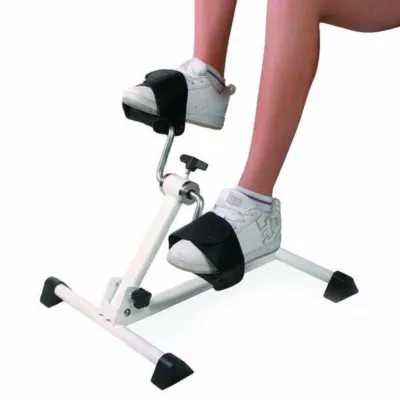
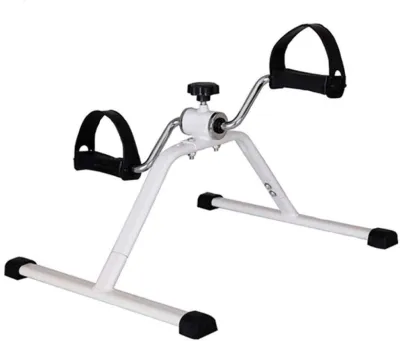
Foot pedal exercise machines operate at a much lower intensity level. These compact devices are designed for low-resistance, high-repetition movement, typically while you sit in a standard office chair or on a sofa. The energy expenditure is considerably lower than both treadmills and spin bikes because your core and upper body remain completely relaxed.
The primary muscle groups engaged by a pedal exerciser are the quadriceps and calves, with minor activation of the hamstrings. These machines are not intended for high-intensity cardiovascular conditioning or building significant muscle mass. Instead, they excel at promoting blood circulation, joint mobility, and modest active calorie burn during long periods of sitting.
Typical workout durations also differ based on these intensity profiles. A treadmill or spin bike session is often structured around 20 to 60 minutes of focused effort. In contrast, a foot pedal exerciser is frequently used for extended, low-intensity intervals throughout the day, sometimes accumulating hours of active pedaling during work or leisure.
Evaluate Space, Noise, and Daily Usability
Physical footprint and storage are critical constraints for any home fitness setup, especially in compact living environments. Treadmills require the largest dedicated space, often demanding a footprint of at least two meters in length and nearly a meter in width. Even foldable models require significant vertical or horizontal storage space and can be heavy and difficult to move alone.

Spin bikes occupy a moderate footprint, typically requiring about 1.2 meters by 0.6 meters of floor space. Most models feature transport wheels on the front stabilizer, allowing you to roll the bike into a corner or closet when not in use. Their rigid frames do not fold, but their upright design makes them easier to integrate into multi-purpose rooms.
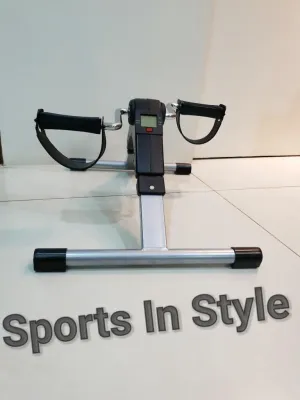
Foot pedal exercise machines offer the ultimate in space-saving design. Weighing only a few kilograms, they can easily be tucked under a desk, placed under a bed, or stored on a shelf. This portability makes them highly suitable for small apartments, shared offices, or temporary workout spaces.
Noise levels and floor vibrations are major considerations, particularly for apartment dwellers or those sharing walls with neighbors. Treadmills generate substantial impact noise and low-frequency vibrations with every footstep, which can easily travel through floors. Using a thick rubber equipment mat can help dampen this sound, but running at high speeds will always produce noticeable noise.
Spin bikes are significantly quieter, especially those equipped with magnetic resistance and belt drive systems. These models operate almost silently, producing only a soft whirring sound that is unlikely to disturb others in the same room. Friction-resistance bikes with felt pads may produce slightly more noise but remain much quieter than a treadmill.
Foot pedal exercisers are virtually silent during operation. Because they use simple magnetic or friction resistance and operate at low speeds, they generate minimal noise. You can easily use them during video calls, online meetings, or while watching television without distracting yourself or others.
Power requirements also vary across these devices. Motorized treadmills require a dedicated electrical outlet and can draw significant power, which is an important consideration for utility bills. Spin bikes and foot pedal exercisers are typically self-powered, relying on manual resistance knobs and simple battery-operated consoles, giving you complete freedom of placement.
Assess Joint Impact, Safety, and Accessibility
Understanding the physical impact of each machine is essential for preventing injuries and accommodating existing joint conditions. Treadmills present the highest joint impact because running and walking are repetitive, high-impact activities. Every foot strike sends a shockwave up through your ankles, knees, hips, and lower back, which can exacerbate joint pain or arthritis.
To mitigate this impact, many modern treadmills feature cushioned decks designed to absorb a portion of the shock. However, for individuals with severe joint degeneration or those recovering from lower-limb injuries, the repetitive stress of walking or running on a treadmill may still be too demanding.
Spin bikes offer a low-impact alternative that completely eliminates foot-strike impact. The smooth, circular pedaling motion keeps your feet in constant contact with the pedals, protecting your knees and hips from sudden jarring forces. This makes cycling an excellent option for cardiovascular conditioning if you suffer from joint sensitivity or mild osteoarthritis.
Foot pedal exercisers provide the lowest impact of all three options. Because you remain seated in a supportive chair of your choice, there is no gravitational load on your lower joints. The gentle, low-resistance pedaling motion helps lubricate the knee and ankle joints without placing them under stress, making it highly accessible for physical rehabilitation.
Stability and balance requirements also dictate safety levels. Treadmills require active balance and coordination, presenting a potential fall risk if you lose your footing or experience dizziness. Spin bikes require some balance to mount and dismount, but the stationary frame provides a stable base during the workout.
Foot pedal exercisers carry virtually zero fall risk because your body is fully supported by an external chair. This makes them exceptionally safe for older adults, individuals with balance disorders, or those recovering from neurological conditions. It allows users to maintain lower-body mobility without the fear of losing balance or falling.
For multi-user households, a spin bike or treadmill offers the greatest versatility for varying fitness levels, provided all users meet the safety criteria. A foot pedal exerciser is highly specialized for low-intensity movement and may not satisfy household members seeking a challenging, sweat-inducing workout.
Verify Essential Features Before Buying
Before purchasing any home fitness equipment, it is crucial to verify specific product labels and manufacturer specifications to ensure safety and compatibility. Always check the maximum weight capacity of the machine, ensuring it accommodates the heaviest user in your household with a safe margin. For treadmills, pay close attention to the belt dimensions; a running belt should be wide and long enough to accommodate your natural stride length safely.
In the Philippines, prices for home cardio equipment vary widely across authorized distributors and online marketplaces. Basic foot pedal exercisers are highly budget-friendly, typically ranging from ₱1,500 to ₱5,000. Spin bikes generally range from ₱8,000 to ₱30,000, depending on whether they use magnetic or friction resistance. Treadmills represent a more significant investment, with entry-level motorized models starting around ₱15,000 and high-end units exceeding ₱50,000.
When budgeting, remember to factor in additional costs such as delivery fees, which can be substantial for heavy items like treadmills. Some retailers offer professional installation services, which are highly recommended for complex treadmill assembly to ensure the belt is properly aligned and tensioned.
Always cross-check the user manual before finalizing your purchase. Verify the assembly requirements to ensure you have the necessary tools and space to put the machine together. For treadmills, measure your ceiling height to ensure you have adequate clearance, especially if the machine features an incline function that raises the deck during use.
Additionally, review the routine maintenance tasks outlined in the manual. Treadmills require regular belt lubrication and alignment checks to prevent motor strain. Spin bikes may require occasional pedal tightening and belt tension adjustments, while foot pedal exercisers generally require minimal maintenance beyond wiping down the frame.
Decision Framework: Match the Machine to Your Routine
To choose the right machine for your home, consider how your space, physical needs, and fitness goals align with each option.
Choose a treadmill if:
- Your primary goal is high-intensity cardiovascular conditioning, running, or walking.
- You have ample floor space, high ceilings, and do not share immediate walls with noise-sensitive neighbors.
- You prefer weight-bearing exercise to support bone density and functional daily movement.
Choose a spin bike if:
- You want a high-intensity, sweat-inducing workout without the joint impact of running.
- Your living space is moderate, and you need a machine that can be wheeled away after use.
- You enjoy cycling-style workouts and want to build lower-body muscular endurance.
Choose a foot pedal exercise machine if:
- You have extremely limited space or want to stay active while working at a desk.
- You require a very low-impact, low-intensity option for joint rehabilitation or gentle daily movement.
- You need a budget-friendly, completely silent machine that requires no electrical power.
Verify first if:
- You have pre-existing joint conditions or balance issues; consult a healthcare professional before starting a treadmill or spin bike routine.
- You live in a high-humidity tropical environment; ensure you have a dry, well-ventilated space to prevent rust and electronic damage.
- Multiple people will use the machine; ensure the weight capacity and adjustability accommodate everyone safely.
Frequently Asked Questions (FAQ)
Can a foot pedal exercise machine replace a treadmill for weight loss?
A foot pedal exercise machine is generally not a direct replacement for a treadmill when it comes to active weight loss. Because pedaling while seated requires significantly less muscle activation and energy expenditure than supporting your full body weight on a treadmill, the calorie burn is much lower. However, a pedal exerciser can be a valuable tool for increasing your daily non-exercise activity thermogenesis (NEAT). For a comprehensive weight management plan, consult a fitness professional to establish personalized calorie and activity targets.
Do spin bikes require special footwear or pedals?
Spin bikes do not always require special footwear, but it depends on the pedal type installed on the machine. Many home spin bikes come equipped with standard toe-cage pedals, which allow you to ride safely using ordinary athletic shoes. Other models feature clip-in pedals designed for specific cycling cleats, which provide a more secure connection and efficient power transfer. Always check the manufacturer’s specifications for the pedal thread size and compatibility if you plan to swap the pedals or use dedicated cycling shoes.
How do I maintain the belt on a home treadmill?
Maintaining a home treadmill belt requires regular visual checks to ensure it remains centered and properly tensioned. If the belt shifts to one side or slips during use, refer to your user manual for instructions on adjusting the alignment bolts. Additionally, you must lubricate the deck beneath the belt periodically using the manufacturer’s recommended silicone lubricant. Avoid using unauthorized household oils or harsh chemical cleaners, as these can degrade the belt material and damage the motor.

Community discussion
Share your experience or ask a question. Comments are reviewed before publication.