
To find the right gymnastic rings for kids, prioritize a ring diameter of 23 to 25 millimeters (or smaller for younger children) and an adjustable strap length of 15 to 18 feet (4.5 to 5.5 meters). This combination ensures a secure, slip-free grip for smaller hands while providing enough height adjustability for various mounting setups, whether indoors on a pull-up bar or outdoors on a sturdy backyard tree branch.
Selecting the correct dimensions prevents unnecessary physical strain and ensures that the equipment can be safely adjusted as your child grows and progresses through different exercises.
Decoding Ring Diameter for a Secure Grip
Ring thickness is the single most critical factor in determining how safely and comfortably a child can hold onto gymnastic rings. Standard adult competition rings typically feature a diameter of 28 millimeters for men and 23 millimeters for women. While a 28-millimeter ring might feel standard to an adult, it is far too thick for a child’s hand, preventing them from wrapping their fingers completely around the surface and significantly increasing the risk of slips.
Products mentioned in this guide
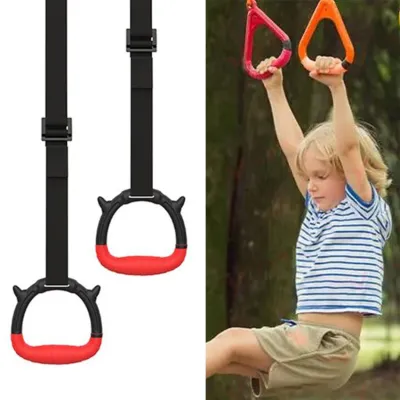
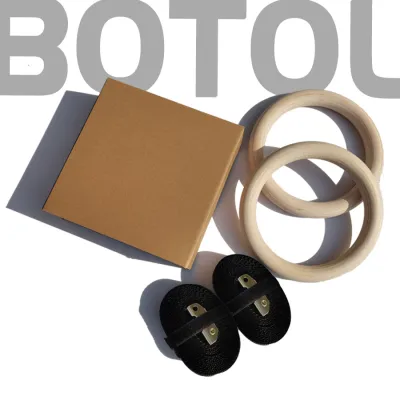
Prices are valid at publication and may change. Please refer to the product page for the latest price.
To determine the ideal ring thickness for your child, you can perform a simple finger wrap test at home. Have your child grip a cylindrical object of a known diameter, such as a broom handle or a small dowel. If their thumb and fingers cannot comfortably overlap or touch when wrapping around the object, the diameter is too large. For most children under the age of ten, a ring diameter of 23 millimeters or fewer is necessary to achieve a secure, full-wrap grip.
Using rings that are too thick introduces several physical risks during active play or training. When a child cannot establish a proper grip, their forearm muscles must work twice as hard to maintain hold, leading to premature fatigue and sudden grip failure. Additionally, a thick ring prevents the development of a “false grip”—a fundamental technique where the heel of the palm rests on top of the ring—which is essential for safely transitioning through advanced movements like pull-ups and muscle-ups.
When shopping, avoid relying solely on generic product titles like “kids’ gymnastic rings,” as marketing labels can be highly misleading. Always look for the technical specifications section on the product packaging or manufacturer’s listing to verify the exact millimeter diameter. Prioritizing a verified 23-millimeter or smaller ring ensures the equipment matches your child’s actual hand size rather than an arbitrary age recommendation.
Sizing the Strap Length and Adjustment Mechanism
Strap length determines where you can hang the rings and how much height adjustment you have for different exercises. Most high-quality gymnastic ring sets come with straps ranging from 15 to 18 feet (4.5 to 5.5 meters) in total length. This generous length is highly beneficial because it allows you to mount the rings from high structures, such as ceiling beams, outdoor swing sets, or tall doorframe pull-up bars.

When evaluating strap specifications, keep in mind that the usable length is always shorter than the total length of the strap. Because the strap must wrap around an anchor point and feed back through the adjustment buckle, you effectively lose several feet of working length. If you plan to hang the rings from high tree branches in a backyard, opting for 18-foot straps ensures you have enough slack to bring the rings down to a child’s chest level.
The type of adjustment mechanism on the strap is a vital safety feature that requires careful inspection. Most consumer rings use cam buckles, which rely on spring-loaded teeth to grip the nylon strap. While highly adjustable, cam buckles must be threaded correctly according to the manufacturer’s instructions to prevent slippage under load. Roller buckles, which use a pin-and-hole system similar to a belt, offer a highly secure, slip-free lock but provide fewer incremental height options.
To set the correct ring height, use a general framework based on your child’s height and the specific movement they are performing. For hanging and pulling exercises, the bottom of the rings should be set high enough that the child’s feet completely clear the ground when hanging with straight arms. For supported exercises like dips or push-ups, adjust the rings to chest or hip height so the child can easily step down to the floor if they lose control.
Secondary Specs: Material, Weight Capacity, and Spacing
Beyond diameter and strap length, several secondary specifications influence how the rings perform and how long they will last under daily use.
Material Selection for Grip and Durability
Gymnastic rings are primarily made from wood, plastic, or resin. Wood rings offer the best natural grip and superior sweat absorption, making them excellent for humid tropical environments. However, wood is highly sensitive to moisture and will warp or splinter if left outdoors in the rain; they must be brought inside after every session.
Plastic or polycarbonate rings are highly weather-resistant and can permanently hang outdoors, but they can become very slippery when wet or when a child’s hands sweat. If you choose plastic rings for outdoor use, ensure you dry them thoroughly before each use.
Understanding Dynamic Weight Capacity
When checking the weight capacity on a product label, do not mistake static weight limits for dynamic load limits. A child swinging or dropping into a hang exerts dynamic forces that can easily double or triple their actual body weight. Always verify that the manufacturer’s rated load limit accommodates these dynamic forces by checking the product label or manual.
Strap Width and Horizontal Spacing
Standard 1-inch (2.5 cm) nylon straps are the industry standard and provide ample support for children’s training. When installing the rings, set the horizontal spacing between the straps to match your child’s shoulder width, or slightly wider. Spacing the rings too far apart places excessive lateral stress on a child’s shoulders, while spacing them too close together can cause the straps to rub painfully against their arms during exercises.
Specifications You Can Safely Ignore
While safety and sizing specs are critical, you can safely ignore aesthetic features such as strap colors, decorative patterns, or branded logos. These design elements do not affect the structural integrity or performance of the rings and should never take priority over verified ring diameters or buckle safety ratings.
Safety Checks and Installation Boundaries
Before allowing your child to use gymnastic rings, establishing a strict routine of physical inspections and safety protocols is essential to prevent accidents.
Always inspect the primary mounting point before every single training session. If you are using an indoor doorway pull-up bar, verify its structural integrity and ensure it is firmly tightened against the frame. For outdoor setups on tree branches, assess the health and thickness of the branch; avoid hanging rings from dead, creaking, or thin branches that could snap under dynamic movement.
Conduct a thorough visual and physical check of the straps and buckles prior to use. Look closely for signs of fraying along the edges of the nylon, stitching degradation, or discoloration caused by UV exposure from intense sunlight. Test the buckle mechanism by pulling downward on the rings with your own weight to verify that the strap does not slip or creep through the teeth.
Establish clear stop conditions with your child before they begin playing. Instruct them to stop using the rings immediately if they feel the hardware slip, if the mounting structure creaks or shifts, or if they experience any joint pain or sudden hand fatigue. Because gymnastic rings are highly unstable and require significant foundational shoulder stability, they should never be used without active adult supervision and proper, age-appropriate progression.
Frequently Asked Questions (FAQ)
Can children safely use standard adult gymnastic rings?
While older teenagers with larger hands can transition to standard 28-millimeter adult rings, younger children should not use them. A ring that is too thick prevents a child from wrapping their fingers securely, leading to rapid hand fatigue and a high risk of falling. Prioritizing a ring diameter that matches your child’s current hand size is essential for building grip strength and learning proper technique safely. If your child is between sizes, it is always safer to choose the smaller diameter to ensure a secure, confident hold.

Community discussion
Share your experience or ask a question. Comments are reviewed before publication.