
Choosing the right dive light is a critical safety decision, whether you are exploring the vibrant coral reefs of Anilao or navigating a dusk dive in tropical waters. The Haixnfire DV57 flashlight is a popular option on local ecommerce platforms, but understanding what its technical specifications mean in real-world underwater conditions is essential before trusting it as your primary light source. While its advertised numbers look promising for recreational use, a successful dive requires translating these specifications into actual performance metrics like sustained brightness, true depth limits, and reliable battery runtimes.
Understanding Brightness and Beam Distance Underwater
When evaluating a dive light like the Haixnfire DV57, the lumen rating is often the first specification buyers notice. However, there is a significant difference between peak lumens—the maximum brightness a light can emit for a few seconds on a fresh battery—and sustained output. Due to heat buildup, most portable flashlights automatically step down their brightness after a few minutes to protect the internal circuitry, meaning your actual light output during a forty-minute dive will be lower than the maximum advertised number.
Underwater visibility is also heavily influenced by water density and suspended particulate matter. In tropical waters, plankton blooms or kicked-up silt can cause backscatter, where a wide, powerful beam reflects off particles directly back into your mask, blinding your field of view. To prevent this, check whether the DV57 features a tight spot beam for cutting through murky water and highlighting distant marine life, or a wide flood beam, which is better suited for close-up underwater photography and wide-angle area illumination.
Products mentioned in this guide
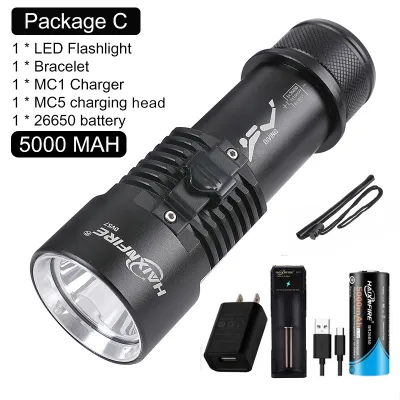
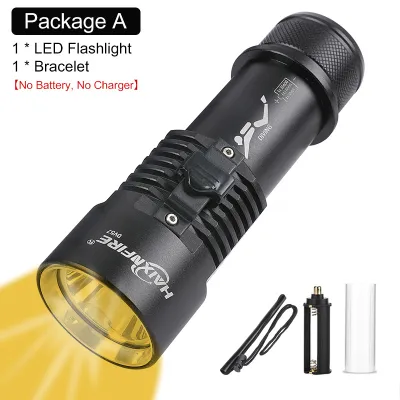
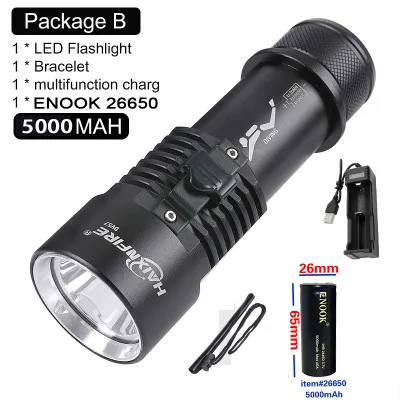
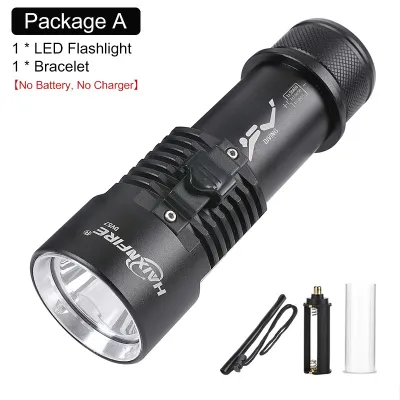
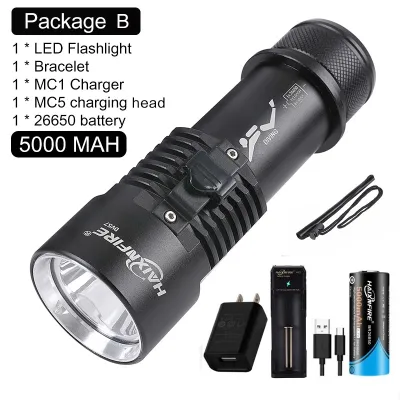
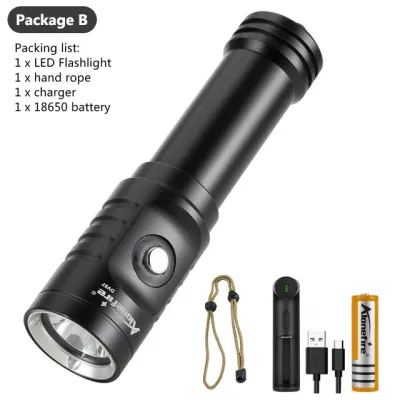
Prices are valid at publication and may change. Please refer to the product page for the latest price.
Evaluating Water Resistance and Depth Ratings
A flashlight intended for land use might carry an IPX8 rating, but this does not automatically make it safe for scuba diving. General IPX8 labels often only guarantee protection against continuous immersion in shallow water, typically up to two meters. True diving lights must specify a concrete depth rating, such as fifty or one hundred meters, which indicates the housing can withstand the immense hydrostatic pressure of the deep.

It is also vital to understand that manufacturer depth ratings are calculated under static pressure conditions in a laboratory. In actual diving scenarios, dynamic movements—such as jumping off a boat, swimming against strong currents, or accidentally bumping the light against a reef—can momentarily increase the pressure exerted on the seals. To maintain water resistance, always inspect the flashlight’s rubber O-rings before every dive, ensuring they are free of sand, hair, and salt crystals, and lightly lubricated with silicone grease as recommended in the user manual.
Battery Life and Power Management for Dives
Advertised battery runtimes can be highly misleading if they are calculated using the lowest power-saving mode. For diving, you must evaluate the runtime on the high or medium settings, which are the levels you will actually use to navigate dark crevices or night dives. A light that claims to last ten hours might only provide one hour of usable, high-intensity light before dropping to an unusable glow.
Water temperature also plays a critical role in battery performance. Even in warm tropical waters, prolonged exposure to cooler thermoclines can reduce the chemical efficiency of lithium-ion batteries, causing them to drain faster than they would on land. Because of this unpredictable drain, always plan your dive with a secondary backup light and familiarize yourself with the DV57’s low-battery warning indicators, such as a flashing power button or a sudden step-down in brightness, so you can safely begin your ascent before the light fails completely.
Matching Specifications to Your Dive Profile
Your choice of dive light should directly align with your specific diving activities and certification level. For standard daytime recreational dives in shallow reefs, a compact light like the DV57 serves well for peering into dark crevices to spot hidden octopuses or nudibranchs. However, for night dives where the flashlight is your sole source of orientation, relying on a single unverified light is a safety risk; you must carry a reliable primary light alongside a dedicated backup.
Before taking the Haixnfire DV57 into the water, consult the official Haixnfire documentation or user manual to verify its exact operational limits, battery compatibility, and depth certifications. Never assume a light is suitable for deep or challenging environments based solely on online marketplace descriptions. Ensuring your gear matches your dive profile is the best way to guarantee a safe and enjoyable underwater experience.
Frequently Asked Questions (FAQ)
Is the Haixnfire DV57 suitable for technical or cave diving?
Technical and cave diving demand extreme equipment redundancy and highly specialized gear that meets strict agency standards. Because overhead environments offer no direct access to the surface in an emergency, lights used in these settings must have guaranteed burn times, heavy-duty double or triple O-ring seals, and a tightly focused beam for signaling. You should check if the DV57 carries official certifications for technical diving; if it does not, it should be restricted strictly to shallow, open-water recreational activities.
How do I properly maintain the flashlight after saltwater use?
Saltwater is highly corrosive and can quickly ruin the threads and seals of your dive light. Immediately after your dive, rinse the flashlight thoroughly in clean, fresh water, operating the power switch or rotating bezel while submerged to flush out trapped salt crystals. Once rinsed, dry the exterior completely with a soft towel before opening the battery compartment, and periodically inspect, clean, and re-grease the O-rings according to the manufacturer’s guidelines to prevent dry-rotting.

Community discussion
Share your experience or ask a question. Comments are reviewed before publication.