
Choosing between a hard shell and a soft shell roof top tent (RTT) comes down to how often you camp, your vehicle’s load capacity, and your space requirements. Hard shell models are highly suitable for frequent travelers, solo adventurers, or couples who prioritize rapid deployment, streamlined aerodynamics, and the convenience of leaving bedding inside the tent during transit. Soft shell tents, on the other hand, are excellent for families or budget-conscious campers who need maximum interior headroom and a larger sleeping footprint for occasional trips. Before making a final decision, you must verify your vehicle’s dynamic and static roof weight limits to ensure safe installation and operation on the road.
Evaluating Setup Speed and Travel Convenience
When comparing roof top tents, setup speed is often the deciding factor for active campers. Hard shell tents typically utilize gas-strut assisted mechanisms or internal scissor lifts that allow the tent to erect itself almost automatically once the latches are released. This rapid deployment is incredibly convenient when arriving late at a campsite or trying to set up shelter during a sudden tropical downpour. Packing the tent down is equally swift, requiring you to pull the shell down and secure the latches, which usually takes less than two minutes.
Soft shell tents require a more hands-on, manual unfolding process. To set up a soft shell RTT, you must first remove a heavy-duty PVC travel cover, unbuckle the securing straps, and extend the ladder to use it as a lever to swing the tent open. Once unfolded, you must manually insert spring steel rainfly poles to prop open the windows and doors. This process generally takes anywhere from 10 to 20 minutes, which can feel tedious if you change campsites daily or camp in inclement weather.
Products mentioned in this guide
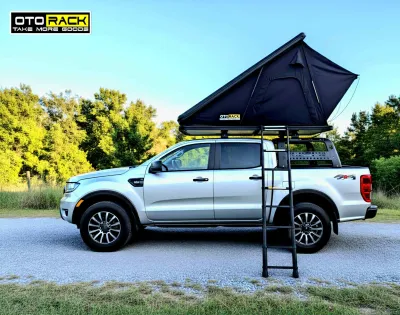
Prices are valid at publication and may change. Please refer to the product page for the latest price.
Aerodynamic drag is another critical factor that affects your vehicle’s performance and fuel efficiency during highway driving. Hard shell tents feature a slim, rigid profile made of fiberglass, aluminum, or ABS plastic that cuts through the wind with minimal resistance. This streamlined design helps reduce wind noise and minimizes the impact on your vehicle’s fuel consumption. Soft shell tents are bulkier when folded and are wrapped in a thick vinyl cover that creates more aerodynamic drag, which can noticeably increase fuel consumption on long road trips.
Storage and physical footprint also differ significantly between the two designs. Hard shell tents occupy the exact footprint of their rigid shell on your roof rack, meaning they do not extend past the sides of your vehicle when deployed. Soft shell tents fold in half for transit, taking up less space on your roof rack while driving, but they double their footprint when opened, extending over the side of the vehicle to provide a larger sleeping area.
Comparing Interior Space and Sleeping Comfort
Interior layout and headroom shape play a major role in how comfortable you feel inside the tent. Hard shell tents often feature a wedge or clamshell design, where one end remains hinged while the other opens wide. While this design is incredibly fast to set up, it limits headroom to one side of the tent, making it less suitable for multiple occupants who want to sit up simultaneously. Some hard shell models pop up vertically to provide uniform headroom, but their overall floor space remains strictly limited to the dimensions of the shell.

Soft shell tents fold out to create an expansive, A-frame or dome-like structure that offers generous headroom across the entire sleeping area. This design allows multiple campers to sit up, move around, and change clothes comfortably. If you are camping with family or a larger group, the fold-out design of a soft shell tent provides a much more spacious and livable interior environment compared to most hard shell alternatives.
Sleeping comfort also depends on mattress thickness and insulation from the vehicle’s roof. Because hard shell tents must close tightly to maintain their aerodynamic profile, they often feature thinner mattresses, typically ranging from 5 to 7 centimeters in thickness. Soft shell tents can sometimes accommodate slightly thicker mattresses or allow you to add a comfortable foam topper. Additionally, the insulated floor panels of both tent types help isolate sleepers from the cold metal of the vehicle roof, which is particularly beneficial during cooler nights in high-altitude camping areas like Sagada or Benguet.
To ensure a comfortable fit, use this practical checklist before purchasing:
- Measure the height of your tallest sleeper and compare it to the tent's peak height.
- Check the usable floor length, keeping in mind that wedge-style hard shells lose usable foot space near the hinge.
- Verify the width of the mattress against your sleeping pads or sleeping bags to ensure everyone has adequate shoulder room.
Verifying Vehicle Compatibility and Weight Limits
Before purchasing any RTT, you must systematically verify your vehicle’s structural limits and roof rack ratings. The most critical safety step is understanding the difference between dynamic and static weight limits. The dynamic weight limit is the maximum load your vehicle’s roof can safely carry while the vehicle is in motion. This limit is typically specified by the vehicle manufacturer and often ranges between 50 to 75 kilograms for standard passenger vehicles and mid-size SUVs.
Static weight limit refers to the weight capacity of the roof when the vehicle is parked and stabilized. This limit is significantly higher—often three to four times the dynamic limit—because the vehicle is not subjected to the forces of braking, cornering, or wind resistance. The static limit must support the combined weight of the tent, the roof rack, all occupants, and any gear stored inside. Never assume your vehicle can support a roof top tent without verifying these specific ratings first.
Your roof rack system must also be rated to handle the weight of the tent. Standard factory-installed crossbars are rarely designed to support the weight of an RTT and the dynamic forces of driving. You will need to invest in a heavy-duty, aftermarket roof rack system or platform that is specifically rated for off-road use and heavy loads. Ensure that the mounting towers and tracks are securely fastened to your vehicle’s factory mounting points.
Always consult your vehicle manufacturer’s official owner’s manual for specific roof load restrictions and warranty implications. Exceeding the recommended weight limits can severely compromise your vehicle’s handling, increase the risk of a rollover accident, and void your vehicle’s warranty. If your vehicle’s dynamic limit is close to the dry weight of the tent, consider lighter tent models or upgrading your suspension and rack system.
Assessing Weather Protection and Durability
Weather resilience and material durability are essential considerations, especially when camping in diverse tropical climates. Hard shell tents feature rigid outer shells made of ABS plastic, aluminum, or fiberglass. These materials offer excellent impact resistance against low-hanging branches on off-road trails and provide a durable shield against intense UV rays and heavy rainfall. Aluminum shells are particularly robust, though they can become hot to the touch under direct sunlight.
Soft shell tents utilize heavy-duty fabrics, such as ripstop polyester or poly-cotton canvas blends. While high-quality canvas is highly durable and offers excellent breathability, it requires more active maintenance. In humid environments, wet canvas must be dried thoroughly before folding the tent away for storage; failing to do so can lead to mold, mildew, and unpleasant odors. Hard shell tents are generally easier to maintain, as the rigid shell protects the fabric from moisture when closed.
Ventilation is crucial for managing condensation and maintaining comfort in warm, humid conditions. Look for tents that feature large mesh windows, sky panels, and dedicated micro-vents that promote cross-ventilation. Double-walled designs and anti-condensation mats placed under the mattress can also help prevent moisture from building up inside the tent overnight.
To ensure long-term reliability, perform a regular visual inspection of these key points:
- Check all seams for waterproof taping and ensure there is no fraying or lifting.
- Inspect the zippers to ensure they glide smoothly and are free of dirt or corrosion.
- Examine the hinges, mounting brackets, and rubber weather seals around the shell or travel cover to confirm they are intact and watertight.
Decision Framework: Choosing the Right RTT Camping Tent
To finalize your decision, match the characteristics of each tent type to your specific camping style and vehicle capabilities. A hard shell tent is highly recommended if you take frequent weekend trips, travel solo or as a couple, and prioritize a setup that takes under two minutes. It is also the preferred choice if you want to maintain better fuel economy during long highway drives and do not mind a higher initial financial investment, with prices often starting around ₱60,000 to ₱120,000 depending on the materials.
Conversely, a soft shell tent is the ideal choice if you camp occasionally, travel with family or a larger group, and require maximum interior space and panoramic views. Soft shells offer a more traditional camping feel at a more accessible price point, making them a practical option for those who do not mind the extra setup time and maintenance requirements.
Always prioritize safety by verifying your vehicle’s dynamic roof limits before making a purchase. If your vehicle’s weight capacity is limited, or if you frequently navigate tight, overgrown off-road trails where low-hanging branches are a constant hazard, a low-profile hard shell tent is generally the safer and more practical option.
Frequently Asked Questions (FAQ)
Can I leave my bedding inside the roof top tent when packed?
Hard shell tents often have enough internal clearance to allow you to leave thin sleeping bags, sheets, and flat pillows inside when the shell is closed. This feature significantly speeds up your camp setup and pack-down times. Soft shell tents, however, fold in half and compress the interior space tightly. Leaving bulky comforters or thick pillows inside a soft shell tent can prevent it from folding completely, strain the zippers, and compromise the outer weather seal, potentially allowing water to enter during transit.
Do roof top tents affect my vehicle's fuel consumption?
Yes, any roof top tent will increase wind resistance and add weight, which naturally affects your vehicle’s fuel efficiency. Hard shell tents, with their slim, aerodynamic profiles, minimize this drag, typically resulting in only a minor drop in fuel economy on the highway. Soft shell tents are bulkier and less aerodynamic when packed, creating a larger wind profile that can lead to a more noticeable increase in fuel consumption. To minimize this effect, drive at moderate speeds and ensure the travel cover is secured tightly.

Community discussion
Share your experience or ask a question. Comments are reviewed before publication.