
To find the best heavy-duty large tent for group camping in the Philippines, you must look beyond basic passenger ratings and focus on materials that can withstand intense tropical downpours, high humidity, and sudden wind gusts. A truly heavy-duty tent relies on high-denier fabrics, robust aluminum poles, and a high hydrostatic head rating to keep your group dry and secure. Because camping environments in the country range from humid beachside coves to windy mountain ridges, your choice must match your specific destination, transport limits, and group size.
Understanding Heavy-Duty Tent Specifications and Materials
Evaluating a tent’s durability starts with decoding the technical specifications provided by manufacturers. The term “denier” (denoted as D) refers to the weight and thickness of the individual threads used to weave the fabric. For a tent to qualify as heavy-duty, the rainfly should feature a minimum of 75D polyester, while the floor—which faces constant friction and ground moisture—should ideally be constructed from 150D oxford polyester or a thick, puncture-resistant polyethylene.
The choice of fabric material also dictates how the tent performs over time. Polyester is highly recommended for tropical climates because it resists UV degradation from intense sun exposure and does not stretch or sag when wet. Nylon is lighter and highly packable but tends to absorb water and stretch, requiring frequent tension adjustments during prolonged rain. Canvas is exceptionally durable and breathable, but its extreme weight and susceptibility to mildew make it a specialized choice rather than a general recommendation.
Products mentioned in this guide
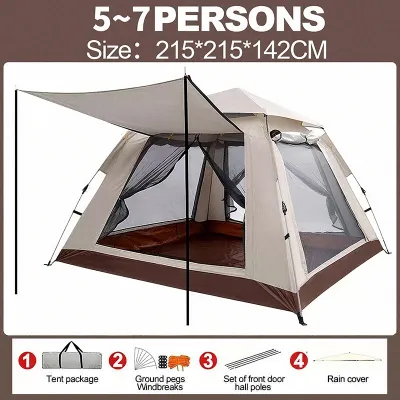
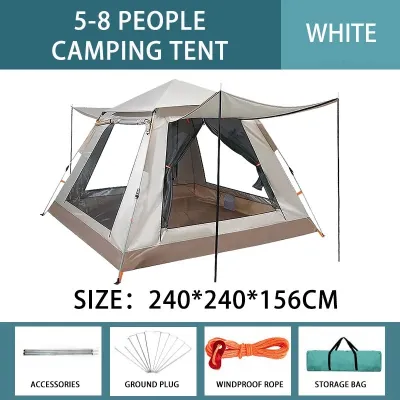
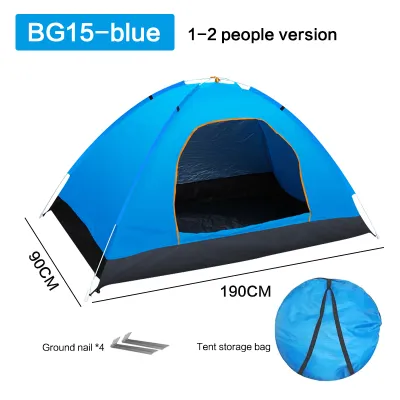
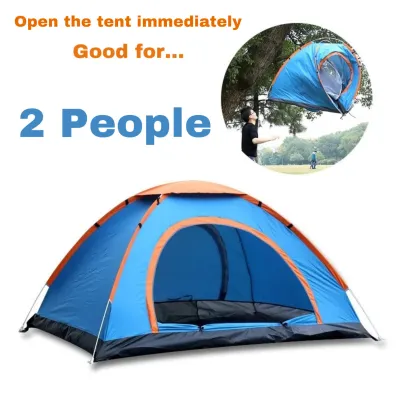
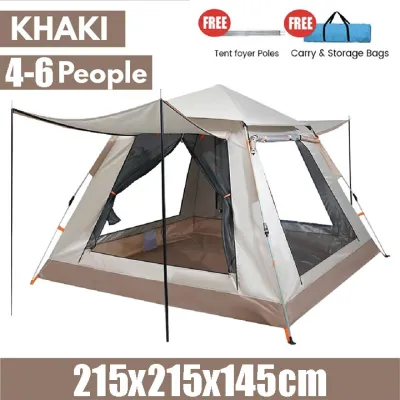
Prices are valid at publication and may change. Please refer to the product page for the latest price.
Pole material is the single most critical factor in determining whether your tent will survive a sudden storm. Budget tents often use fiberglass poles, which are heavy, rigid, and prone to splintering or shattering under high wind loads. Heavy-duty tents utilize aluminum alloy poles (such as 7001 or 7075 series), which offer an outstanding strength-to-weight ratio. Aluminum poles flex naturally to absorb wind energy without breaking, making them essential for exposed campsites.
When assessing “large” tents, do not rely solely on the manufacturer’s passenger rating. Instead, examine the physical floor dimensions in centimeters and the peak height. A peak height of 180 centimeters or more allows most adults to stand upright, which significantly improves comfort when a group is confined indoors during a downpour. Multi-room configurations with zippered dividers are also valuable, providing privacy and organized gear storage for larger groups.
Choosing the Right Tent Structure for Your Group
The geometry of your tent determines how it handles wind, sheds water, and utilizes interior space. Cabin tents are designed with near-vertical walls and high ceilings, maximizing the livable volume and allowing campers to walk around freely. This structure is ideal for base camps and car camping where comfort is the priority and weight is not a constraint. However, their flat, vertical profiles act like sails in high winds, meaning they require robust steel or thick aluminum frames and secure anchoring to remain stable.

Tunnel tents utilize a series of parallel arched poles to create a long, cylindrical shelter. This design offers an exceptional space-to-weight ratio, providing massive vestibules that are perfect for storing muddy gear or cooking during bad weather. When pitched parallel to the wind direction, tunnel tents are highly aerodynamic and stable. They are a practical choice for larger groups who need to balance interior space with packed weight, though they must be staked out securely at both ends to stand.
Geodesic and semi-geodesic designs feature poles that cross over each other multiple times to form a self-supporting dome. This interlocking structure distributes external forces across the entire frame, making these tents incredibly stable in high winds and heavy rain. While the sloped walls reduce standing headroom compared to cabin tents, geodesic models are the safest option for high-altitude expeditions or exposed coastal campsites where weather conditions can change rapidly.
Weatherproofing and Comfort Features for Tropical Climates
In the Philippines, weatherproofing is not just about keeping rain out; it is also about managing extreme humidity and heat. The waterproofing capability of a tent fabric is measured by its hydrostatic head (HH) rating in millimeters. For reliable protection against heavy tropical downpours, look for a rainfly with a rating of at least 2,000mm to 3,000mm. The tent floor requires a higher rating, ideally 5,000mm or more, to prevent water from being pressed through the fabric when campers sit, kneel, or sleep on it.
Even the highest waterproof rating will fail if the tent’s construction is lacking. Ensure that all seams on the rainfly and floor are fully factory-taped, meaning a waterproof tape has been heat-sealed over the stitching. Look for reinforced stitching at all high-stress areas, such as pole attachment points and guyline loops.
Ventilation is critical to prevent the interior of the tent from turning into a sauna. A heavy-duty tropical tent must feature extensive mesh panels on the inner tent body to facilitate airflow. The rainfly should include adjustable roof vents and low-level vents that can be kept open even during heavy rain to allow warm, moist air to escape, minimizing the condensation that naturally builds up from multiple people sleeping in a confined space.
Wind resistance relies heavily on the quality of the guylines and stakes. Look for tents with multiple, reinforced guyline attachment points positioned along the poles to distribute wind loads evenly. Upgrading the standard steel pegs that come with most tents to heavy-duty Y-beam aluminum stakes will ensure a secure hold in varied soils, from loose forest dirt to hard-packed clay.
How to Build Your Group Camping Tent Shortlist
To narrow down your options, start by calculating your group’s true capacity needs. Manufacturer capacity ratings are based on the maximum number of standard sleeping pads that can fit shoulder-to-shoulder on the floor, leaving no room for bags, pathways, or personal space. To ensure a comfortable trip, apply the “plus-two” rule: if you have a group of four campers, look for a six-person tent. If you have significant gear or plan to use large air mattresses, an eight-person tent is more appropriate.
Next, evaluate your transport logistics. A heavy-duty tent with thick fabrics and metal poles is heavy, often weighing between 10 kg and 30 kg. If you are car camping where you can unload directly at the campsite, weight is negligible. However, if your group must hike even a short distance to reach the site, you must split the tent components (poles, fly, inner tent) among multiple backpacks or opt for a lighter tunnel design.
Establish a realistic budget in ₱. High-quality materials come at a premium. In the local market, budget tents under ₱5,000 often rely on thin fabrics and fragile fiberglass poles. Investing ₱10,000 to ₱30,000 or more in a tent with aluminum poles, high-denier fabrics, and verified waterproofing ratings ensures the shelter will last for years of regular use rather than failing during its first major storm.
Setup, Maintenance, and Safety Best Practices
A heavy-duty tent is a significant investment, and proper care is essential to maximize its lifespan and ensure your safety. Always conduct a pre-trip dry run in your backyard or a local park before heading to the campsite. This allows you to verify that all poles, stakes, and guylines are present, understand the setup sequence, and inspect the seams for any manufacturing defects.
Proper site selection is your first line of defense. Avoid pitching your tent in low-lying areas or dry creek beds that can quickly flood during a sudden downpour. Look up to check for dead tree branches that could fall in high winds. Pitch the tent on a slight elevation, and if heavy rain is expected, clear small natural runoff paths around the tent perimeter without digging deep trenches that damage the local environment.
Post-trip care is crucial to prevent mold and mildew, which can destroy waterproof coatings within days in a humid climate. Once home, hang the tent and rainfly in a shaded, well-ventilated area until completely dry. Clean off dirt and mud using a soft sponge and plain water; harsh detergents can strip away the water-repellent treatments. Store the tent loosely in a cool, dry place rather than tightly packed in its compression sack.
Frequently Asked Questions (FAQ)
How do I determine the right tent capacity for my group?
To find the ideal capacity, calculate the total floor area needed for your group. A standard sleeping pad requires about 60 cm by 190 cm of space. Multiply this by your group size, then add at least 30% more floor area to accommodate backpacks, gear storage, and walking paths. If your group includes children or pets, or if you plan to use large air mattresses instead of compact sleeping pads, you should double the manufacturer’s standard passenger rating to ensure everyone can sleep comfortably without crowding.
Are canvas tents better than synthetic heavy-duty tents for the Philippines?
Canvas tents offer exceptional durability and natural breathability, which helps keep the interior cool during hot, humid days. However, they are extremely heavy, bulky to transport, and require meticulous drying to prevent rot and mildew in the tropical climate. Synthetic heavy-duty tents made of high-denier polyester or nylon are much lighter, dry faster, pack down smaller, and offer excellent waterproofing out of the box, making them a more practical and versatile choice for most group camping scenarios in the Philippines.

Community discussion
Share your experience or ask a question. Comments are reviewed before publication.