
Selecting a fishing set is one of the most critical decisions an angler makes, yet many hobbyists buy components individually without considering how they interact. A truly balanced fishing set functions as a single, seamless extension of your arm. When your rod, reel, and line are properly matched, casting becomes highly accurate, bite detection is sharp, and fighting a fish requires far less physical effort. Conversely, a mismatched setup leads to frequent line tangles, casting frustration, hand fatigue, and even structural gear failure. To build a balanced system, you must align the physical specifications of each component with your target species and the environments you plan to fish.
Define Your Target Species and Fishing Environment
Before looking at gear specifications, you must define where you will fish and what you intend to catch. Fishing environments dictate the materials and durability your gear must possess. For instance, saltwater environments—such as coastal flats, surf zones, and deep marine waters—expose your fishing set to highly corrosive salt spray and intense humidity. In these settings, selecting a reel with sealed bearings, an anodized aluminum spool, and corrosion-resistant drag washers is essential to prevent internal rust. Freshwater environments, like inland lakes and mountain streams, are less demanding on materials but often require highly sensitive setups to detect subtle bites.
The size, strength, and habitat of your target species establish the baseline requirements for your rod’s power, your reel’s drag capacity, and your line’s breaking strength. If you are targeting hard-fighting species that seek shelter in heavy cover, such as barramundi or giant trevally, you need a heavy-power rod to pull them away from structures, a reel with a robust drag system to halt their runs, and a high-strength line that resists abrasion. For smaller species in open water, an ultra-light or medium-light setup provides a much more engaging and effective fishing experience.
Products mentioned in this guide
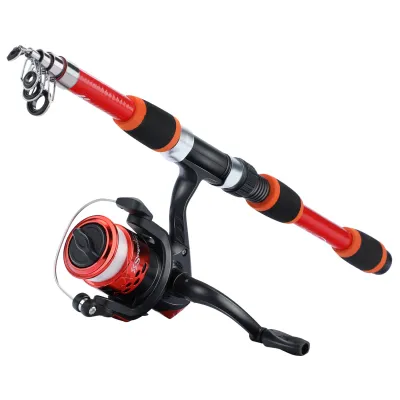
![[In Stock]Sougayilang Fishing Rod Set Full Set 1.8mTelescopic Fishing Rod and Spinning Fishing Reel and Fishing Accessories Fishing Rod Complete Set](https://img.lazcdn.com/g/p/e37753596223983276174dfaf93f2cb3.jpg_400x400q80.jpg_.webp)
![[In Stock] Fishing Rod Set Full Set 1.8mTelescopic Fishing Rod and Spinning Fishing Reel and Fishing Accessories Fishing Rod Complete Set](https://img.lazcdn.com/g/p/65c6d5a4581153d8c18704a050abe73b.jpg_400x400q80.jpg_.webp)
![[COD]Fishing Rod Set Full Set 1.8m 2 Sections Fishing Rod and Spinning Fishing Reel and Fishing Accessories Fishing Rod Complete Set](https://img.lazcdn.com/g/p/9b377f9568b20beb79e161e524425030.jpg_400x400q80.jpg_.webp)
![[COD]Fishing Rod and Reel Set Fishing Rod Set Full Set Fish rods 1.8m Telesscopic Fishing Rod Fishing Rod and Reel Combos](https://img.lazcdn.com/g/p/dd36fe77f96794e78e35359c533a3b87.jpg_400x400q80.jpg_.webp)
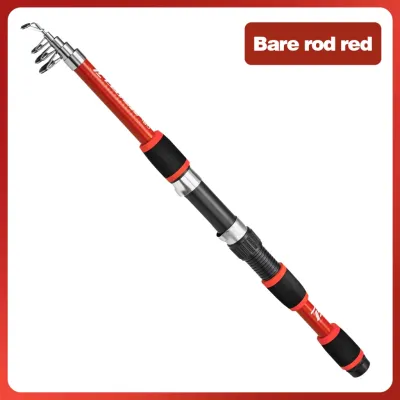
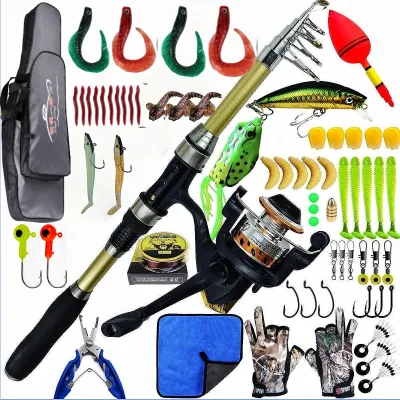
Prices are valid at publication and may change. Please refer to the product page for the latest price.
Local geography also plays a massive role in gear selection. In the Philippines, anglers frequently transition between vastly different aquatic terrains. Casting from open sandy beaches or deep-sea boats requires longer rods to maximize casting distance and clear the surf. However, if you are navigating the tight, overgrown channels of mangrove estuaries, brackish fishponds, or narrow riverbanks, a long rod becomes a liability. In these confined spaces, a shorter, highly maneuverable rod allows you to make precise underhand or sidearm casts around low-hanging branches and submerged roots without snagging your surroundings.
Match the Rod and Reel for Optimal Balance
Pairing a rod and reel is not just about ensuring the reel fits into the reel seat; it is about matching their physical weight and mechanical design to achieve ergonomic balance. To start, look at the manufacturer’s specifications printed directly on the rod blank, usually located just above the handle. These markings indicate the recommended line weight and lure weight for that specific rod. As a general rule, light-power rods pair best with smaller reels (such as 1000 to 2500 series spinning reels), while medium to heavy rods require larger reels (3000 to 5000 series or larger) to accommodate thicker lines and provide sufficient drag pressure.

The physical weight of the reel must complement the length and action of the rod to prevent the setup from feeling awkward in your hand. A setup is “tip-heavy” when the rod tip pulls downward, forcing you to constantly apply upward wrist pressure to keep it level. This is common when a long, heavy rod is paired with an excessively light reel. A “butt-heavy” setup occurs when a heavy reel pulls the handle down, making the rod tip feel unresponsive. A balanced fishing set should have its center of gravity located right where you naturally place your hand during a retrieve, allowing the rod to sit level with minimal effort.
Furthermore, you must strictly match the reel type to the rod’s structural design. Spinning reels hang beneath the rod, which means spinning rods are designed with large, high-frame guides to gather the wide loops of line coming off the spool. They also feature a smooth reel seat without a trigger. Baitcasting reels sit on top of the rod, requiring casting rods with small, low-profile guides positioned close to the blank to keep the line from rubbing against the rod under load. Casting rods also feature a distinct finger trigger on the handle to help you maintain a secure grip during high-torque casts. Attempting to cross-pair these designs compromises casting distance and can damage the guides.
Select the Right Line Weight and Capacity
Once your rod and reel are physically matched, you must select a fishing line that respects the structural limits of both components. The rod’s printed line rating (for example, 8–17 lb or 4–8 kg) represents the optimal range of line strength the rod blank is engineered to support. Using a line within this recommended range ensures that when a fish pulls hard, the rod bends safely to absorb the energy, preventing the line from snapping while protecting the rod from overloading.
Reel spools are engineered with specific line capacity limits, which are typically stamped on the side of the spool. These specifications show how many meters of a specific line diameter the spool can hold. It is vital to stay within these limits. Overfilling a spool—especially with stiff monofilament or fluorocarbon—causes the line to jump off the spool in clumps, resulting in frustrating tangles and wind knots. Underfilling the spool, where the line level sits more than a few millimeters below the spool lip, increases friction as the line rubs against the metal edge during a cast, severely shortening your casting distance.
The choice of line material also affects how your fishing set performs. Braided line offers an incredibly thin diameter relative to its breaking strength, allowing you to pack more line onto a smaller reel. It has zero stretch, providing maximum sensitivity to feel light bites, but it is highly visible in clear water and can easily cut on sharp rocks or barnacles. Monofilament line is highly forgiving because it stretches under load, acting as a shock absorber when a fish makes sudden runs, and it floats, making it ideal for topwater lures. Fluorocarbon line sinks quickly, is virtually invisible underwater, and offers excellent abrasion resistance, making it a preferred choice for leaders or clear-water applications, though its stiffness requires careful spool management.
Avoid Common Mismatches and Setup Mistakes
One of the most damaging mistakes anglers make is spooling a reel with a line that far exceeds the rod’s maximum line rating. If you snag a heavy obstacle or hook a massive fish with a 30-pound braided line on a rod rated for a maximum of 12 pounds, the line will not break when tension increases. Instead, the excessive force is transferred directly into the graphite or fiberglass rod blank, causing it to shatter. Always ensure your reel’s drag is set correctly so that the line slips before reaching the breaking point of either the line or the rod.
Another common error is mounting an oversized, heavy-duty reel onto a short, ultra-light rod. Anglers sometimes do this thinking the extra line capacity will prepare them for unexpectedly large fish. However, this extreme mismatch completely deadens the sensitivity of the ultra-light rod, making it impossible to feel the delicate vibrations of small lures or light bites. It also ruins the casting physics of the rod, leading to poor accuracy and severe wrist strain after only an hour of casting.
Lastly, using freshwater-rated reels in coastal or brackish environments without immediate, rigorous maintenance is a recipe for gear failure. Saltwater penetrates non-sealed reel bodies, leaving behind salt crystals that grind down gears and corrode bearings. If you must use a standard reel in saltwater, you must commit to rinsing it thoroughly with a gentle spray of freshwater after every single trip, keeping the drag tightened during the rinse to prevent water from entering the drag stack, and backing the drag off completely once dry to preserve the washers. When browsing local tackle shops, you might find pre-assembled packages starting around ₱1,500, but verifying the balance of these individual components remains essential.
Assemble Your Fishing Set Step-by-Step
To finalize your balanced fishing set, follow a systematic workflow when spooling your reel and rigging your rod. When spooling a spinning reel, place the supply spool flat on the floor so the line uncoils in the same direction that the reel’s rotor spins. This matches the natural twist of the line and prevents severe line twists before you even reach the water. Keep steady, moderate tension on the line by pinching it gently with a damp cloth or your fingers just ahead of the reel as you turn the handle, ensuring the line packs tightly and evenly onto the spool.
Once the reel is properly spooled, mount it securely into the rod’s reel seat, tightening the locking nut firmly but without over-tightening, which can crack the reel seat. Pull the line out and thread it through the rod guides. Start from the large stripper guide closest to the reel and work your way up to the tip guide. Ensure the line passes directly through the center of every single guide without wrapping around the rod blank. Missing even a single guide distributes the load unevenly when the rod bends, which can cause the rod to snap under the pressure of a fighting fish.
When connecting your lines, always verify the manufacturer’s recommended knots for your specific line types. Use a reliable arbor knot to secure your backing or main line to the spool arbor. If you are using a braided main line, it is highly recommended to tie a monofilament or fluorocarbon leader to the end to provide abrasion resistance and stealth. Use a streamlined connection knot, such as the Double Uni knot or the FG knot, to ensure the connection is slim enough to pass smoothly through the rod guides during casting and retrieval without catching or damaging the guide inserts.
Frequently Asked Questions (FAQ)
Can I use a spinning reel on a casting rod?
No, spinning reels and casting rods are mechanically incompatible. Casting rods are designed with small, low-profile guides positioned along the top of the blank to keep the line from rubbing against the rod when it bends under load. Spinning reels release line in wide, spiraling loops that require the large, high-frame stripper guides found on spinning rods to tame the line. Mounting a spinning reel on a casting rod results in extreme line friction, severely reduced casting distance, and potential damage to the small guides.
How do I know if my fishing set is properly balanced?
You can easily verify the balance of your fishing set using a simple finger-balance test. Fully assemble your rod and reel, including the spooled line. Place your index finger under the rod blank directly in front of the reel seat, which is where your hand naturally rests during a retrieve. A well-balanced setup will balance horizontally on your finger or tilt slightly toward the tip. If the rod tip drops rapidly toward the ground, the setup is tip-heavy; if the butt of the rod drops sharply, it is butt-heavy.

Community discussion
Share your experience or ask a question. Comments are reviewed before publication.